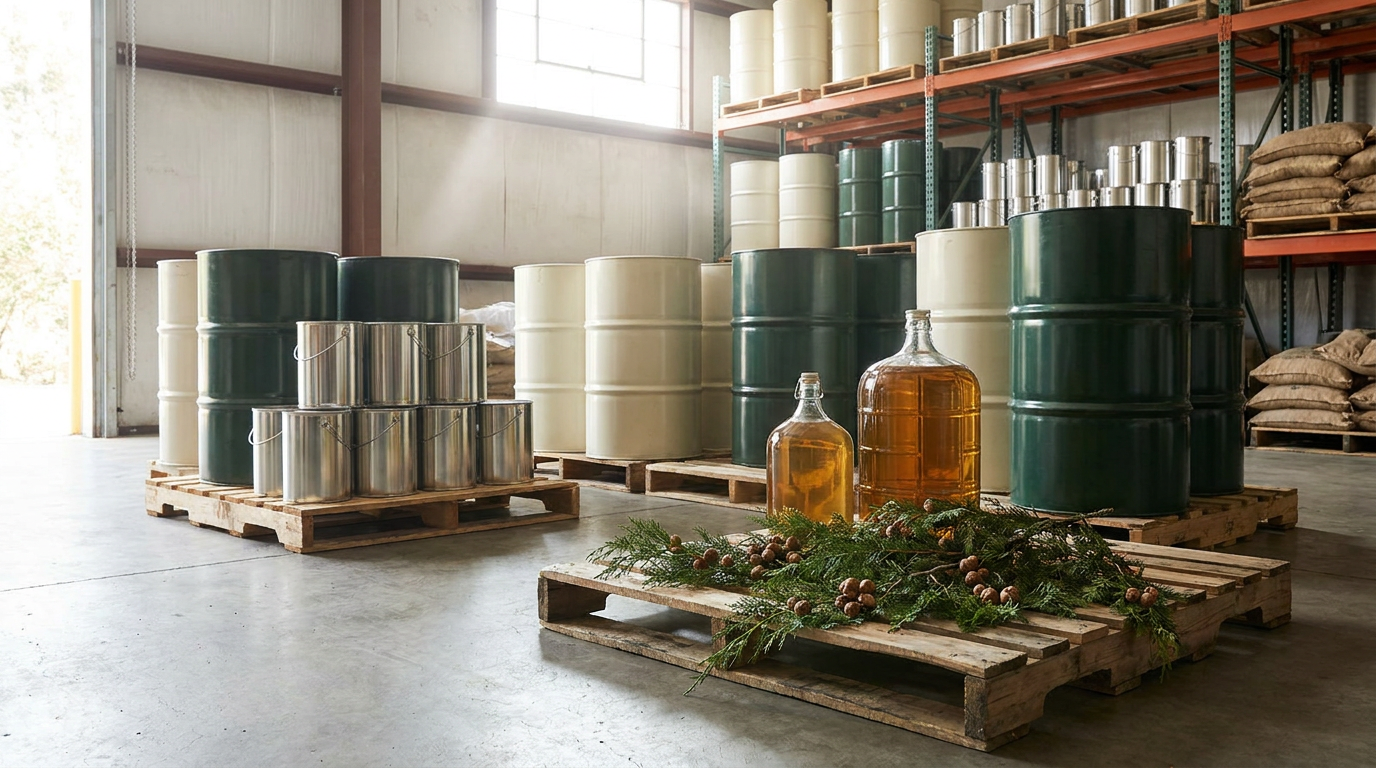
Cypress essential oil is steam-distilled from the needles, twigs, and small cones of Cupressus sempervirens, the slender Mediterranean evergreen prized since antiquity for its endurance. For formulators and brand owners, the appeal is a scent that reads cleaner and more refined than a common pine oil: green, resinous, and smoky at the finish. This guide covers what wholesale buyers of cypress oil are actually formulating, how to verify what is really in the drum, and which of our nine sizes fits a first order.
Check current pound-tier pricing on the wholesale page before you commit to a size.
Cupressus sempervirens grows across the Mediterranean, and the oil is steam-distilled from its needles, twigs, and small cones rather than the heartwood used for many other conifer oils. The distillation choice shapes the aroma: readers can walk through the process in how cypress essential oil is made, from harvest through steam extraction. The resulting profile sits between top and middle notes, drier and more resinous than an ordinary pine oil, which is why formulators reach for it instead of cheaper conifer stand-ins; the full aroma breakdown is in what cypress essential oil smells like.
Not every oil labeled "cypress" is Cupressus sempervirens, and the wholesale market has more overlap here than most buyers expect; the market table below and what is cypress essential oil cover the distinctions in full. Origin also matters for consistency batch to batch: buyers comparing Mediterranean stock to other regional sources should read how origin shapes cypress oil quality before committing to a supplier.
| Sold as | What it actually is | How to recognize it |
|---|---|---|
| Cypress Oil (true) | Steam-distilled from Cupressus sempervirens needles, twigs, and cones, the Mediterranean evergreen this store sources from | Botanical name Cupressus sempervirens on the label and the batch COA, plus a clean, green, resinous aroma rather than a sweet or camphor-heavy one |
| Blue Cypress Oil | Distilled from Callitris intratropica, an Australian tree unrelated to Cupressus sempervirens despite the shared common name | A deep blue color from guaiazulene and a heavier, woodier note; the full comparison is in blue cypress versus Mediterranean cypress oil |
| Cypress Rotundus Oil | Distilled from Cyperus rotundus, a sedge commonly called nutgrass, not a conifer at all | An earthy, root-like aroma with none of the green conifer character; see cypress rotundus oil explained |
| Hinoki / Japanese Cypress Oil | Distilled from Chamaecyparis obtusa, a related but distinct conifer grown mainly in Japan | A warmer, more camphoraceous, woodsy note, covered in hinoki and Japanese cypress oil |
The common name "cypress" is doing a lot of work across these four products, and none of the substitutes are inferior on their own terms, they are simply different oils built for different formulas.
The sourcing trap here is not counterfeit oil, it is a genuine botanical mix-up: a supplier can hand over a real, well-made essential oil that is simply not Cupressus sempervirens. Confirm the botanical name on the COA before you place a bulk order, not after the drum arrives.
Wholesale demand for this oil clusters around formulators who want a refined, dry conifer note rather than a sweet floral or a heavy camphor smell: soap and candle makers, cologne and grooming brands, and home fragrance lines. The soap and candle side has its own formulation quirks, covered in cypress essential oil for soap and candle makers.
Perfumers and cologne formulators are the other major buyer group, drawn to how cleanly cypress bridges top and middle notes in a woodland accord; cypress in perfumery walks through the accord-building logic. Spa, bath, and massage oil brands round out the list, typically buying in the same pound-tier sizes as the fragrance and grooming buyers above.
Before placing a bulk order, confirm the following on any lot you are quoted:
Treat the COA and GC-MS report as the deciding documents, not the marketing copy. If a supplier cannot produce both for the specific lot you are buying, that is a reason to ask more questions, not a reason to walk away entirely, but it should slow the order down.
Cypress essential oil here ships in nine sizes, from a 0.5 oz sample bottle up to 400 lbs, and most wholesale buyers move through more than one size before settling on a standing order. New formulators typically start with a 16 oz or 5 lbs bottle to run trials, then scale to 25 lbs or 400 lbs once a formula is locked; the full breakdown of which size fits which stage is in cypress essential oil sizes: which bottle should you order first.
Pricing scales differently across that range, and per-ounce cost drops meaningfully at the 25 lbs and 400 lbs tiers; see the price guide for what actually drives that cost. A closer look at bulk-specific sizing and minimums is also in wholesale cypress essential oil: a guide to bulk sizes and pricing.
Order a 16 oz or 5 lbs bottle and run it through your actual formula, not just a smell test, since performance in wax, soap base, or a carrier oil can differ from the bottle.
Request the COA and GC-MS report for the specific lot you plan to buy, and confirm the botanical name matches Cupressus sempervirens.
Place your bulk order at /bulk/ once the formula and documentation both check out; 5 lbs and 25 lbs cover most standing orders, with 400 lbs for larger production runs.
Lock in a repeat schedule once your formula is stable, and confirm lot-to-lot consistency each time with a fresh COA rather than assuming it matches the last shipment.
The sections below break down the applications wholesale buyers actually formulate this oil into, with sourcing and sizing notes specific to each.
How cypress performs in cold-process soap and poured candles, and what cold throw testing actually shows.
Read the sourcing guide →Building woodland accords with cypress as a top-to-middle bridge note, and what makes a lot fragrance-grade.
Read the sourcing guide →Aftershaves, splash colognes, and beard oils built around cypress's clean, dry conifer note.
Read the sourcing guide →Diluted skin care blends built around cypress's clean, green profile, and the dilution questions buyers ask first.
Read the sourcing guide →Sea salt soaks and bath products carrying a forest-fresh cypress scent after time outdoors.
Read the sourcing guide →Diffuser blends, linen sprays, and seasonal home fragrance lines built around cypress's coniferous top note.
Read the sourcing guide →Diluted massage and body oil blends carrying cypress's clean, outdoorsy note into a carrier oil base.
Read the sourcing guide →Reach out for lot-specific documentation or a sample recommendation.
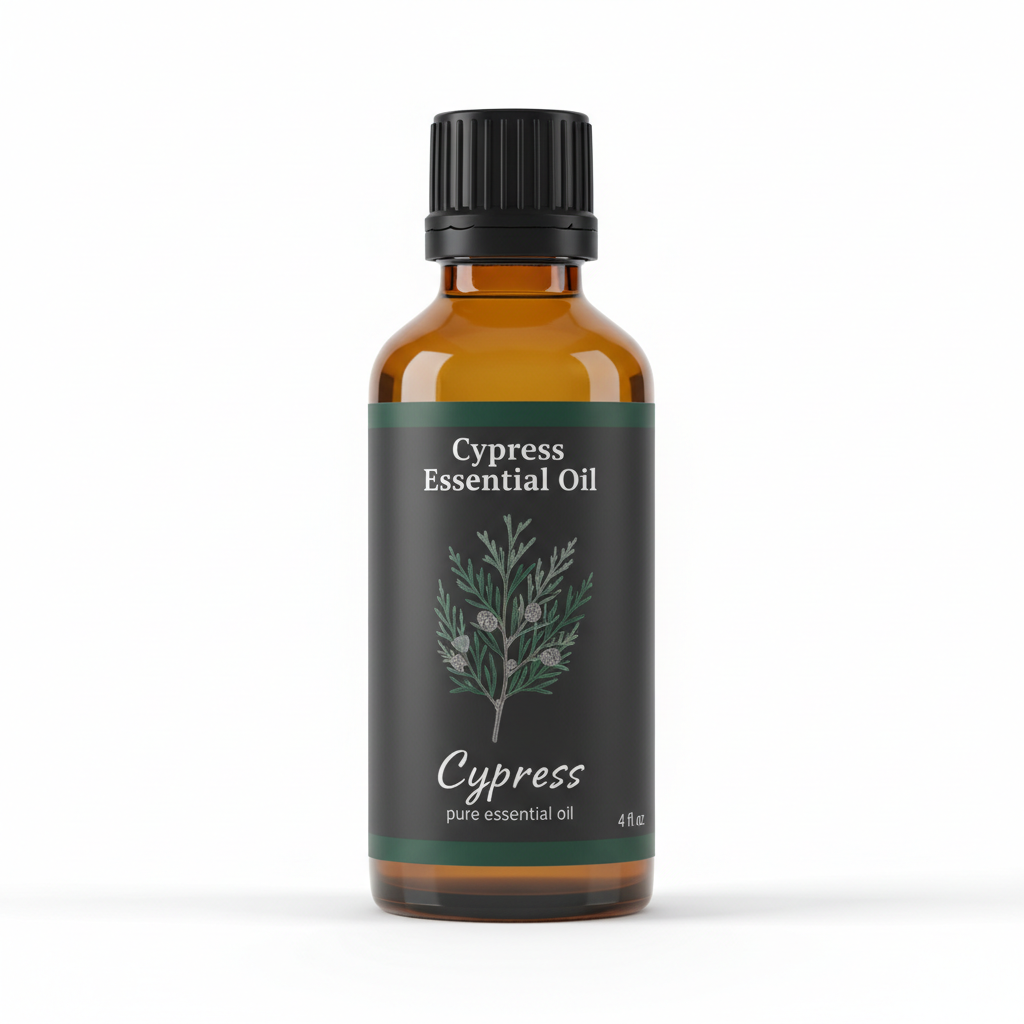
Our own Cypress Essential Oil, in sizes from 0.5 oz to bulk.
From $10.99
Shop Now →