
What Does Cypress Essential Oil Smell Like? A Full Scent Profile
Cypress essential oil smells like a dry, green conifer: a bright, faintly citrus-edged opening, a restrained heart of evergreen needles with a trace of smoke, and a soft woody-resinous trail that lingers for hours. It is lighter and drier than pine, with none of the sugary sweetness of fir.
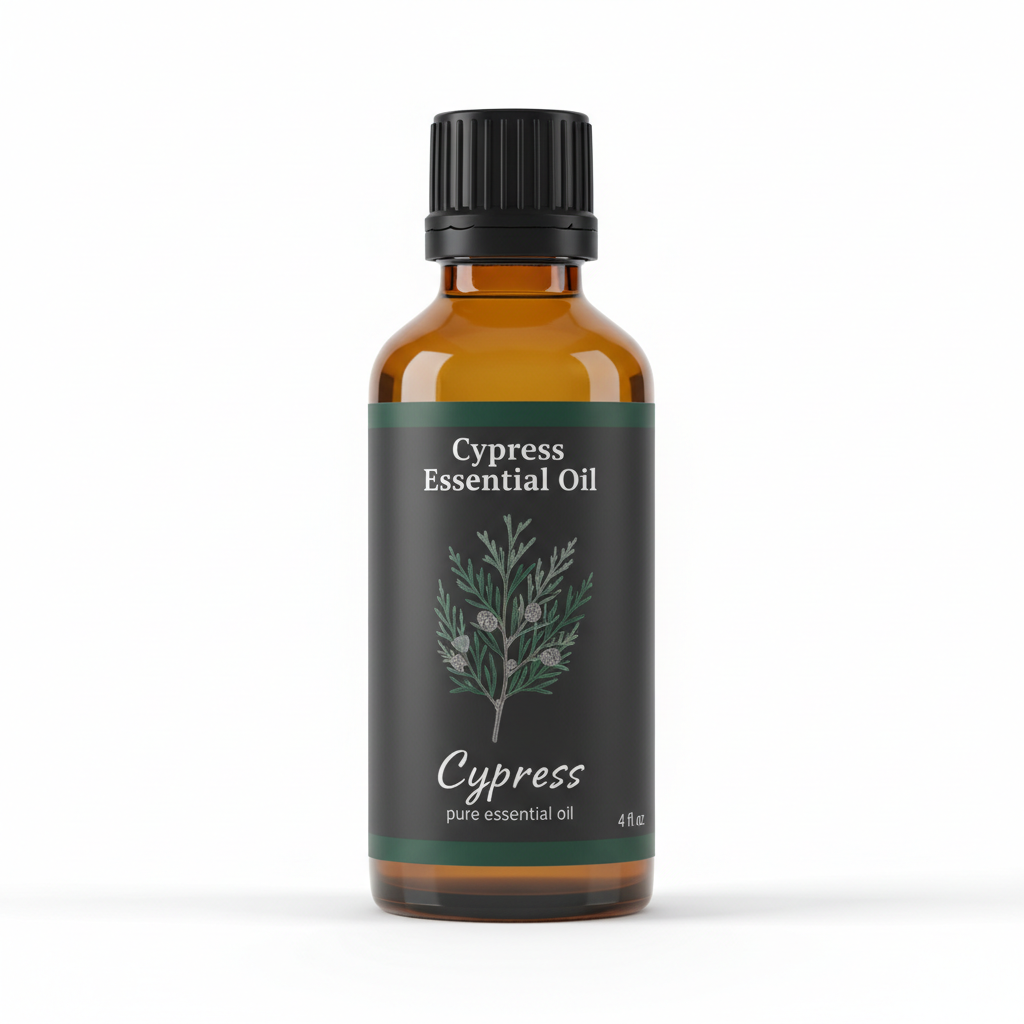
Cypress Essential Oil
Our own Cypress Essential Oil, in sizes from 0.5 oz to bulk.
From $10.99
Shop Now →That one-line answer hides a lot of variation, and most of it comes down to chemistry and bottle age. This guide walks through the scent in the order your nose meets it, explains what shifts it from batch to batch, and sets cypress beside the oils it is most often mistaken for. If you want the botanical background first, the complete guide to cypress essential oil covers the plant itself.
Smell it the way a perfumer would
Perfumers do not sniff from the bottle. The opening of any oil is mostly its most volatile molecules, and a bottle neck concentrates them into something harsher than the oil really is. Put one drop on a paper strip (a clean coffee filter works), wave it a few inches below your nose, and come back to it at intervals over the next few hours. What follows is the arc you should expect.
The opening: bright green with a citrus edge
The first minute is the sparkling part. Think of a freshly clipped evergreen hedge just after rain: wet green, a little sharp, with a lemon-peel flicker at the very top. That flicker is the work of light terpenes such as limonene and terpinolene, which evaporate first. It is brief. If you are judging the oil by this stage alone, you are judging the least representative part of it.
The heart: dry conifer, lightly smoky
After about ten to fifteen minutes the brightness settles and the character of cypress appears. It is dry rather than juicy. Picture crushed needles on a cold trail, or the warm, faintly smoky wall of a dry sauna. A thin thread of smoke runs through it, and the whole thing is more restrained than pine. Nothing in this stage is sweet or fruity, which is exactly why it reads as clean and composed rather than loud.
The dry-down: a soft woody-resinous trail
Over the next few hours the scent thins into something quiet and woody, with a slightly balsamic, resinous softness at the bottom. It does not turn syrupy or musky. On a strip it can still be faintly detectable the next morning, though a strip and skin or a diffuser room behave differently, so treat the timing as a guide rather than a promise.
The chemistry behind the scent
Cypress oil is a monoterpene-rich oil. Published compositional analyses of Cupressus sempervirens foliage oil generally report alpha-pinene as the largest single component, followed by delta-3-carene, with smaller amounts of limonene, myrcene, terpinolene, and sabinene. Trace amounts of heavier woody molecules such as cedrol and sweeter esters such as alpha-terpinyl acetate sit underneath. You can look up each of these by name on PubChem, the US National Library of Medicine's chemical database, to see structures and odor descriptions.
| Compound | Typical role in the scent |
|---|---|
| Alpha-pinene | Fresh, piney backbone; the "conifer" signal |
| Delta-3-carene | Sweet, slightly earthy and pungent; part of cypress's dry, smoky character |
| Limonene | Citrus flicker in the opening |
| Terpinolene | Fresh, green, faintly sweet top note |
| Cedrol (trace) | Soft, dry wood in the base |
| Alpha-terpinyl acetate (trace) | Gentle herbal sweetness that rounds the edges |
The ratio of delta-3-carene to alpha-pinene is a useful way to think about why cypress feels drier and more restrained than a pine oil dominated by pinene alone. Carene adds earthy weight; pinene adds shine. Lean toward carene and the oil smells deeper and quieter.
Why one bottle smells different from the next
Three things move the scent more than anything else. The first two are craft decisions. The third is time.
Origin and harvest window
Terpene composition in conifers shifts with climate, soil, and the season a tree is cut. A foliage harvested in a different part of the year can plausibly carry a different balance of light and heavy molecules, so two honest cypress oils from different places can smell noticeably different side by side. That is normal botanical variation, not a flaw.
The needle-to-twig ratio in the still
Distillers load the still with foliage and fine twigs. Reasoning from the chemistry, more green needle material should favor the volatile, sparkling terpenes, while a heavier share of woody twig should favor drier, woodier notes. How the plant material is cut and packed also changes what comes over with the steam. The walkthrough of how cypress oil is made shows where those choices happen.
Oxidation: the most common reason cypress smells "wrong"
Here is the trade-off worth knowing. The molecules that make cypress smell fresh are the same ones that react readily with oxygen. Alpha-pinene and delta-3-carene both oxidize on air contact, forming compounds such as pinene oxide and verbenone, which smell flat, harsh, and turpentine-like. Light and warmth speed this up. Because the reaction needs oxygen, a half-empty bottle ages faster than a full one: there is more air in the headspace.
So if your cypress smells sharp, thin, and solvent-like, the likeliest explanation is an old or poorly stored bottle, not a badly made oil. A fresh bottle from the same still would smell completely different. Store it tightly capped, in dark glass, somewhere cool, and consider moving a nearly empty bottle into a smaller one.
Cypress next to the oils it gets confused with
Buyers often reach for cypress expecting something else, or the reverse. This is how the neighbors differ.
| Oil | How it differs from cypress |
|---|---|
| Pine | Brighter and more resinous, with a louder pinene shine that can read as floor cleaner |
| Fir | Sweeter and more balsamic, closer to a Christmas tree |
| Juniper berry | Fruitier, with a gin-like berry note cypress does not have |
| Cedarwood | Deeper and woodier: a wood note rather than a needle note |
One more distinction matters if you are shopping. "Cypress" on a label usually means Mediterranean cypress, but blue cypress is a different tree and a different scent altogether. The comparison of blue cypress and Mediterranean cypress oil explains why they should not be swapped.
The conifer for people who think they dislike conifers
Here is a position worth taking: many people who say they hate pine scents have never actually disliked conifers. What they dislike is the cheap, high-pinene brightness of pine cleaners, the sharpness that fills a bathroom aisle. Cypress shares the family but not that edge. Its drier, carene-weighted heart and its restraint make it read as forest air rather than disinfectant packaging.
If you have written off evergreen scents, try cypress on a strip before you decide.
Who cypress is not for
If you want something sweet, fruity, floral, or creamy, cypress will disappoint you. It is dry and composed. It also does not suit anyone hoping for a big, room-filling fragrance: it is more of a quiet background. And if you are sensitive to pinene-rich scents in general, you may find even this restrained version too much in a small space.
Research observations, framed carefully
Some laboratory research on conifer-derived terpenes such as alpha-pinene and delta-3-carene has explored how these molecules behave in the body and in cell models. That work is early, and findings in a dish do not tell us what an oil does in a living room. For everyday use, the sensible position is simple: cypress is an aromatic ingredient, valued for scent, and anyone curious about its wider properties should read primary sources rather than rely on marketing claims.
Safety profile and contraindications
Cypress oil is for aromatic and cosmetic use only. Do not swallow it. In Essential Oil Safety (2nd edition), Robert Tisserand and Rodney Young note that oils rich in monoterpenes can raise skin sensitization risk once oxidized, which is one more reason to retire old bottles.
- Dilute before skin contact. Mix into a carrier oil, and follow the dilution guidance in a reference such as Tisserand and Young rather than guessing.
- Patch test first. Apply a small diluted amount to the inner forearm and wait 24 hours.
- Keep away from eyes and mucous membranes.
- Pregnancy, nursing, young children, or regular medications: ask your doctor or pharmacist before using.
- Pets: cats and dogs can be sensitive to concentrated oils and diffused vapor. Ventilate, let animals leave the room, and consult the ASPCA Animal Poison Control Center if a pet is exposed.
- Accidental ingestion: contact US Poison Control (1-800-222-1222) right away.
Essential oils are not a substitute for professional guidance, and nothing here replaces advice from a qualified doctor.
Sourcing and quality indicators
Because scent is the whole point, a few label details tell you more than any marketing copy:
- Latin name: Cupressus sempervirens for Mediterranean cypress. If the label only says "cypress," ask which species.
- Plant part and method: steam-distilled foliage (needles and twigs) is standard.
- Origin and batch information: a supplier willing to name a country and a distillation or bottling date is easier to trust than one that does not.
- Chromatography report (GC/MS): it should match the batch number on your bottle. A report that shows pinene and carene near the top fits the scent described above.
- Packaging: dark glass with a tight cap and an orifice reducer, not clear glass or plastic.
- Price sanity: unusually cheap cypress deserves suspicion, since extended or blended oils lose the dry character.
When you are ready to compare real bottles, the shop lists current cypress options with their species and sourcing details.
A simple way to judge your own bottle
Pour one drop onto a strip and check it three times: at once, after fifteen minutes, and after two hours. A good cypress should move from bright green, to dry smoky conifer, to a soft woody base, with no sour or solvent note anywhere along the way. If the first sniff is harsh and the heart never arrives, the bottle is probably oxidized. If the whole arc plays out, you have the real thing, and you now know what it should smell like.