
How Cypress Essential Oil Is Made: Needles, Twigs, and Steam
Cypress oil is made by steam distillation. Fresh needles, twigs, and small cones are loaded into a still, steam passes through them and carries the aromatic molecules out, a condenser turns that vapor back into liquid, and a separator floats the oil off the water. A large mass of foliage yields a small amount of oil.
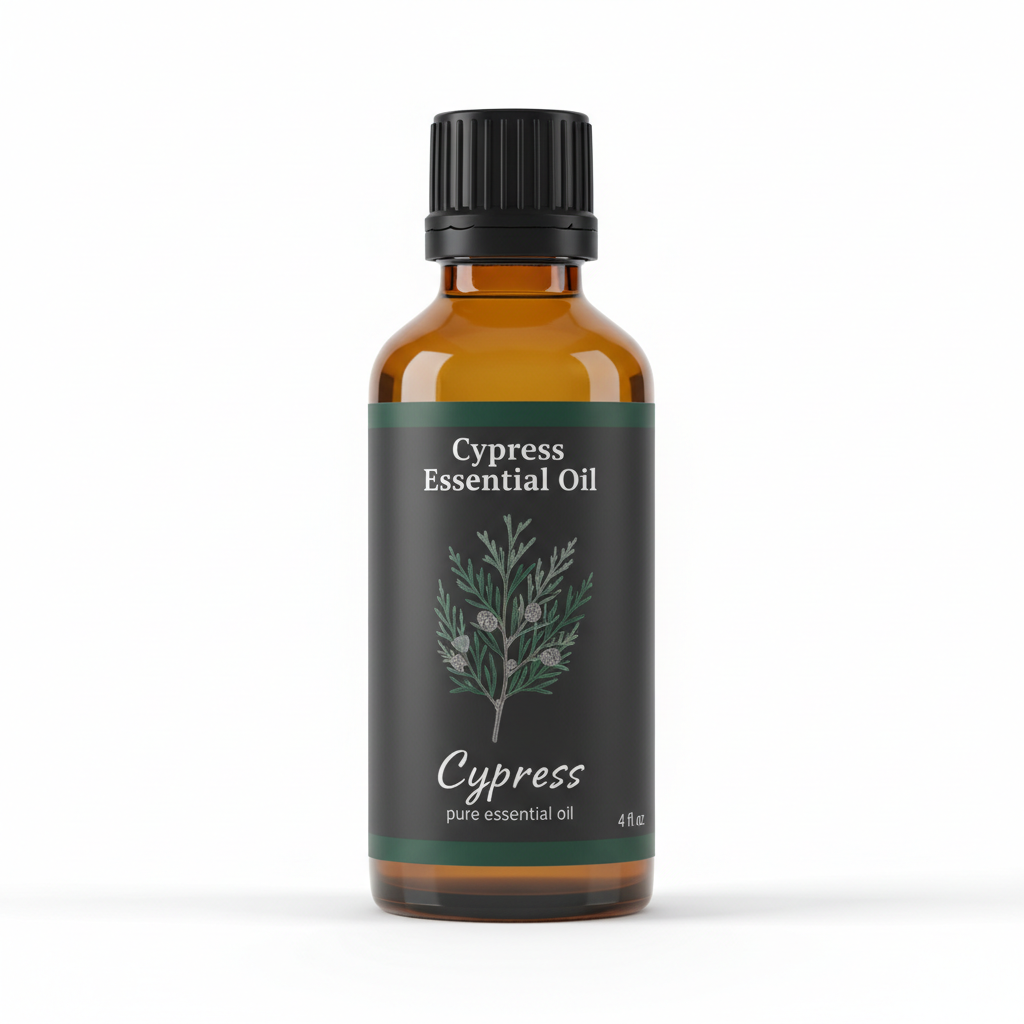
Cypress Essential Oil
Our own Cypress Essential Oil, in sizes from 0.5 oz to bulk.
From $10.99
Shop Now →That is the short answer to how cypress oil is made. The longer answer matters more if you buy the oil, because the process is the same everywhere and the results are not. This walkthrough follows the plant material from branch to bottle, explains what is physically happening at each stage, and points out where a careful producer and a careless one part ways. If you want the broader profile of the oil first, the complete guide to cypress essential oil covers scent, uses, and species.
The Misconception Worth Clearing Up First
"Steam distilled" on a label sounds like a quality claim. It is not. Steam distillation is the standard method for cypress foliage, so a legitimate cypress oil is steam distilled, and that phrase tells you almost nothing about which bottle is better. Cold pressing is for citrus rinds. Solvent extraction is for delicate flowers that cannot survive heat. Cypress needles are tough and resinous, and steam suits them.
The differences between two bottles of cypress oil live in two places: the plant material that went into the still, and the restraint of the person running it. The rest of this article is about those two things.
What a Producer Needs
This is an explainer, not a kitchen project. Distilled oil is concentrated, flammable, and easy to ruin, and a stovetop pot is not a sensible way to find that out. For readers who want to understand the operation, here is the equipment and material list behind a typical run.
- Plant material: fresh foliage (needles and green twigs) and small cones from a correctly identified cypress species, most often Cupressus sempervirens for the Mediterranean-style oil.
- A chipper or cutting tool to reduce bulky branches to small, even pieces.
- A still: a steam source (boiler or a water-filled lower chamber), a charge chamber that holds the plant material, and a vapor line.
- A condenser with a steady supply of cool water.
- A separator (often called a Florentine flask) that collects the condensate and lets oil and water part ways.
- Dark glass or stainless containers for resting and storing the finished oil.
Step 1: Harvest the Right Material at the Right Time
The first step happens long before any heat. A cypress tree makes its aromatic molecules in tiny oil glands in the foliage, and the composition of those molecules shifts with the season, the age of the growth, and the conditions the tree has lived through. Hot, dry sites and cool, wet ones can produce noticeably different oils from the same species. That is why exact figures for any one oil are unreliable and why reputable sellers publish batch-specific analysis rather than a generic profile.
Producers generally harvest green, healthy growth and avoid brown, dead, or heavily shaded material, which carries less of the fresh scent. Small cones are collected along with the needles and twigs because they hold their own resinous character. Timing within the year is a producer's judgment call, and it is one of the quiet variables behind a batch that smells bright and clean versus one that smells flat.
Common mistake: letting cut branches sit in a pile. Volatile molecules begin to escape from cut foliage immediately, and a heap in the sun loses its best material before the still is even lit. Fresh and fast beats a large stockpile.
Step 2: Chip and Load the Still
Whole branches are awkward. Steam follows the path of least resistance, so a loose tangle of big twigs gives it channels to rush through while dense pockets stay untouched. Chipping the material into small pieces exposes more oil glands and makes the charge more even.
Loading is a craft skill. Pack too loosely and steam bypasses most of the plant. Pack too tightly and the steam cannot get through, pressure builds, and the run behaves unpredictably. The aim is a bed that is uniform and lightly firm, with no hollows along the wall of the chamber.
Tip: never fill the chamber to the lid. Leave headroom so foliage does not get carried up the vapor line.
Step 3: Run the Steam, and Understand What It Is Doing
This is the heart of cypress oil distillation, and the mechanics are simple enough to state plainly.
- Steam enters the bottom of the charge and moves upward through the chipped foliage.
- The heat ruptures the oil glands in the needles, twigs, and cones, releasing the aromatic molecules.
- The steam carries those molecules with it as vapor. Many of them boil well above the temperature of steam on their own, but in the presence of steam they travel out together at a lower temperature than they otherwise would. That is the whole reason steam works: it moves the oil without roasting it.
- The mixed vapor goes to the condenser, where cool water on the outside of a coil or tube turns it back to liquid.
- The liquid drops into the separator. Oil and water do not mix, so the oil forms its own layer and is drawn off from the aqueous phase beneath or above it, depending on density.
This is why the cypress needle oil that finally reaches a bottle is chemically a collection of volatile molecules, such as alpha-pinene and related compounds, that were lifted out of the foliage by steam. You can look up the individual compounds on PubChem if you like seeing the structures behind the scent.
Step 4: Collect Two Products, Not One
People picture a still producing oil. It actually produces two things. The oil is the small, concentrated layer. The much larger volume is the water that came off with it, called hydrosol or floral water, which carries a faint, soft version of the plant's scent and trace amounts of dissolved aromatic material. Many producers sell it separately as a gentle aromatic mist, since it is a genuine byproduct and not waste.
The proportions are what surprise newcomers. A big batch of foliage produces a modest quantity of hydrosol and only a small fraction of that mass as oil. Exact yields vary with the season, the origin, the freshness of the material, and the design of the still, and anyone quoting a precise universal number is guessing. What is not in doubt is the arithmetic: a lot of plant in, a little oil out.
That arithmetic is most of the reason real essential oils cost what they cost. Growing or gathering foliage, chipping it, fueling the boiler, and tending the still for hours all gets divided across a small volume of oil. A very low price on a cypress oil should make you ask where the shortfall was made up, whether in cheaper material, a shortened run, or dilution.
Step 5: Judge the Run, Because Time and Heat Shape the Oil
Here is where the operator's restraint shows up in the bottle. Different molecules leave the plant at different rates. Lighter, more volatile ones tend to come over early in the run, and heavier ones come later. The early fractions are generally where the fresh, bright, green-woody top notes live. The later fractions add depth but also heavier, duller, sometimes harsher character.
That produces a real trade-off:
- Running hot or fast raises output quickly but can scorch the material, drive off delicate top notes, and pull in a sharper, rougher profile.
- Running too long squeezes out the last of the oil, but the last portion is often the least pleasant, and it dilutes the fine early character of the batch.
- A gentler, well-judged run gives up some yield for a cleaner, more layered scent.
Some distillers deal with this by collecting fractions separately, others by stopping the run at a chosen point. Either way, the decision to leave oil in the plant because it would not improve the batch is an economic sacrifice, and it is hard to see from outside. It is also why two steam-distilled cypress oils from the same species can smell like different products.
Step 6: Rest, Filter, and Bottle
Fresh oil often smells slightly sharp and unsettled. Producers commonly let it rest in a cool, dark place so that any stray water settles out and the aroma rounds off. The oil is then filtered or decanted off any residue and stored in dark glass with minimal headspace.
The headspace point is chemistry, not fussiness. Alpha-pinene and many other monoterpenes oxidize readily on contact with air, so a half-empty bottle ages faster than a full one. That reasoning applies in your cabinet as much as at the distillery: keep caps tight, keep bottles cool and dark, and choose a smaller size if you use oil slowly.
Common Mistakes That Show Up in the Finished Oil
- Wrong plant, right label. Cypress is a broad name. Blue cypress, Mediterranean cypress, and Japanese cypresses are different plants with different profiles, and the comparison of blue and Mediterranean cypress oil shows how far apart they sit. Wood-derived oils such as the one in hinoki and Japanese cypress oil come from different material and smell different again.
- Overloaded or channeled stills, which leave part of the charge undistilled and the rest overcooked.
- Old or dried material, which gives a thin scent no distillation skill can restore.
- Pushing the last drop. Chasing yield at the end of the run buys a few extra milliliters at the cost of the batch's finish.
- Poor storage after bottling, which undoes careful work through air and light exposure.
What to Expect From a Well-Made Oil
A carefully distilled cypress oil should smell fresh and woody with a clean, slightly resinous green edge, without a burnt, musty, or flat note. Colour is usually pale, from nearly clear to light yellow. Some people report that diffusing it gives a room a crisp, forest-like feel, and many people use it as an aromatic element in a calming evening routine. Individual experience varies, and these are matters of scent and atmosphere, not outcomes anyone can promise.
For any cosmetic or aromatic use, dilute properly, as Robert Tisserand and Rodney Young explain in Essential Oil Safety (2nd edition), and patch test on a small area first. Keep oils away from children and pets; the ASPCA Animal Poison Control Center and US Poison Control are the right places to call if a bottle is swallowed or an animal is exposed. Check with a qualified healthcare provider before using essential oils if you are pregnant, nursing, or taking medication.
Who This Is Not For
If you want a single guaranteed yield figure or a promise about what a particular oil will do, this process does not offer one. Natural variation is built in. And if you want to try distilling at home, treat this as background reading, not instructions: it takes proper equipment, ventilation, and an understanding of fire risk that a short article cannot give.
How to Use This When You Buy
Skip the "steam distilled" line, since every honest bottle has it. Look instead for the botanical name, the plant part used, the country of origin, and a batch-specific analysis. Those details point to the two things that actually separate good cypress oil from ordinary: the material in the still and the patience of the person running it. When you are ready to compare real bottles, the cypress oil shop lists each with its species and origin.