
Blue Cypress vs Mediterranean Cypress Oil: Two Very Different Trees
The word "cypress" on a product label tells you surprisingly little. Pick up a bottle of blue cypress essential oil and a bottle of classic Mediterranean cypress, and you will find two oils that share almost nothing beyond a common name. Different continents, different botanical families, different chemistry, different scent profiles, and genuinely different reasons to reach for one over the other. This guide walks through both oils side by side so you can make a well-informed choice for your collection.
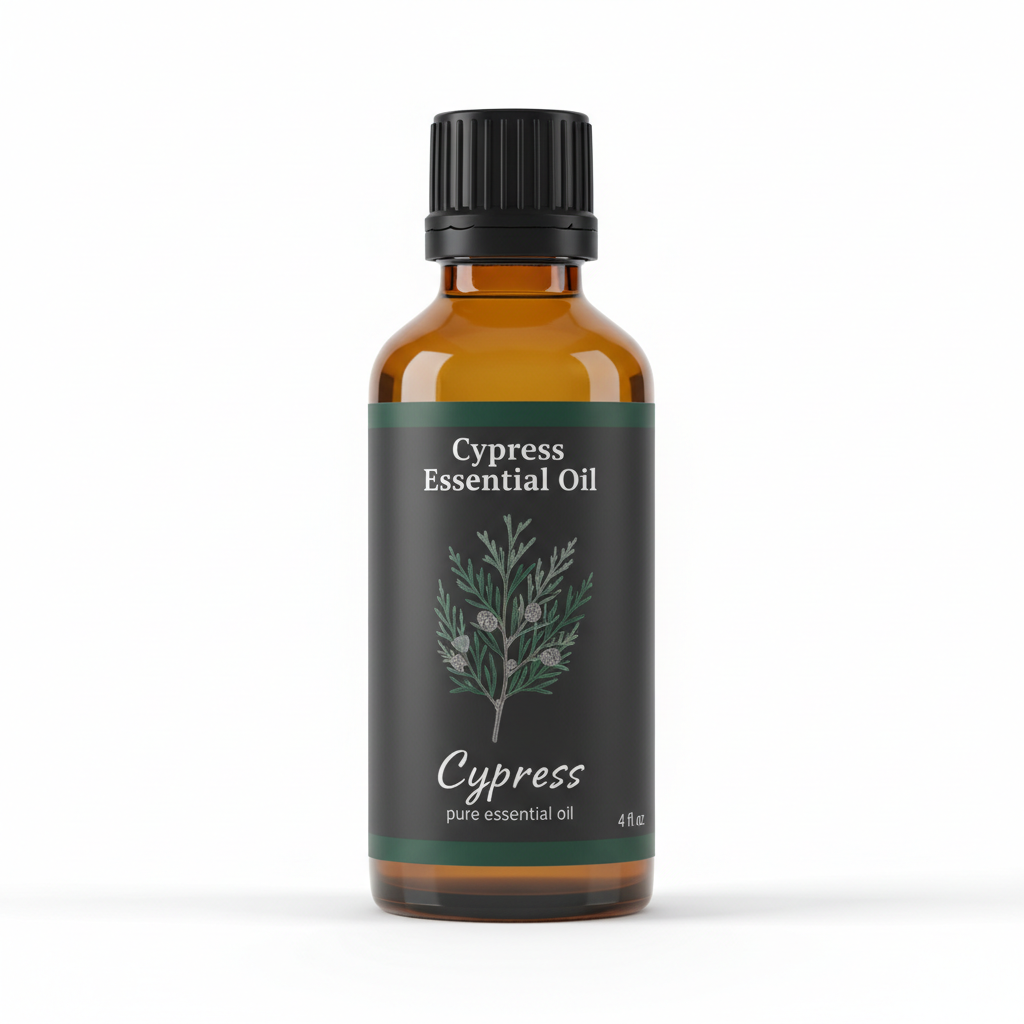
Cypress Essential Oil
Our own Cypress Essential Oil, in sizes from 0.5 oz to bulk.
From $10.99
Shop Now →If you are new to cypress oils in general, the complete guide to cypress essential oil is a good starting point before diving into this comparison.
Meet the Two Plants
Mediterranean Cypress (Cupressus sempervirens)
This is the cypress most people picture: those tall, narrow, dark green columns standing in Tuscan hillsides, Spanish gardens, and Greek landscapes. Cupressus sempervirens belongs to the Cupressaceae family and has been cultivated around the Mediterranean basin for thousands of years. The essential oil is steam-distilled primarily from the young twigs and needles, though some producers use the cones as well. The resulting oil is clear to very pale yellow, with a dry, woody, slightly smoky character and a clean conifer freshness on top.
Major producing regions include France, Spain, Morocco, and Italy. Quality and scent profile can shift noticeably depending on altitude, harvest timing, and distillation method, which is worth keeping in mind when comparing suppliers.
Australian Blue Cypress (Callitris intratropica)
Callitris intratropica is a native Australian tree found primarily in the Northern Territory and parts of Queensland. Despite carrying the "cypress" name, it belongs to a different genus entirely within the Cupressaceae family. The oil is steam-distilled from the heartwood and wood chips, and it is the chemistry of that heartwood that makes this oil genuinely unusual.
Australian blue cypress produces an oil with a naturally occurring deep blue to teal color. That color comes from a group of sesquiterpene compounds, particularly guaiazulene and related azulene-type molecules, which form during the distillation process from precursor compounds in the wood. The scent is warm, rich, and earthy with a soft, almost creamy woodiness. It is notably less sharp than Mediterranean cypress and lingers much longer on the skin.
Key Differences at a Glance
| Attribute | Mediterranean Cypress (C. sempervirens) | Australian Blue Cypress (C. intratropica) |
|---|---|---|
| Botanical family | Cupressaceae | Cupressaceae |
| Origin | Mediterranean Europe, North Africa | Northern Australia |
| Plant part used | Twigs, needles, sometimes cones | Heartwood and wood chips |
| Distillation method | Steam distillation | Steam distillation |
| Color | Clear to pale yellow | Deep blue to teal |
| Scent character | Dry, woody, fresh, conifer-green | Warm, earthy, creamy, smoky-sweet |
| Key constituents | Alpha-pinene, delta-3-carene, cedrol | Guaiazulene, eudesmol, guaiol |
| Viscosity | Thin, mobile | Medium, slightly viscous |
| Blends well with | Citrus, lavender, rosemary, juniper | Sandalwood, vetiver, frankincense, rose |
| Typical price point | Moderate, widely available | Higher, niche availability |
| Sustainability notes | Generally well-managed; check sourcing | Wild-harvested; ethical sourcing critical |
Scent Profile: Nose to Nose
Scent is often the deciding factor, and these two oils sit at opposite ends of the cypress spectrum.
Mediterranean cypress opens with a crisp, slightly resinous freshness. Alpha-pinene, its dominant constituent, gives it that characteristic conifer snap. Delta-3-carene contributes a dry, woody undertone with a faint sweetness. The overall impression is clean and invigorating. It reads as "outdoors" in the most literal sense: cool air, green wood, forest paths.
Blue cypress opens differently. The azulene compounds that give it its color also contribute a distinctly warm, almost balsamic character. It is smoother and heavier on the inhale, sitting closer to patchouli or vetiver territory than to a classic conifer. If Mediterranean cypress is a morning walk through a pine forest, blue cypress is a late evening fire in a cedar cabin.
Neither profile is objectively better. They serve different moods and different formulations.
Chemistry and What It Means for Use
Understanding the basic chemistry of each oil helps explain why they behave so differently in formulas and diffuser blends.
Mediterranean Cypress Chemistry
The high monoterpene content in Mediterranean cypress, primarily alpha-pinene at around 40-65% depending on origin, means the oil is volatile and energetic in diffusion. It moves through air quickly and pairs beautifully with other fresh or citrus notes. The cedrol content, a sesquiterpene alcohol, adds a mild, woody base that gives the blend some staying power.
Some research suggests alpha-pinene may play a role in supporting focused, alert moods during diffusion, though the findings are observational and more human studies are needed.
Australian Blue Cypress Chemistry
The sesquiterpene-heavy profile of blue cypress makes it far more substantive. Guaiazulene, eudesmol, and guaiol are larger molecules that evaporate slowly, which is why blue cypress functions almost like a natural fixative in blends. It also tends to be gentle on skin at appropriate dilutions, though patch testing is always important given the color compounds present.
The azulene-type molecules in blue cypress have attracted some research interest in the context of skin applications. People who use blue cypress in facial formulations often report a sense of comfort and softness, though individual results vary and it is not a substitute for a dermatologist's guidance.
Sourcing and Sustainability
Both oils carry sourcing considerations worth knowing.
Mediterranean cypress is farmed or wild-harvested across a broad geographic range, and most commercial supply comes from cultivated sources. Quality is generally consistent, though cheaper oils are sometimes adulterated with synthetic alpha-pinene or blended with other conifer oils. Look for suppliers who provide GC/MS (gas chromatography/mass spectrometry) reports.
Australian blue cypress presents a more complex picture. Callitris intratropica is wild-harvested from Northern Territory woodlands, and the industry has historically operated with limited oversight. Reputable producers work with indigenous communities and hold sustainable harvesting certifications, which is something worth asking about directly before purchasing. The higher price of genuine blue cypress reflects both rarity and the complexity of responsible wild-harvest operations. Be cautious of unusually cheap blue cypress oils, as adulteration with synthetic azulene or guaiazulene is documented in the market.
Pros and Cons
Mediterranean Cypress: Pros
- Widely available and straightforward to source
- Versatile, fresh scent that blends easily
- Moderate price point suits everyday use
- Color-free, so no staining concerns in fabric or cosmetic formulas
- Strong track record in aromatic and cosmetic applications
Mediterranean Cypress: Cons
- Adulteration is common at lower price points
- Top-note dominant; does not anchor blends on its own
- Scent may feel familiar or generic to experienced formulators
- Less useful as a cosmetic ingredient due to lighter constituents
Australian Blue Cypress: Pros
- Distinctive, complex scent profile with strong fixative qualities
- Rich sesquiterpene content makes it a standout cosmetic ingredient
- Visually striking blue color adds an artisan quality to products
- Long-lasting on skin and in blends
- Genuinely different from anything else in the conifer family
Australian Blue Cypress: Cons
- Higher price point limits casual or high-volume use
- Blue pigment may stain light fabrics and some plastics
- Niche availability means fewer supplier options
- Sustainability varies significantly by producer
- The warm, earthy scent is polarizing and not universally loved
Best For: Use Case Recommendations
Diffuser Blends for a Focused Daytime Atmosphere
Mediterranean cypress is the better choice here. Its bright, dry freshness works well in morning or daytime diffusion, particularly paired with lemon, rosemary, or juniper berry. Blue cypress can feel heavy in a daytime setting unless used very sparingly as an accent note.
Calming Evening and Bedtime Wind-Down Rituals
Blue cypress earns its place in an evening diffuser blend or a pre-sleep body oil. Its warm, grounding character pairs beautifully with sandalwood and vetiver for a slow, settling atmosphere. Mediterranean cypress can work in evening blends too, especially with lavender, but it tends to feel more energizing than restful.
Facial Serums and Cosmetic Formulations
Blue cypress is increasingly sought after by independent cosmetic formulators for its skin-feel properties and the research interest around its sesquiterpene content. Mediterranean cypress is less commonly used in facial formulas, though it appears in some toners and mists. Always dilute either oil appropriately (typically 0.5-1% in facial products) and patch test before use. For broader safety guidance, see the article on cypress oil phototoxicity, dilution, and safety.
Perfumery and Natural Fragrance Work
Experienced natural perfumers use both, but for different roles. Mediterranean cypress acts as a fresh middle or top note, adding an aromatic, woody lift. Blue cypress functions as a base note and fixative, extending the longevity of a blend while adding depth. Combining them can be surprisingly effective if the overall formula has the complexity to carry both.
Budget-Conscious Building of an Oil Collection
Mediterranean cypress is the practical starting point. It is affordable, flexible, and easy to find in verified quality. Blue cypress is worth the investment once you know how you plan to use it, but its higher cost and niche sourcing make it less ideal as a casual introduction to cypress oils.
A Note on the Wider Cypress Family
Mediterranean cypress and Australian blue cypress are not the only members of this broad aromatic family worth knowing. Hinoki, the sacred Japanese cypress (Chamaecyparis obtusa), offers yet another distinct profile with its own cultural and aromatic history. If the wooden, forest character of these oils appeals to you, the guide to hinoki and Japanese cypress oil is worth exploring alongside this comparison.
Safety Reminders for Both Oils
A few practical notes apply to both oils regardless of which you choose.
- Always dilute in a carrier oil before skin application. A typical dilution for body use is 1-2%, and lower for facial use or sensitive skin.
- Patch test on a small area before applying to larger skin surfaces.
- Blue cypress oil may temporarily stain light fabrics and some packaging materials due to its natural pigment compounds.
- Neither oil should be used undiluted. The concentrated nature of essential oils means even plant-derived materials can cause skin reactions at full strength.
- Consult a qualified healthcare provider before using either oil if you are pregnant, nursing, or have any existing health considerations.
- Keep all essential oils out of reach of children and away from eyes and mucous membranes.
The Verdict
These are not competing products. They happen to share a common name, but they are genuinely different materials with different strengths, different sourcing realities, and different reasons to be in a collection.
Mediterranean cypress is the workhorse: accessible, versatile, and a reliable aromatic presence in blends ranging from diffusers to room sprays to hair care. It suits people who want a clean, woody freshness without a significant investment of cost or research.
Australian blue cypress is the specialist. Its rich chemistry, distinctive color, and grounding depth make it a fascinating ingredient for those willing to pay more and source carefully. It rewards formulators who take the time to understand it, and its fixative properties alone can justify the cost in the right project.
The choice comes down to your specific use case, your budget, and whether you find the warm, earthy complexity of blue cypress compelling enough to seek it out. Many enthusiasts find room for both once they understand that these are complementary oils, not interchangeable ones.