
Is Cypress Essential Oil Phototoxic? Dilution and Safety Basics
Cypress essential oil has a clean, woody, resinous scent that makes it a favourite in skincare blends, diffuser formulas, and body care products. But before you blend it into a facial serum or a summer body oil, it is worth pausing on a few safety questions. Is cypress essential oil phototoxic? How much is too much on the skin? And what do sourcing and quality have to do with any of this?
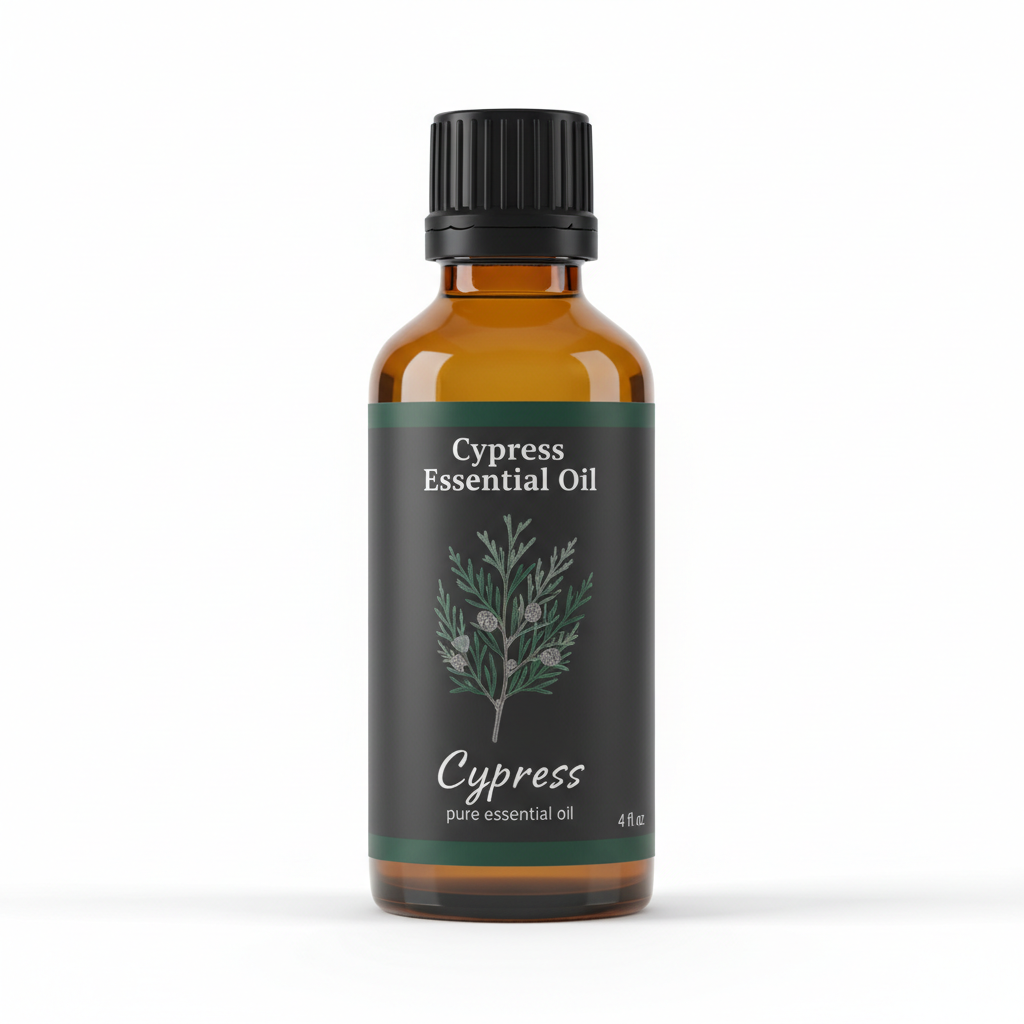
Cypress Essential Oil
Our own Cypress Essential Oil, in sizes from 0.5 oz to bulk.
From $10.99
Shop Now →The questions below are grouped by theme so you can jump straight to what matters most to you. Whether you are new to working with cypress or refining a well-established blending practice, these answers should give you a solid, honest foundation.
Phototoxicity: The Basics
1. What does phototoxicity mean in the context of essential oils?
Phototoxicity refers to a skin reaction that can occur when certain compounds in an essential oil interact with ultraviolet (UV) light after being applied to the skin. The result can range from temporary redness and darkening of the skin to more pronounced irritation, depending on concentration and UV exposure. It is not the oil itself that is the problem in isolation: it is the combination of those specific compounds, skin contact, and sunlight (or tanning beds).
2. Which types of essential oils are most commonly phototoxic?
Cold-pressed citrus oils are the most widely recognised phototoxic essential oils. Bergamot, lime, lemon, and bitter orange all contain furanocoumarins, particularly bergapten, which are the compounds responsible for phototoxic reactions. Some other botanicals, including certain members of the carrot family, also carry phototoxic risk.
3. Is cypress essential oil phototoxic?
No. Cypress essential oil (Cupressus sempervirens) is not considered phototoxic. It does not contain furanocoumarins or other recognised phototoxic compounds at significant levels. You can apply a properly diluted cypress blend to skin that will be exposed to sunlight without the same concerns that come with cold-pressed citrus oils.
4. Could adulterated or blended cypress oil ever carry phototoxic risk?
Yes, and this is a real-world quality concern. If a product labelled as cypress oil has been adulterated with citrus components or other phototoxic oils to bulk out the blend or alter the scent profile, the resulting product could carry phototoxic risk that pure cypress would not. This is one reason why purchasing from suppliers who provide gas chromatography / mass spectrometry (GC/MS) reports matters: you can verify what is actually in the bottle.
Dermal Maximum and Dilution Guidelines
5. What is a dermal maximum, and why does it matter for cypress essential oil?
A dermal maximum is the upper limit of concentration at which an essential oil is considered safe for use on the skin, expressed as a percentage of the total formula. It exists because even non-phototoxic oils can cause sensitisation or irritation at high concentrations over time. Staying within established limits protects your skin and helps ensure long-term, comfortable use.
6. What is the cypress essential oil dermal maximum according to Tisserand and Young?
Robert Tisserand and Rodney Young's reference work Essential Oil Safety is the most widely cited source on dermal limits in professional aromatherapy. For cypress essential oil (Cupressus sempervirens), Tisserand and Young indicate a dermal maximum of around 10% for most leave-on and rinse-off skin applications. This figure accounts for the oil's alpha-pinene content and its theoretical cumulative sensitisation potential.
7. Does a 10% dermal maximum mean I should use cypress at 10% in my blends?
Not necessarily. A dermal maximum is a ceiling, not a recommendation. Most everyday body oil and lotion blends work well with essential oils at 1% to 3%, and facial products are typically kept even lower, around 0.5% to 1%. The 10% figure simply tells you where the upper boundary of safety sits, not where your formula should land.
8. How do I calculate a 1% dilution with cypress oil at home?
A practical starting point: one drop of essential oil in approximately 5 ml of carrier oil gives you roughly a 1% dilution. For a standard 30 ml blend, that works out to about 6 drops total for a 1% concentration. Use a digital scale and measure by weight rather than drops when precision matters, because drop sizes vary between oils and dropper types.
9. Are dilution guidelines different for facial blends versus body care products?
Yes. Facial skin, especially around the eyes and lips, tends to be more reactive than skin on the arms or legs. Many formulators keep facial blends at 0.5% to 1% as a precaution, particularly for daily-use serums or moisturisers. Body care products used on sturdier areas of skin are often formulated at 1% to 3%, with athletic or foot-focused blends occasionally going higher while still staying well within safe limits.
Skin Sensitisation and Oxidation
10. Can cypress essential oil cause skin sensitisation?
At reasonable dilutions, cypress is considered a relatively low-risk oil for sensitisation. However, like most essential oils high in monoterpenes such as alpha-pinene, cypress is more likely to cause sensitisation issues if the oil has oxidised. Proper storage and staying within established dermal limits are the main safeguards most formulators rely on.
11. What is oxidation, and how does it affect cypress oil safety?
Oxidation happens when essential oil molecules react with oxygen, heat, or light over time, changing the chemical composition of the oil. In cypress, oxidised alpha-pinene in particular may become more likely to irritate skin than the fresh compound. An oil that smells flat, sharp, or noticeably different from when you first opened it may have oxidised and is best retired from skin-use applications.
12. How should I store cypress essential oil to slow oxidation?
Keep the bottle tightly sealed, stored in a cool and dark environment, away from heat sources and direct sunlight. Amber or dark glass bottles are better than clear ones for long-term storage. If you buy larger quantities, consider decanting into smaller working bottles so that the bulk of your stock stays sealed and unexposed to air for as long as possible.
13. Should I always do a patch test before using a cypress blend on my skin?
Yes, a patch test is always a sensible step, regardless of how low-risk an oil is generally considered. Apply a small amount of the diluted blend to the inside of your forearm, leave it for 24 hours without washing, and watch for redness, itching, or any other unusual response. This is particularly worth doing when you are using a new batch from a different supplier or a new blend formula.
Special Populations and Precautions
14. Is cypress essential oil safe to diffuse around children?
Diffusing generally poses less direct risk than topical application because concentrations in the air are much lower. That said, many experts suggest using caution with any essential oil around very young children, particularly infants, and always diffusing in a well-ventilated space with the option to move the child away. If you have specific concerns about a child's sensitivities, a qualified healthcare provider is the right person to consult. You can also read more about the botanical origins of this oil in our guide to the Mediterranean cypress tree, its groves, and its symbolism.
15. Are there any precautions for using cypress oil during pregnancy?
General guidance in the aromatherapy community recommends approaching all essential oils with extra caution during pregnancy, particularly during the first trimester. Cypress is not among the most frequently flagged oils, but the honest answer is that the evidence base for essential oil safety in pregnancy is limited. Consulting a midwife or qualified healthcare provider before incorporating any essential oil into a pregnancy routine is the most responsible approach.
16. Can people with sensitive skin use cypress essential oil?
People with reactive or sensitive skin can often use cypress in well-diluted formulas without issue, but lower dilutions (0.5% or below for leave-on products) are a reasonable starting point. A patch test is especially worthwhile for anyone who knows their skin tends to react to botanical ingredients. Choosing a fresh, high-quality oil that has been properly stored reduces the risk further.
Sourcing, Quality, and What to Look For
17. Does the country of origin affect the safety profile of cypress essential oil?
Origin influences the chemical composition of the oil, which in turn affects both scent and how the oil performs in blends. Cypress from Mediterranean regions such as Spain, France, and Morocco tends to be rich in alpha-pinene and cedrol, which shape the oil's characteristic dry, woody character. Significant compositional variation between origins can also mean slight differences in how the oil behaves on skin, which is another reason GC/MS reports are useful for formulators. For a broader overview, see our article on what cypress essential oil is and how it is produced.
18. What should a GC/MS report for cypress oil tell me?
A GC/MS (gas chromatography / mass spectrometry) report breaks down the chemical constituents of the oil and their percentages. For cypress, you would expect to see alpha-pinene as a dominant component, alongside compounds such as delta-3-carene, limonene, sabinene, and cedrol. Unexpected constituents or percentages that fall well outside established ranges for Cupressus sempervirens can indicate adulteration or misidentification of the plant species.
19. Are all plants called "cypress" the same species?
No, and this matters more than many buyers realise. The name "cypress" is applied to a number of different trees across the botanical world. The oil discussed in most aromatherapy safety references is Cupressus sempervirens, the Mediterranean or Italian cypress. Other species sold as cypress oil, including blue cypress (Callitris intratropica) and Leyland cypress, have different chemical profiles and should be evaluated on their own merits.
20. How can I tell if a cypress oil is good quality before I buy it?
Look for a supplier who lists the full botanical name (Cupressus sempervirens), the plant part (typically the branches and twigs, sometimes cones), the country of origin, the extraction method (steam distillation), and ideally a batch-specific GC/MS report. Pricing that seems unusually low compared to other reputable suppliers is worth questioning. Genuine cypress oil has a dry, green, slightly smoky woodiness that is fairly distinctive once you know it well.
Blending, Aromatics, and Practical Use
21. Can I use cypress essential oil in a citrus-heavy blend without worrying about phototoxicity?
Cypress itself will not add phototoxic risk to a blend. However, if the blend also contains cold-pressed bergamot, regular (non-furocoumarin-free) lemon, or cold-pressed lime, those citrus components still carry their own phototoxic potential. The safest approach is to use furocoumarin-free (FCF) versions of phototoxic citrus oils in any skin blend that may be applied before sun exposure, regardless of whether cypress is in the formula.
22. What carrier oils pair well with cypress for a skin blend?
Cypress has a dry, woody scent that blends harmoniously with lighter, less dominant carrier oils. Jojoba (technically a liquid wax), squalane, and rosehip oil are popular choices for facial-focused blends. For body applications, sweet almond, fractionated coconut, and apricot kernel all work well without overpowering the aromatic profile of the cypress.
23. What does cypress essential oil smell like, and how does it behave in a blend?
Cypress has a dry, clean, resinous-green scent with a faintly smoky or balsamic undertone. It sits in the middle-to-base note range, meaning it lingers a little longer than top notes like bergamot but does not anchor a blend as heavily as a true base note such as vetiver or sandalwood. It works as both a supporting character and a focal point, depending on the concentration used. If you are searching for oils with a similar aromatic character, our article on cypress essential oil substitutes and close matches covers several useful alternatives.
24. Is cypress safe to use in a diffuser blend without dilution in a carrier oil?
For ultrasonic diffusers and nebulisers, you use undiluted essential oil directly in the device, and this is standard practice. A few drops of cypress in a diffuser running in a well-ventilated room is a common and generally well-tolerated approach for those who enjoy its clean, forest-like atmosphere. Direct inhalation from the bottle or from a personal inhaler stick is also widely used and poses considerably less skin contact risk than topical application.
25. Is there anything I should avoid combining with cypress oil in a topical blend?
There are no widely documented incompatibilities specific to cypress essential oil in topical blends. The main considerations are cumulative concentration (keeping the total essential oil load within safe limits when blending multiple oils), and the status of any co-ingredients that carry their own contraindications. Always assess the safety profile of each oil in a blend individually, and when in doubt, consult a qualified aromatherapy practitioner or a current edition of a reputable safety reference such as Tisserand and Young.