
Cypress Essential Oil Substitutes: Close Matches for Your Blend
Running low on cypress, or simply curious about what else might capture that cool, resinous, forest-fresh character in your diffuser or skincare blend? You are not alone. Cypress essential oil has a distinctive profile that many formulators come to rely on, and finding a good cypress essential oil substitute requires understanding what makes cypress unique in the first place.
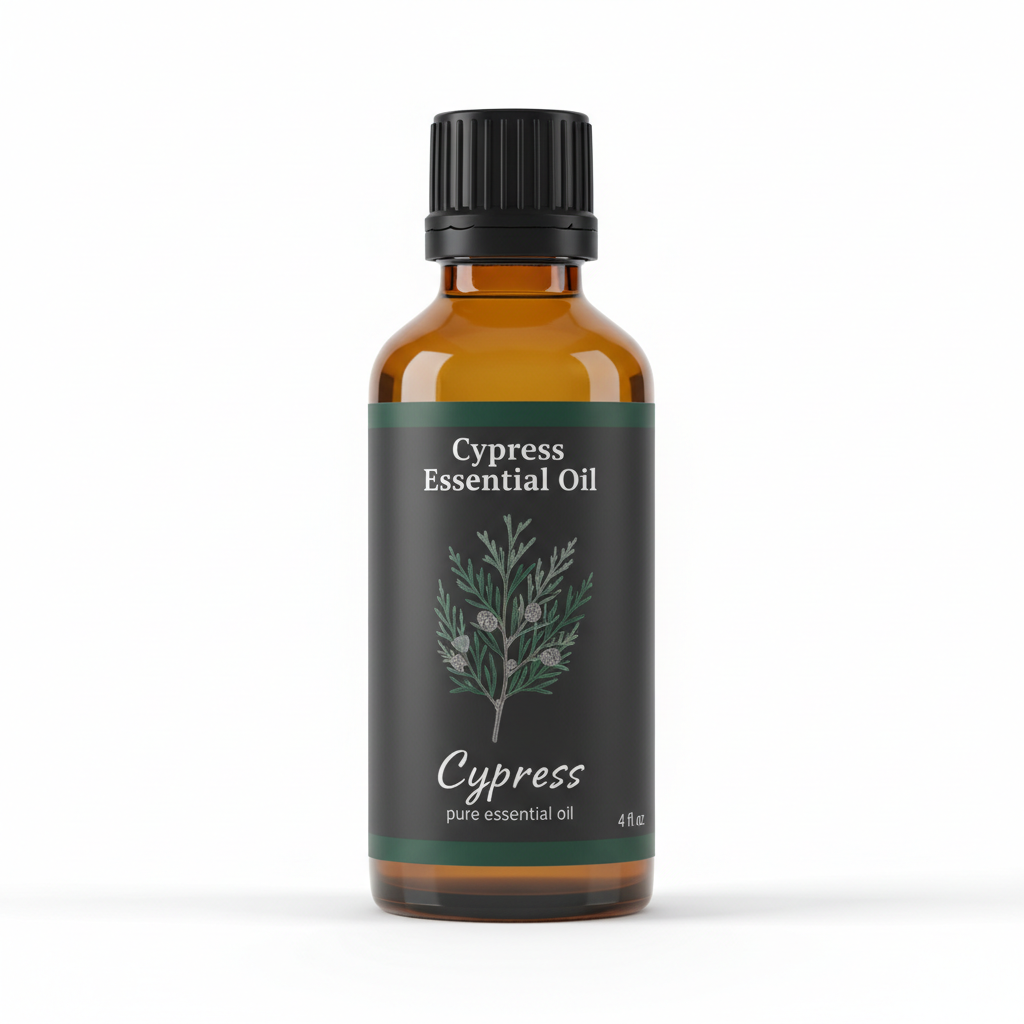
Cypress Essential Oil
Our own Cypress Essential Oil, in sizes from 0.5 oz to bulk.
From $10.99
Shop Now →This FAQ guide walks through the most common questions about oils similar to cypress, organized by topic so you can jump straight to what matters for your project. For a deeper background on the oil itself, see our complete guide to cypress essential oil.
Understanding Cypress Essential Oil Before You Substitute
Q1: What does cypress essential oil actually smell like?
Cypress has a dry, woody, slightly smoky scent with a clean green quality that many people associate with mountain air or an old-growth forest after rain. There is a faint citrus edge in some batches, depending on the source. This complexity is worth keeping in mind when you shop for a substitute, because no single oil will replicate every facet perfectly.
Q2: Why would someone need an essential oil substitute for cypress?
The most common reasons include cost, availability, personal scent preference, or sensitivity to specific compounds in cypress oil. Some formulators working on large batches simply need a more budget-friendly option with a compatible aromatic profile. Others are blending for someone with a known sensitivity and want to keep the overall character of the blend intact.
Q3: What are the main aromatic characteristics I should try to match?
Focus on three qualities: the dry woody base, the crisp green top note, and the slight resinous depth. A substitute that covers even two of these three will feel coherent in a blend. You may need to combine two oils to capture all three at once.
Top Single-Oil Substitutes
Q4: Is juniper berry the closest cypress essential oil substitute?
For many blenders, yes. Juniper berry shares that clean, piney, slightly fruity freshness while still sitting in the dry-woody family. It tends to be brighter and a little more citrus-forward than cypress, so you may want to use it at a slightly lower percentage if you are aiming for a calm, grounded diffuser blend. It is one of the most recommended oils similar to cypress across both aromatic and cosmetic applications.
Q5: How does cedarwood compare as a substitute?
Cedarwood (Atlas, Virginia, or Himalayan) offers a warmer, creamier take on the woody family. It lacks the bright green top note of cypress but brings excellent depth and a soft balsamic quality. If your original blend leaned heavily on cypress for grounding rather than freshness, cedarwood is a strong choice. Himalayan cedarwood in particular has a gentle sweetness that pairs well with citrus oils.
Q6: Can I use pine essential oil instead of cypress?
Pine is a practical essential oil substitute for cypress when you want that forest-fresh quality at a lower price point. Scots pine or black spruce are closer in character than generic pine blends, which can sometimes smell more like a cleaning product than a botanical ingredient. Look for a steam-distilled needle oil from a reputable supplier for the best aromatic fidelity.
Q7: What about fir needle or silver fir?
Fir needle oils (silver fir, balsam fir, Douglas fir) are excellent when you want a greener, more herbaceous substitute with a cool, almost icy edge. They tend to be softer than pine and less resinous than cedarwood, which makes them very blendable. Silver fir in particular works beautifully in diffuser blends where cypress would have added lift and airiness.
Q8: Is frankincense a reasonable substitute?
Frankincense is a worthwhile substitute if the resinous depth of cypress is what you are trying to preserve. It will shift the blend toward a more meditative, incense-like character rather than the green freshness of cypress. Used alongside a brighter oil like lemon or juniper berry, frankincense can anchor a blend convincingly when cypress is unavailable.
Q9: What about sandalwood?
Sandalwood is richer and creamier than cypress and will move a blend in a distinctly different direction. It is worth considering only when the goal is a smooth, lingering base note and the green freshness of cypress is not essential to your formula. Given sandalwood's premium price, it is rarely the most practical substitute for everyday blending.
Blending Two Oils to Replace Cypress
Q10: Can I combine two oils to get closer to cypress's full profile?
Absolutely, and many experienced formulators prefer this approach. Combining a woody base (cedarwood or sandalwood) with a fresh top note (juniper berry, fir needle, or a small amount of lemon) can produce a surprisingly convincing stand-in. Start with roughly 70 percent of the woody oil and 30 percent of the fresh oil, then adjust to your nose.
Q11: What is a good two-oil blend for a diffuser when I am out of cypress?
Try three drops of juniper berry with two drops of Atlas cedarwood. This combination covers the crisp green note and the warm woody base reasonably well. You can add a single drop of frankincense if you want to push the blend toward a more resinous, forest-floor character.
Q12: What two-oil blend works best in a skincare formula as an essential oil substitute for cypress?
For a leave-on product such as a facial oil or balm, a blend of Himalayan cedarwood and silver fir at the same combined dilution you would have used for cypress tends to blend smoothly with carrier oils. Always patch test any new combination before wider use, and keep total essential oil content within safe dilution ranges for the product type.
Substitutes by Use Case
Q13: Which substitute works best in a diffuser blend for a calm evening atmosphere?
Silver fir or Scots pine are popular choices for evening diffuser blends where you want a quiet, woodsy backdrop without anything sharp or citrus-heavy. Both oils layer well with lavender and bergamot if you are building a longer, more complex diffuser blend for a wind-down routine.
Q14: What substitute suits a masculine or unisex cologne-style blend?
Vetiver, used at a low percentage, combined with juniper berry and a small amount of black spruce, creates a convincing woodsy profile that reads as grounded and crisp. This trio can stand in for cypress in alcohol-based room sprays or personal fragrance blends where you want that outdoorsy, coniferous quality without the oil itself.
Q15: What oil can replace cypress in a hair care or scalp product?
Rosemary (specifically ct. camphor or ct. verbenone, depending on your formula's needs) is a commonly used aromatic complement in hair care products where cypress has been called for. It has a sharper, more herbaceous character but blends well with the woody notes that typically accompany cypress in scalp-focused formulas. Always dilute properly in a carrier appropriate for hair application.
Q16: Are any of these substitutes pet-safe?
This is an important question, and the honest answer is: consult a veterinarian before using any essential oil around animals. Cypress itself raises specific questions for pet owners, which we cover in detail in our article on cypress oil and dogs. Many substitutes including pine, cedarwood, and juniper berry also carry cautions around pets, so professional guidance is essential before diffusing any of these oils in a home with animals.
Quality and Sourcing Questions
Q17: Does the quality of the substitute oil matter as much as it does for cypress?
Yes, perhaps even more so. Many of the conifer oils (pine, fir, spruce) oxidize relatively quickly, and a low-quality or old batch can smell flat, harsh, or chemical rather than fresh and botanical. Look for oils that carry a distillation date, come from a named source region, and are stored in dark glass. A poor-quality substitute will not just fail to replicate cypress; it may undermine the entire blend.
Q18: Are there sustainability concerns with any of these substitute oils?
Sandalwood has well-documented sustainability pressures depending on the source species and country of origin, so always verify whether the supplier uses sustainably managed or plantation-grown material. Atlas cedarwood from Morocco has faced similar scrutiny in the past, though certified sustainable sources do exist. Juniper berry and fir needle are generally considered lower-risk choices from a sourcing standpoint.
Q19: What does GC/MS testing mean for substitute oils, and why should I care?
GC/MS (gas chromatography/mass spectrometry) testing reveals the exact chemical composition of an essential oil batch, confirming its identity and flagging any adulterants. When you switch to a new substitute oil from an unfamiliar supplier, a GC/MS report gives you confidence that you are working with a genuine botanical oil rather than a blended or extended product. Reputable suppliers will share these reports on request or post them publicly.
Practical Blending and Safety
Q20: What dilution rate should I use when substituting a new oil in an existing formula?
Start at the same dilution rate you were using for cypress and assess from there, keeping total essential oil content within guidelines for the product type (typically 1 to 2 percent for leave-on skin products, up to around 3 percent for rinse-off products, and variable for diffusion). Changing the oil itself can change the overall intensity, so adjust gradually and always perform a patch test on a small area of skin before full application.
Q21: Can I use the same substitute in every application where I used cypress?
Probably not one single substitute for every context. Juniper berry is bright enough to work well in diffuser blends and room sprays but may be too assertive in a delicate facial serum. Himalayan cedarwood suits skin-facing products beautifully but can feel heavy in a light daytime diffuser blend. Keep a small selection of two or three cypress-adjacent oils on hand and choose based on the specific blend's needs.
Q22: Are there any safety differences between cypress and its common substitutes?
Each oil carries its own safety profile. Pine and fir needle oils can be sensitizing if oxidized, so using fresh stock and storing properly matters a great deal. Juniper berry should be avoided in certain situations; consult safety references such as the IFRA guidelines or Robert Tisserand's Essential Oil Safety before formulating. Never assume that because cypress was suitable for a particular use, its substitute will be equally so.
Q23: How do I adjust fragrance percentages when swapping oils?
Some substitutes are stronger or more tenacious than cypress. Vetiver, for example, is significantly more persistent and can overpower a blend if used at the same percentage as cypress. Pine and fir needle tend to dissipate faster in a diffuser than cypress does, which means you may need slightly more to achieve the same room presence. Blend in small test batches first, note your ratios, and scale up only once you are satisfied with the result.
Q24: What should I look for on a supplier's product page when buying a substitute oil?
Look for the Latin botanical name, the plant part used (needles, berries, wood, resin), the country of origin, the extraction method, and ideally a batch number linked to a GC/MS report. These details tell you far more about what you are actually buying than marketing language does. For background on why sourcing details matter so much in this category, our article on the Mediterranean cypress tree, its groves, and its symbolism explores how geography shapes the character of conifer oils.
Q25: Where can I learn more about cypress itself before deciding whether to substitute?
Our complete guide to cypress essential oil covers everything from botanical origin and distillation methods to aromatic character and blending suggestions. Sometimes the best outcome is sourcing a higher-quality cypress rather than substituting at all. Knowing what genuine, well-sourced cypress smells and performs like gives you a much clearer benchmark for evaluating any substitute you try.
Quick-Reference Substitute Guide
| Substitute Oil | Aromatic Character | Best Use Case | Blending Notes |
|---|---|---|---|
| Juniper Berry | Crisp, piney, slightly fruity | Diffusion, room sprays | Use slightly less; bright and assertive |
| Atlas Cedarwood | Warm, creamy, woody | Skin-facing products, base notes | Pairs well with citrus and florals |
| Scots Pine | Fresh, green, resinous | Diffusion, candles, room sprays | Use fresh stock; oxidizes relatively quickly |
| Silver Fir | Cool, soft, balsamic | Evening diffuser blends | Very blendable; fades faster than cypress |
| Frankincense | Resinous, incense-like, slightly citrus | Diffusion, meditative blends | Pair with a bright top note for balance |
| Himalayan Cedarwood | Gentle, sweet, woody | Facial oils, hair care formulas | Soft and skin-friendly at proper dilution |
A good substitute does not try to be identical. It preserves the spirit of the blend while bringing its own honest character. Work with your oils rather than against them, and keep notes as you go.