
Cypress in Perfumery: Building Green Woodland Accords
Cypress earns its place in perfumery by doing one job better than almost anything else in the woody category: it smells like air moving through needles, not like a candle labeled "forest." Perfumers reach for it to build a green woodland accord, the cluster of notes that reads as cool, resinous, and outdoors rather than warm and sweet. Where cedarwood and sandalwood sit back and hum, cypress cuts a clean, slightly peppery line through a blend. That cutting quality is the whole reason it works, and it's also the reason it's easy to overdose.
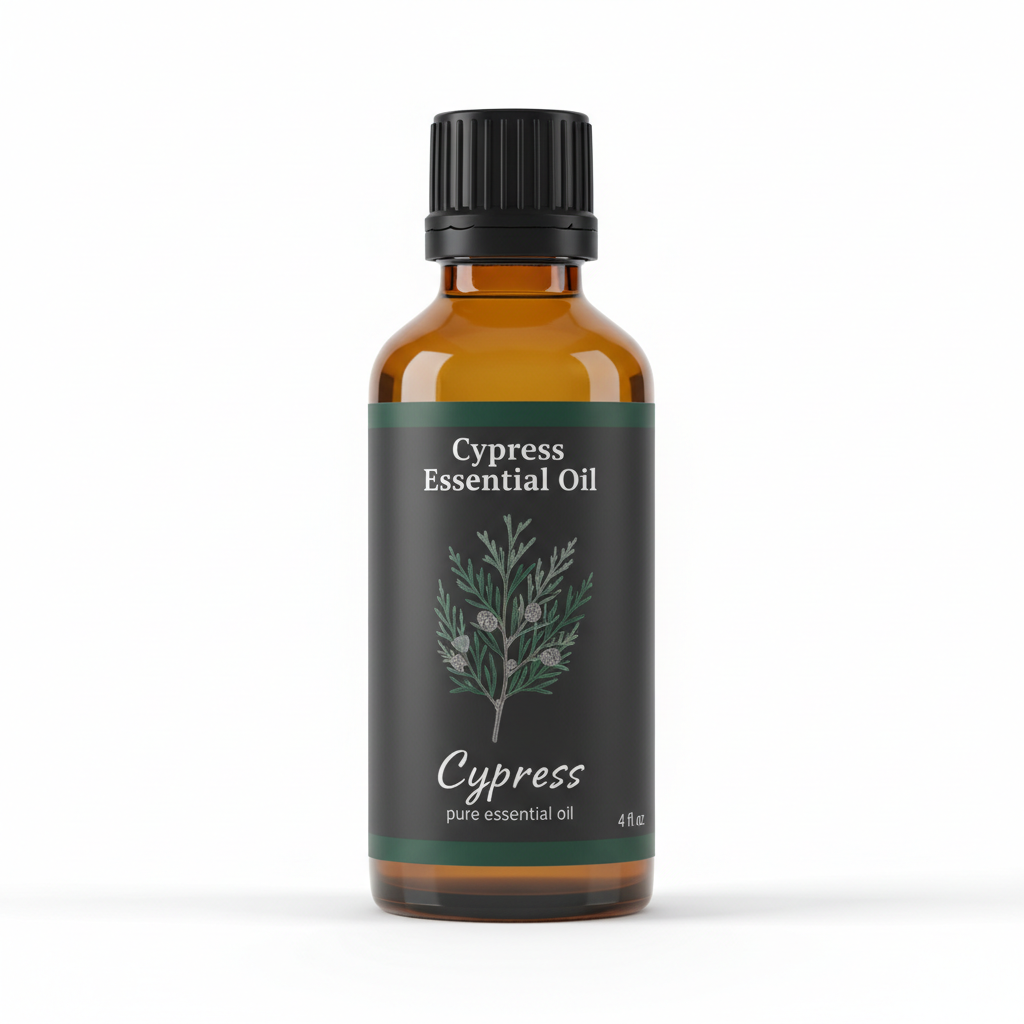
Cypress Essential Oil
Our own Cypress Essential Oil, in sizes from 0.5 oz to bulk.
From $10.99
Shop Now →What's actually in the bottle
Steam-distilled cypress oil (Cupressus sempervirens) is a mix dominated by monoterpenes, and that family of molecules explains most of what you smell. According to PubChem's compound records, the major constituents typically include alpha-pinene, delta-3-carene, and sabinene, with smaller amounts of terpinen-4-ol and cedrol rounding out the profile. Alpha-pinene alone can account for a large share of the oil by volume depending on the batch, and it's the molecule responsible for the sharp, turpentine-adjacent top note you get on first smell straight from the bottle.
That top note fades fast. Within a few minutes on skin or paper, the lighter pinene and sabinene fractions evaporate and what's left leans more toward the cedrol and other sesquiterpene traces, which read as drier and woodier. This is why cypress smells like two different things depending on when you check the blotter: sharp and green at minute one, soft and woody at minute thirty. A perfumer working with cypress has to smell it at both ends, not just at the top.
Composition varies more than labels suggest
Chemical composition studies on cypress oil, typically using gas chromatography-mass spectrometry, consistently find real variation in alpha-pinene percentage across growing regions, harvest season, and even which part of the tree was distilled (needle versus cone versus wood). Research of this kind is useful for understanding why two bottles labeled simply "cypress essential oil" can smell noticeably different: one leans sharp and resinous, another leans soft and almost citrus-adjacent. None of this research supports claims about what the oil does inside the body. It documents what's in the bottle, which is the part that matters for a perfumer deciding how much to use.
Where cypress sits in an accord
Perfume structure is usually described in three layers: top notes (the first few minutes, mostly light, volatile molecules), heart or middle notes (the body of the scent, roughly the first few hours), and base notes (the slow-evaporating anchor that lingers longest and also slows down everything else). Cypress is unusual because it behaves like a bridge. Its pinene fraction acts almost like a top note, sharp and quick, while its woodier trailing compounds pull it toward the heart. In practice, perfumers treat it as a green heart note: it arrives after the citrus and herbal top notes have started to settle, and it's the material most responsible for making a blend smell like a living plant rather than a flat accord of "woody" and "fresh" aroma chemicals.
This is the role cypress plays in a Green Woodland accord specifically. Bergamot or another citrus opens the blend and disappears quickly. Cypress and a green, slightly sharp material like petitgrain carry the middle, doing the work of making the thing smell outdoors. Cedarwood and a resin like frankincense sit underneath, holding the shape together once the brighter top notes are gone. Readers who want the plainer, non-perfumery uses of this oil, diffusing, cleaning blends, simple roll-ons, can find a fuller rundown in our complete guide to cypress essential oil uses at home, and a shorter list of quick ideas in 15 fresh ways to use cypress essential oil at home.
Safety profile and who should be cautious
Cypress oil is pinene-heavy, and pinene-rich oils share a known chemistry problem: they oxidize on contact with air. Robert Tisserand and Rodney Young, in Essential Oil Safety (2nd edition), note that oxidized monoterpenes, the kind that form once a bottle of pine, cypress, or similar oil has been opened and exposed to air repeatedly over months, carry a higher risk of skin sensitization than the same oil fresh from an unopened bottle. The practical takeaway for a perfumer or home blender is straightforward: buy cypress oil in smaller quantities you'll use within a reasonable window, keep the cap on tight, store it cold and dark, and don't keep decanting from the same half-empty bottle for a year.
Patch test before wearing any new blend on skin: a small amount of the finished, diluted accord on the inner forearm, left alone for a full day, checked for any reaction before applying more broadly. Anyone pregnant, nursing, or managing a known sensitivity to pine or conifer materials should talk to a qualified healthcare provider before adding cypress-heavy blends to a routine, and this oil, like any concentrated plant extract, should be kept away from children and pets; the ASPCA Animal Poison Control Center and US Poison Control are the right first calls if an animal or person ingests essential oil rather than wearing it as intended.
One honest correction worth making here: cypress oil's reputation gets stretched into territory the chemistry doesn't support. It shows up marketed for all kinds of skin and body routines that have nothing to do with how it behaves on a perfume strip, and the claims don't always hold up to scrutiny. We've looked at one of the more persistent versions of this directly in cypress oil and hair removal: what it can and cannot do, which is worth reading if you've seen that claim elsewhere and want a sober look at it.
Sourcing and what quality actually looks like
Three things separate a cypress oil worth building a perfume around from one that will fight you at the bench:
- Species and origin labeling. Cupressus sempervirens is the standard perfumery species; the label should say so rather than just "cypress oil." Mediterranean-grown material (France, Morocco, Spain) is the traditional source and tends to carry the cleaner, more classically green profile perfumers expect.
- Distillation method and part used. Steam-distilled from branch tips and foliage gives the brighter, greener result most useful in a Green Woodland accord. Oil distilled from wood or cones leans drier and more resinous, closer to a base note than a heart note.
- Color and clarity. Fresh cypress oil runs pale yellow to faint green and should pour clean, not cloudy. A bottle that's gone noticeably darker or thicker than when you bought it has likely started oxidizing, which circles back to the sensitization point above.
A GC-MS batch report isn't something every seller offers, but a seller who can tell you the species, the region, and roughly when the batch was distilled is giving you the information that actually predicts how the oil will behave in a blend. If you're sourcing cypress specifically to build the accord below, our steam-distilled cypress oil is a reasonable starting point for this kind of work.
The DIY recipe: a Green Woodland accord
This is a complete, followable formula for a 10 ml alcohol-based natural perfume, built around cypress as the green heart. You'll need a 10 ml glass bottle (amber, if you have it), high-proof perfumer's alcohol or a similar denatured alcohol base, a set of glass droppers, and the five oils listed below.
| Layer | Material | Drops (10 ml batch) |
|---|---|---|
| Top | Bergamot FCF | 4 |
| Heart | Cypress | 6 |
| Heart | Petitgrain | 1 |
| Base | Cedarwood | 3 |
| Base | Frankincense | 2 |
Combine the five oils directly in the bottle first, before adding any alcohol. Swirl gently to let them mix, then top up with alcohol to the 10 ml mark and cap tightly. Shake once to combine, then set the bottle aside somewhere dark and cool. Don't judge it yet.
Why maceration isn't optional
A freshly mixed natural perfume smells sharper and more alcoholic than it will a week later, and that's not your imagination. Fresh denatured alcohol carries its own bite, and the individual oils haven't had time to diffuse evenly through the solvent or interact with each other. Maceration, the resting period, gives the molecules time to distribute and lets the sharper top-note edges soften into the blend rather than sitting on top of it. Rest the bottle at least one week before evaluating it on a blotter, and two weeks minimum before wearing it anywhere that matters. A judgment made on day one is really a judgment of raw alcohol and unsettled oil, not of the accord you actually built.
Adjusting the formula
After the rest period, smell the blend on a blotter strip, then on skin. Two common problems and their fixes:
- Too sharp or thin. If the pinene brightness from the cypress is still dominating and the blend feels like it has no floor, add one more base-note drop (cedarwood or frankincense, your choice) and let it rest another two to three days before re-testing.
- Too flat or heavy. If the blend feels muddy or like it never lifts off the skin, add one more drop of bergamot to restore some top-note lift.
In a 10 ml batch, never adjust by more than one drop at a time. The math is unforgiving at this volume: a single extra drop of a strong material like frankincense can shift the whole balance more than you'd expect, and two or three drops added at once make it nearly impossible to tell which change actually fixed the problem.
A note on wear time, and the mistake that follows from ignoring it
The fragrance industry's IFRA standards set conservative usage limits for materials worn on skin, more conservative than what's typically used in a room diffuser blend, because skin-worn fragrance sits against living tissue for hours at a stretch. The formula above is proportioned with that difference in mind: it's built lighter than you'd dose a diffuser blend, on purpose.
The biggest mistake home perfumers make with natural materials is chasing the kind of all-day persistence they remember from a commercial alcohol-based perfume built on synthetic fixatives. Natural essential oils don't hold a scent trail for ten or twelve hours the way some commercial formulas do; a well-built natural accord like this one typically reads clearly for a few hours before fading toward a soft skin scent. Trying to close that gap by piling on more drops just leads to an overdosed, cloying blend that still fades at roughly the same rate, because you can't out-dose evaporation chemistry. The better fix is the one perfumers who work with naturals actually use: apply a modest amount, and reapply once in the afternoon if you want the effect to carry through the day. Wear lighter, and carry the bottle.