
Cypress Oil and Hair Removal: What It Can and Cannot Do for Skin and Hair
Cypress essential oil has built a devoted following in the world of botanical beauty. Its clean, resinous scent and long history in skincare and grooming rituals have earned it a respected place on vanity shelves worldwide. But along with genuine, well-supported uses, a number of claims have circulated online that stretch well beyond what the evidence actually shows.
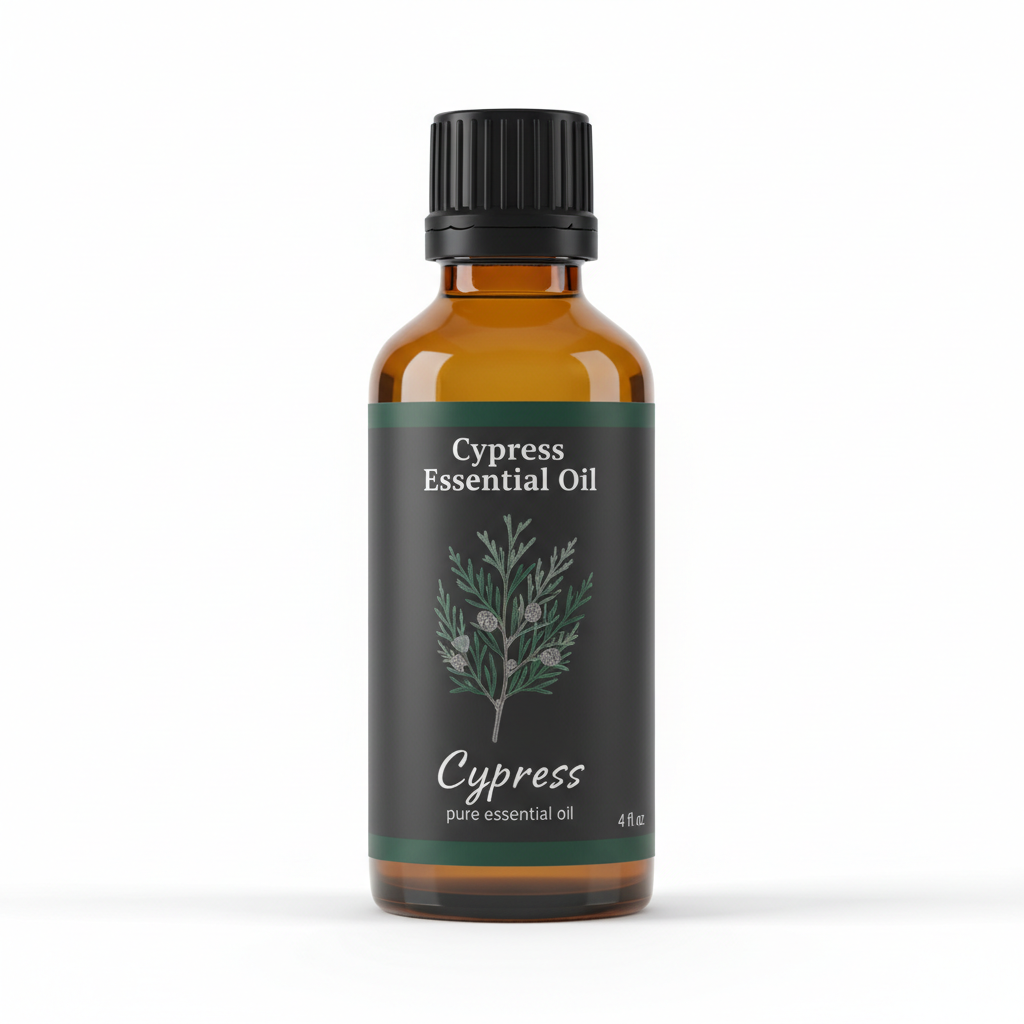
Cypress Essential Oil
Our own Cypress Essential Oil, in sizes from 0.5 oz to bulk.
From $10.99
Shop Now →One category of claims has grown especially persistent: the idea that cypress oil can remove hair, slow regrowth, or act as a natural depilatory. Social media posts, forum threads, and certain wellness blogs have repeated these ideas so often that many people now accept them as fact before asking a single critical question.
This article takes a clear-eyed look at the most common myths surrounding cypress oil for hair removal. For each one, we will explain what the claim says, what the evidence actually supports, and why the myth developed in the first place. The goal is not to dismiss cypress oil. It is a genuinely interesting botanical ingredient with real cosmetic value. The goal is simply to give you accurate expectations so you can use it wisely.
A Quick Primer on Cypress Essential Oil
Cypress essential oil is steam-distilled from the branches and needles of Cupressus sempervirens, the Mediterranean cypress tree. The resulting oil is pale yellow to nearly colorless, with a fresh, woody, slightly smoky aroma that blends beautifully with citrus, lavender, and cedarwood.
Its primary chemical constituents include alpha-pinene, delta-3-carene, and limonene. These compounds contribute to its crisp scent profile and are the subject of ongoing cosmetic research. For a broader look at how this oil fits into everyday routines, the cypress essential oil uses complete guide for home and skin covers its well-established cosmetic applications in detail.
Now, on to the myths.
Myth 1: Cypress Oil Is a Natural Hair Removal Agent
The Myth: Applying cypress oil to the skin will dissolve or remove unwanted hair, acting as a botanical alternative to waxing or shaving.
The Truth
There is no credible evidence that cypress essential oil removes hair. None. Hair removal, whether chemical or physical, requires either mechanical force (shaving, waxing, threading) or a substance that breaks down the keratin protein structure of the hair shaft. Depilatory creams, for example, use alkaline chemicals like calcium thioglycolate to dissolve keratin bonds at the skin's surface.
Cypress oil contains none of these keratin-disrupting compounds. Its constituents are primarily monoterpenes: volatile aromatic molecules that evaporate readily and interact with scent receptors and the skin's surface layer. They do not penetrate deeply enough into the follicle to affect the hair shaft, and they have no known chemical mechanism for dissolving hair.
Applying cypress oil to skin and expecting hair to fall away is, in practical terms, like applying lemon juice and expecting the same result. It will not happen.
Why the Myth Exists
This claim likely arose from a combination of wishful thinking and the genuine astringent reputation cypress oil has developed in cosmetic circles. Astringent ingredients tighten the appearance of pores and smooth the skin's surface texture. Someone may have applied diluted cypress oil to their legs, noticed the skin felt smoother, and drawn an incorrect conclusion about hair. Smooth skin is not the same as hair-free skin.
Marketing language on some wellness sites has also blurred the line between "supports skin clarity" and "removes hair," contributing to the confusion.
Myth 2: Cypress Oil Stops or Significantly Slows Hair Growth
The Myth: Regular application of cypress oil for hair removal will suppress the hair follicle, causing hair to grow back finer, slower, or not at all over time.
The Truth
The question of whether cypress oil stops hair growth deserves a careful answer, because the short version is: no, and the longer version explains why this is a particularly persistent misconception.
Hair growth is governed by the dermal papilla, a small structure at the base of the hair follicle that receives signals from hormones and growth factors. Slowing or stopping hair growth at the follicular level requires either hormonal intervention, laser or light-based destruction of the follicle, or specific enzyme inhibitors (some pharmaceutical, some botanical) that block the signaling pathways involved in the growth cycle.
Some plant-derived compounds have been studied for their potential influence on hair follicle activity. Spearmint, saw palmetto, and certain phytoestrogen-rich botanicals appear in this research. Cypress oil does not feature prominently in peer-reviewed literature on follicle suppression or hair growth inhibition. The monoterpene-heavy profile of cypress oil does not correspond to the biochemical pathways involved in hair growth regulation.
Some people report that after using essential oils in post-wax routines, their hair seems to regrow more slowly. This is almost certainly a result of the waxing itself, which removes hair from the root and naturally extends the regrowth period, not from any follicle-affecting property of the oil applied afterward.
Why the Myth Exists
A few factors feed this one. First, cypress oil is sometimes recommended as part of a post-waxing routine to soothe and smooth the skin. When people notice slower regrowth after waxing, the oil gets credit that belongs to the waxing process. Second, some sources loosely group cypress with botanicals that have demonstrated some follicle-related activity in early research, without distinguishing between those with actual evidence and those without. Research on one plant does not transfer to a botanically unrelated one.
Myth 3: The Astringent Properties of Cypress Oil Make It a Hair Removal Tool
The Myth: Because cypress oil is astringent and tightens the skin around pores and follicles, it can effectively close off hair follicles and prevent regrowth.
The Truth
Cypress oil does have a well-established cosmetic reputation as an astringent. Some research suggests its constituent compounds interact with skin proteins in a way that creates a temporary tightening sensation. This is a genuine and useful property in skincare, particularly for people seeking to reduce the appearance of enlarged pores or oiliness.
However, the leap from "astringent" to "hair removal tool" represents a misunderstanding of what astringency actually does. Astringent ingredients cause a temporary contraction of surface tissues. They do not seal follicles shut permanently, destroy the dermal papilla, or prevent new hair from forming. The tightening effect is cosmetic and temporary. Once you rinse the product away or the compounds dissipate, the follicle returns to its normal state.
Think of astringency as a brief change in surface appearance, not a structural change to the follicle itself.
Why the Myth Exists
The word "pore-tightening" has been stretched well beyond its accurate meaning across the beauty industry broadly. When people read that cypress oil tightens pores, some extend that logic to follicle tightening, and then to hair growth prevention. Each step in that chain moves further from what the evidence supports.
Myth 4: Cypress Oil Can Replace Conventional Hair Removal Methods
The Myth: With consistent use, cypress oil provides results comparable to waxing, sugaring, or laser treatments for managing unwanted hair.
The Truth
This is one of the most important myths to address clearly, because someone acting on this belief might delay or forgo methods that would actually deliver the results they want.
Conventional hair removal methods work through specific, well-understood mechanisms. Waxing and sugaring physically pull the hair from the follicle. Laser and intense pulsed light (IPL) devices target the melanin in the hair shaft to damage the follicle at its root. Electrolysis uses electrical current to destroy the follicle entirely. Each of these produces measurable, documented results.
Cypress oil does none of these things. It does not pull hair from the follicle. It does not target melanin. It does not produce an electrical current. Evidence does not indicate that any topical essential oil, applied alone, produces results comparable to these methods for actual hair removal or long-term reduction.
If someone is researching cypress oil hair removal as a genuine alternative to waxing or laser, the honest answer is that it will not deliver those results, and expecting it to will lead to frustration.
Why the Myth Exists
The appeal of a gentle, natural alternative to more intensive hair removal methods is completely understandable. Waxing can be uncomfortable. Laser treatments are expensive. People naturally gravitate toward solutions that feel kinder and more accessible. Essential oil brands and wellness influencers sometimes imply broad benefits without explicitly stating what the research does or does not support, and that gap fills with optimism.
Myth 5: Cypress Oil Is Unsafe for Use Near Recently Waxed or Shaved Skin
The Myth: Cypress oil should never be used on skin that has been recently waxed or shaved because it will cause serious irritation or a reaction.
The Truth
This myth runs in the opposite direction from the others. Rather than overclaiming what cypress oil can do, it overclaims how dangerous it is in common grooming contexts.
The reality is more nuanced. Cypress oil, like all essential oils, should always be properly diluted before any skin application. A typical cosmetic dilution rate for adults is 1 to 2 percent in a carrier oil (roughly 6 to 12 drops per ounce of carrier). Freshly waxed or shaved skin is temporarily more sensitive and permeable, which does mean you should exercise more caution, not that cypress oil is categorically off-limits.
Many formulators include diluted cypress oil in post-wax soothing blends precisely because of its astringent and toning properties. Used at appropriate dilutions and with a patch test, many people report finding it pleasant on post-waxing skin. That said, individual skin responses vary. Some people are more sensitive to terpene-rich oils, and freshly treated skin deserves a conservative approach.
Certain people should exercise additional caution regardless of dilution: those with known terpene sensitivities, those who are pregnant or nursing, and those with specific skin conditions. Consulting a qualified healthcare provider before incorporating any new botanical ingredient into a routine is always a sensible step.
Why the Myth Exists
General guidance to avoid applying essential oils undiluted to broken or sensitive skin has been helpful and accurate. Somewhere along the way, that reasonable caution expanded into a blanket prohibition, which overcorrects and prevents people from exploring genuinely pleasant uses within safe parameters.
What Cypress Oil Actually Offers in Grooming Contexts
Setting aside the myths, cypress oil does have genuine and interesting cosmetic applications in hair and skin routines. These are not hair removal claims. They are honest, evidence-informed observations about what this oil may contribute to a grooming ritual.
- Scalp and hair care: Some research suggests cypress oil may support scalp balance when used in diluted leave-in or rinse-out formulations. For a deeper look, the article on cypress oil for hair and scalp grooming covers this territory well.
- Skin tone appearance: Its astringent character may help temporarily improve the look of pores and surface evenness, which is why it appears in toners and facial mists.
- Post-waxing comfort: At appropriate dilutions, it may contribute to a soothing, cooling sensation on skin that has just been waxed, though results vary by individual.
- Aromatic experience: The woody, fresh scent of cypress adds a grounding, spa-like quality to any grooming routine. This alone is a legitimate reason many people reach for it.
For a full picture of how cypress oil fits into both home and skincare routines, the cypress oil for skin guide is a practical starting point.
Safe Use: A Practical Reminder
Before adding cypress oil to any new routine, a few practical guidelines are worth keeping in mind:
- Always dilute. Essential oils should not be applied undiluted to skin. A 1 to 2 percent dilution in a carrier oil such as jojoba, sweet almond, or fractionated coconut oil is a standard starting point for cosmetic use on adults.
- Patch test first. Apply a small amount of your diluted blend to the inside of your elbow and wait 24 hours before wider application, especially on sensitive or recently treated skin.
- Avoid eyes and mucous membranes. Keep all essential oils away from these areas.
- Check for contraindications. If you are pregnant, nursing, managing a skin condition, or taking medications, consult a qualified healthcare provider before use.
- Store properly. Cypress oil should be kept in a dark glass bottle away from direct sunlight and heat to preserve its quality.
The Bottom Line on Cypress Oil and Hair Removal
The evidence is consistent on this point: cypress oil does not remove hair, does not stop hair growth, and does not replicate the results of conventional hair removal methods. Claims suggesting otherwise are not supported by the available research, and acting on them is likely to lead to disappointment.
What cypress oil does offer is genuinely worth appreciating on its own terms. It is a beautifully scented, well-researched botanical ingredient with a real place in thoughtful skincare and grooming rituals. Its astringent character, its contribution to scalp-focused routines, and its aromatics make it a worthwhile addition to the shelf for reasons that have nothing to do with removing hair.
Knowing what an ingredient cannot do is just as valuable as knowing what it can. That clarity lets you choose the right tool for each job and get real satisfaction from the ones that are genuinely well-suited to your routine.