
Cypress Oil for Hair and Scalp: Fresh Evergreen Grooming Routines
No essential oil is proven to regrow hair, and any page promising that is selling hope. What a cypress scalp routine honestly offers is a calm weekly ritual, hair that feels well-conditioned, a comfortable scalp, and a dry evergreen scent in place of heavy fragrance. That is the whole deal, and it is enough.
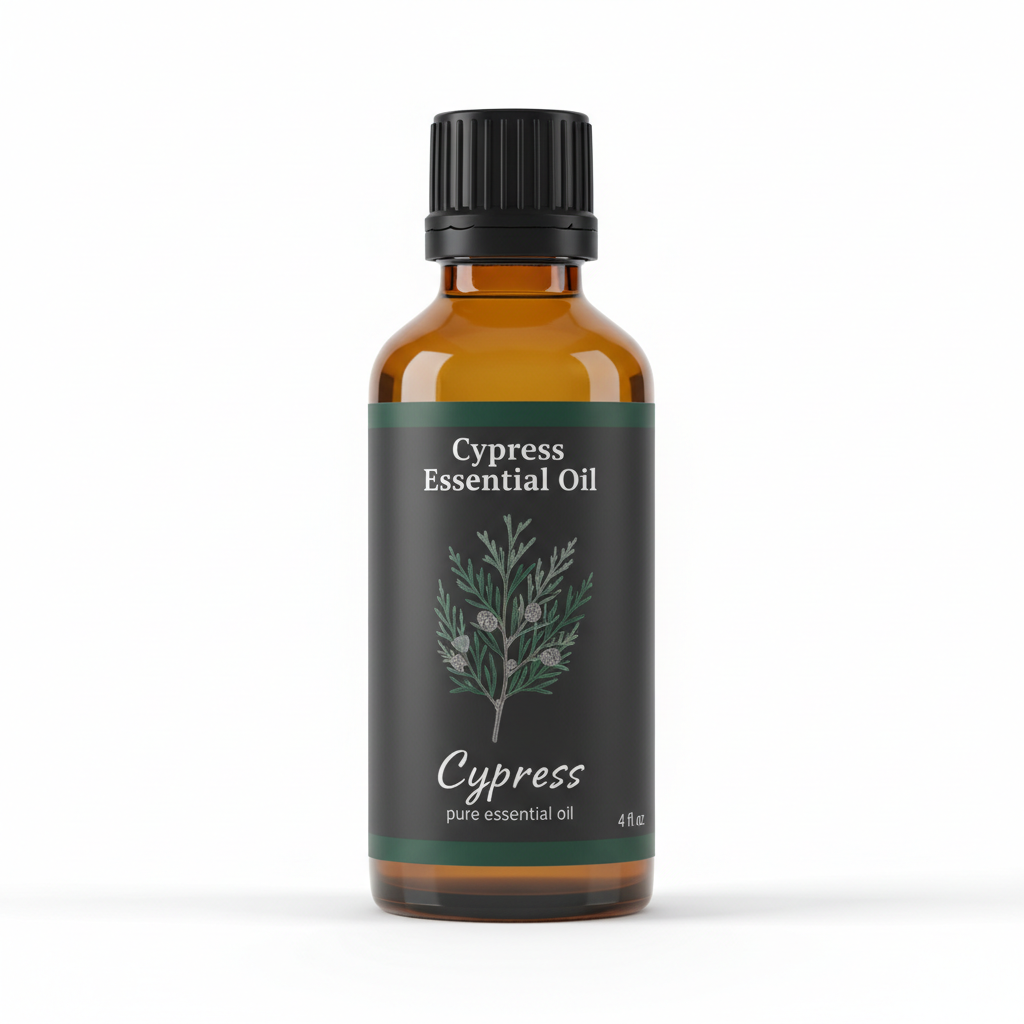
Cypress Essential Oil
Our own Cypress Essential Oil, in sizes from 0.5 oz to bulk.
From $10.99
Shop Now →Why the growth promise falls apart
Search for cypress oil for hair growth and you will find confident pages. Look for the human studies behind them and the confidence thins out. A scent molecule rubbed into the scalp for a few minutes is simply not a documented route to a different head of hair, and we will not pretend otherwise.
So this guide makes no promises about growth, thickness, or anything happening beneath the skin. It is about grooming. Hair oiling is an old habit in many households, and its real rewards are practical: slip for the comb, a softer feel in the hair lengths, and a few unhurried minutes that belong to you.
Cypress earns its place for a different reason: the smell. The oil is rich in monoterpenes such as alpha-pinene and delta-3-carene (you can look up both compounds on PubChem), and that chemistry reads as crisp, resinous, and a little smoky-green. Think of a cold walk past a windbreak of conifers, not a candle shop. If you dislike sweet, perfumed hair products, that is the appeal.
What you need
- Cypress essential oil. Look for the botanical name Cupressus sempervirens on the label, plus a distillation date or batch number if the seller offers one.
- Jojoba oil. Technically a liquid wax rather than a triglyceride oil, which is why it keeps far better than most kitchen oils. It also rinses out of hair more cleanly than heavier carriers such as olive or castor.
- A small dark glass bottle with a dropper, 1 ounce (30 ml) or smaller.
- A clean, dry towel you do not mind staining, plus a shower cap or old shirt collar protection.
- Your usual shampoo. You will use it a little more generously than normal on oiling day.
- A wide-tooth comb for detangling before you begin.
Mixing the blend: 1 to 2 percent, no higher
Essential oils are concentrated, and the scalp is not a place to experiment with strength. Robert Tisserand and Rodney Young, in Essential Oil Safety (2nd edition), are the standard reference for dermal dilution, and their guidance for ordinary adult skin use sits well below the strengths hobbyist blogs sometimes suggest. For the scalp, start at 1 percent.
| Carrier amount | 1 percent | 2 percent |
|---|---|---|
| 1 tablespoon (15 ml) | 3 drops | 6 drops |
| 1 ounce (30 ml) | 6 drops | 12 drops |
Those figures assume about 20 drops per milliliter, which is typical but varies with the dropper. Measure into the bottle, cap it, and roll it between your palms for ten seconds. Label it with the date.
Most people should stay at 1 percent for the first month. The scent of cypress carries further than you expect, and a 2 percent blend is mostly for people who find 1 percent too faint, not for anyone who wants a stronger effect on the scalp itself.
Patch test before the first full session
Put a drop of your finished blend (not the pure oil) on the skin behind one ear. Leave it uncovered and unwashed for 24 hours. The skin there is thin and close to the hairline, so it makes a fair stand-in for the scalp.
If the spot looks pink, feels warm, or you simply do not like how it feels, wash it with mild soap and skip the routine. A comfortable result means you can move on. It does not mean you are immune forever, so stay alert in the first few sessions.
The weekly routine, step by step
Once a week is plenty. The method is a pre-wash massage, meaning the oil goes on before shampoo and comes out in the same session. That choice is deliberate, and the section on oily scalps below explains why.
- Detangle dry hair. Work through knots with the wide-tooth comb from the ends upward. Massaging a tangled head pulls hair and wastes the session.
- Warm the oil. Pour about a teaspoon (5 ml) of the blend into your palm and rub your hands together. For shoulder-length or longer hair, you may want a second teaspoon later, but start with one. Too much is the most common reason people dislike this routine.
- Part the hair and apply to the scalp, not the lengths. Use your fingertips to dab the oil along the parts, working in rows from the front hairline to the crown and then the nape. Keep it away from your eyes and eyelids.
- Massage with fingertips for 3 to 5 minutes. Use the pads of your fingers, never your nails. Small, slow circles, moving the skin over the skull rather than scrubbing across it. Pause at the temples and behind the ears. This is the part that feels good, so let it take its time.
- Smooth any leftover oil through the mid-lengths. Whatever remains on your hands can be drawn gently down the hair. Skip the roots here, since they have had their share.
- Wait about 20 minutes. Clip the hair up, put on a cap if you like, and set a timer. Read, stretch, make tea. Longer is not better. Beyond 20 minutes you are mainly giving the oil time to transfer onto pillowcases and collars.
- Shampoo it out. Apply shampoo to dry or barely damp hair first, before adding much water. Oil and water do not mix, and shampoo applied straight onto oiled hair emulsifies it far more easily. Lather, rinse, and repeat once if the hair still feels slick.
- Condition the ends as usual, then rinse with the coolest water you can tolerate.
Keep the bottle fresh: the oxidation point
This is where a lot of well-meaning routines go wrong, and it matters more for scalp use than for a bath or a diffuser. Cypress is built largely from monoterpenes, and alpha-pinene oxidizes readily on contact with air. Oxidized terpenes are a recognized route to skin sensitization, and Tisserand and Young discuss this at length for oils high in pinene and carene.
The practical reasoning follows from that chemistry. A bottle that is half empty holds more air than a full one, so it ages faster. A bottle that has sat open on a bathroom shelf, warm and bright, ages faster still. A product that touches your skin every week deserves an oil from a bottle you opened recently.
- Mix small. A 1-ounce batch at 1 percent lasts a long time for a once-weekly teaspoon, so consider mixing half an ounce at a time and using it within a few weeks.
- Store the essential oil capped tightly, in dark glass, somewhere cool.
- If the scent turns sharp, flat, or turpentine-like, retire the bottle for cleaning-cloth duty and start a new one.
- Do not top up an old blend with new oil. Make a fresh batch.
Jojoba is stable, so it is rarely the weak link. The cypress is.
Who this routine is not for
Honesty about the limits is part of the recipe.
- Anyone who wants a result on the scalp itself. If that is the goal, this routine will disappoint you. It is a ritual and a scent.
- People with persistent scalp concerns. If something about your scalp has been bothering you for weeks, see a dermatologist rather than add another oil to the pile. A new product can make it harder to work out what is going on, and a professional can look at the actual skin.
- Anyone with a history of reacting to fragranced products, or who is pregnant or nursing. Check with a qualified physician first.
- Households with cats and dogs that groom or sleep near you. The ASPCA Animal Poison Control Center is the right call if a pet has had contact with essential oils. Prevention is simpler: wash your hands, rinse well, and keep the bottle shut away.
- Young children. Keep this routine to adults.
If your scalp runs oily
Skip leave-in use entirely. The pre-wash method exists for exactly this situation: the oil is on for 20 minutes and then it is gone, so nothing stays on the scalp between washes. Someone with an already oily scalp who leaves the blend in overnight is likely to feel heavier, not fresher. Start with 1 percent, apply sparingly at the roots, and put most of the blend through the dry ends of the hair instead.
Common mistakes
- Using the essential oil neat. Always blend into a carrier first. Undiluted oil on the scalp is the quickest route to a bad reaction.
- Doubling the strength because the scent is faint. Cypress is quiet on the skin. Wait for the scent to develop over the 20 minutes before reaching for more drops.
- Oiling daily. Weekly is a pace, not a minimum. Frequent use raises the odds of a sensitivity developing and does nothing for the experience.
- Leaving the blend in overnight. It stains linens, and it turns a short exposure into a long one for no real gain.
- Scrubbing with nails. You are looking for a slow massage, not friction.
- Shampooing onto soaking-wet hair. It makes rinsing the oil out take twice as long.
- Keeping a blend for a year. See the oxidation section above.
The beard crossover
If you keep a beard, the same logic applies with one change. Facial skin is more reactive than the scalp, so keep to 1 percent and use it as a short pre-wash or a drop of leave-in on the whiskers rather than on the skin underneath. The recipes in DIY Cypress Cologne and Beard Oil follow this thinking and are a sensible next step once the scalp routine feels familiar. Since the scent is the same, many people like that their hair, beard, and a light cologne all point in one evergreen direction.
For a wider look at how this oil fits into a household routine, our complete guide to cypress essential oil covers home and skin uses. If you are curious how the oil behaves on skin below the hairline, cypress oil for skin walks through that carefully.
What to expect
Set your expectations at the level of a good grooming habit. After a session, people commonly report hair that feels softer and combs through more easily, which is what you would expect from a light film of jojoba on the lengths. The scalp may feel comfortable and the massage itself may feel unhurried and settling. The scent tends to fade from the hair within a day, and a faint pine-dry note may linger.
Anecdotal accounts also describe the 20-minute wait as a small, regular pause in the week, and that alone may help promote a sense of calm. That is a statement about the ritual, not about the oil acting on the body.
What you should not expect: any change to the hair itself. If you want to compare oils before you buy, browse the shop and check the botanical name and batch details on the label.
Do the patch test, mix a small batch, keep it weekly, and shampoo it out. That is the whole routine. If your scalp ever tells you to stop, listen to it, and consult a qualified physician or a dermatologist for anything that lingers.