Cypress Essential Oil Uses: A Complete Guide for Home, Skin, and Fragrance
Short answer: Cypress essential oil is a dry, woody-green aromatic, and its best uses are scent-led: diffusing, room and linen sprays, diluted colognes and beard oils, bath and massage blends, and closet sachets. It delivers atmosphere and ritual. It does not disinfect or repel, it carries no regulated claims, and it should never be swallowed.
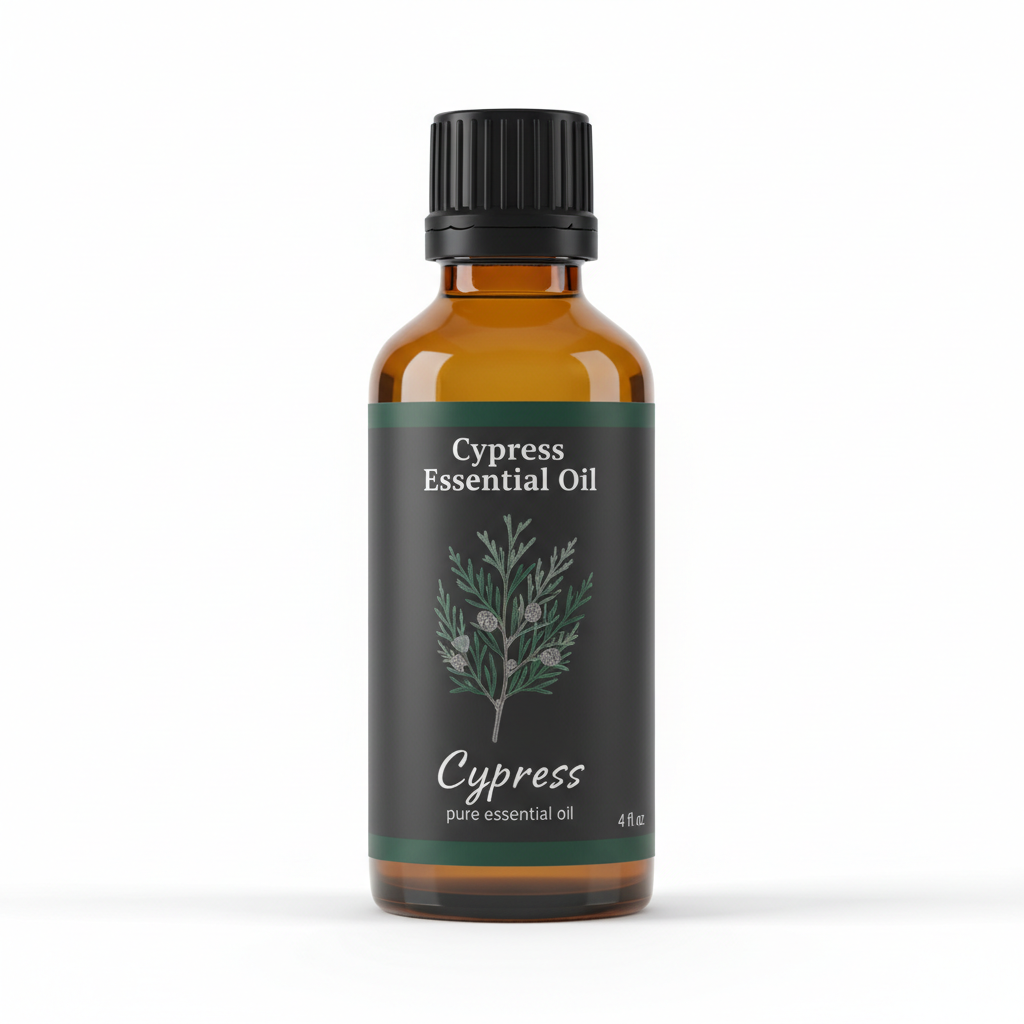
Cypress Essential Oil
Our own Cypress Essential Oil, in sizes from 0.5 oz to bulk.
From $10.99
Shop Now →Key Takeaways
- The strongest case for cypress oil is aesthetic: a crisp, resinous, slightly smoky evergreen scent that sits well in rooms, colognes, and grooming blends.
- Every skin use needs a carrier. A 1 to 2 percent dilution covers nearly everything in this guide, and a patch test comes first.
- Cypress oil is not a disinfectant, not an insect repellent, and not for ingestion. Products that need those claims are regulated, and a cosmetic aromatic is not one of them.
- Alpha-pinene, the main component, oxidizes readily on air contact. Fresh oil in a small, full, dark bottle is better oil.
- Match the method to the goal. The use-finder table below gives strength, time, and a dedicated guide for each use.
Contents
- What cypress oil is, and what it actually does
- The use-finder: goal, method, strength, time
- Scenting a space: diffusers and sprays
- Personal scent and grooming: cologne, beard oil, rollers
- Skin and bath routines, always diluted
- Massage: glide, scent, and a slower evening
- Around the house: cleaning spray, linen spray, closet sachets
- What cypress oil is not for, and how to buy and store it
What cypress oil is, and what it actually does
Start with the plant. The oil in this guide comes from Cupressus sempervirens, the tall, narrow Mediterranean cypress, and it is steam distilled from the foliage and twigs. Steam carries the volatile aromatic molecules out of the plant material, they condense, and the oil floats on top of the water. Nothing is added. What you smell is what the tree makes.
The scent is dry and green, with a resinous edge and a faint smokiness underneath. It sits closer to a dry forest floor than to a Christmas tree: less sweet than pine, less sharp than fir, and woodier than juniper. If you like the smell of cedar chests, clipped hedges, and cold air near evergreens, you will probably like cypress. If you want florals, citrus candy, or vanilla, this is the wrong bottle.
The chemistry, in plain terms
Alpha-pinene is typically the largest component of cypress oil, with delta-3-carene usually next and a handful of smaller compounds behind them. Exact proportions shift with harvest time, region, and distillation, which is why two bottles labeled cypress can smell slightly different. Compound records on PubChem describe both of these as volatile monoterpenes, and that volatility explains most of how the oil behaves in daily use.
Volatile molecules evaporate fast. That is why cypress reads as a bright top and middle note that opens crisply and fades sooner than a heavy base like sandalwood. It also explains two practical habits that come up throughout this guide: pair cypress with something slower if you want it to last, and keep the bottle tightly closed. Because alpha-pinene oxidizes readily on air contact, a half-empty bottle ages faster than a full one. Robert Tisserand and Rodney Young, in Essential Oil Safety (2nd edition), discuss how oxidized oils rich in monoterpenes are more likely to cause skin reactions. Fresh oil is a safety point as much as a scent point.
What does cypress oil do?
It scents things. That sounds modest, and it is, but it is the honest answer. In a diffuser it changes the smell and mood of a room. On a diluted roller or in a beard oil it gives your skin and clothes a dry evergreen note. In a bath or a massage blend it adds a ritual: the smell tells you the evening has started. People report that evergreen scents feel clean and grounding. That is a personal impression of atmosphere, not a measured outcome, and nothing here should be read as more than that.
What is cypress essential oil good for?
Good for fragrance, good for atmosphere, good for the small rituals that surround bathing, grooming, and tidying a home. Perfumers use cypress as a dry green-woody note, and it fits naturally into colognes and woody blends. It also blends easily: citrus on top, cedarwood or sandalwood underneath, a little lavender or rosemary alongside.
What is cypress oil used for, and what is it not used for?
Cypress oil is used in diffusers, room and linen sprays, personal fragrance, grooming oils, bath and massage blends, and closet sachets. It is not used for anything that requires a regulated claim. It does not replace a disinfectant, an insect repellent, or anything a doctor recommends. The rest of this guide stays on the useful side of that line.
The best uses of cypress oil are the aesthetic ones. A seller who tells you that plainly is the one to trust with your money.
That is the position of this guide, and it is worth saying why. Essential oil marketing drifts toward big promises because promises sell. But a bottle that is wonderful to smell, easy to blend, and pleasant to use in small rituals does not need inflated claims. If anything, claims are a warning sign. Quality shows up in the label (botanical name, plant part, country of origin), in a scent that is clean rather than flat, and in a seller who is comfortable saying what the oil does not do.
The use-finder: goal, method, strength, time
Most people arrive with a goal, not a method. They want the bedroom to smell different, or they want a cologne that is not sugary, or they want closet drawers that smell like a cedar chest. The table below starts from the goal and works backward. Strengths are conservative starting points for adults, and all skin uses assume a carrier oil or an alcohol base, never the neat oil. Drop counts are approximate because droppers vary.
| Goal | Method | Strength | Time required | Dedicated guide |
|---|---|---|---|---|
| Give a room a crisp evergreen scent | Ultrasonic diffuser | 3 to 5 drops per 100 ml of water | 30 to 60 minutes per session | Evergreen Stillness diffuser blend |
| Refresh a room quickly, no equipment | Room spray | About 1 to 2 percent in alcohol and water | 5 minutes to mix | 15 fresh ways to use cypress at home |
| A dry, woody personal scent | Diluted cologne | 2 to 3 percent in perfumer's alcohol | 15 minutes, plus days to rest | DIY cypress cologne and beard oil |
| Scent and softness for a beard | Beard oil in a carrier | 1 to 2 percent | 10 minutes to blend | DIY cypress cologne and beard oil |
| A pocket-size scent you can reapply | Pulse-point roller | 2 percent in carrier oil | 5 minutes to blend | Cypress oil for skin |
| A scented bath | Oil blended into a carrier or unscented base first | 3 to 6 drops in about a tablespoon of base | 5 minutes | Cypress oil for skin |
| A slower, scented massage | Massage oil | 2 percent in carrier oil | 10 minutes to blend, then unhurried | Cypress oil for skin |
| A scented hair and scalp oil | Light carrier blend | 1 percent | 10 minutes | Cypress oil for hair and scalp |
| Fresh-smelling pillowcases and throws | Linen spray | About 1.5 percent in alcohol and water | 10 minutes | 15 fresh ways to use cypress at home |
| A scented wipe-down | Cleaning spray (scent only) | About 1 percent | 5 minutes | 15 fresh ways to use cypress at home |
| Drawers and closets that smell of cedar and evergreen | Sachet or wooden block | A few drops, refreshed monthly | 5 minutes | 15 fresh ways to use cypress at home |
Two notes on reading the table. First, the percentages are about the finished product, not the drops you add to a pantry jar. A 2 percent blend is roughly 12 drops in one fluid ounce (30 ml) of carrier. Second, hair removal comes up often enough in searches that it deserves a plain answer elsewhere: the piece on cypress oil and hair removal explains what a scented oil can and cannot do there. Short version: it can scent a routine. It cannot stand in for the products that exist for the job.
Scenting a space: diffusers and sprays
This is where cypress oil does its most reliable work. Scent is a room-level decision: the same bottle that smells flat in a cupboard can make an entry hall or a bedroom feel noticeably different once it is airborne. Because cypress is volatile and top-heavy, the way you disperse it matters.
Ultrasonic diffusion
An ultrasonic diffuser vibrates water into a fine mist that carries oil droplets. For a typical 100 ml reservoir, start with 3 drops. Cypress has a dry, penetrating scent, and in a small room 3 to 5 drops is generally plenty. More oil does not make a better room, it makes a heavier one, and with a resinous note like this one it can tip from crisp to harsh.
What diffusion delivers is atmosphere. Cypress in a diffuser reads as clean and quiet, a bit like a cold morning near trees. It works well in entryways, studies, bathrooms, and bedrooms in the hour before bed. If you want a blend that has already been balanced, the Evergreen Stillness diffuser blend pairs cypress with softer partners so the dry edge has something to rest against.
Practical habits that make a difference:
- Run it in intervals. Thirty to sixty minutes, then switch it off. Your nose adapts to a constant scent within a short time, so a diffuser left running all day stops being noticed and starts being wasteful.
- Ventilate. A room with a window slightly open smells better than a sealed one, and fresh air resets your sense of smell.
- Clean the reservoir. Resinous oils leave a film. A weekly rinse with warm water and a soft cloth keeps the mist clean and the scent honest.
- Think about who shares the room. Cats, dogs, and birds process aromatic compounds differently from people, and the ASPCA Animal Poison Control Center is the right place to ask about a specific animal. Use a diffuser only where pets can leave the room freely, keep sessions short, and do not diffuse in a closed room with a caged bird. Check with a veterinarian if you are unsure.
- Check in with your own household. If anyone who shares your home is pregnant, nursing, very young, or managing a medical condition, ask their doctor first or simply skip diffusion in shared spaces.
Room sprays
A room spray is the no-equipment option. Essential oil does not dissolve in water, so a spray needs a dispersant, and the simplest is high-proof alcohol. In a 2 ounce (60 ml) glass or PET bottle, combine 1 ounce of perfumer's alcohol or high-proof vodka with 15 to 20 drops of cypress oil, swirl, then add 1 ounce of distilled water. Shake before each use, and mist into the air rather than onto surfaces.
A spray delivers a quick, short-lived burst: the alcohol carries the scent into the air and then evaporates, and cypress's volatility means the scent peaks fast and fades within the hour. That makes it ideal for refreshing a bathroom, a car interior, or a hallway before guests arrive. It is a poor choice if you want the scent to last all afternoon. For that, a diffuser or a sachet wins.
A well-composed room spray usually has more than cypress in it. Because the oil is top-heavy, adding a few drops of something with more staying power (cedarwood, sandalwood, or a resin like frankincense) gives the evergreen note a floor to stand on. The 15 fresh ways to use cypress at home collects more ideas for rooms, entryways, and small spaces.
Common mistake: spraying onto upholstery, wood finishes, or polished stone. Alcohol and oil can mark finishes. Mist upward and let it fall, or spray a cloth and wipe, and always test somewhere hidden first.
Personal scent and grooming: cologne, beard oil, rollers
Cypress has a natural home in men's grooming and unisex woody fragrance because it smells like cut greenery and dry wood rather than flowers or sweets. It is also one of the cleaner ways to make a fragrance that does not smell like every drugstore cologne. All of these uses go on skin, so dilution is not optional.
Cologne
A cologne is an alcohol-based fragrance at a modest concentration. For a cypress cologne, 2 to 3 percent essential oil in perfumer's alcohol is a sensible range, applied to clothing or to the skin on the chest or wrist after a patch test. You can build a more complete scent by combining cypress with a citrus top note, a little cedarwood or vetiver underneath, and perhaps a touch of resin. The DIY cypress cologne and beard oil recipes give measured formulas, so there is no guessing.
What a homemade cologne delivers is a personal signature at a very low cost. What it does not deliver is the polish or longevity of a house-made perfume with fixatives and synthetic molecules. Expect it to wear closer to the skin and fade within a few hours. That is not a defect. It is the nature of a volatile, all-natural top note. Let the blend rest for several days after mixing, shaking gently once a day, because the scent smooths and rounds as the components marry.
Beard oil
Beard oil is a carrier oil with a little essential oil for scent. Jojoba and fractionated coconut oil are common bases because they are light and stay stable on a shelf. A concentration of 1 to 2 percent is plenty: in a 1 ounce (30 ml) dropper bottle, that means about 6 to 12 drops of essential oil. Because the oil sits close to your face, start at 1 percent and see how your skin responds before going higher.
Here is what beard oil honestly delivers: softness and glide from the carrier, a subtle cypress scent that rises as the oil warms against skin, and a bit of ritual in the morning. The carrier does the conditioning work. The cypress oil contributes the smell. If the recipe makes your beard smell like a pine forest by lunchtime, you used too much. The same grooming recipes include a tested ratio.
Pulse-point rollers
A roller bottle is a pocket-size perfume. Fill a 10 ml glass roller with a carrier oil (jojoba stays stable and does not turn rancid quickly) and add about 4 drops of cypress oil for a 2 percent blend. If you want a fuller scent, add 1 or 2 drops of a base note like cedarwood. Roll onto the inner wrist or behind the ear. The scent is quiet and lasts better than a spray because the carrier oil holds the volatile molecules close to skin for longer.
Rollers are a good first project. They are cheap, they are forgiving, and you can make a few small variations to find the balance you like. Label each bottle with its date and drops, because a recipe you cannot reproduce is a recipe you will never improve.
Hair and scalp oils
A light oil blend at 1 percent can scent a scalp massage or a leave-in conditioning oil. If that is your interest, see the guide to cypress oil for hair and scalp, which covers carriers, frequency, and what to expect, which is a pleasant scent and a slightly more ritual-like wash day, not a transformation.
Skin and bath routines, always diluted
The word that matters in this section is diluted. Tisserand and Young's Essential Oil Safety is clear that undiluted essential oils on skin raise the chance of a reaction, and that risk rises with repeated exposure and with oxidized oil. A carrier oil such as jojoba, sweet almond, or fractionated coconut spreads the oil out, slows its evaporation, and makes it far gentler to use.
Dilution basics
These benchmarks cover the uses in this guide for healthy adult skin:
- 1 percent: about 6 drops per ounce (30 ml) of carrier. Use for facial-area products, beard oil, and anything you will use daily.
- 2 percent: about 12 drops per ounce. Use for rollers, body oils, and massage blends.
- Above 2 percent: save it for rinse-off products or occasional use, and read a dedicated safety reference first. More oil means more scent, but it also means more chance of a reaction.
Patch test every new blend. Apply a small amount to the inner forearm, cover it, wait 24 hours, and stop if anything looks or feels off. Keep oil away from eyes, inner ears, and broken skin. Skip it altogether on young children, and ask a doctor first if you are pregnant, nursing, taking medication, or managing a medical condition. The full routine, with carriers and ratios, is laid out in the guide to cypress oil for skin.
Cypress in a scented bath
This is the use that most often goes wrong. Essential oil floats. Drop 10 undiluted drops into a tub and they gather on the surface, then cling to your skin in concentrated patches when you step in. That is the opposite of what you want.
The fix is to blend the oil into a base before it touches the water. Stir 3 to 6 drops of cypress into about a tablespoon of carrier oil, unscented body wash, or unscented bath gel, then pour it under running water. The base disperses the oil more evenly through the bath. A note on carriers: plant oils make a tub slippery, so use a mat and step out carefully. Keep the water comfortably warm, not hot.
What a cypress bath delivers is a scent and a ritual. Steam lifts the volatile compounds into the air, so the bathroom smells of evergreen, and the routine of drawing a bath, dimming the lights, and shutting the door is as much of the effect as the oil is. Pairing cypress with a softer oil, perhaps lavender or a little sweet orange, rounds out the dry edge. Rinse the tub afterward, because oil residue on porcelain and acrylic is slippery.
Body oils and everyday skin routines
A light body oil at 1 percent is a pleasant way to scent skin after a shower. Apply it to damp skin, because the carrier spreads further and absorbs more evenly that way. The scent is green and clean, and it fades within a few hours. Do not expect a body oil to do anything beyond smelling good and feeling smooth. The carrier is what feels good on skin. Cypress is what makes it smell like something.
Massage: glide, scent, and a slower evening
Cypress oil in a massage blend does two jobs, and it is worth keeping them separate. The carrier oil gives glide, so hands move smoothly instead of dragging. The essential oil gives scent, so the ten minutes feels like a distinct ritual and not a chore. Neither of those is a promise about what happens to the body, and nothing here makes one.
For a full-body blend, use 2 percent: about 12 drops of cypress per ounce of carrier. Sweet almond oil is a popular base because it is light, slightly sweet, and glides easily. Jojoba is lighter still and stays stable on a shelf for a long time. If you are making a blend for a small area, such as hands, feet, or shoulders, a 10 ml roller or a small tin of blend at 2 percent is more than enough.
What makes massage with a scented oil feel different is attention. Cypress has a dry, quiet scent, and many people report that it pairs well with slow, unhurried evenings. That is a description of atmosphere, not a claim about the body. To keep the blend pleasant rather than overwhelming:
- Warm the carrier oil in your hands first. It spreads more easily and releases the scent gently.
- Do your patch test on the day you make the blend, not just before use.
- Keep the oil away from the face and eyes, and wash your hands well afterward.
- Pair cypress with something rounder. A few drops of sweet orange or lavender alongside the cypress soften its dry edge.
- Make small batches. A blend with a few drops of essential oil in carrier oil keeps its best scent for a few weeks, and fresh blends smell better than old ones.
Who is this not for? Anyone who dislikes resinous, smoky scents will not enjoy a whole-body blend of cypress. Anyone with skin that reacts easily should patch test twice and keep to 1 percent. And anyone seeking a particular physical outcome from a massage should talk to a licensed professional. A scented oil makes a massage nicer to receive. It does not alter what a massage can do.
Around the house: cleaning spray, linen spray, closet sachets
These are the quiet, practical uses, and they are where a lot of over-promising happens, so this section is explicit about what the oil does and does not do.
Cleaning spray: scent, not sanitizing
A cypress cleaning spray is a scented wipe-down, and that is all it is. Mix a small spray bottle with 1 cup of distilled water, 2 tablespoons of high-proof alcohol or an unscented surface-safe cleaner as the dispersant, and about 10 drops of cypress oil for roughly a 1 percent blend. Shake before each use. Spray a cloth, not the surface, then wipe.
What this delivers is a clean-smelling kitchen counter or bathroom shelf, a scent that signals that the space has been tidied. What it does not deliver is disinfection. Disinfectants are regulated products that carry registered claims and tested directions. A cosmetic aromatic product makes no such claims, and an essential oil in a bottle of water is not one. If you need a surface actually disinfected, use a product labeled for that purpose and follow its label. Use your cypress spray for the final scented pass.
Two practical cautions. Test surfaces first, because oil and alcohol can mark sealed wood and some plastics. And skip vinegar as a base on natural stone such as marble or granite, since acid can etch it.
Linen spray
A linen spray scents pillowcases, throws, and towels. In a 2 ounce (60 ml) bottle, combine 1 ounce of high-proof alcohol with 20 drops of cypress oil, swirl, then add 1 ounce of distilled water. That is about a 1.5 percent blend. Shake well, then mist from about a foot away so the fabric is lightly dampened and not soaked.
What it delivers is a subtle, fresh scent that lasts as long as the fabric holds it, usually a few hours on cotton. Light, natural fabrics hold scent better than synthetics. Test on an inconspicuous corner first, since oil can leave marks on silk and some delicate finishes, and let the fabric dry fully before use. Do not mist pillowcases right before your face touches them. Spray, then let them air for a while.
Closet sachets and drawer scenting
This is the cypress use with the most natural fit, because cypress smells like cedar and dry wood, the smell people associate with a well-kept closet. Fill a small cotton or linen bag with dried lavender, uncooked rice, or plain cotton batting, add 5 to 8 drops of cypress oil, and let it sit sealed for a day so the oil distributes. Tuck it into a drawer or hang it in a closet. You can also put a few drops on an unfinished cedar block, which absorbs the oil and releases it slowly.
What sachets deliver is a gently scented space that smells like evergreen and clean wood. They need refreshing about once a month, because the volatile molecules fade. Keep drops off the fabric itself, because oil can stain clothing. One honest caution: a cosmetic aromatic sachet makes no claim to protect clothes from moths or other pests. If you have a pest problem, use a product labeled and regulated for that purpose, and treat the sachet as a pleasant scent only.
More household ideas, from entryways to car interiors, are collected in 15 fresh ways to use cypress essential oil at home.
What cypress oil is not for, and how to buy and store it
Every essential oil guide should have a section like this one. Here are the plain limits.
Not for ingestion
Do not swallow cypress oil, add it to food or drink, or put it in a glass of water. Essential oils are concentrated, and Tisserand and Young's Essential Oil Safety is clear that internal use belongs under qualified supervision, not in a home kitchen. If someone swallows essential oil, especially a child, call US Poison Control at 1-800-222-1222 right away. For a pet, contact the ASPCA Animal Poison Control Center or a veterinarian.
Not neat on skin
Undiluted oil on skin raises the chance of a reaction, and repeated neat use raises it further. If a splash lands on your skin, wash with a carrier oil first and then with mild soap and water. If it gets into the eyes, flush with plenty of clean water and contact a doctor if discomfort continues.
Not a substitute for regulated products
This is the misconception worth correcting. Disinfectants, insect repellents, and anything a doctor recommends are regulated for a reason: they have to show that they do what they say, in tested amounts, with directions to match. A cosmetic aromatic product is not that, and it makes no such claims. A seller or a blog that suggests otherwise is selling something the oil cannot deliver. Use cypress for scent, ritual, and atmosphere, and use the right product for anything else.
Who cypress oil is not for
- Anyone who dislikes dry, resinous, smoky scents. The oil is not subtle and will not smell sweeter in a different bottle.
- Anyone looking for an outcome rather than a scent. If that is you, a talk with a doctor is the right step, not a different oil.
- Households where animals cannot leave a diffused room. Diffuse sparingly or not at all.
- Pregnant or nursing people, young children, and anyone taking medication or managing a medical condition, unless a doctor has said it is fine.
What commonly goes wrong
- Too many drops. Cypress is strong. If a room, bath, or cologne smells harsh, halve the drops.
- Floating drops in the bath. Blend into a base first.
- Old oil. Oxidized oil smells flat or sharp and is more likely to bother skin. Replace it.
- Plastic and heat. Concentrated oil can degrade some plastics. Use glass for storage and keep bottles away from windows and radiators.
- Skipping the patch test. It takes a day and saves a reaction.
Buying and storing cypress oil
A good label lists the botanical name (Cupressus sempervirens), the plant part, the country of origin, and the extraction method. A seller who will share a batch gas chromatography report is showing you the composition of the oil, and that is a sign of confidence. Be cautious of anything labeled as fragrance oil or a cypress blend, which may be synthetic or diluted. If you want to see what is currently available, the shop lists cypress oil with its sourcing details.
Store the bottle in dark glass, tightly capped, upright, and away from light and heat. Buy the smallest size that suits your use, because a full bottle ages slowly and a half-empty one ages faster. Most people who use cypress a few times a month are better served by a 10 or 15 ml bottle than a large one. Write the date of opening on the label, and plan to use the oil within a year or so of opening for best scent. If it smells sharp, flat, or sour, retire it from skin products and use it, if at all, in a cleaning spray.
Cypress oil is at its best when you ask it to do the one thing it does well: make a space, a skin routine, or an evening smell like clean evergreen. Pick the goal in the table, follow the dilution, keep the bottle fresh, and keep your expectations honest. For personal questions about your own situation, speak with a qualified doctor.