15 Fresh Ways to Use Cypress Essential Oil at Home
One diffuser will not scent an entire house, and buying a bigger one will not fix that. Scent is local: it clings to the fabric, air current, and surface of the room it starts in, then fades fast at the doorway. The fix isn't more oil in one machine, it's matching a method to each room's job. A console-table diffuser does different work than a linen spray, and a cotton pad tucked behind a showerhead does something neither of those can.
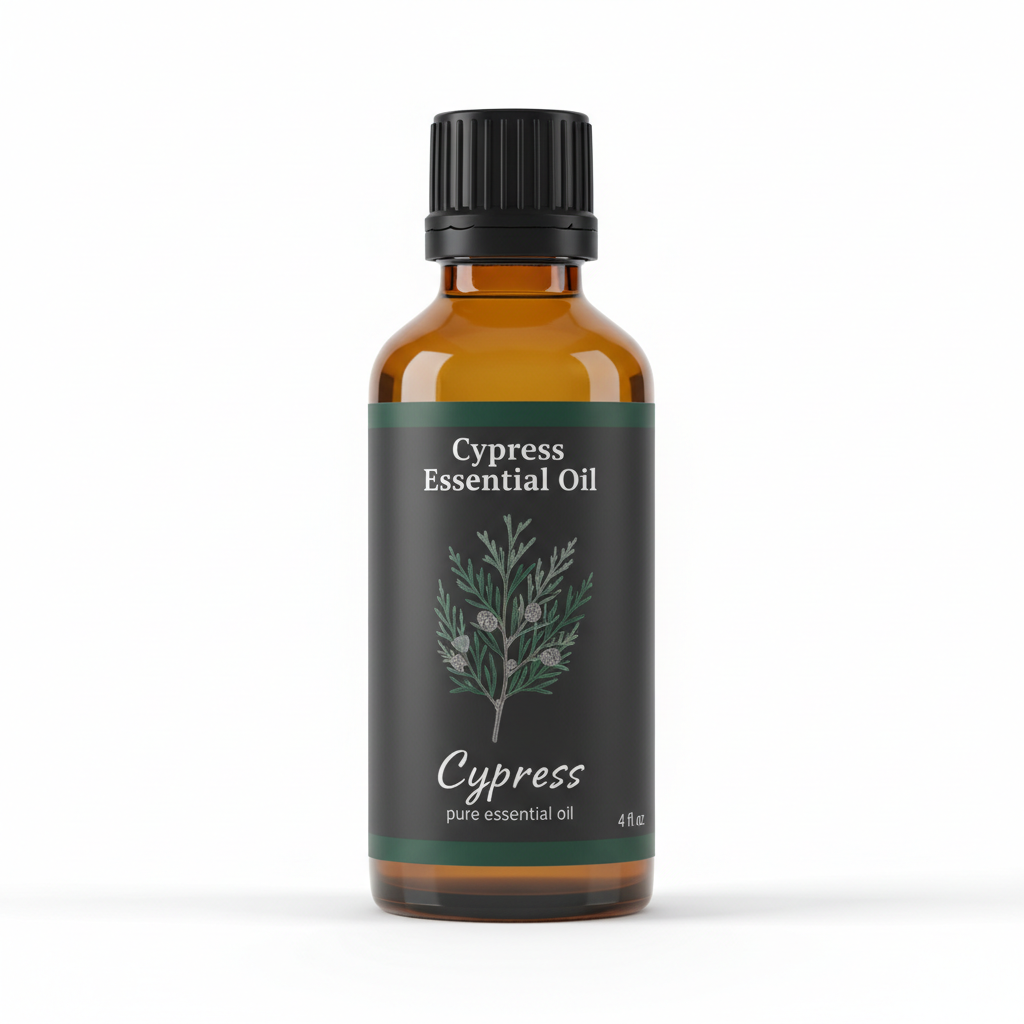
Cypress Essential Oil
Our own Cypress Essential Oil, in sizes from 0.5 oz to bulk.
From $10.99
Shop Now →Cypress (usually Cupressus sempervirens, steam-distilled from the twigs and needles) is a reasonable oil to build a whole-home routine around because its profile sits between green, resinous, and faintly citrus-sharp, which means it reads as "outdoors" in a living room and as "crisp" in a bathroom without smelling like either a candle aisle or a cleaning product. Below are 15 room-specific ways to use it, each with amounts, not vague suggestions.
Entryway
1. Set the console-table diffuser on a short cycle, not a constant one
An entryway only needs to smell good for the thirty seconds someone is standing in it, which means running a diffuser constantly is wasted oil. Use an ultrasonic diffuser with 3 to 4 drops per 100ml of water, and set it to a 30-minutes-on, 30-minutes-off cycle timed around when people actually arrive (before a dinner guest shows up, after the morning rush clears out).
Alpha-pinene, typically the dominant monoterpene in steam-distilled cypress oil according to PubChem's compound records, is also one of the faster molecules to evaporate and oxidize once it's exposed to air. That's good news for an entryway: the scent announces itself quickly on the first open of the door, then clears out instead of lingering into a stale haze by evening. A steam-distilled Cupressus sempervirens oil like the one in our shop is the starting point for all of the recipes below.
Practical takeaway: Run the entryway diffuser in short bursts timed to arrivals, not all day, so the first impression stays sharp instead of fading into background noise.
2. Refresh the doormat and shoe tray with a light spray, not a soak
A doormat picks up damp, mineral, and rubber smells that a diffuser across the room never reaches, because none of that scent travels. Mix 8 drops of cypress oil into 2 ounces of water with a half-teaspoon of unscented liquid castile soap (the soap disperses the oil so it doesn't just bead on the surface), and mist the mat and shoe tray lightly after they've dried from the day's weather.
Spray in the evening rather than right before guests arrive. A damp mat smells worse, not better, for the first ten minutes after misting.
Practical takeaway: Mist the doormat and shoe tray at night, 8 drops per 2 ounces of water plus a dispersant, so it's dry and scented by the next entrance.
Living Room
3. Build a forest-floor diffuser blend instead of running cypress alone
Cypress on its own smells bright and a little flat in a large room; it needs something lower and woodier underneath it to read as "forest" rather than "pencil shavings." A workable ratio for a living-room diffuser is 3 drops cypress to 2 drops cedarwood to 1 drop sweet orange, in the same 100ml water fill most ultrasonic units take.
The cedarwood component is heavier and slower to evaporate, so it anchors the blend after the brighter cypress and orange notes have already cleared the room, giving the scent a longer, truer arc instead of one quick burst.
Practical takeaway: Pair 3 drops of cypress with 2 drops of cedarwood and 1 drop of sweet orange per 100ml fill for a blend that holds its shape longer than cypress alone.
4. Use a reed diffuser or wood-slice tray for low shelves and side tables
Electric diffusers need an outlet and a flat surface clear of fabric or paper, which rules out a lot of living-room shelving. For a bookshelf or side table, soak unfinished wood slices or rattan reeds in a mix of 20 drops cypress oil to 2 tablespoons of a light carrier oil like fractionated coconut oil, then set them in a shallow dish.
Flip the wood slices or reeds every few days to redistribute the oil toward the exposed surface. Expect a quieter, more ambient scent than a diffuser puts out, which is the point on a shelf where it only needs to carry a few feet.
Practical takeaway: Soak wood slices in a 20-drop-to-2-tablespoon carrier oil mix for passive scenting on shelves where an electric diffuser doesn't fit.
Kitchen
5. Spray the counters and air after cleanup, never to cover cooking smells
A cypress spray in the kitchen has one honest job: marking the end of cleanup, not masking what's happening at the stove. Spraying it mid-cook layers a resinous note on top of food smells, which reads as off rather than fresh. Save it for after the dishes are done and the counters are wiped.
For a kitchen-air spray, use 10 drops of cypress oil per 2 ounces of water with a teaspoon of witch hazel as the dispersant, shaken before each use since the oil and water separate quickly. Mist the air a few feet above the counter, not directly onto butcher block or any surface that will touch food.
Practical takeaway: Spray cypress air mist only after cleanup is finished, 10 drops per 2 ounces of water with witch hazel, and keep it off surfaces that touch food.
Bathroom
6. Tuck a cotton pad behind the showerhead for shower-steam scent
Steam is the easiest way to carry scent in a bathroom, since the heat does the diffusing work a device would otherwise need to do. Put 3 to 4 drops of undiluted cypress oil on a cotton pad or folded tissue, and tuck it on the shower floor at the far end from the water stream, or wedge it on the shelf just outside the direct spray.
Keep it out of direct water contact, since a soaked pad dumps its scent in the first thirty seconds and leaves nothing for the rest of the shower. If shaving is part of the routine and you're curious whether cypress belongs there too, cypress oil and hair removal: what it can and cannot do covers that question directly.
Practical takeaway: Place 3 to 4 drops on a cotton pad away from direct water contact so steam carries the scent through the whole shower instead of all at once.
7. Keep a small sachet on the towel shelf
A towel shelf holds its scent for days because stacked fabric traps air better than an open shower stall does. Drop 8 to 10 drops of cypress oil onto a wool felt square or a cotton sachet bag, tuck it between the folded towels, and refresh it every two to three weeks as the top note fades.
This shelf is also usually where skin-care products live, and cypress's astringent, green profile does show up in some topical formulas. Our complete guide to cypress essential oil uses for home and skin covers that side of the oil separately from the home-scenting uses here.
Practical takeaway: A felt sachet with 8 to 10 drops, refreshed every two to three weeks, keeps a towel shelf scented without a device or outlet.
Bedroom
8. Time the bedroom diffuser to finish, not run through the night
A diffuser running all night does two things badly: it uses far more oil than the room needs, and an ultrasonic unit's reservoir runs dry and starts rattling an empty tank around 2 a.m. for most models. Instead, run 4 to 5 drops per 100ml for 45 to 60 minutes during the wind-down part of the evening, timed to finish on its own before anyone's actually asleep.
Set it on a side table at least a few feet from the pillow. Scent that's too close to the face reads as sharp rather than calming at close range, no matter which oil is in the tank.
Practical takeaway: Run 4 to 5 drops per 100ml for 45 to 60 minutes in the hour before bed, positioned a few feet from the pillow, and let it shut off on its own.
Closets and Linens
9. Make a cedar-block-style sachet for closet shelves
Closets trap scent well because there's little air exchange, which also means it's easy to overdo it. One sachet per closet section, built from 10 drops of cypress oil on an unfinished wood tag or wool felt square, is enough; a second one a shelf away usually reads as too much rather than reinforcing the first.
Store the stock bottle itself somewhere else, ideally a dark drawer rather than the closet shelf. Because alpha-pinene and the oil's other monoterpenes oxidize on contact with light and air, a bottle kept on an open, light-exposed shelf will smell noticeably flatter within a few months than one kept capped and dark.
Practical takeaway: One 10-drop sachet per closet section is enough, and the stock bottle itself keeps its scent longer stored dark, not on an open shelf.
10. Mist pillowcases and sheets with a diluted linen spray, patch-tested first
For anything that sits directly against skin all night, dilution matters more than it does for a room spray. Robert Tisserand and Rodney Young's Essential Oil Safety (2nd edition) recommends patch testing before regular skin contact with any diluted essential oil, so test a small area of fabric (and a dab on the inner forearm, left 24 hours) before spraying a full set of sheets. Once tested, 12 drops of cypress oil in 4 ounces of water with a tablespoon of witch hazel, misted lightly and allowed to dry fully before the bed is made, works for pillowcases and sheets.
Because hair rests against the pillowcase for hours at a stretch, the same evergreen note that works here also turns up in scalp-focused grooming products; cypress oil for hair and scalp: fresh evergreen grooming goes into that angle in more depth.
Practical takeaway: Patch-test fabric and skin first, then use 12 drops per 4 ounces of water with witch hazel, and let linens dry fully before making the bed.
Home Office
11. Use a desk-scale personal diffuser rather than a room-size one
A standard diffuser is built to fill a bedroom or living room, which is too much output for the two or three feet of desk space a laptop actually occupies. A small USB or battery personal diffuser, run at 2 to 3 drops in its (usually smaller, 30-50ml) tank, matches the scale of a desk without perfuming the whole office.
Run it for the first hour of a work block rather than continuously. By the second hour, the nose has already adjusted and stopped noticing it, so the extra runtime is oil spent on nothing.
Practical takeaway: A desk-size personal diffuser with 2 to 3 drops, run for about an hour at the start of a work session, fits the actual size of the space being scented.
12. In a shared office, ask before you diffuse
Scent preference is personal, and a shared office has no opt-out for whoever sits nearest the diffuser. If the office isn't a private one, skip the diffuser entirely and use a sachet in a desk drawer instead, 6 to 8 drops on felt, closed when not in use. It scents the drawer's contents (papers, a scarf, a stress ball) without reaching a coworker's desk.
This is a courtesy, not a rule enforced by anyone, which is exactly why it's worth doing without being asked.
Practical takeaway: In shared offices, keep cypress contained to a closed desk drawer sachet rather than an open diffuser that scents a coworker's space too.
Cleaning
13. Add cypress to an all-purpose spray for scent, not as a disinfectant
A cypress-scented all-purpose spray is a nice-smelling finish to a cleaning routine, not a substitute for the cleaning itself. Mix 15 drops of cypress oil into 16 ounces of water with 2 tablespoons of white vinegar and a half-teaspoon of dish soap as the dispersant, and use it on countertops, trash can lids, and other surfaces after they've already been washed.
To say it plainly: this spray does not disinfect, and it isn't a replacement for soap, detergent, or an EPA-registered cleaner on anything that needs actual germ removal. It freshens the air and surface scent after the real cleaning is done, nothing more.
Practical takeaway: Use 15 drops per 16 ounces of water with vinegar and dish soap as a scented finishing spray after cleaning, never as the cleaning step itself.
14. Buff wood furniture with an oil-and-carrier polish
Unfinished or oiled wood furniture, a cutting board handle, a wooden stool leg, takes a light cypress polish well because the wood already absorbs oil-based finishes. Mix 10 drops of cypress oil into 2 tablespoons of food-grade mineral oil or fractionated coconut oil, apply a small amount with a soft cloth, and buff until it's absorbed rather than sitting on the surface.
Skip this on finished or lacquered furniture, where the oil just sits on top and attracts dust instead of soaking in.
Practical takeaway: On unfinished wood only, buff in 10 drops of cypress oil per 2 tablespoons of carrier oil with a soft cloth until fully absorbed.
On the Go
15. Clip a scented wood tag to a gym bag or car vent
A gym bag or car cabin is a small, closed volume, which is exactly where a passive method works best and an electric diffuser doesn't fit at all. Put 6 to 8 drops of cypress oil on an unfinished wood car-vent clip or luggage tag, let it sit for ten minutes to absorb before clipping it in, and expect it to hold a noticeable scent for about a week before it needs more drops.
In a car especially, clip it to a lower vent rather than the one aimed at the driver's face, since a blast of concentrated scent on every acceleration gets old fast.
Practical takeaway: A wood clip with 6 to 8 drops, placed on a lower vent or inside a gym bag, lasts about a week in a small, enclosed space.
Matching the Method to the Room
The thread through all fifteen of these is the same: pick the method for what the room actually does, not for how strong a scent you want. An entryway needs a quick hit timed to arrivals. A bedroom needs a diffuser that finishes before anyone's asleep. A shared office needs a closed drawer, not an open diffuser. None of this requires a bigger machine or more oil per room, just a method sized to the space.
This applies strictly to home atmosphere and scenting. For anything involving skin contact, hair, or routines beyond the house, the linked guides above go into those uses in more depth, and a qualified healthcare provider is the right source for anything beyond scent and household use.