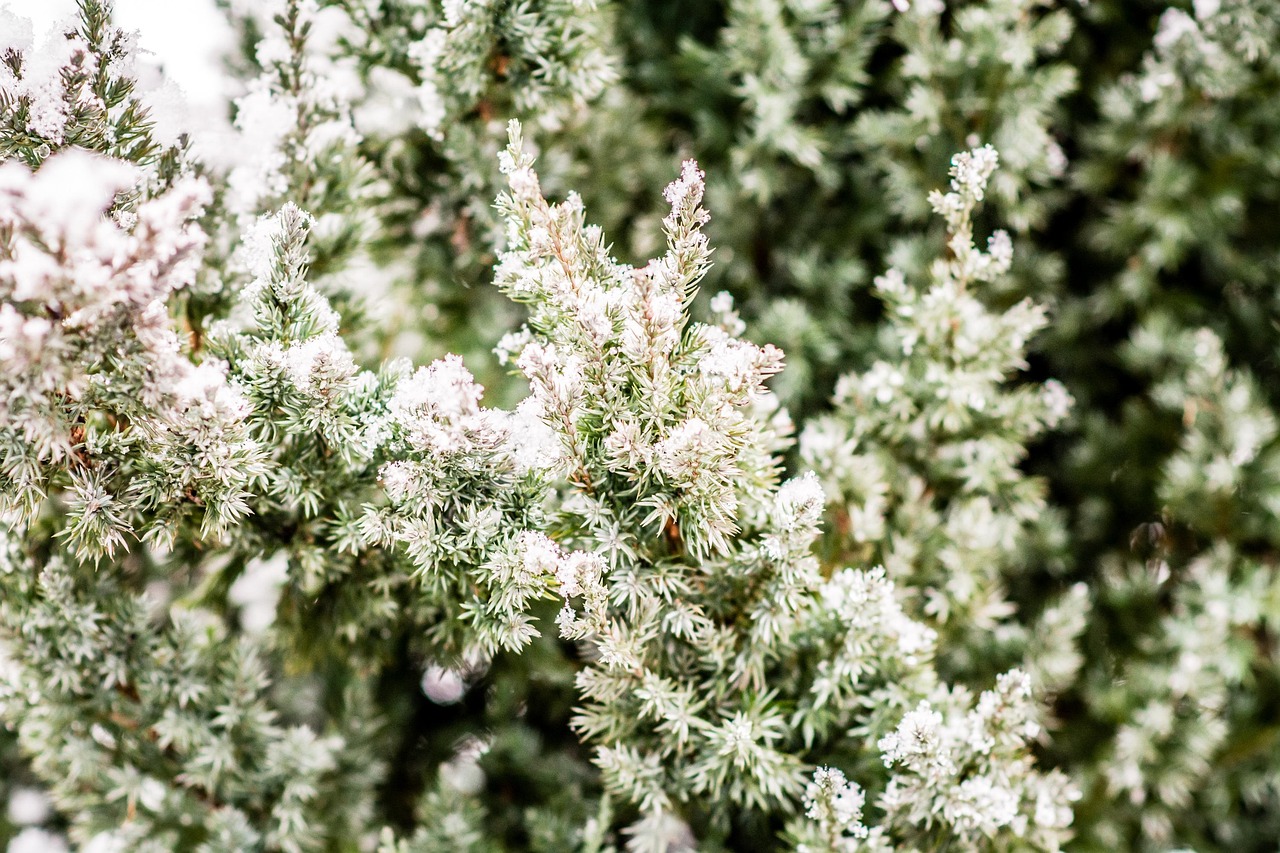
Evergreen Stillness: A Signature Cypress Diffuser Blend
Some evenings call for something quieter than music. A cypress diffuser blend that opens the windows of your senses without demanding anything of you. This recipe was built for exactly that kind of moment: the long exhale at the end of a full day, a Sunday morning before anyone else is awake, or a slow afternoon when the light goes amber and the house finally settles.
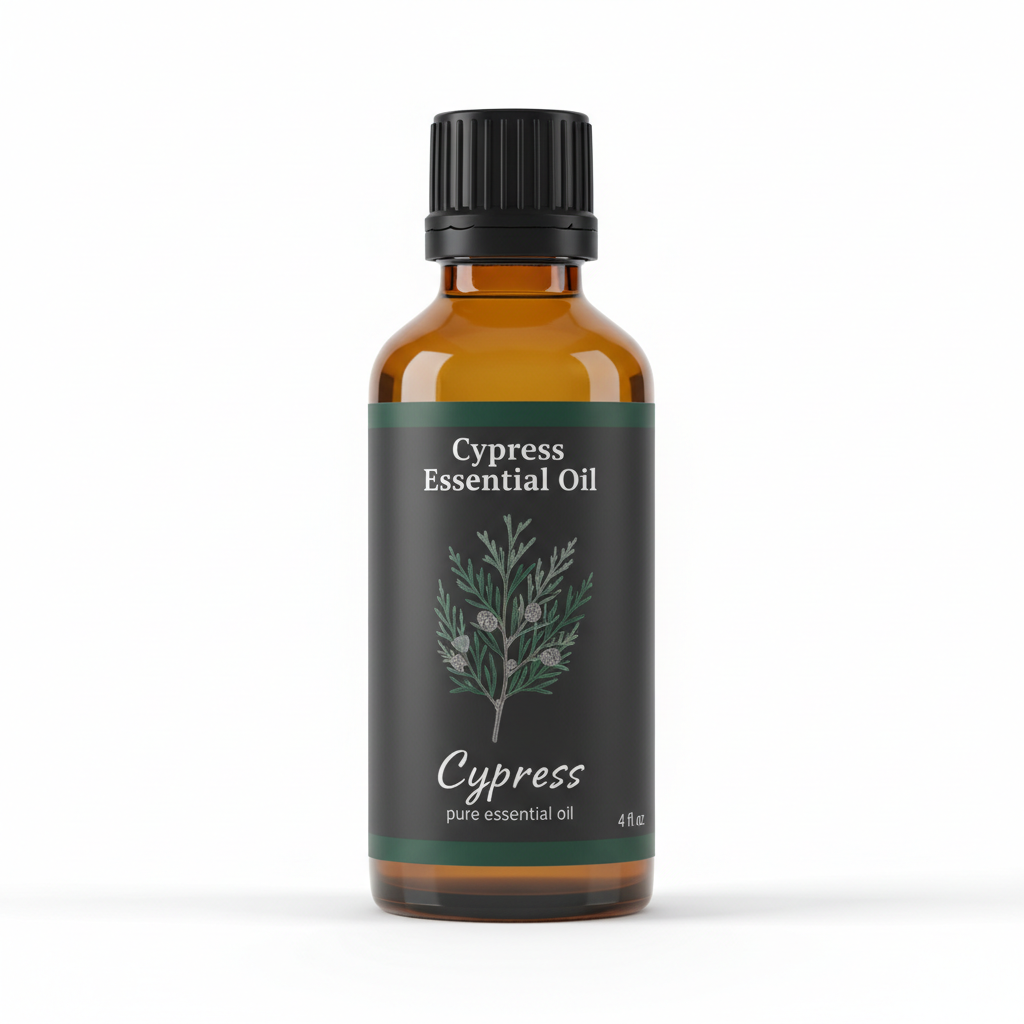
Cypress Essential Oil
Our own Cypress Essential Oil, in sizes from 0.5 oz to bulk.
From $10.99
Shop Now →The anchor of this blend is Cupressus sempervirens, the Mediterranean cypress that has framed hillsides from Tuscany to the Levant for centuries. Its aroma is clean, resinous, and faintly smoky, with a green-wood dryness that sits well in any season. Paired with the right frankincense, it becomes something genuinely atmospheric. In this guide, we explore why Boswellia serrata is the frankincense of choice, how to assemble the blend at home, and how to adjust the recipe for different moods and spaces.
For a broader picture of how cypress works across scent and home contexts, the complete guide to cypress essential oil uses is a useful companion read.
Why Frankincense Serrata: The Indian Variety That Earns Its Place
There are several species of frankincense oil available to home blenders, and the differences between them matter more than most product pages admit. Boswellia carterii from Somalia, Boswellia sacra from Oman, Boswellia frereana from the drier coastal regions of the Horn of Africa. Each has a distinct personality. So why serrata here?
Boswellia serrata is sourced primarily from India, where it is harvested from trees that grow across the dry deciduous forests of Rajasthan, Madhya Pradesh, and Chhattisgarh. The resin is tapped by hand and steam-distilled into an oil with a character quite different from its East African cousins.
Where Boswellia sacra tends toward the citrus-bright and crystalline, and carterii leans into soft, slightly sweet depth, serrata is earthier. It carries a mild, warm woodiness with a faint spice note underneath, almost like sandalwood's quieter sibling. There is very little sharp top note. The opening is gentle, and it dries down slowly into something that reads as ancient and grounded without ever becoming heavy.
That earthiness is precisely what cypress needs in a partner. Cypress essential oil already contributes brightness and lift. Its green, almost aquatic freshness can feel a little stark on its own in a cold-diffuser context. Serrata fills the space beneath it without competing, the way a good bass note supports a melody rather than drowning it. The result is a cypress room fragrance that feels complete: dimensional, calm, and genuinely interesting to sit with.
You can find our sustainably sourced, GC/MS-tested Boswellia serrata essential oil in the shop.
The Full Blend: Evergreen Stillness
Aroma Profile
This evergreen diffuser recipe opens with a breath of cool, resinous cypress. As the blend warms in the diffuser, the serrata emerges as a slow, woody undertone. Cedarwood Virginia ties the two together with its soft pencil-shaving note, and a single drop of vetiver grounds the whole composition without pulling it toward heaviness. The final impression is of a forest floor after rain, if that forest were somewhere temperate and still.
Ingredients
| Ingredient | Drops | Approximate Volume (mL) | Role in Blend |
|---|---|---|---|
| Cypress essential oil (Cupressus sempervirens) | 6 | 0.30 mL | Top/middle: green, resinous, fresh |
| Frankincense serrata essential oil (Boswellia serrata) | 4 | 0.20 mL | Middle/base: warm, earthy, woody |
| Cedarwood Virginia essential oil (Juniperus virginiana) | 3 | 0.15 mL | Middle: dry wood, soft, bridging |
| Vetiver essential oil (Vetiveria zizanoides) | 1 | 0.05 mL | Base: smoky, rooted, depth |
Total: 14 drops (0.70 mL) per diffuser session.
This ratio uses cypress as the dominant note at roughly 43% of the blend. If you have a smaller room or a lighter-style ultrasonic diffuser, start with 10 drops total and scale the ratios down proportionally.
Step-by-Step Blending Instructions
- Prepare a clean small glass vial or a 2 mL dark glass sample bottle. This makes it easy to pre-batch the blend and store it for multiple sessions without re-measuring each time. Amber or cobalt glass is preferable to clear.
- Add the oils in order from heaviest to lightest viscosity. Start with vetiver (1 drop), then cedarwood (3 drops), then serrata (4 drops), then cypress (6 drops). Adding heavier oils first helps them integrate properly rather than sitting on top.
- Cap the vial and roll it gently between your palms for 20 to 30 seconds. Rolling warms the oils slightly and encourages the molecules to begin mingling. Do not shake aggressively.
- Allow the pre-blended vial to rest for at least 15 minutes before diffusing. This short resting period lets the aroma begin to develop. For a more fully rounded scent, allow 24 hours if you have pre-batched a larger quantity.
- Add the recommended number of drops to your diffuser's water reservoir according to the manufacturer's instructions. Most ultrasonic diffusers work well with 8 to 15 drops per 100 mL of water. Nebulizing diffusers require no water; add the pre-blended oil directly.
- Run your diffuser in 30 to 60 minute intervals with breaks between sessions. Continuous diffusion in an enclosed space is not recommended.
Dilution, Safety Notes, and Patch Testing
This blend is formulated for aromatic diffusion only, not topical application. If you wish to adapt any of these oils for skin use, please consult our guide to blending cypress with other oils for appropriate dilution guidance.
General Diffusion Safety
- Diffuse in a well-ventilated room. Avoid using in small, sealed spaces for extended periods.
- Keep diffusers out of reach of children and pets. Many essential oils that are safe for adult aromatic use may not be appropriate around young children, cats, or dogs. Consult a qualified veterinarian before diffusing around animals.
- Pregnant or nursing individuals should consult a qualified healthcare provider before using any essential oil blends aromatically.
- People with respiratory sensitivities should introduce any new diffuser blend cautiously and in short sessions.
- Vetiver is thick and viscous. Warm the bottle briefly between your hands before measuring to ease the drop count.
If You Plan to Adapt This for Topical Use
A standard dilution for adult skin is 2% in a carrier oil, which equals roughly 12 drops of essential oil per 30 mL (1 oz) of carrier. Always perform a patch test: apply the diluted blend to the inner forearm, cover lightly, and wait 24 hours before wider use. Discontinue use if any irritation occurs and consult a healthcare provider.
Storage and Shelf Life
Pre-batched blends store well when handled correctly. A few practical guidelines:
- Container: Use a dark glass bottle (amber or cobalt) with a tight-fitting cap or orifice reducer. Avoid plastic, as some essential oils degrade certain plastics over time.
- Location: Store in a cool, dry place away from direct sunlight and heat sources. A drawer or cupboard works well. Avoid bathroom shelves where humidity fluctuates.
- Shelf life: Cypress oil, when properly stored, remains at its aromatic peak for approximately 2 to 3 years. Serrata and cedarwood are similarly stable. Vetiver is one of the most stable essential oils available, with a shelf life that often extends beyond 5 years. A pre-blended vial, stored correctly, should retain its character for at least 18 to 24 months.
- Labeling: Always label your blends with the date blended and the oil names. Memory is not a reliable storage system.
Variations on Evergreen Stillness
Once you know the base of this cypress diffuser blend, it becomes a framework rather than a fixed recipe. Here are three directions worth exploring.
Variation 1: Citrus Edge (Brighter and More Uplifting for Morning Use)
Replace the vetiver entirely and reduce cedarwood to 2 drops. Add 2 drops of bergamot (bergapten-free) and 1 drop of lemon or mandarin. The cypress and serrata foundation remains, but the citrus opens the top of the blend considerably. This cypress room fragrance variation suits a morning workspace or a bright, airy kitchen.
- Cypress: 6 drops
- Frankincense serrata: 4 drops
- Cedarwood Virginia: 2 drops
- Bergamot (bergapten-free): 2 drops
- Lemon or mandarin: 1 drop
Variation 2: Deep Winter (Richer and More Resinous for Cold Months)
Increase serrata to 5 drops and add 2 drops of black spruce in place of one of the cedarwood drops. A single drop of clove bud (no more) can be folded in for warmth and spice. This version suits a wood-paneled room or a reading corner on a cold evening. For more seasonal inspiration, the cypress for the seasons guide explores similar territory in depth.
- Cypress: 6 drops
- Frankincense serrata: 5 drops
- Black spruce: 2 drops
- Cedarwood Virginia: 2 drops
- Clove bud: 1 drop
- Vetiver: 1 drop
Variation 3: Smoke and Stone (Minimalist, for Focused Quiet)
Strip the blend back to three oils only. Cypress at 6 drops, serrata at 5 drops, vetiver at 2 drops. Nothing else. This is a deliberately spare composition, and it rewards a still room. The vetiver becomes more present without the cedarwood to soften it, giving the blend a slightly smoky, almost peaty character that some people find especially grounding for a bedtime wind-down ritual.
- Cypress: 6 drops
- Frankincense serrata: 5 drops
- Vetiver: 2 drops
A Few Final Notes on Sourcing
The quality of any cypress diffuser blend depends almost entirely on the quality of the individual oils going into it. Adulterated or low-grade cypress oil often smells sharp and one-dimensional, missing the layered green-wood character that makes this blend work. For serrata in particular, look for a supplier who provides GC/MS (gas chromatography/mass spectrometry) testing data and can confirm the botanical species clearly on the label. "Frankincense" as a generic name covers several quite different oils, and serrata specifically should not be used as a catch-all term.
Good oils do not need to be expensive. They do need to be honest. Check the Latin name, check the country of origin, and when in doubt, request documentation. Your nose will also tell you something. A well-sourced Boswellia serrata should smell warm, quiet, and mildly complex, never harsh or flat.
Build this blend once, note what you notice, and adjust from there. The evergreen diffuser recipe above is a starting point, not a final word. Your space, your diffuser model, and your own sense of smell are all variables worth paying attention to.