
Cypress for the Seasons: Winter Green and Spring Fresh Home Scents
It is early October, which is when holiday scent planning quietly begins. Shelves fill with pine-and-spice candles, and the search for christmas diffuser blends climbs weeks before the first tree goes up. This is a good moment to decide what your home will smell like from November to May, and to learn the one skill that matters more than any recipe: dosing for the room.
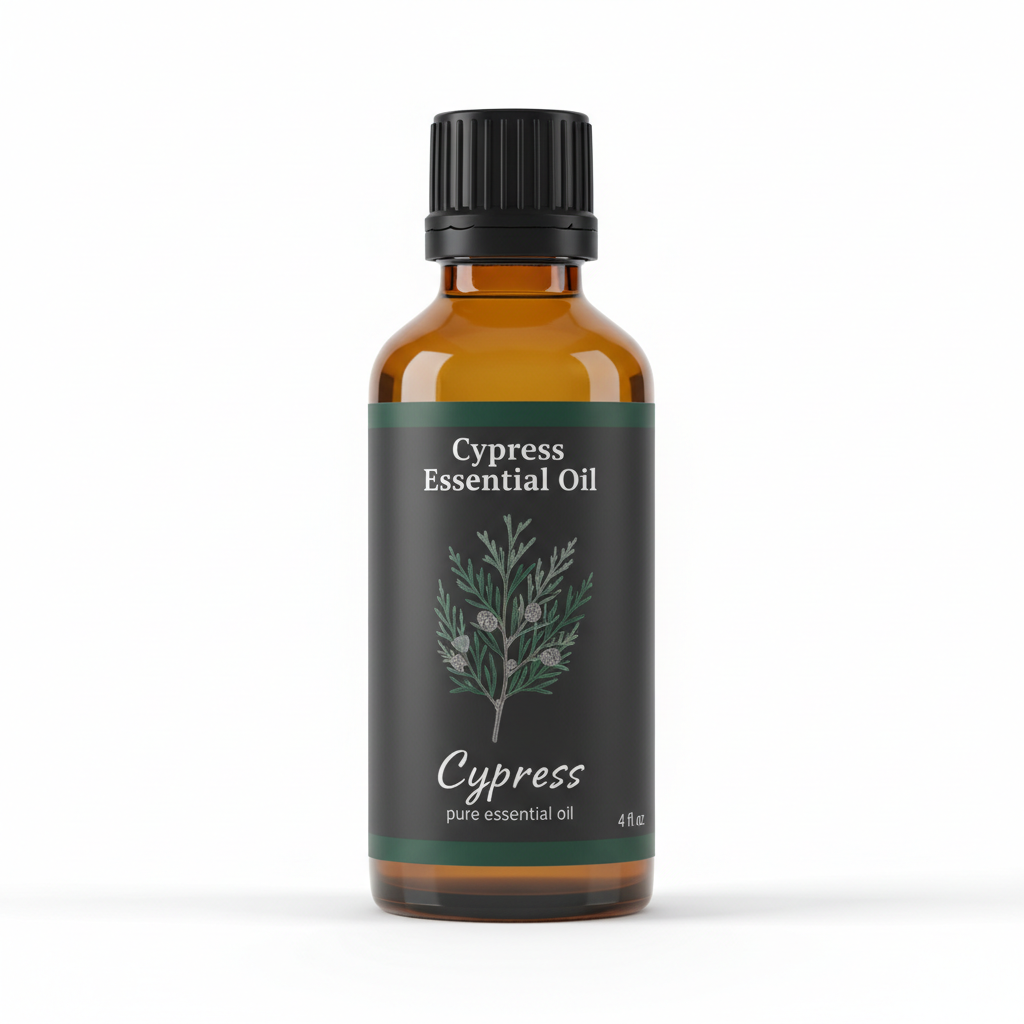
Cypress Essential Oil
Our own Cypress Essential Oil, in sizes from 0.5 oz to bulk.
From $10.99
Shop Now →Most seasonal blend lists rename the same recipe. "Winter Woods" in December becomes "Fresh Start" in January and "Spring Meadow" in April, with the same four oils in a new order. The oils are not the real seasonal variable. The room is. A sealed, heated living room in January and an open-windowed kitchen in May are different volumes of air with different turnover, and the same eight drops behave very differently in each.
Why conifers own the cold months
The link between evergreen scent and winter is partly cultural, and it helps to say so plainly. Bringing boughs indoors, hanging wreaths and cutting a tree are old seasonal habits in much of Europe and North America, and generations of pine-scented candles, cleaners and air fresheners reinforced them. If you grew up with a real tree, the smell of conifer probably files itself under "December" before you can think about it.
The association is also built on something real. Cypress (Cupressus sempervirens) and fir oils are rich in monoterpenes such as alpha-pinene, the same volatile molecules you smell walking through a conifer forest. PubChem lists alpha-pinene among the most widespread terpenes in plants, and it is a large part of why cypress reads as green, resinous and dry rather than sweet. That dry, clean quality is why a cypress winter scent suits a heated room: it adds a woodland note without the heaviness of a vanilla or amber candle.
So the connection is learned and chemical at once. Lean into it. There is nothing wrong with wanting your house to smell like the holidays, and conifers are the most direct way to get there. For the wider picture of how cypress behaves in a home, the complete guide to cypress uses for home and skin covers it in more depth.
The room is the variable
Every recipe below is written for a standard 100 ml ultrasonic diffuser tank filled with water. Think of drops per 100 ml as a starting dose, then adjust for the space.
- Winter rooms are closed rooms. Windows stay shut and heating recirculates the same air, so volatile compounds linger longer than they would in spring. Run shorter sessions (30 to 45 minutes, then off for at least an hour) and crack a window briefly each day.
- Small rooms need fewer drops, not shorter recipes. In a bathroom or a small bedroom, halve the quantities. Keep the ratios so the blend still smells the way it is meant to.
- Open, airy rooms can take the full dose. A kitchen-living space with high ceilings dilutes a blend quickly.
If you can still clearly smell the blend after leaving the room and coming back, you have overdone it. A well-dosed room should read as a faint backdrop that you notice on entering and then forget.
Deep winter and the holidays
This is the blend most people want from November through December. It is the one that makes a room smell like a cut tree and an orange studded with spices, without resorting to artificial pine.
| Oil | Drops per 100 ml | Role |
|---|---|---|
| Cypress | 3 | Dry, green backbone |
| Fir | 2 | Sweeter, balsamic tree note |
| Sweet orange | 2 | Warm citrus brightness |
| Clove bud | 1 | A single drop of spice |
Cypress carries the structure, fir rounds it into something closer to a real tree, and orange keeps the whole thing from turning heavy. The clove is a seasoning, not an ingredient you build around.
One drop of clove, and mean it. Clove bud is dominated by eugenol, and Robert Tisserand and Rodney Young's Essential Oil Safety (2nd edition) treats it as one of the more potent oils for skin contact, which is a good reason to respect it in the air too. Add a second drop and the room does not smell twice as festive. It smells like a dental office, and it will stay that way for a day because the molecule is heavy and clings to fabric. If you misjudge, there is no quick fix other than airing the room out and waiting.
These christmas diffuser blends work best when the oils are in good condition. Because alpha-pinene oxidizes readily on air contact, a half-empty bottle of cypress or fir ages faster than a full one, and oxidized conifer oil tends to smell sharp and turpentine-like rather than green. If the bottle you opened last December has been sitting in a warm cupboard, smell it before you build a holiday blend around it.
Hosting: a lighter hand than you would use alone
Holiday gatherings change the dosing calculation. A blend you find pleasant at home alone may be too much for a guest who is sensitive to fragrance, and a full house of people raises the air's overall scent load before you add anything.
The host etiquette is simple. Use the lower end of your usual dose, start the diffuser an hour before guests arrive, and switch it off when they walk in. The room will hold a faint trace without anyone being confronted by it. If you know someone is scent-sensitive, skip diffusing for the day and let a bowl of fresh orange peel and a cut fir branch do the work.
Pets deserve the same consideration. Cats and dogs process some essential oil components differently from people, and the ASPCA Animal Poison Control Center is the right place to check before diffusing around animals. Keep sessions short, keep the room open to another space so animals can leave, and never leave a diffuser where it can be knocked over. If you have any doubt, ask your veterinarian.
The January reset
Once the tree is down, a heavy spiced room starts to feel stale. January calls for the opposite: clean and spare.
- Cypress: 3 drops
- Lemon: 2 drops
This is the shortest recipe in the article, and it works because the two oils pull in different directions. Cypress is dry and woody, lemon is sharp and bright, and together they read as a freshly cleaned room. Run it for 30 minutes in the morning while you open the windows for a few minutes. Among winter diffuser blends, this is the one that suits a house that has just been put back in order.
Spring fresh
By April, the windows are open at least part of the day, and the blend should soften to match.
- Cypress: 2 drops
- Lavender: 2 drops
- Lemon: 1 drop
Dropping cypress from 3 to 2 matters. Lavender brings a floral, herbaceous softness that needs room to be noticed, and too much cypress will flatten it. Lemon is only a single drop here, a lift rather than a headline. If you are curious why these three sit well together, the same logic runs through building green woodland accords in perfumery, where cypress is used as a dry green anchor beneath brighter notes.
Seasonal cypress blends like this one are also forgiving. Because the room has fresh air moving through it, you can run a session a little longer, up to an hour, as long as you are not stacking one session on top of another.
High summer: a lighter hand, or none at all
Heat changes how scent travels and how it is received. Warm air carries volatile compounds quickly and makes resinous notes feel thick, and conifers can feel heavy when the room is already warm. It is perfectly fine to put them on the shelf from July through August.
If you want to diffuse in summer, use a lighter hand: one or two drops of lemon or sweet orange per 100 ml, a session of 20 to 30 minutes, and the windows open. A single drop of cypress in a lemon blend is enough to add a little dry greenness. For other low-effort ways to use cypress without a diffuser at all, the 15 fresh ways to use cypress at home has several that suit warm weather better than a closed-room session does.
Fall
Fall is its own season of blending, with smoke, wood and warm spice in the mix. We cover it in a dedicated bonfire-season piece, which is the place to go for fall diffuser blends. The short version: it sits between the January reset and the deep winter recipe, with a bit more wood than citrus, and the same room logic applies. Ventilate more as the nights cool and the windows close.
Who this is not for, and what goes wrong
This approach is not for anyone who wants a strong, room-filling fragrance. A well-dosed diffuser is a faint background note. If you want something that fills the house, a candle or simmer pot is better suited.
The common mistakes are predictable. People double a spice oil because the first minutes smell faint, then find the room overwhelming an hour later. They run a diffuser for hours in a sealed room because the winter weather makes airing out unappealing. They keep using last year's bottle, now oxidized, and wonder why the blend smells harsh. And they forget that guests and pets share the air.
Essential oils are for fragrance and atmosphere only. If you are pregnant, nursing, or under a clinician's care, ask your healthcare provider before diffusing regularly, and keep all oils away from children and animals.
The seasonal calendar at a glance
| Season | Blend (per 100 ml) | Room note |
|---|---|---|
| Deep winter and holidays | Cypress 3, fir 2, sweet orange 2, clove bud 1 | Closed room: 30 to 45 minute sessions, ventilate daily |
| January reset | Cypress 3, lemon 2 | Run in the morning with a window open |
| Spring fresh | Cypress 2, lavender 2, lemon 1 | Open windows allow longer sessions |
| High summer | Citrus-led, cypress optional | Short sessions, windows open |
| Fall | See the bonfire-season piece | Ventilate as the windows close |
If you are building a seasonal shelf and need a bottle of cypress to start, a single good oil goes a long way, and you can browse the cypress oils in the shop. Buy a size you will use within a season or two so the oil stays fresh. Then pick one recipe, dose it for the room you actually have, and adjust from there. That is the whole craft of evergreen home fragrance: the oils change a little, and the room changes a lot.