Cypress Essential Oil for Soap and Candle Makers: FAQ
Cypress essential oil shows up often in soap and candle formulas because of its crisp, evergreen scent and its reputation for behaving well in a variety of bases. But crafters new to it tend to run into the same handful of questions about usage rates, discoloration, and how it holds up to heat. This FAQ pulls together the most common ones, organized by theme, so you can find an answer without digging through forum threads.
Cypress Essential Oil
Our own Cypress Essential Oil, in sizes from 0.5 oz to bulk.
From $10.99
Shop Now →Cypress Oil Basics for Crafters
What is cypress essential oil, and where does it come from?
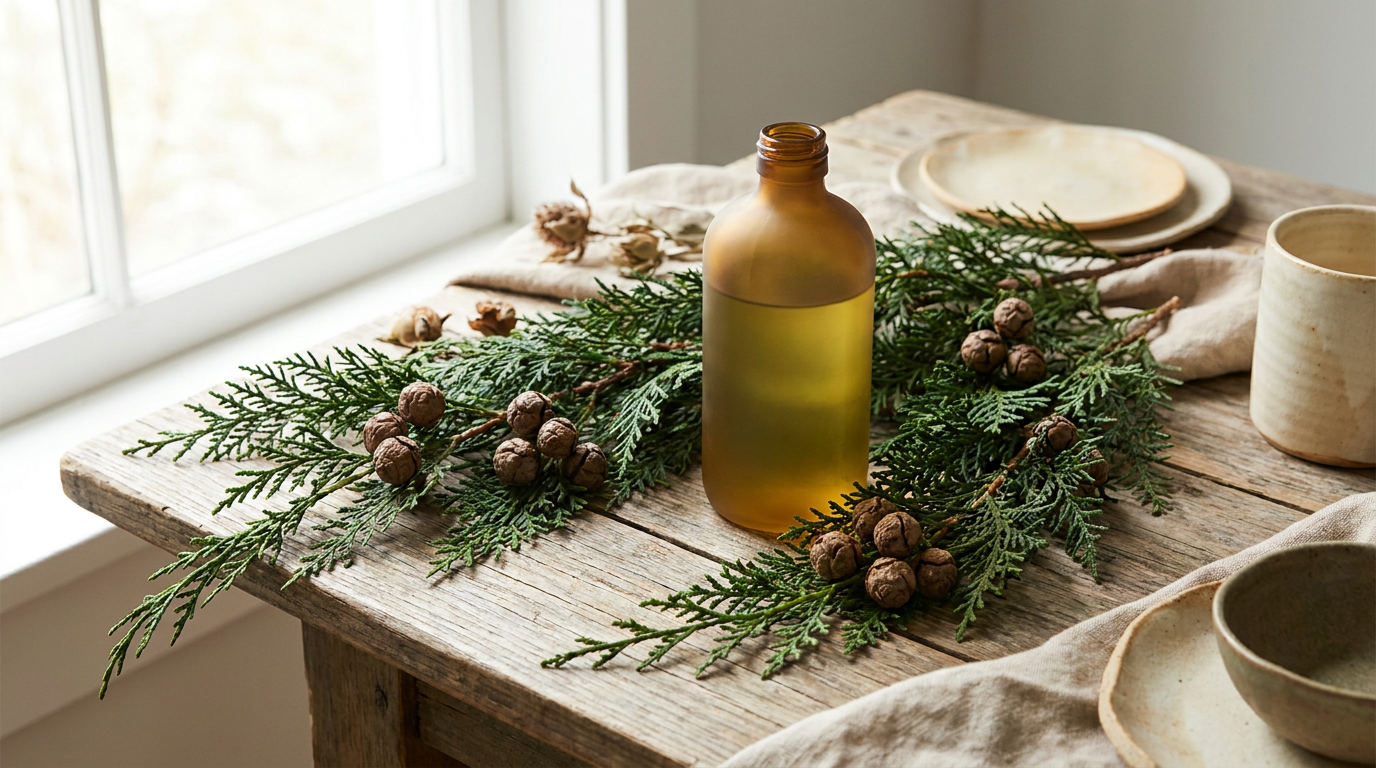
Cypress essential oil is steam distilled from the needles, twigs, and cones of the Mediterranean cypress tree (Cupressus sempervirens). Most commercial supply comes from France, Spain, and Morocco, where the trees are cultivated for both timber and oil production. Crafters like it for a fresh, woody, slightly resinous scent that reads as outdoorsy rather than sweet.
What does cypress essential oil smell like in finished soap or candles?
Expect a green, forest-like opening with a dry, woody base note, somewhat similar to juniper or cedar but sharper and fresher. In soap, the scent tends to mellow and become slightly softer over cure time. In candles, cypress reads clean and outdoorsy rather than sweet or floral, which is why it pairs so often with pine, fir, and citrus blends.
Is cypress essential oil the same as cypress fragrance oil?
No. Essential oil is a natural distillate from the plant itself, while fragrance oil is a synthetic or partly synthetic blend formulated to mimic a scent. Fragrance oils are often more shelf-stable and predictable in soap and candle bases, but essential oil buyers are typically choosing cypress specifically for its natural, plant-derived sourcing, not for cost or consistency.
Does cypress essential oil need to be diluted before adding to a soap or candle base?
Essential oils are typically added directly to melted wax or soap batter rather than pre-diluted in a carrier oil, since the base itself acts as the diluting medium. That said, always work from a supplier's usage guidelines and a fragrance calculator for your specific recipe size, since concentration needs differ between rinse-off soap and leave-on candle wax. When in doubt, start on the lower end of a recommended cypress oil usage rate for crafting and adjust in small batches.
Cypress Essential Oil for Soap Making
What usage rate should I start with for cypress essential oil for soap making?
Most soap makers start cypress essential oil in the range of 0.5 to 1 ounce per pound of oils (roughly 3 to 6 percent), then adjust based on scent strength and any discoloration observed in test batches. Because essential oil strength varies by distillation batch and supplier, it is worth running a small test loaf before committing a full recipe to a single usage rate. A fragrance calculator built for cold process soap will convert this into a precise weight for your specific formula.
Will cypress essential oil cause discoloration in cold process soap?
Cypress oil discoloration in soap is a real consideration: the oil can push a bar toward tan, beige, or light brown tones as it ages, especially in lighter base recipes. This happens gradually over the cure period rather than immediately at pour, so a bar that looks pale on day one may deepen in color by week four. If you want to keep a true white or pastel bar, consider a titanium dioxide base coat or plan your color palette around earthy, natural tones instead of fighting the drift.
Does cypress oil accelerate trace in cold process soap?
Some soap makers report mild to moderate acceleration with cypress essential oil, though this varies by supplier, batch, and the rest of your recipe's oil profile. If acceleration is a concern, work at a slightly cooler temperature, use a stick blender in short pulses, and have your mold ready before adding fragrance. Testing a small single-pound batch first will tell you how your specific oil behaves before you commit a full recipe.
Can I use cypress essential oil in melt and pour soap?
Yes, cypress essential oil generally works well in melt and pour bases, and the discoloration effect tends to be less pronounced than in cold process since there is no long saponification and cure period involved. Add it after the base has cooled slightly below pouring temperature to reduce evaporation loss. Clear glycerin bases will show any color shift more visibly than opaque white bases, so factor that into your design if you are aiming for a specific look.
How does cypress oil behave in cold process versus hot process soap?
Hot process soap is fully saponified before fragrance is added, which means less of the oil is exposed to the ongoing chemical reaction and scent retention can be slightly better. Cold process exposes the oil to a longer saponification window, which is part of why discoloration and trace acceleration show up more often in cold process batches. Neither method is wrong for cypress oil, but expect somewhat different results in scent throw and color between the two.
Cypress Essential Oil for Candle Making
What is the flash point of cypress essential oil, and why does it matter for candles?
Cypress oil flash point in candles is generally cited in the range of roughly 100 to 130 degrees Fahrenheit, though this can vary by supplier and distillation batch, so always check the specific safety data sheet for the oil you are using. The flash point is the temperature at which vapors from the oil can ignite near an open flame, which matters both for how hot you can pour your wax and for how the oil behaves once the candle is burning. Adding fragrance below the flash point and well below your wax's recommended fragrance-load temperature helps preserve scent instead of burning it off during pour.
At what temperature should I add cypress essential oil to candle wax?
Most soy and paraffin wax guides recommend adding fragrance between 165 and 185 degrees Fahrenheit, which is comfortably above the oil's flash point range but below the point where scent volatilizes too quickly. Pouring too hot can cause the lighter, fresher top notes of cypress to evaporate before the candle even sets. Stir gently but thoroughly for at least two minutes to fully incorporate the oil before pouring into your container.
What fragrance load should I use for cypress essential oil in candles?
A common starting range is 6 to 10 percent of the total wax weight, though essential oils in general throw scent less strongly than synthetic fragrance oils, so cypress may need to sit at the higher end of that range for a noticeable cold and hot throw. Run a burn test with a single candle before scaling up a full batch, since wax type, wick size, and container shape all affect how strong the final scent reads. Overloading fragrance beyond the wax manufacturer's maximum can cause sweating, poor adhesion, or an unstable flame.
Does cypress essential oil work in soy wax, paraffin, and coconut wax equally well?
Cypress oil generally performs across all three, but soy and coconut waxes tend to hold scent at a slightly lower fragrance load than paraffin because of differences in melting point and density. Coconut and coconut-blend waxes are known for particularly strong cold throw, which can make cypress read more prominent even at moderate percentages. If you switch wax types, treat it as a new recipe and re-test rather than assuming the same fragrance load will carry over.
Why does my cypress candle lose scent throw after curing?
Candles typically need one to two weeks of cure time after pouring for the fragrance oil to fully bind with the wax, and essential oils in particular can mellow noticeably during this window compared to their scent straight out of the bottle. If throw is still weak after a full cure, the fragrance load may simply be too low for that wax and wick combination. Storing finished candles away from direct light and heat also helps preserve scent longevity over time.
Blending and Formulation
What scents pair well with cypress essential oil?
Cypress blends naturally with other evergreen and woody notes like fir, pine, cedarwood, and juniper for a forest-inspired profile. It also pairs well with brighter citrus notes such as bergamot, lemon, or grapefruit for a fresher, more uplifting combination, and with warm base notes like sandalwood or vetiver for depth. A common starting blend ratio is two parts cypress to one part citrus and one part woody base note, adjusted to taste.
Can I combine cypress essential oil with fragrance oils in the same batch?
Yes, many crafters blend a natural essential oil like cypress with a synthetic fragrance oil to balance cost, scent strength, and stability. When combining the two, calculate your total fragrance load based on the combined weight of both oils, not each one separately, so you stay within your wax or soap base's safe maximum. Test the blend in a small batch first, since essential oils and fragrance oils can behave differently in terms of trace acceleration or scent throw.
How much cypress essential oil should I use in a lotion or body butter alongside soap and candle projects?
For leave-on skin products, a general starting dilution is 0.5 to 1 percent of the total formula, which is lower than typical soap or candle usage rates because the product stays on the skin rather than washing off or burning away. Always calculate dilution by total batch weight and patch test any new formula on a small area of skin before full use. If you are new to essential oil dilution math, a simple percentage calculator designed for skin care formulation will keep your ratios accurate.
Does the color of cypress essential oil vary by batch, and will that affect my finished product?
Cypress oil color can range from pale yellow to a light olive-green depending on the distillation and the specific plant material used, and older stock tends to darken slightly with age and light exposure. In candles this rarely shows up visibly once diluted in wax, but in very light or clear soap bases it can contribute a faint tint in addition to the discoloration that develops during cure. Buying from a consistent supplier and checking the batch date on your invoice helps you anticipate color shifts before they show up in a finished product.
Safety and Storage
How should I store cypress essential oil to keep it fresh for crafting?
Store cypress essential oil in a dark glass bottle, tightly capped, away from direct sunlight and heat sources such as a stove or sunny windowsill. Most essential oils have a usable shelf life of two to three years when stored properly, though oxidation can gradually change both scent and how the oil behaves in a recipe. If an older bottle smells noticeably different from a fresh batch or has become thick and cloudy, it is worth replacing before using it in a new batch.
Is cypress essential oil safe to use around pets in a home candle or soap workshop?
Concentrated essential oils, including cypress, should be kept out of reach of household pets, since animals metabolize aromatic compounds differently than people do and undiluted oil spilled or left accessible poses a real risk. Once fully incorporated into cured soap or a burning candle, the concentration is far lower, but it is still sensible to keep a workshop well ventilated and to store bulk oil bottles in a closed cabinet. If you have specific concerns about a pet's exposure, a veterinarian is the right person to ask.
Should I patch test soap or lotion made with cypress essential oil before regular use?
Yes, patch testing is good practice for any new essential oil formulation, including cypress. Apply a small amount of the finished, cured product to a small area of skin, such as the inner forearm, and wait 24 to 48 hours to check for any redness or irritation before using it more broadly. This is especially worth doing for leave-on products like lotion, since dilution and skin contact time are both higher than in a rinse-off soap.
Are there people who should avoid cypress essential oil in DIY products?
Pregnant individuals, young children, and anyone with known sensitivities to plant-derived oils are often advised to be more cautious with concentrated essential oils in general, cypress included. If you or someone using your finished product falls into one of these groups, or has any ongoing health question, checking with a qualified healthcare provider before use is the safest approach. This guidance applies to homemade skin care in particular, since exposure and dilution are harder to control precisely than in commercially tested products.
Can I sell soap or candles made with cypress essential oil?
Many small-batch crafters do sell cypress-scented soap and candles, but selling any body care or home fragrance product means following your local and national labeling and safety regulations, which can include ingredient disclosure and specific claims restrictions. Avoid describing your product in terms that suggest a medical or drug-like effect, and stick to describing scent, ingredients, and general cosmetic use. If you plan to sell at any real volume, consulting a professional familiar with cosmetic labeling law for your region is worth the upfront cost.
Quick Reference: Cypress Oil at a Glance
| Use Case | Typical Starting Rate | Key Consideration |
|---|---|---|
| Cold process soap | 0.5 to 1 oz per lb of oils | May accelerate trace; watch for discoloration during cure |
| Melt and pour soap | Similar to cold process, added post-cooling | Less discoloration risk than cold process |
| Candle wax (soy/paraffin/coconut) | 6 to 10% of wax weight | Add between 165 to 185°F, above the oil's flash point |
| Lotion or body butter | 0.5 to 1% of total formula | Patch test before regular use |
Usage rates above are general starting points drawn from common crafting practice, not fixed rules. Always verify against your specific supplier's safety data sheet and your own small-batch testing before scaling a recipe.