Hinoki vs Mediterranean Cypress Oil: Telling Them Apart
Hinoki has a reputation for calm, temple-wood serenity, and it earns plenty of it. But hinoki is Chamaecyparis obtusa, a different genus from the Cupressus sempervirens we sell, so a bottle labelled "Japanese cypress" and a bottle of Mediterranean cypress are simply different oils. We love ours; this is a tour of the cousin, so you know what a hinoki label is telling you.
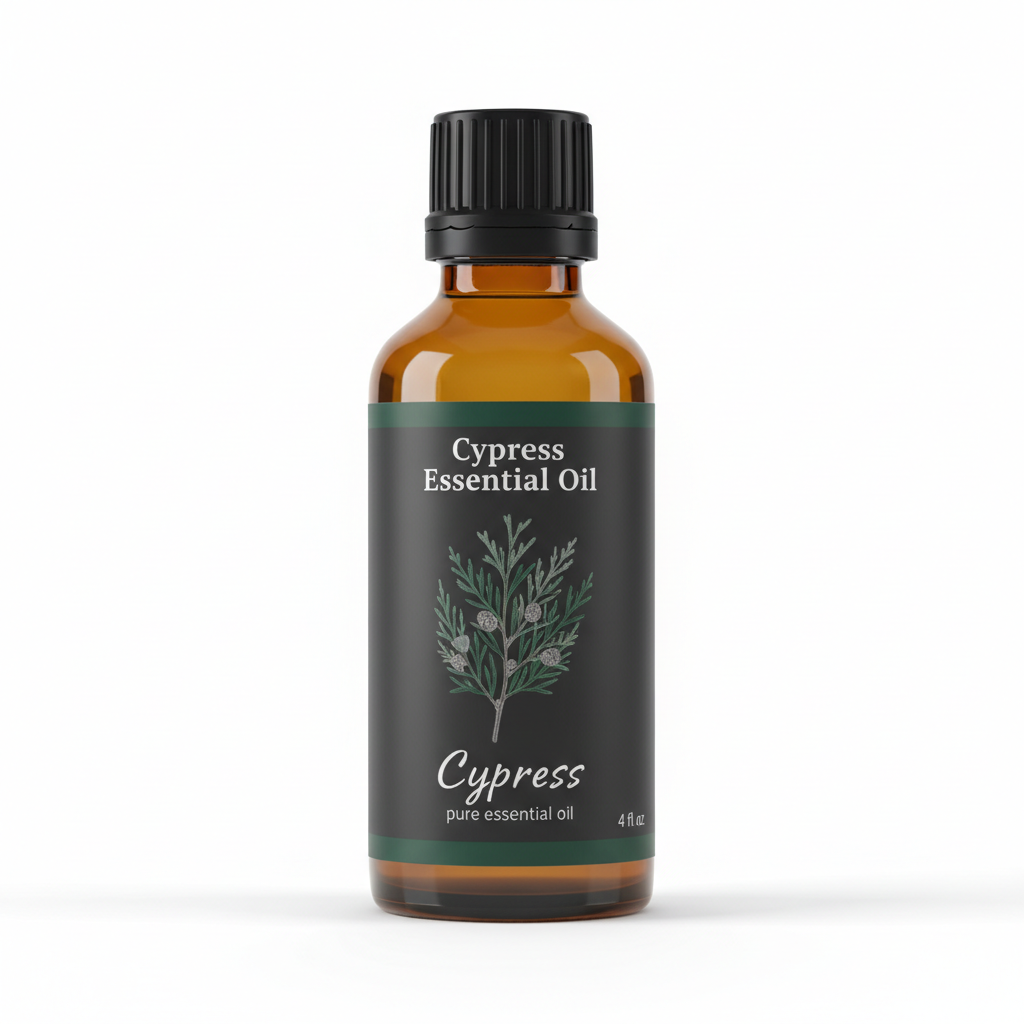
Cypress Essential Oil
Our own Cypress Essential Oil, in sizes from 0.5 oz to bulk.
From $10.99
Shop Now →One name, three different oils
The most surprising thing about hinoki oil is how much it depends on which part of the tree went into the still. Published analyses read like descriptions of unrelated oils, because in a sense they are.
- Leaf oil, distilled from dried leaves collected in Korea, was led by alpha-terpinyl acetate, with sabinene, bornyl acetate and limonene close behind (Kim et al., 2024). Those are floral-fruity, slightly balsamic notes.
- Wood oil from a Taiwanese form of the tree was dominated by alcohols such as alpha-terpineol, borneol and alpha-cadinol, across 57 compounds (Chien et al., 2014).
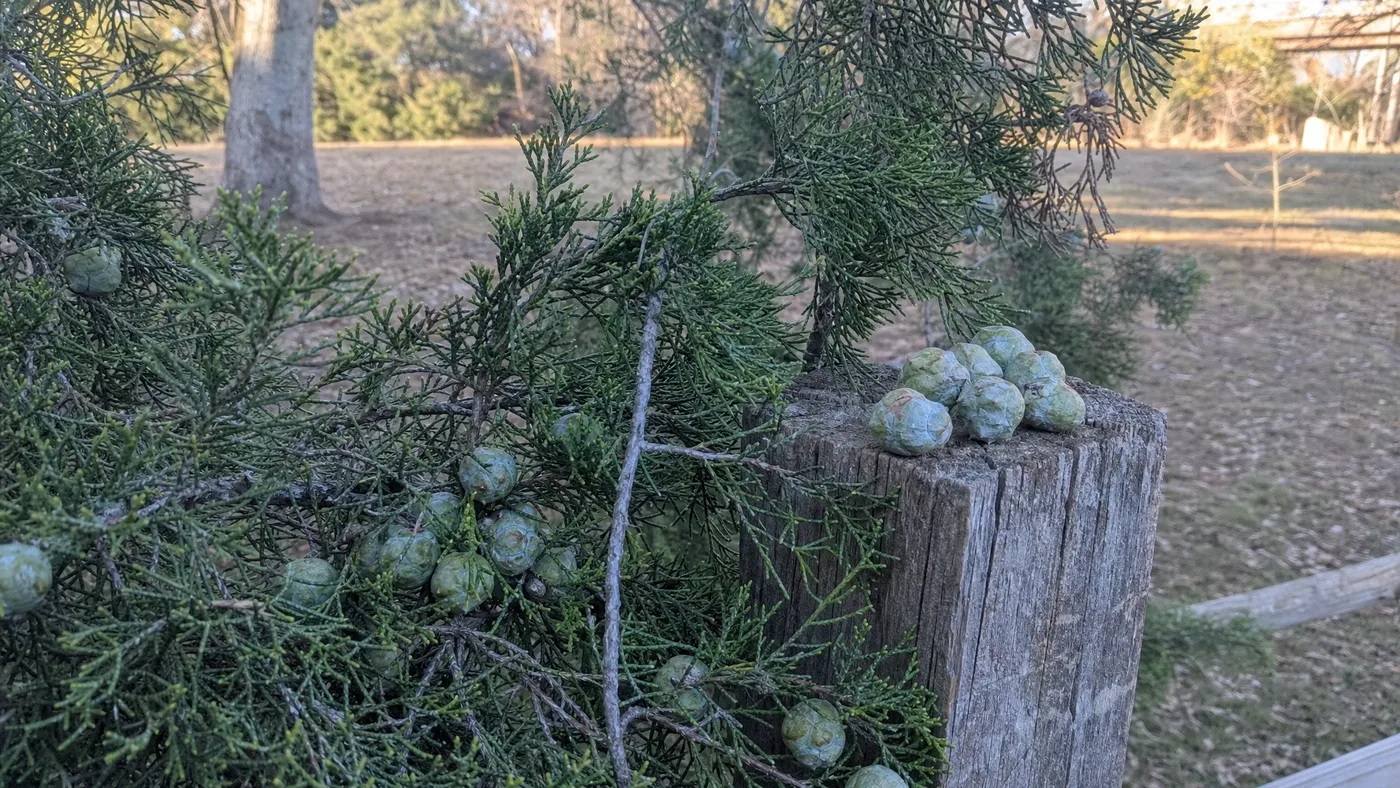
- Fruit (cone) oil from trees grown in Sudan was almost all alpha-pinene, the sharp conifer note (Eltayeb et al., 2023).
Each is a single sample from a single study, so none is "the" hinoki profile. What they show is that the botanical name alone does not predict the scent. A leaf oil, a wood oil and a cone oil should smell quite unlike each other.
Where Mediterranean cypress fits
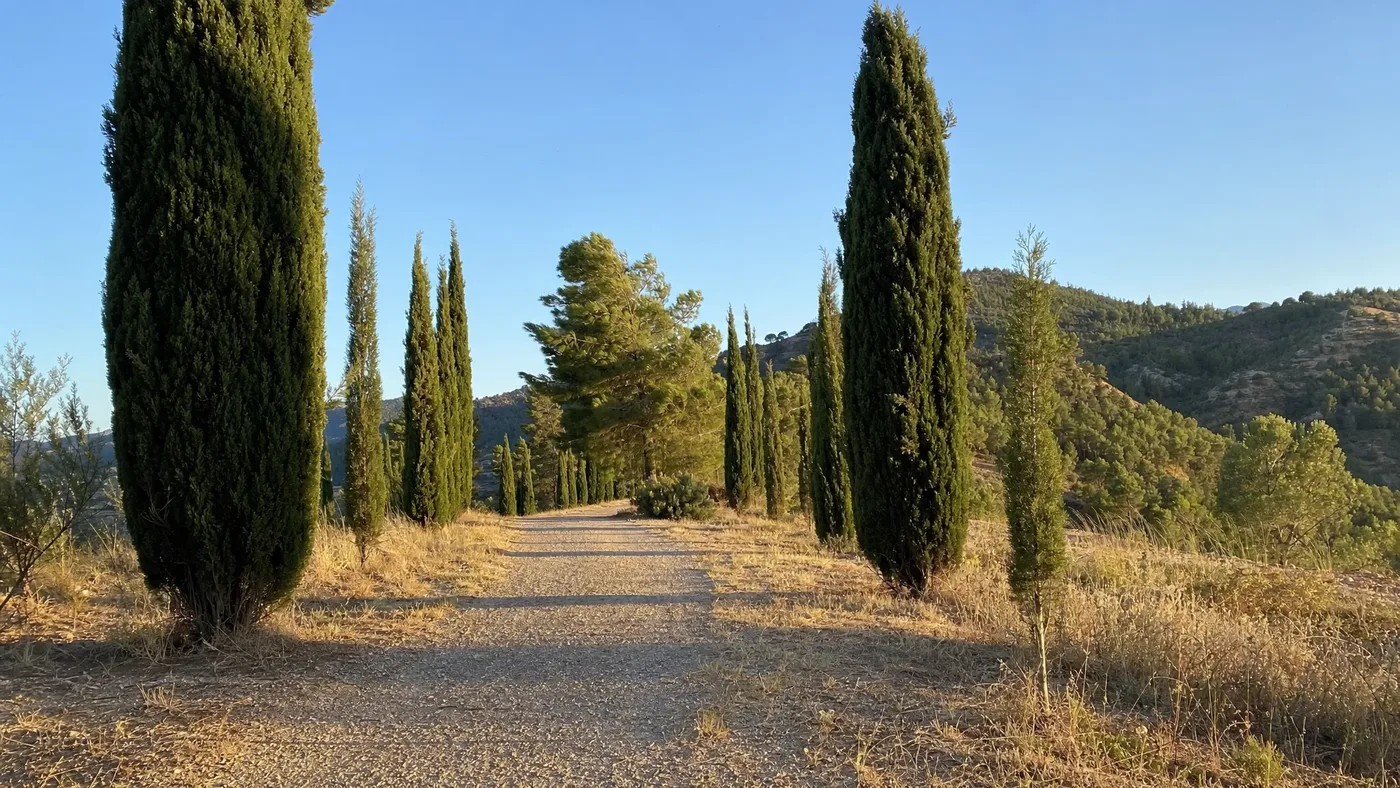
Mediterranean cypress sits in a different place again. A hydro-distilled Cupressus sempervirens oil in a 2014 study was led by alpha-pinene and delta-3-carene (Selim et al.), the combination behind that fresh, slightly sweet, resinous conifer character. We describe our own oil as fresh and smoky-green, drier and more refined than common pine oils, and we recommend it when you want that crisp evergreen note rather than the softer, more floral-woody character of a hinoki leaf.
So the two are not substitutes. If the Mediterranean note is what you are after, our scent profile is the place to start, and our guide to the types of cypress oil puts the whole family side by side.
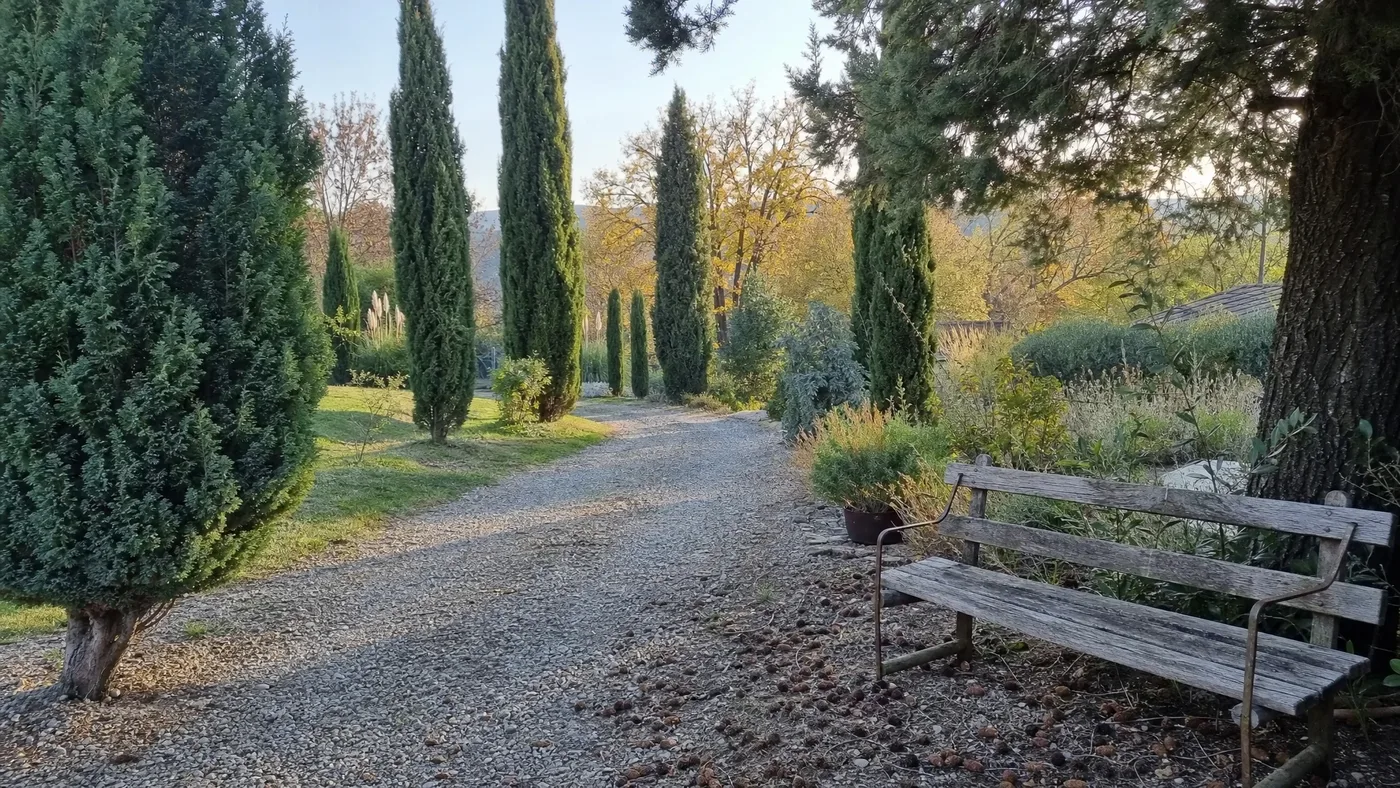
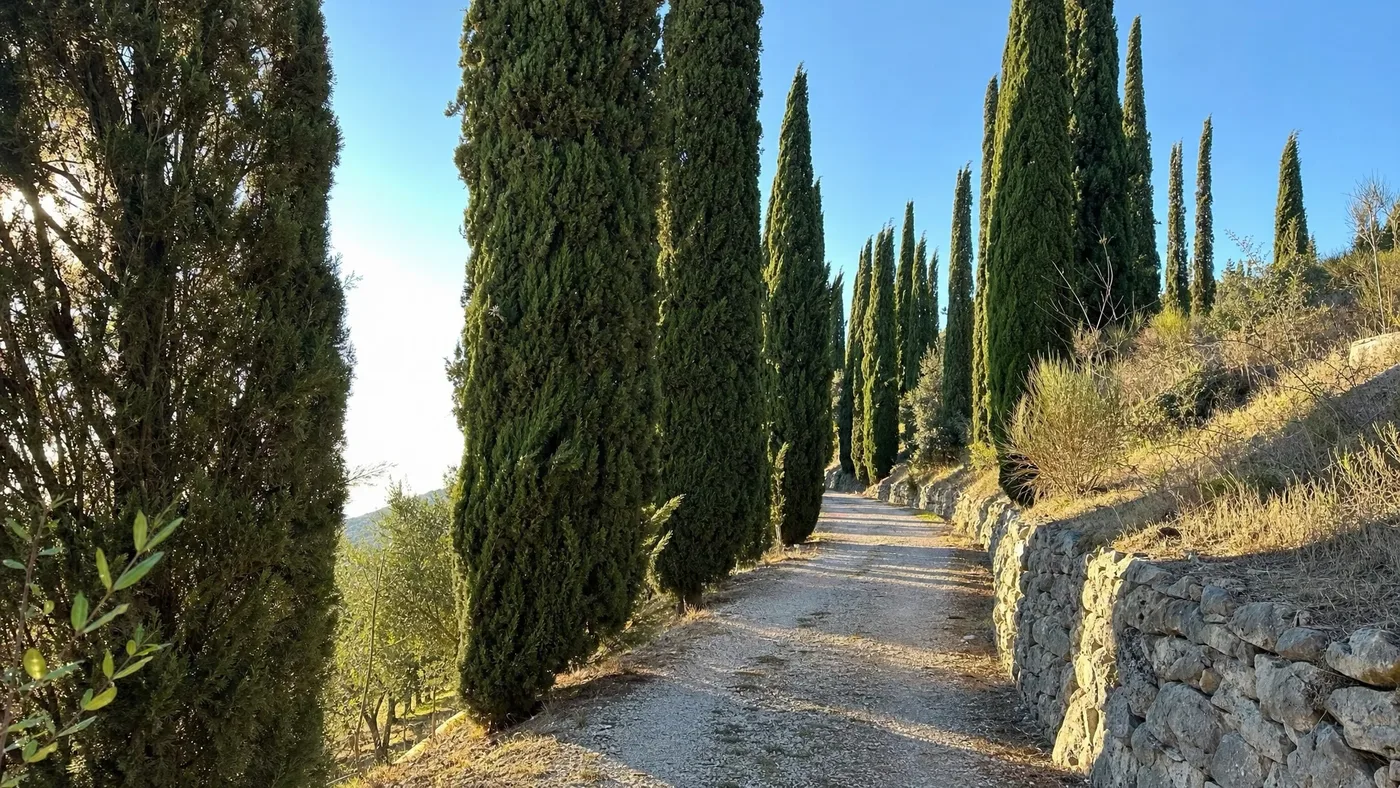
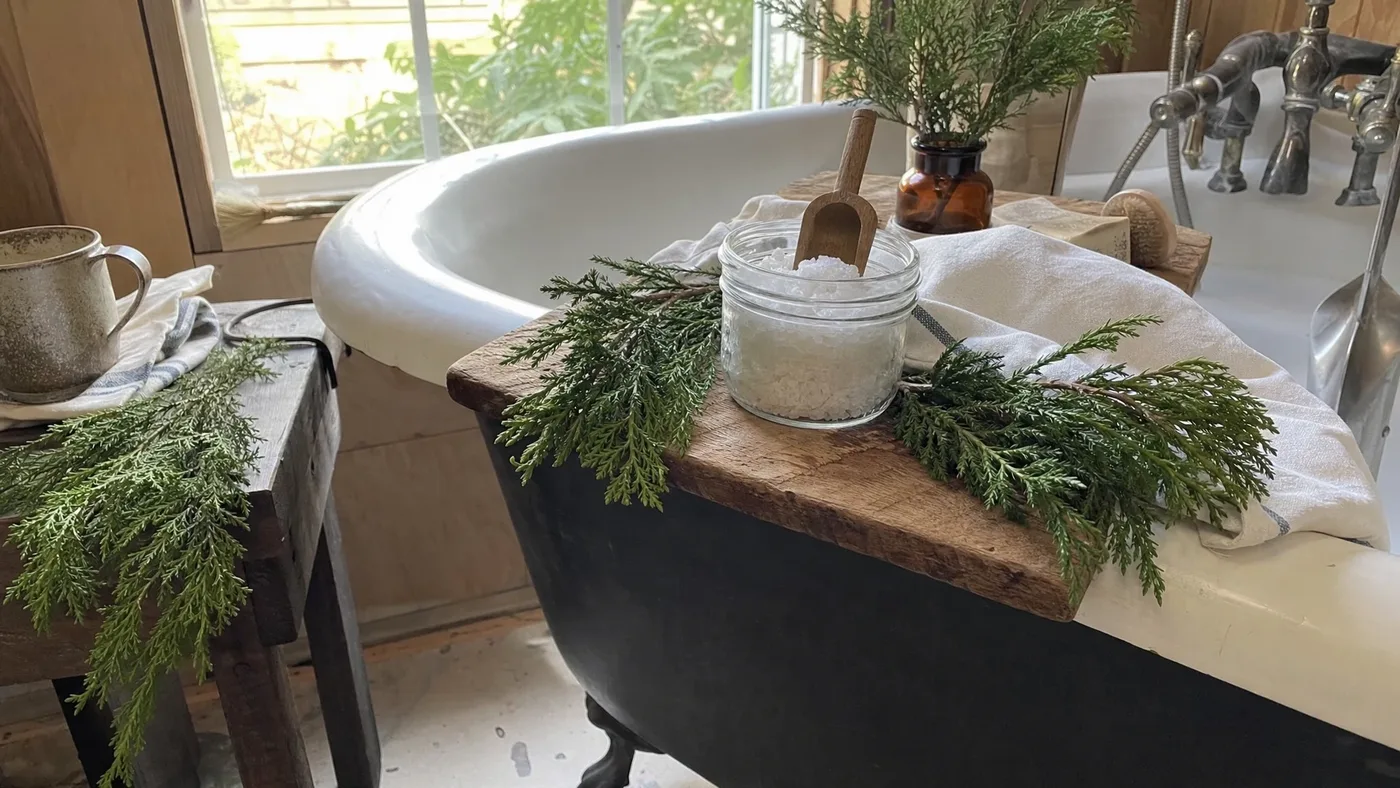
Here is an easy way to feel the difference without spending anything. Picture two walks. One is along a sunny Mediterranean road, with dry, warm air and dark green hedges that smell of resin and dust. The other is a Japanese bathhouse with a pale wooden tub and a damp, soft, woody warmth. Both are lovely, and they would never be mistaken for each other. When you open a bottle of each, those are the pictures worth holding in your mind, and it is the contrast, not any single word, that tells you which oil is which.
Four questions worth asking a hinoki seller
If you do want to try hinoki, a short list of questions will tell you whether the seller knows what is in the bottle.
- Which part? Leaf, wood, root or cone give very different oils.
- Which species and form? "Japanese cypress" on its own is loose language. The same tree has named forms, and the old habit of calling anything in the cypress family "cypress" is how mix-ups like cypress rotundus keep circulating.
- Which origin? Hinoki is grown in large plantations, and a review of the species is a good place to read about the tree itself (Gorski et al., 2024).
- Is there a GC-MS report for the lot? It is the only way to tell leaf from wood from a mixture. We apply the same standard to ourselves: the Certificate of Analysis we publish for one cypress batch lists density, refractive index and optical rotation, and if you need a compound breakdown, ask us in writing through our contact page before ordering. Our post on reading a cypress COA explains what each figure means.
If you decide to try both, smell them on separate strips, a few minutes apart, and keep a short note for each. Hinoki oils vary so much from one seller to the next that your note will be about that specific bottle, not about hinoki in general. That is a useful reminder when you are reading reviews or descriptions: a description of one hinoki oil is a description of that oil.
Why the shrine story does not choose a bottle
Hinoki writing usually opens with shrines and imperial baths. It is a lovely picture, but it describes timber. A tree prized for its wood tells you very little about the oil in a given bottle, which may come from leaves, trimmings or cones. That is why the label questions matter more than the legend.
A word on safety
We do not sell hinoki and have no dermal limit to give for it, so take the limits from the seller's own safety documents for the exact oil. For our cypress, our guidance is to dilute to 0.5% to 2% in a carrier oil, patch test first, keep it away from eyes, children and pets, and never take it internally. We also suggest avoiding it in pregnancy as a precaution. Our oil is an external cosmetic oil; for anything medical, a physician or pharmacist is the right person to ask.
If you want a woody companion to cypress rather than a swap, cypress and cedarwood make the more natural pair. Hinoki, meanwhile, deserves to be bought by name, part and batch.
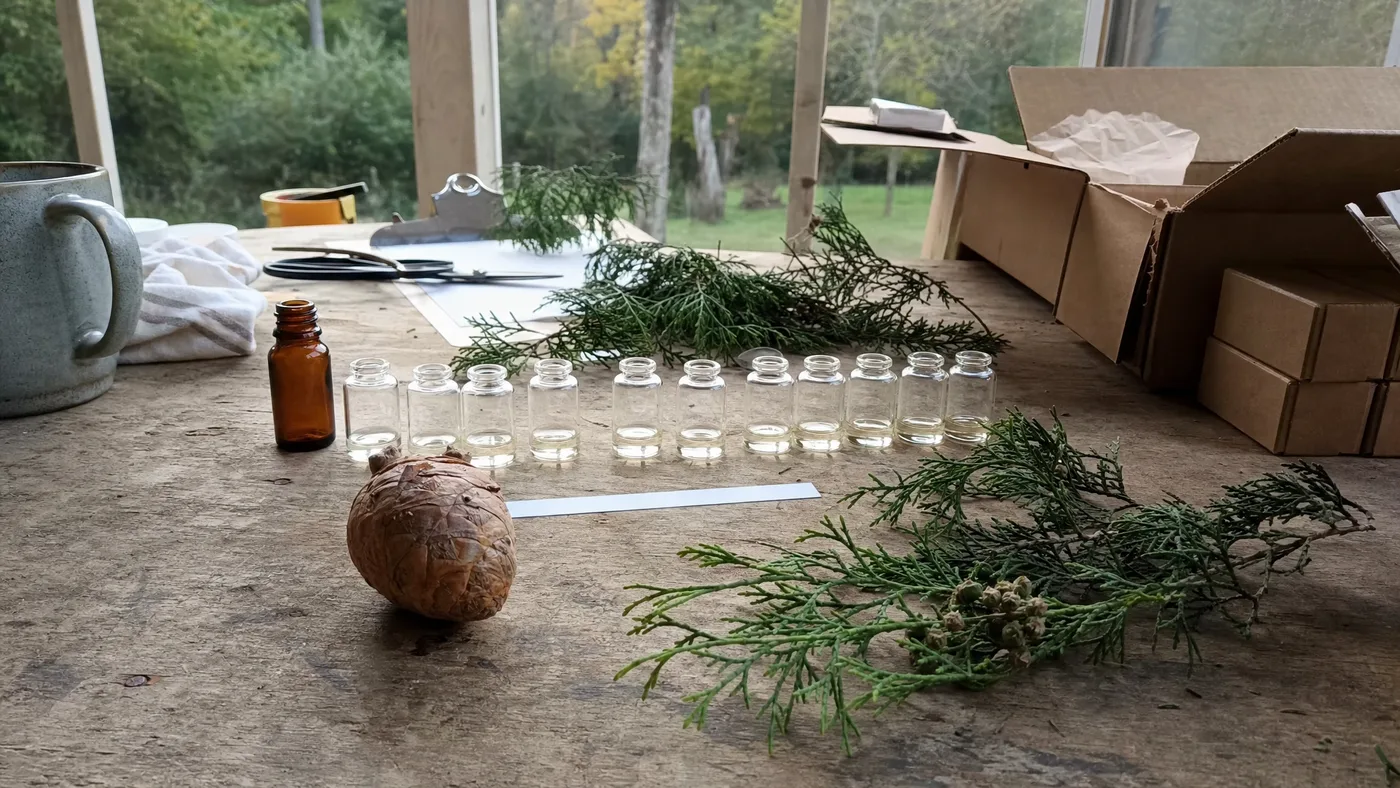
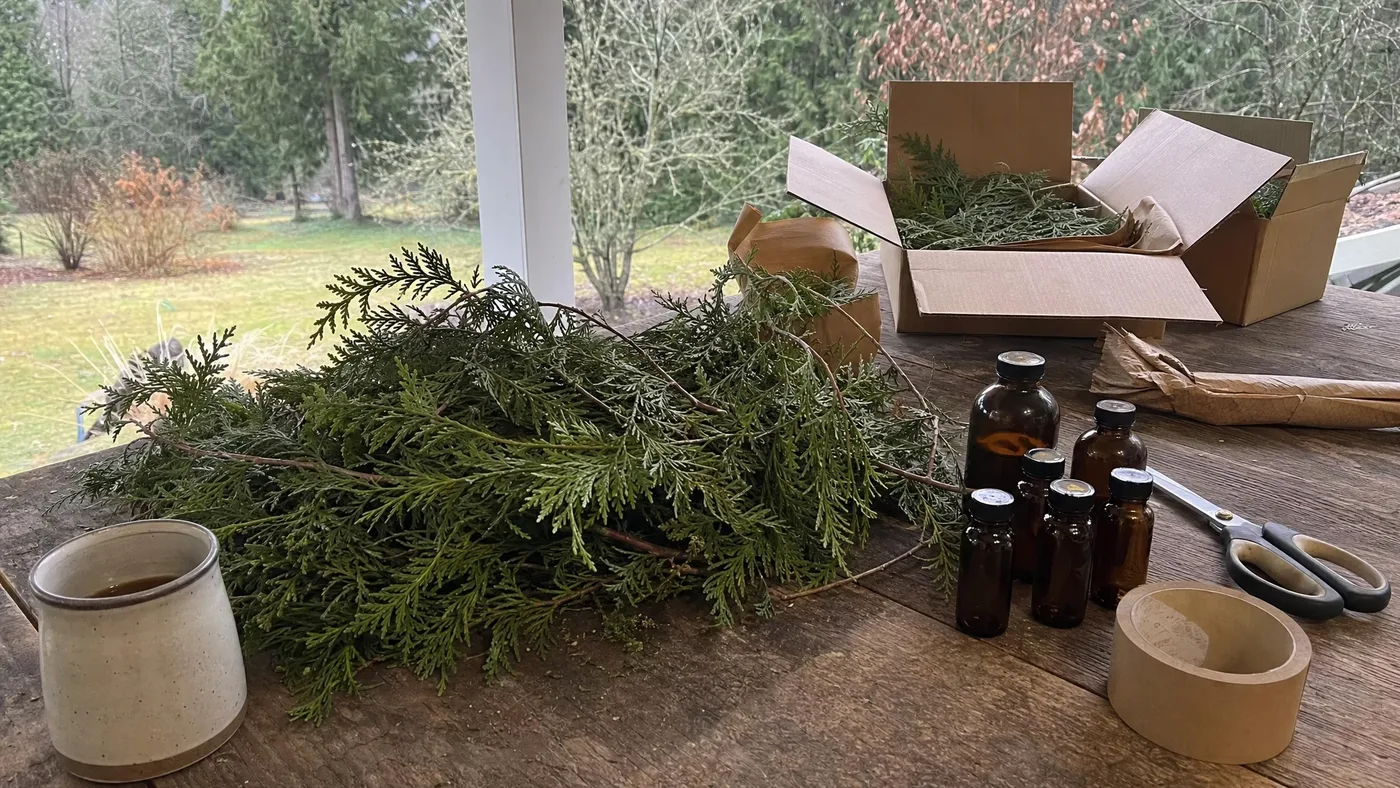
Whichever oil you pick, a good habit is to keep the two bottles apart and clearly marked. They are both brown glass, both smell woody and green at a glance, and a mix-up is easy in a dim cupboard. A strip of masking tape with the Latin name and the date you opened it takes seconds and spares you a muddled blend later.
Cypress Essential Oil
Cypress Essential Oil from our own shop, in sizes from 0.5 oz to bulk.
From $10.99
Shop Now →Sources & Further Reading
- Kim SH, Jang YA, Kwon YJ, 2024. Anti-inflammatory effect of Chamaecyparis obtusa leaf essential oil. Molecules 29(5):1117. pmc.ncbi.nlm.nih.gov/PMC10933829
- Chien TC, Lo SF, Ho CL, 2014. Chemical composition and anti-inflammatory activity of Chamaecyparis obtusa f. formosana wood essential oil from Taiwan. Nat Prod Commun (PMID 25026733). pubmed.ncbi.nlm.nih.gov/25026733
- Eltayeb LMH et al., 2023. Essential oils composition and biological activity of Chamaecyparis obtusa, Chrysopogon nigritanus and Lavandula coronopifolia grown wild in Sudan. Molecules 28(3):1005. pubmed.ncbi.nlm.nih.gov/36770673
- Selim SA et al., 2014. Chemical composition, antimicrobial and antibiofilm activity of the essential oil and methanol extract of the Mediterranean cypress (Cupressus sempervirens L.). BMC Complement Altern Med 14:179. pubmed.ncbi.nlm.nih.gov/24890383
- Gorski KM et al., 2024. The precious potential of the sacred tree Chamaecyparis obtusa as a source of secondary metabolites with broad biological applications. Int J Mol Sci 25(5):2723. pubmed.ncbi.nlm.nih.gov/38473970