What Does Cypress Oil Smell Like? A Sniff Guide
Open a bottle of cypress oil and you will not get the sugary, Christmas-tree sweetness many people expect from an evergreen. What greets you is cooler and drier: clean, green, a little smoky, and finishing resinous. It is the conifer for people who find pine too loud.
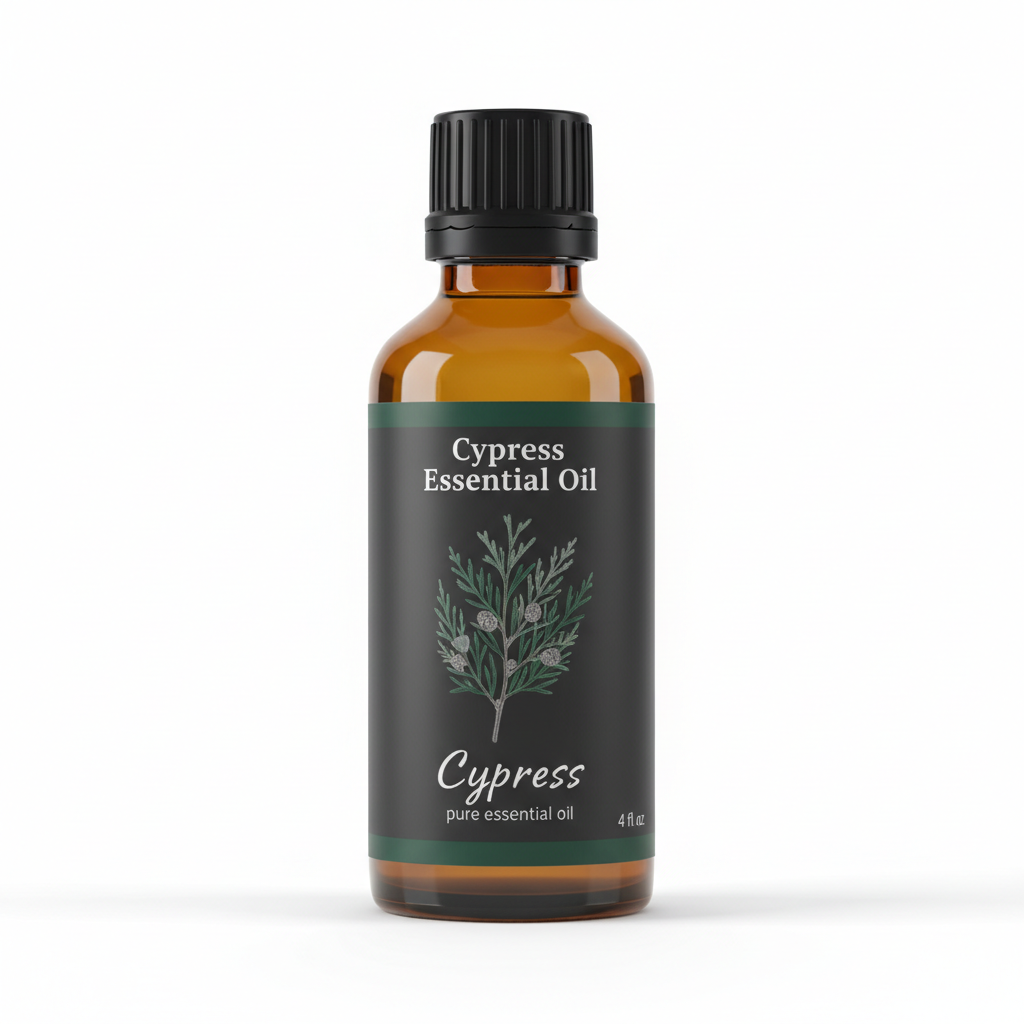
Cypress Essential Oil
Our own Cypress Essential Oil, in sizes from 0.5 oz to bulk.
From $10.99
Shop Now →How to give it a fair sniff
Skip the bottle neck. The first rush off an open bottle is the most volatile part of the oil, and it is the least representative. Put a drop on a paper blotter (a clean coffee filter will do), hold it a few inches below your nose, and come back to it over the next hour or two. Oils tell their story in stages, and cypress has a nice arc.
The arc, in three moves
Early on it is bright and green, like a freshly clipped hedge. Give it a few minutes and the smoky-green heart appears: dry, needle-like, composed. We describe our cypress as fresh and smoky-green, drier and more refined than common pine oils, finishing resinous and lingering, and the blotter is where that last word makes sense. The scent keeps thinning into something quiet and woody long after the opening has gone. Perfumers would call it a top-to-middle note, which is a polite way of saying it bridges the sparkle of a top note and the body of a heart.
Words that help
If you struggle to describe a scent, borrow from the places you know. Cypress tends to bring to mind a clipped hedge in the morning, the shade under a tall evergreen, a freshly sharpened pencil, a dry stone wall in the sun. None of these is exactly right, and that is fine. Writing down two or three of your own words the first time you smell it makes the second and third sniffs much richer, because you start noticing what changes.
Why it smells the way it does
You do not need chemistry to enjoy cypress, but one fact helps. Analyses of Cupressus sempervirens oil are dominated by light monoterpenes. In one published analysis, alpha-pinene made up nearly half the oil (48.6%), followed by delta-3-carene (22.1%), with smaller amounts of limonene and terpinolene. Alpha-pinene is the classic evergreen note; having a good deal of a second major component alongside it is part of why cypress reads as more reserved than a pine oil built mostly on pinene alone. That is our reading of the numbers, not a sensory study.
It also means no two bottles need smell identical. Another analysis of oil from trees grown in Egypt, using aerial parts, found cedrol as the leading compound instead. Tree, place, plant material and distillation all move the balance, and the Tisserand Institute notes that cypress oil is quite varied in composition. If you are comparing oils side by side, expect family resemblance rather than a clone.
Where to smell it
Where you smell matters nearly as much as how. A kitchen full of cooking odors hides the delicate end of the scent. A bathroom full of steam flattens it. Try a clear, quiet room with a little fresh air, and give your nose a break between sniffs by smelling the inside of your elbow or a clean cloth. If you are comparing it with a second oil, smell the cypress last, since its drier, quieter notes are easy to miss after something louder.
Keeping the freshness you bought
The molecules that make cypress sparkle are also the ones that react with air, light and warmth. Conifer oils are among the faster ones to change, so a tightly capped amber bottle in a cool, dark place is the way to keep that first-day character. A nearly empty bottle holds proportionally more air, so some people decant the last of an oil into a smaller bottle.
A small tasting night
If you have friends who enjoy this sort of thing, set out a few blotters on a plate and have everyone describe what they smell without looking at each other's answers. You will be surprised how differently people hear the same scent: one thinks of garden hedges, another of a mountain trail, another of a wooden spoon. There are no wrong answers, and the variety is half the fun.
Beside its neighbors
Next to pine, cypress is drier and less sharp. Next to fir, it is less balsamic. Next to juniper berry, it lacks the fruity berry edge. Cedarwood is warmer and woodier still. If you are building a blend, these are all natural partners, and our shop pages suggest juniper, bergamot, lavender, cedarwood and frankincense as companions. Our guide to what blends well with cypress goes further, and cypress in perfumery shows how it behaves in a fragrance structure.
Living with it
Some scents impress on the first sniff and tire you by the third day. Cypress is the opposite sort: it is not showy, and it settles into a room like background air. Try it for a week before you decide, in a small dose, and notice whether you still find it pleasant. A smell you can ignore is a good sign when what you want is a tidy, unfussy backdrop.
The best way to know a scent is to give it ten minutes and a blotter. Cypress rewards the patience.
Cypress Essential Oil
Cypress Essential Oil from our own shop, in sizes from 0.5 oz to bulk.
From $10.99
Shop Now →