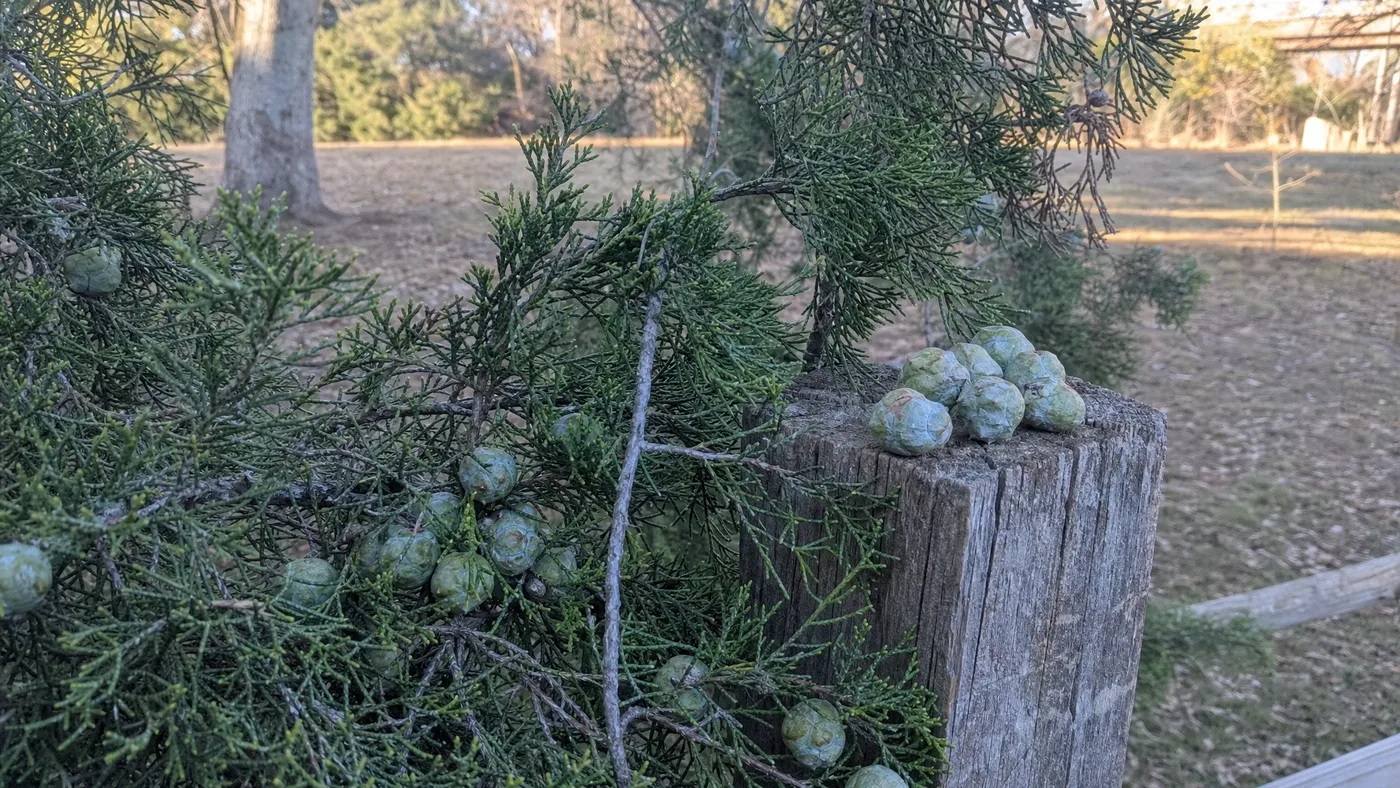
Cypress Oil Chemistry: Pinene, Carene and Cedrol
Open a bottle of cypress oil and you meet, in about three seconds, most of what is going on chemically: a bright dry pine-fresh lift, a sweeter resinous dryness underneath, a faint citrus edge and, after it has been on a blotter a while, a soft woody tail. A handful of small molecules make all of that, and knowing who they are is a good way to understand why this oil smells the way it does.
Cypress Essential Oil
Our own Cypress Essential Oil, in sizes from 0.5 oz to bulk.
From $10.99
Shop Now →The pinene backbone
Alpha-pinene is the molecule that gives the oil its brisk, dry, conifer opening. In a published analysis of a Cupressus sempervirens oil it made up nearly half of the total (48.6%), with delta-3-carene second at 22.1% (Selim et al., 2014). Pinene is everywhere in the plant world, from rosemary to juniper to pine resin, so on its own it does not say "cypress." It is the carene that nudges the scent toward something drier, sweeter and a little earthy, and not as sharp as a pine oil. We describe our oil as fresh and smoky-green, drier and more refined than common pine oils, finishing resinous and lingering, and that dry, resinous character is largely the pinene and carene pairing doing its job.
The supporting notes
Limonene, the molecule most of us know from citrus peel, plays a small part here (4.6% in the same sample), adding a faint lift on top. Terpinolene adds a fresh piney sweetness at a similar level. All four of these are light, quick-moving monoterpenes, which explains two practical things: cypress shows its character within moments of opening the bottle, and that same top-note character fades quickly from fabric, wax or a diffuser pad.
Underneath sits a family of heavier molecules, including cedrol, a waxy sesquiterpene alcohol that is also found in cedarwood. They evaporate slowly and form the woody base you notice as the lighter notes drift away.
Why no two cypress oils are quite the same
The more interesting story is variety. Three Tunisian oils from different regions had alpha-pinene between about 30% and 37% (Sriti et al., 2024), a visible spread from just one country and one plant part. An Egyptian sample made from aerial parts looked different again: cedrol at 74%, with alpha-pinene near 5% (Ibrahim et al., 2017). Robert Tisserand has made the same point about the oil, writing that cypress oil is quite varied in composition, with the proportions of leaf and cone playing a part.
That variety is why we avoid quoting one set of percentages as though it described every bottle. A table from one study is a snapshot of one sample. If you are a perfumer, a soap maker or a formulator, and a compound breakdown matters to your work, ask us in writing through our contact page for the report on your lot. The Certificate of Analysis we publish for one batch gives density, refractive index and optical rotation; our walk-through of that certificate explains each line.
Training your nose
You do not need a lab to appreciate any of this. Try a simple exercise: put a drop of cypress on a blotter and sniff it every few minutes for half an hour. Write down what you notice at each stage. Early on, you will probably catch the bright, brisk piney part. A little later the sweeter dryness steps forward. Toward the end, whatever is left tends to smell woodier and rounder. That sequence is the same one the chemistry above describes, and noticing it yourself is far more memorable than reading a percentage.
It also helps to compare cypress with something familiar. Smell a sprig of rosemary, a juniper berry or the bark of a fresh pine branch next to the blotter. You will pick up the shared piney note right away, and just as clearly, what is different about cypress: it is drier, quieter and less sharp.
You do not need the numbers to enjoy it
All of this is interesting, but it is background. Plenty of people love cypress for years without knowing a single percentage, because the nose gets there first. Treat the chemistry as a map you can consult when a blend surprises you or when one bottle smells different from another, and otherwise just enjoy the green, dry scent for what it is.
What it means when you smell and store the oil
Molecules with reactive double bonds, which includes pinene, carene and limonene, combine with oxygen over time. That is why a fresh bottle smells clean and green, and an old, half-empty one can turn sharp. Hana Tisserand of the Tisserand Institute notes that oils oxidize faster with heat, light and air, and that conifers are among the quicker ones. Our storage guide has practical steps.
The same chemistry helps when comparing cypress with its relatives. A fir or pine oil has a different molecular mix and so a different aroma, and our comparisons of cypress, pine and fir and of cypress and cedarwood put those differences in plain terms.
The next time you open a bottle, give it the three-second test: lift, dryness, then the faint wood that arrives last. You are smelling a small, well-organized family of molecules.
Cypress Essential Oil
Cypress Essential Oil from our own shop, in sizes from 0.5 oz to bulk.
From $10.99
Shop Now →Sources & Further Reading
- Selim SA et al. (2014). Chemical composition, antimicrobial and antibiofilm activity of the essential oil and methanol extract of the Mediterranean cypress (Cupressus sempervirens L.). BMC Complementary and Alternative Medicine 14. PubMed 24890383
- Sriti J et al. (2024). Antioxidant, antibacterial and insecticidal activities of cypress (Cupressus sempervirens L.) essential oil. International Journal of Environmental Health Research. PubMed 37115147
- Ibrahim TA et al. (2017). Chemical Composition and Antimicrobial Activities of Essential Oils of Some Coniferous Plants Cultivated in Egypt. Iranian Journal of Pharmaceutical Research 16(1). PMC5423258
- Tisserand R. Cypress oil as a deodorant and a problem with citing books as references. Tisserand Institute. tisserandinstitute.org
- Tisserand H. Keep essential oils cool! Tisserand Institute. tisserandinstitute.org