What Is Cypress Oil Good For? Scent, Blends and Uses
Ask what cypress oil is good for and the honest answer starts with your nose. It is a dry, green, quietly resinous evergreen scent, calmer than pine and more polished than fir, and nearly everything we love about it follows from that one character.
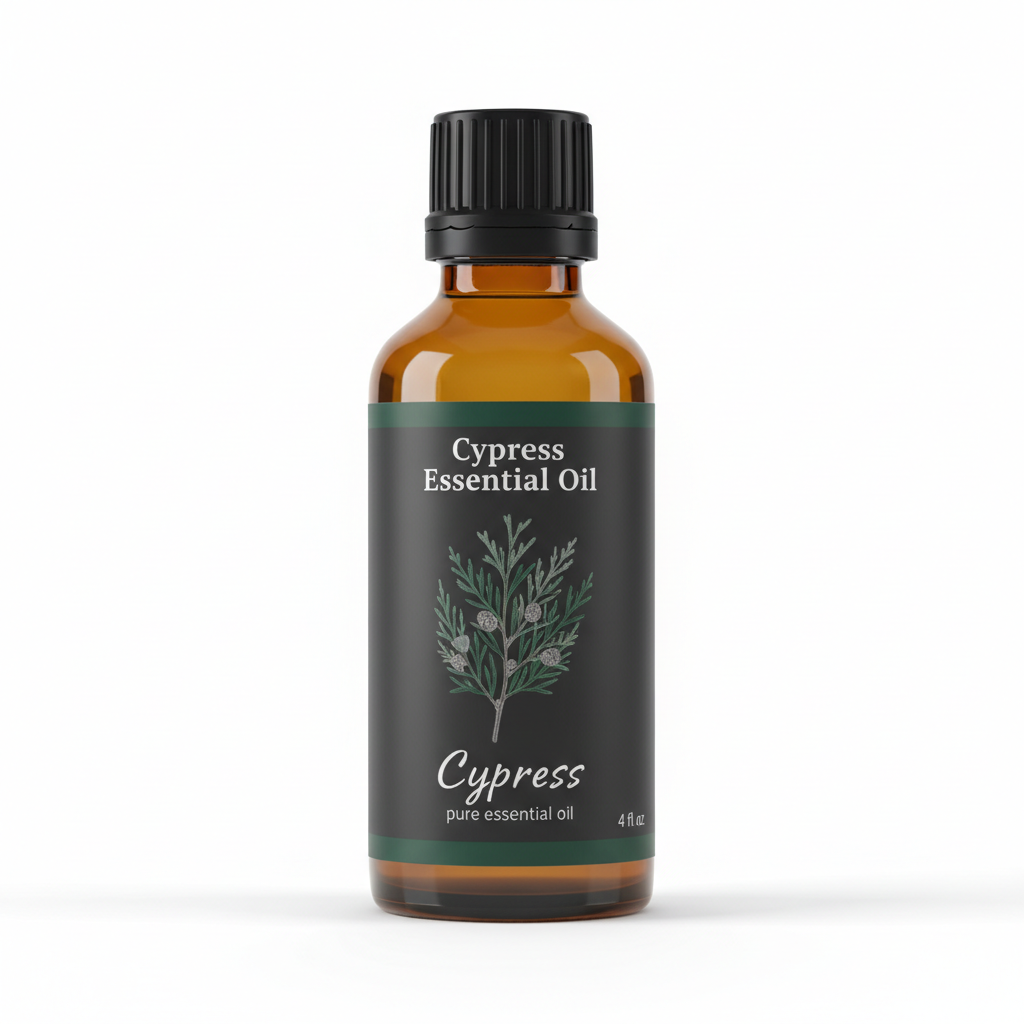
Cypress Essential Oil
Our own Cypress Essential Oil, in sizes from 0.5 oz to bulk.
From $10.99
Shop Now →A scent with real personality
We describe our cypress as fresh and smoky-green, drier and more refined than common pine oils, finishing resinous and lingering. The reason is mostly chemistry. Published analyses of Cupressus sempervirens oil show light pinene-rich molecules leading the way, with alpha-pinene at nearly half of one analyzed sample and delta-3-carene next (Selim et al., 2014). Pinene brings the brisk, dry opening, carene adds a sweeter, earthier dryness, and a small amount of heavier material leaves a soft woody finish. If you want the full tour, our scent profile follows the aroma from first sniff to dry-down, and our piece on the molecules behind cypress explains who does what.
What you will notice first
Put a drop on a paper strip, wave it gently under your nose and then set it down. In the first minute you get the crisp, dry evergreen lift. Come back after a quarter hour and the sharpness has softened into something greener and woodier, with that resinous finish hanging on. Come back after an hour and what remains is faint, dry and tidy. Watching a scent move like that is half the fun of an oil, and cypress has a pleasantly orderly way of doing it.
Where it earns its place
In a blend, as the quiet structure
Cypress sits between a top and a middle note, which makes it a handy bridge. A little of it adds a green, dry backbone that sweeter or floral materials can lean against, and it keeps a blend from tipping into sugar. We pair it with juniper, bergamot, lavender, cedarwood and frankincense, and clary sage and sweet marjoram as well. Our blending guide goes through the pairings, and cypress in perfumery shows how it sits in a green woodland accord.
In grooming and bath-and-body making
Makers use cypress for aftershave-style splashes, colognes and simple balms, where its clean outdoor note reads as fresh rather than sweet. We suggest it only as an aroma: it is a fragrance ingredient, not a treatment for anything. If you are making something for skin, our dilution guidance is 0.5% to 2% in a carrier oil with a patch test first, and for a finished product it is worth checking current IFRA standards for your product type. We sell the oil itself, so carriers, bases and bottles come from a supply shop.
In the room
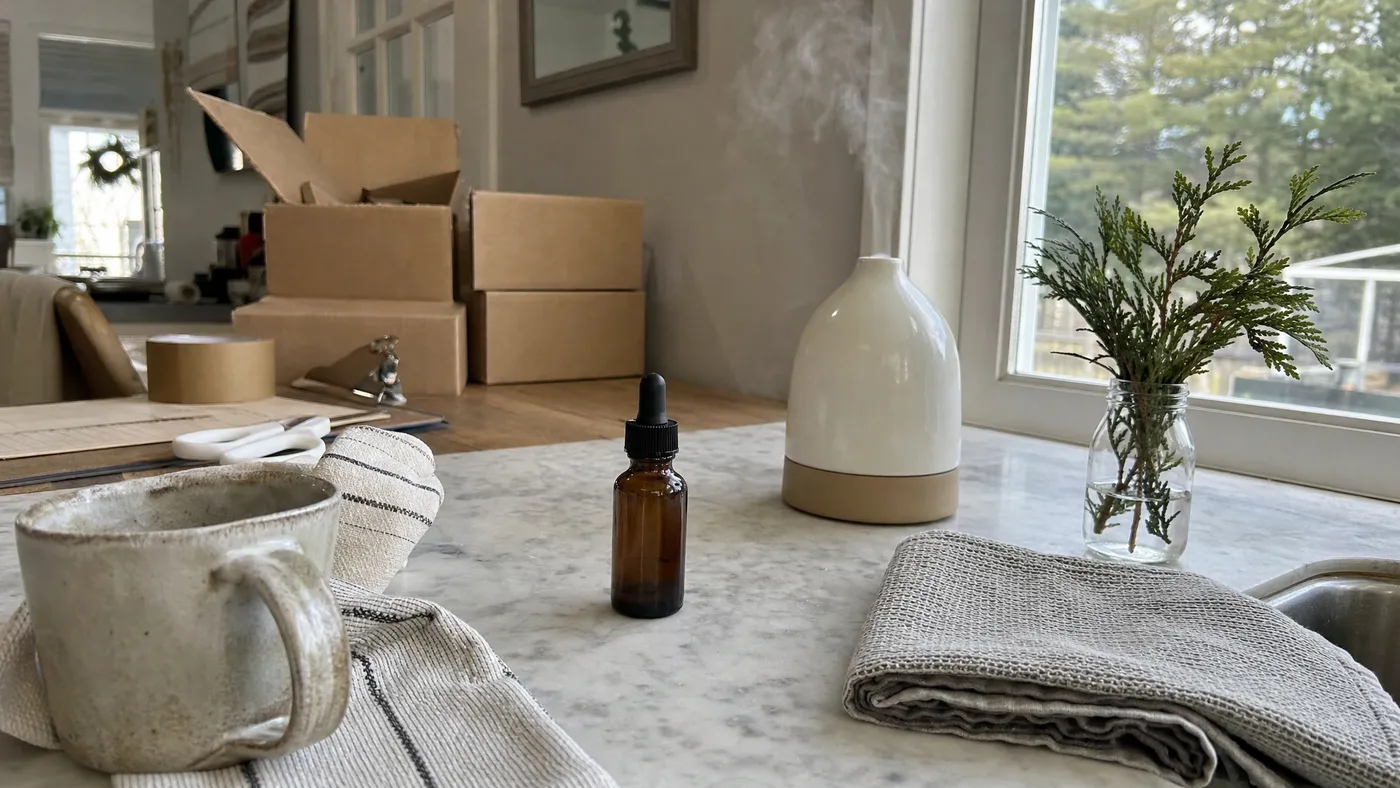
A diffuser with cypress smells like a walk among tall evergreens, not like a bakery or a spa. It suits a hallway, a quiet reading corner or a morning in the kitchen, and a bit of it goes a long way. Our guide to using cypress covers diffusing, pads and diluted use.
In a massage oil or a foot soak
Diluted in a carrier, cypress gives a body oil a dry, green note, which makes an after-outdoors ritual feel a little more like a pause. The pleasure here is the scent and the unhurried touch. The aroma is what we are offering, and we make no medical claims of any kind about the oil.
In the wardrobe and on the shelf
One of the simplest pleasures is the least technical: a drop on a cotton pad tucked into a drawer or a closet, so the scent greets you when you open it. Keep the oil off the fabric itself, since essential oils can mark cloth, and refresh the pad when it fades. A scent like this suits a coat closet, a linen shelf or a gear bag. It asks nothing of you and it smells like a walk in the trees every time you reach for something.
What research does and does not tell us
You will find cypress oil mentioned in laboratory studies that look at single compounds or the whole oil against bacteria, insects and other things in a dish. They are interesting science, and they tell us how a molecule or an extract behaves in a controlled setting. They do not tell us what a few drops in a diffuser or a diluted body oil will do in a home, so we do not build our claims on them. What a laboratory finding describes is the material under those conditions, not the bottle on your shelf. Cypress oil is also quite varied in its composition, with leaf and cone proportions making a difference (Tisserand Institute), so even a good study describes one sample.
That is a relief in a way, because it lets us focus on what you can check yourself in under a minute: whether you like the aroma.
Looking after what you buy
Conifer oils change faster than woods or resins, and Hana Tisserand notes that oxidized oils can bring a higher risk of adverse reaction, so keep the cap tight and the bottle cool and dark; our storage guide shows how. Our guidance is to keep the oil away from eyes, children and pets, never to use it undiluted or internally, and our Harvest page recommends avoiding it in pregnancy as a precaution. Anyone with a medical question should ask a doctor.
If you enjoy evergreen scents, cypress is a fine place to settle, and it rewards the small habits of a careful blender.
Cypress Essential Oil
Cypress Essential Oil from our own shop, in sizes from 0.5 oz to bulk.
From $10.99
Shop Now →Sources & Further Reading
- Selim SA et al. (2014). Chemical composition, antimicrobial and antibiofilm activity of the essential oil and methanol extract of the Mediterranean cypress (Cupressus sempervirens L.). BMC Complementary and Alternative Medicine 14. PubMed 24890383
- Tisserand R. Cypress oil as a deodorant and a problem with citing books as references. Tisserand Institute. tisserandinstitute.org
- Tisserand H. Keep essential oils cool! Tisserand Institute. tisserandinstitute.org