Cypress in Perfumery: Building a Green Woodland Accord
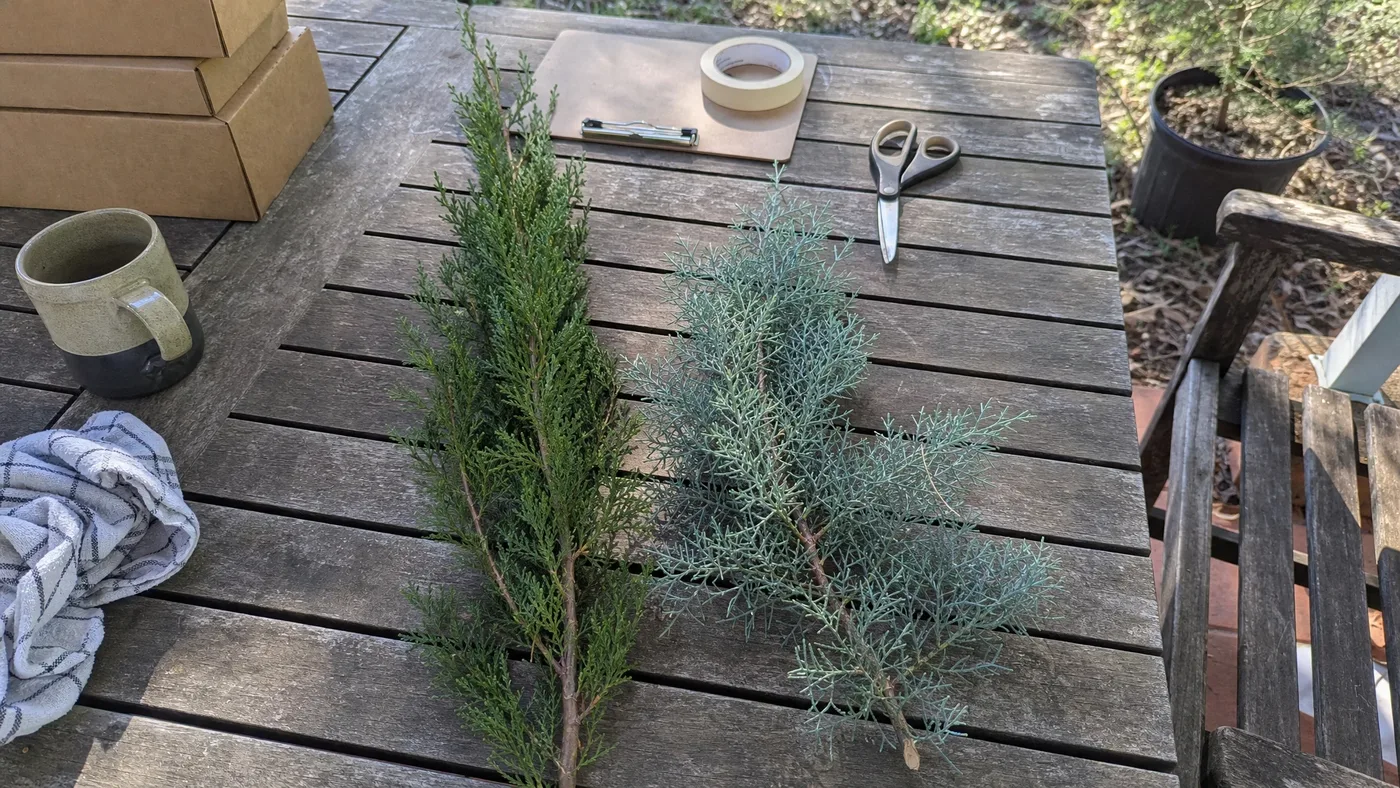
Open a bottle of cypress oil and the first thing you notice is air: cool, dry, a little smoky-green, like a breeze coming through needles. That is exactly why perfumers keep a bottle on the bench. Plenty of woody materials sit warm and heavy; cypress is the one that makes a woodland accord smell like it is standing outdoors.
Cypress Essential Oil
Our own Cypress Essential Oil, in sizes from 0.5 oz to bulk.
From $10.99
Shop Now →A note that bridges
Perfume people sort materials into top, heart and base. Cypress does not stay put in one drawer. We describe ours as fresh and smoky-green, drier and more refined than common pine oils, finishing resinous and lingering, and we place it between the top and the middle of a blend. That in-between position is its talent. It arrives with the bright opening notes, then stays long enough to become the green heart of the composition.
Smell it on a paper blotter at one minute, then again at thirty. The sharp, pine-like lift settles and the drier, woodier side comes forward. If you only judge it at the top, you will misread it.
Why two cypress oils can smell different
One bottle of "cypress" can lean crisp and piney while another leans soft and woody, and the analyses explain why. A hydro-distilled Mediterranean cypress oil in one study was led by alpha-pinene and delta-3-carene, the pair behind that fresh, slightly sweet conifer lift (Selim et al., 2014). A cypress grown in a garden in Giza produced an oil dominated by cedrol, a dry, woody compound, with very little alpha-pinene (Ibrahim et al., 2017). Robert Tisserand makes the same point: cypress oil is quite varied, partly depending on how much leaf and cone goes into the still (Tisserand Institute).
The practical lesson is to smell before you build. Whatever you plan on paper, the oil in your hand decides the proportions.
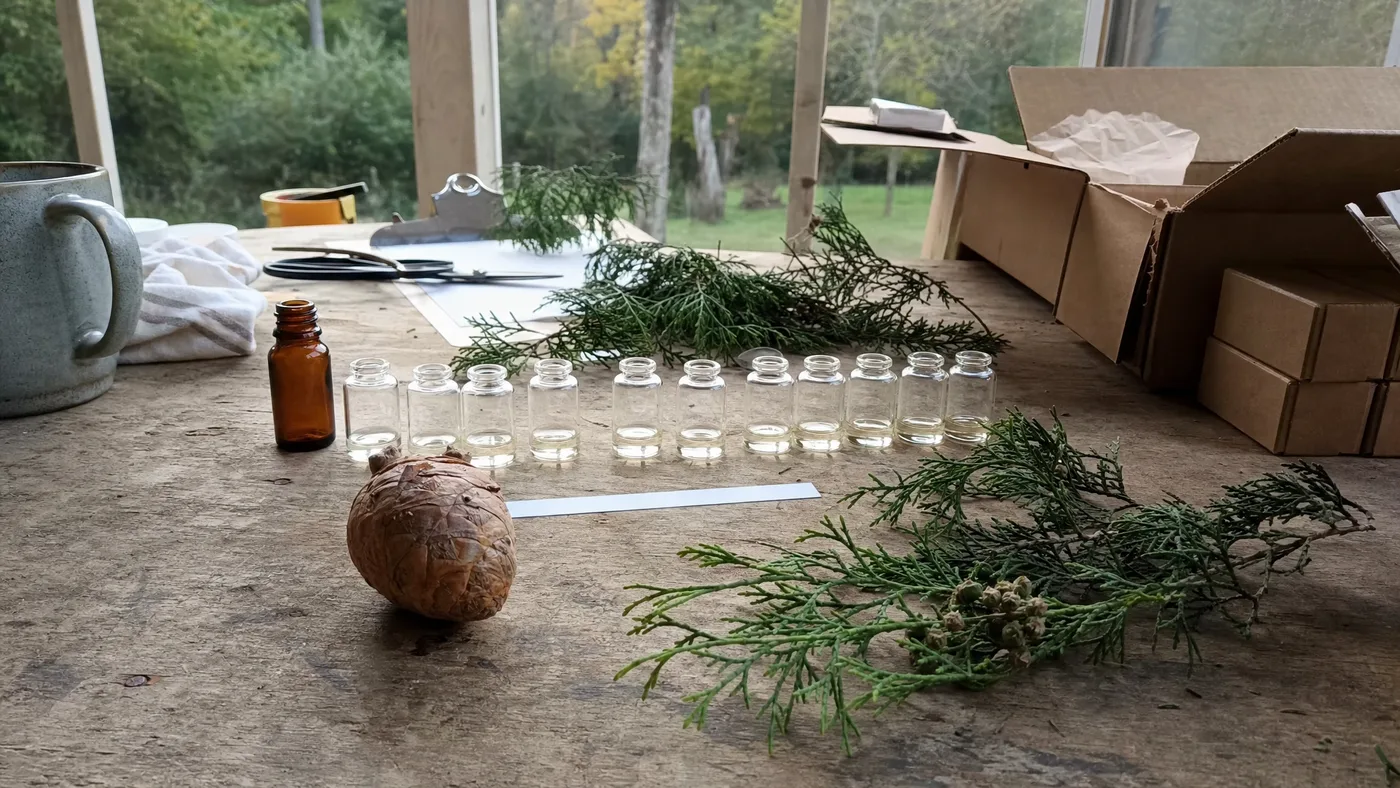
The accord, built on blotters
A green woodland accord has four jobs: a bright opening, a green heart, a dry floor, and something resinous to hold it together. Here is one way to divide them, written as parts so you can scale it to a blotter dish or a larger bench batch:
| Job | Material | Parts |
|---|---|---|
| Opening | Bergamot | 4 |
| Green heart | Cypress | 6 |
| Green edge | Petitgrain | 1 |
| Dry floor | Cedarwood | 3 |
| Resin | Frankincense | 2 |
This is a formulation worked out from how each material behaves, not a recipe we have made. We sell the cypress; the bergamot, petitgrain, cedarwood and frankincense come from a perfumery or aromatherapy supplier. Mix the oils together first, in a small glass dish, and judge the blend on a blotter before it goes near anything else.
If the accord feels thin and has no floor, add a part of cedarwood or frankincense. If it feels muddy and never lifts, add a part of bergamot. Move one part at a time, because small amounts of strong materials change the balance more than you expect.
Training your nose
Perfumers say the nose is a muscle, and it is true that it improves with a little regular attention. Take five minutes a day to smell one material on a blotter, write down three words for it, and come back to it later. With cypress, you might begin with "air", "dry" and "needles", and after a week your words may become more precise. It is a pleasant habit, and it makes every blend you build afterward more deliberate.
Smell in a room with no other strong odors, and take a break when everything starts to smell the same. A sniff of your own sleeve, or a few breaths of fresh air, clears the slate.
Let it rest, and keep expectations honest
A freshly mixed blend smells sharper than it will a week later. Resting it in a cool, dark place lets the edges soften. Natural materials also do not carry a scent trail for hours the way synthetic fixatives do, so the answer is a lighter hand rather than more drops.
If it will touch skin
A blotter is one thing and skin is another. For skin, our own guidance for cypress is 0.5% to 2% in a carrier, with a patch test first, and a finished perfume holds several oils, each with its own limits. Ask your supplier for the IFRA documentation for every material you use and keep the total in line with it. Conifer oils also age faster than most once opened; Hana Tisserand notes that even unopened in a refrigerator they are at the limit of usability after about two years (Tisserand Institute). Buy a bottle you will use, keep it capped, cool and dark. Our oil is for external cosmetic use only, and if you are pregnant or choosing for a child, ask your clinician first.
Keep notes as you go
Write the parts, the date and your impressions at one minute, thirty minutes and the next morning. If a small adjustment turned a blend from flat into lively, you will want to remember exactly which one. A notebook beside the bottles is the single most useful tool on a hobbyist's bench.
For the plainer side of the oil, start with our scent profile, then see how cypress sits beside cedarwood and what blends well with it. Many perfumers will tell you the whole craft comes down to patience and a clean nose, and cypress rewards both.
Cypress Essential Oil
Cypress Essential Oil from our own shop, in sizes from 0.5 oz to bulk.
From $10.99
Shop Now →Sources & Further Reading
- Selim SA et al., 2014. Chemical composition, antimicrobial and antibiofilm activity of the essential oil and methanol extract of the Mediterranean cypress (Cupressus sempervirens L.). BMC Complement Altern Med 14:179. pubmed.ncbi.nlm.nih.gov/24890383
- Ibrahim TA et al., 2017. Chemical composition and antimicrobial activities of essential oils of some coniferous plants cultivated in Egypt. Iran J Pharm Res 16(1):328-337. pmc.ncbi.nlm.nih.gov/PMC5423258
- Tisserand Institute. Cypress oil as a deodorant. tisserandinstitute.org
- Tisserand Institute (Hana Tisserand). Keep essential oils cool. tisserandinstitute.org