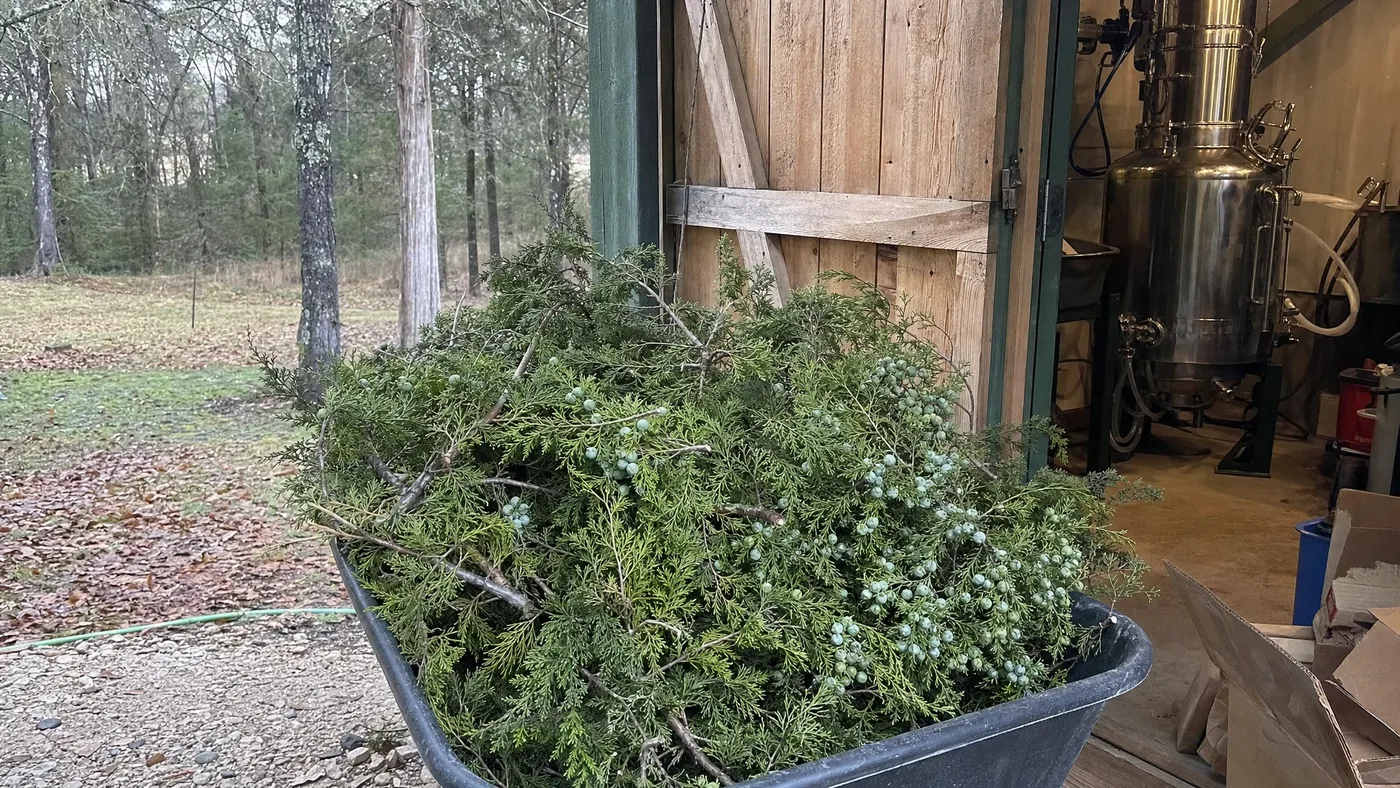
How Cypress Oil Is Made: From Green Branch to Bottle
A cypress branch is full of tiny oil glands, and everything about making the oil comes down to getting that scent out gently. Steam does it. Fresh green growth goes into a still, steam moves through it and lifts the aromatic molecules, a condenser turns the vapor back into liquid, and the oil floats on the water that comes off with it.
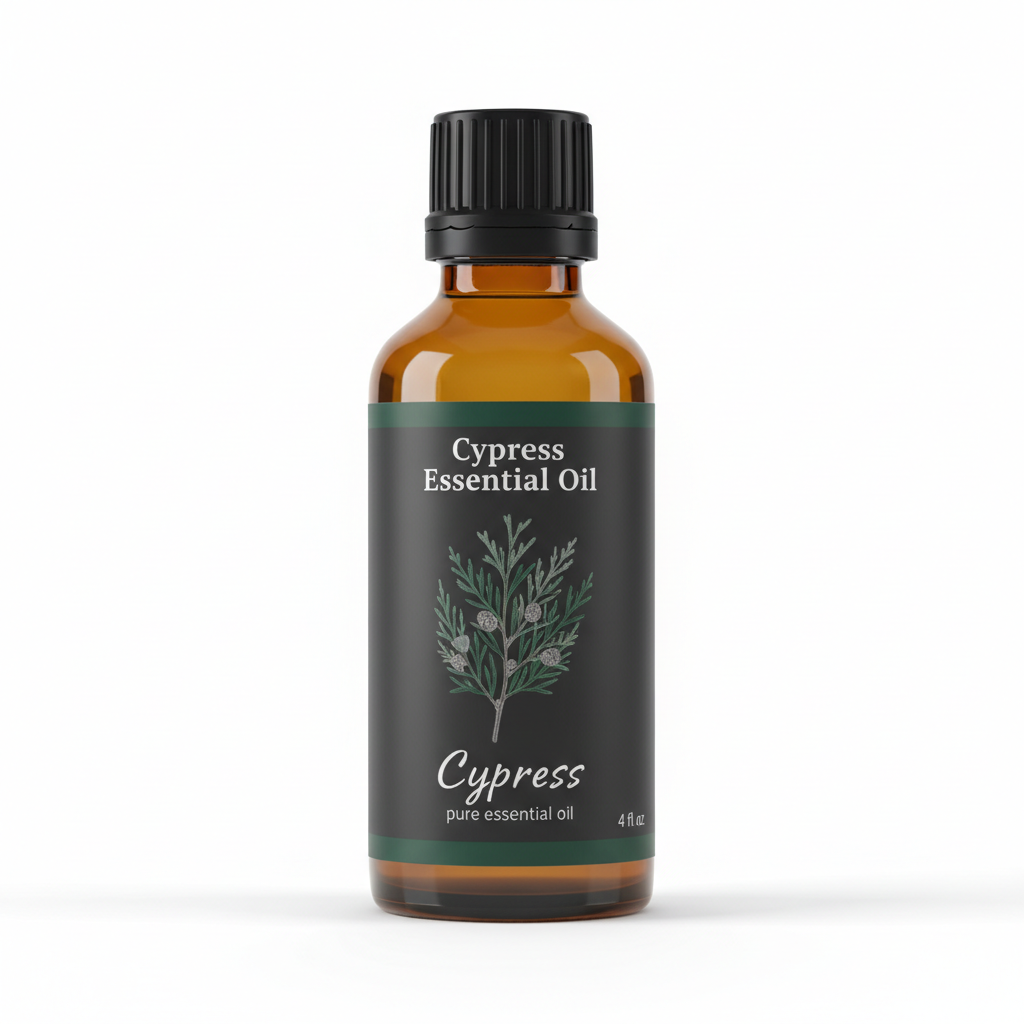
Cypress Essential Oil
Our own Cypress Essential Oil, in sizes from 0.5 oz to bulk.
From $10.99
Shop Now →A common misunderstanding
"Steam distilled" on a label sounds like a premium feature. It is really the standard method for conifer foliage. Citrus rinds are pressed, and delicate flowers are sometimes extracted another way, but tough, resinous needles take well to steam. So the phrase tells you how the oil was made, not how good it is. The differences between two bottles come from the plant material and from how the run is managed. Our oil is steam-distilled and made from Cupressus sempervirens, the Mediterranean cypress.
Where the oil begins
The material is the green growth of the tree: the scale-like needles, fine twigs and small unripe cones, not the wood. We describe it as cut growth, with no tree taken down, since cypress is routinely pruned and the foliage is a by-product. We keep the part list at that, because the plant parts used vary from producer to producer.
The composition varies as well. The Tisserand Institute notes that cypress oil is quite varied, depending partly on the proportion of leaf and cone material distilled. That is why two cypress oils can smell different and why a batch report matters more than a generic description.
Inside the still
Steam enters the bottom of a chamber of plant material and rises through it. The heat opens the oil glands, and the steam carries the scent out as vapor. Because the oil travels with the steam, it comes over at a lower temperature than it would on its own, which is what makes steam gentle. In the condenser, cool water turns the mixed vapor back into liquid, and in the separator the oil, which does not mix with water, forms its own layer.
Packing the chamber is a skill. Loose material lets steam rush past, and packed too tightly it will not pass at all, so the aim is an even, lightly firm bed. Steam is drawn through the charge until it is spent, without a fixed schedule, since the cuttings set the pace, not a clock.
If you have ever crushed a cypress twig between your fingers, you know the smell is right there, green and resinous and a bit dusty. It is a good way to understand what the still is after. Rub a scrap of a twig and sniff your fingers, then compare that to a drop on a blotter strip. You'll notice the oil is a more concentrated and more refined version of the same thing, with the rough, leafy edges gone and the resinous heart left behind.
A lot of leaf, a little oil
The arithmetic surprises people. One analysis of cypress aerial parts from three regions of Tunisia reported oil yields of 0.49 to 0.56 percent. At those figures, roughly 180 to 200 kilograms of foliage give one kilogram of oil. That is a calculation from one study, and yields differ with season, origin and freshness, but the general picture holds: a lot of plant in, a small amount of oil out. The same still also produces a larger volume of scented water, the hydrosol, which is a separate product and not the same as the oil; our comparison explains the difference.
Time shapes the scent
Light, bright molecules tend to come over first and heavier ones later. A run that stops at the right moment keeps the fresh green top of the scent, while one pushed for every last drop can pick up a duller, heavier finish. That is general reasoning about how distillation works rather than a measurement from any one batch, but it is why distillers make judgment calls rather than following a clock.
Resting and bottling
Freshly distilled oil can smell a little sharp, and resting it in a cool, dark place lets the scent round out. After that it is filtered and bottled. Our bottles are amber glass and carry a still date, a fill date and a lot number. Conifer oils oxidize more readily than most, so keep the cap tight and the bottle cool and dark; our guide to storing cypress oil has more.
What it should smell like
Fresh, woody and a little resinous, with a clean green edge. Ours is described as clean, green and coniferous, drier than common pine oils. If you are comparing oils, look at the Latin name, the lot number and the report that goes with the bottle. If you need GC-MS composition for a lot of ours, ask us in writing through the contact page.
For wider context, see our complete guide, and blue versus Mediterranean cypress if the names confuse you. We do not claim any medical effect for cypress; it is an aromatic oil for diluted external use.
It takes a great deal of foliage, a bit of patience and a steady hand to turn a hedge into a small amber bottle.
When your bottle arrives, give it a minute to settle after the trip. Open it, smell from a hand's width away and then close it. The first impression is usually the cleanest one, so pay attention to it. Expect an arc of fresh green at the start, dry wood in the middle and a lingering resinous finish, and notice it as you compare oils over the years.
Cypress Essential Oil
Cypress Essential Oil from our own shop, in sizes from 0.5 oz to bulk.
From $10.99
Shop Now →