Cypress Hydrosol vs Oil: Which One Do You Need?
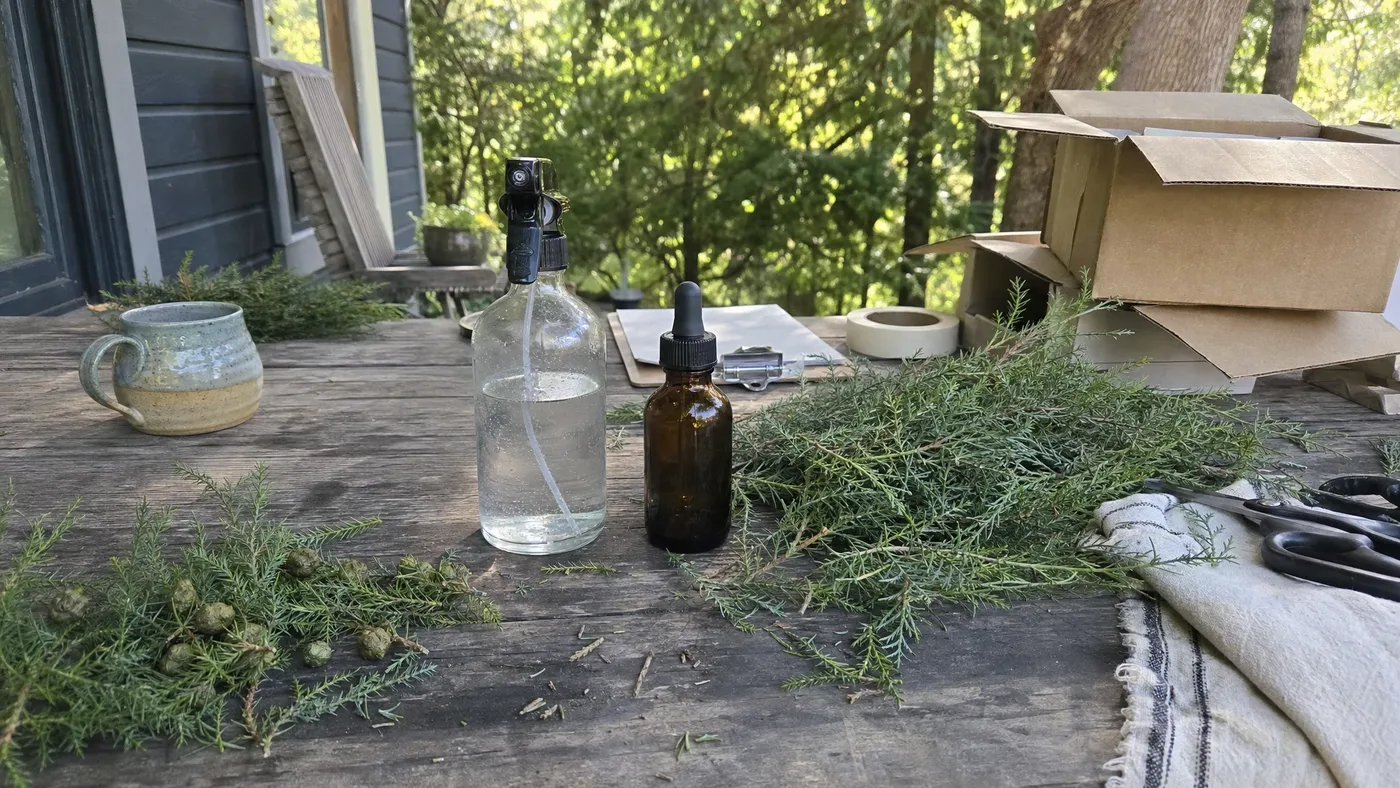
Behind every bottle of cypress oil is a second product most people never see: the water that came out of the still alongside it. That water is a hydrosol, and it sometimes gets sold as a gentler, cheaper version of the oil. It is really its own thing, and knowing the difference saves you from buying the wrong one.
Cypress Essential Oil
Our own Cypress Essential Oil, in sizes from 0.5 oz to bulk.
From $10.99
Shop Now →Where a hydrosol comes from
When steam passes through plant material, it carries aromatic molecules with it. The steam is cooled back into liquid, and the oil, which does not mix well with water, separates into a layer. The water left underneath is the hydrosol. Our oil is steam-distilled, and our guide to how cypress oil is made walks through the process.
It is tempting to think of the water as weak oil. The chemistry says otherwise. In a comparison of sweet wormwood oil and hydrosol from Serbia, the oil was rich in oxygenated monoterpenes and sesquiterpene hydrocarbons, while the hydrosol was dominated by oxygenated monoterpenes, which the authors tie to their higher water solubility. A study of immortelle found the same pattern of two products with different chief compounds: the oils led with alpha-pinene and eudesmol-type compounds, while the hydrosols were led by compounds such as alpha-terpineol and small ketones. We are not aware of a comparable analysis for cypress, so take these as examples of how distillation water behaves in general, not as figures for cypress. The takeaway is that a hydrosol smells different from its oil, usually softer and a little more watery, not simply fainter.
Why you cannot make one at home
Oil and water do not blend, so a few drops of cypress oil in a spray bottle of water is not a hydrosol. The oil floats and clings, and the first sprays can come out stronger than the rest. If you want a cypress room or linen mist, the better route is a dispersing base such as alcohol. We lay out how in our guides to a linen and closet spray and a room spray.
How they differ in the hand
An essential oil and a hydrosol feel completely different when you handle them. The oil is concentrated: one drop on a paper strip is plenty, and it clings. The hydrosol is a light, watery liquid that you would mist rather than drip. If you open both, you will probably notice that the oil has a stronger, more focused scent, while the water is softer and more diffuse. They are related, but they are not the same experience.
That difference is a good reason to decide what you want before you shop. A concentrated aroma you can steer drop by drop, or a gentle spritz you can use freely? Each is a good answer to a different question.
Which one do you need?
- A concentrated aroma for diffusing, blending, or scenting a product: the oil. A few drops go a long way.
- A ready-to-use light mist: a hydrosol from a supplier who makes them.
- A scent you want to last for years on the shelf: the oil, kept cool, dark and capped.
That last point is the big practical split. Water-based products are friendlier to microbes. A French study of cosmetic preservation found that no single factor, whether alcohol, pH or water activity, guaranteed a product would stay microbiologically sound on its own. Combinations mattered. That is why a water-based mist needs a thought-through preservation plan or a short shelf life, while an oil is simply a concentrated material to store carefully.
A few buying questions
If you do decide to buy a hydrosol from a supplier, a few questions help you choose well. What is the Latin name of the plant? When was it distilled, and how long has it been in the bottle? How is it packaged and stored? Is there a stated shelf life? A seller who answers these easily is usually one who handles the product with care. Treat the answers as a small checklist, and trust your nose when the bottle arrives: it should smell clean and plant-like, not sour or stale.
What we sell
We sell cypress essential oil only, in sizes from 0.5 oz up to bulk, and no hydrosol. For skin we recommend diluting the oil to 0.5% to 2% in a carrier oil and patch testing first, and it is not a mist to use neat. Our safety guide covers the details.
Storing each one
Keep the oil capped, cool and dark, and use a small bottle you will finish. A hydrosol should be treated more like fresh produce: keep it cold, note the date you opened it and be ready to replace it sooner. Whichever you choose, label the bottle on the day you open it, so you never have to guess how long it has been sitting there.
If your goal is a mist, a hydrosol is a simple answer. If your goal is aroma you can steer, with drops you can count, the oil gives you control.
Cypress Essential Oil
Cypress Essential Oil from our own shop, in sizes from 0.5 oz to bulk.
From $10.99
Shop Now →Sources & Further Reading
- Comparative Study of the Essential Oil and Hydrosol Composition of Sweet Wormwood (Artemisia annua L.) from Serbia. Chem Biodivers 2022. PubMed 35170197
- Essential Oil and Hydrosol Composition of Immortelle (Helichrysum italicum). Plants 2022. PubMed 36235438
- Berthele H et al. Determination of the influence of factors (ethanol, pH and a(w)) on the preservation of cosmetics using experimental design. Int J Cosmet Sci 2014. PubMed 24117694
- Tisserand Institute. Keep essential oils cool. tisserandinstitute.org