Cypress vs Eucalyptus Oil: Two Kinds of Fresh
Cypress and eucalyptus both get filed under "fresh," and that is exactly how people end up with the wrong bottle. One is the green, resinous hush of a conifer stand. The other is a cold, clearing blast. Same adjective, very different rooms.
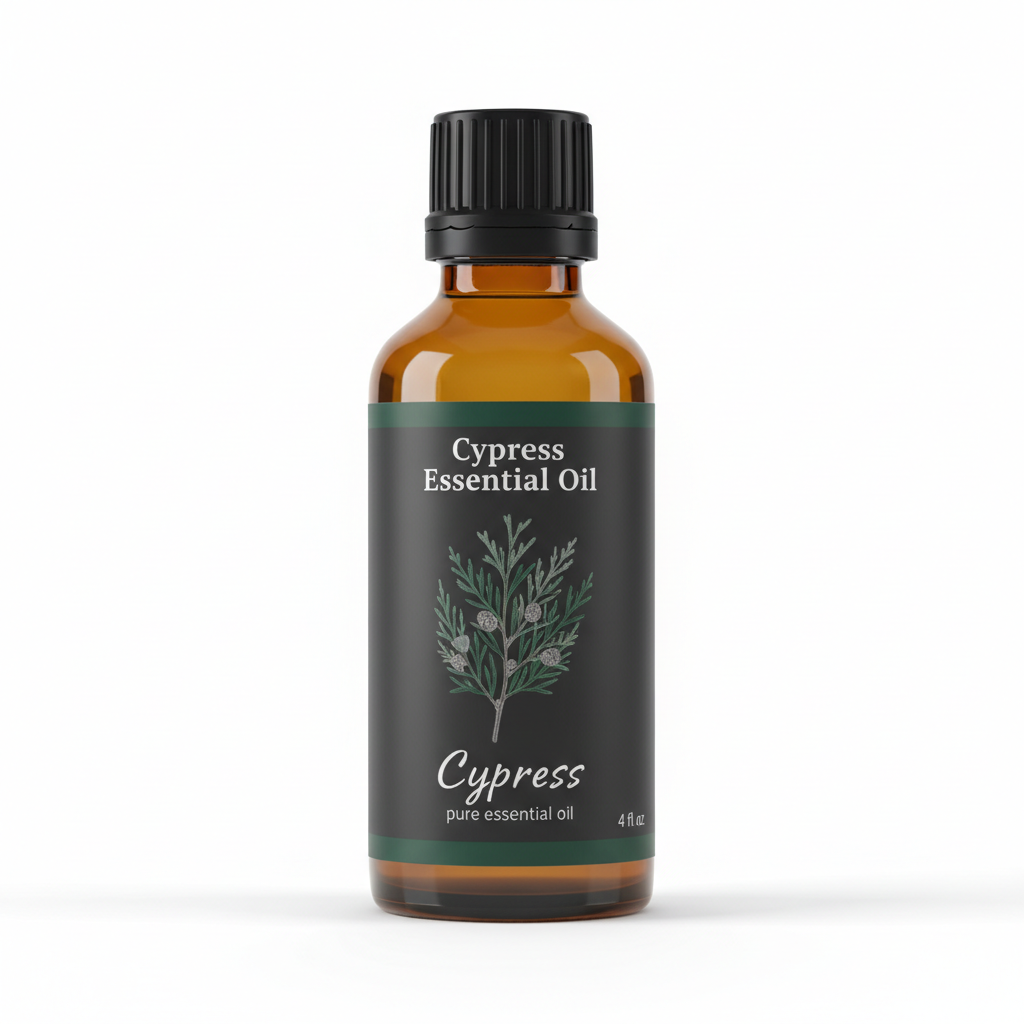
Cypress Essential Oil
Our own Cypress Essential Oil, in sizes from 0.5 oz to bulk.
From $10.99
Shop Now →Where the freshness comes from
Eucalyptus has an unusually lopsided recipe. A 2016 review of essential oil chemistry notes that in Eucalyptus globulus oil a single compound, 1,8-cineole (also called eucalyptol), makes up more than half the oil. A 2023 analysis of E. globulus oil measured it at about 63%. Cineole is penetrating and camphor-like, and when it dominates, it reads as sharp and bright from the moment you open the cap.
Cypress is built differently. In one analysis of Cupressus sempervirens oil, alpha-pinene led at about 49% with delta-3-carene near 22%. That is the chemistry of green needles and cool shade: dry, resinous and a little smoky, with none of the camphor punch. Composition shifts with the material distilled, but the character is consistent.
Two oils, two jobs
A way to remember it: eucalyptus is a statement, cypress is a setting.
Eucalyptus does one thing loudly. It works as a bold accent, and a little too much will flatten a delicate blend, since everything else becomes background. Cypress is the quiet builder. It sits in the middle of a blend and holds up the rest, with citrus on top and resin or moss below. That makes it forgiving for anyone building a room scent or a woodland accord for the first time.
- For a calm, clean living space: cypress.
- For a sharp, bracing accent: eucalyptus, used lightly.
- For a green-and-bright blend: a drop of eucalyptus in a cypress base, adjusted by nose.
Our guide to cypress blends shows partners that suit it, and our cypress scent profile describes what to expect from the bottle.
A simple way to try them together
If you already own both, blot a drop of each on separate strips and wait a minute before comparing. The eucalyptus will announce itself at once, while the cypress takes a moment to unfold into its dry, green middle. Many people find that a single drop of eucalyptus is plenty beside a few drops of cypress, which is a good reminder that strength and quality are different things. The louder oil is not the better one, only the one that needs the lighter hand.
Picture the mood
If you are not sure which to reach for, picture the mood. A cool, clean bathroom after a shower leans eucalyptus: a quick, bracing note that wakes up the air. A hall, a bedroom corner or a reading nook leans cypress, a steadier note that stays pleasantly in the background. The same oil in a different room can feel completely different, so it is worth moving a blotter from space to space before you commit.
Common ways to get it wrong
- Using too much eucalyptus. It tends to dominate. Start with a single drop beside several of cypress and add only if you miss it.
- Expecting cypress to shout. If you want a loud, punchy room, cypress will disappoint you. It is a quiet, supporting scent.
- Judging from the bottle neck. Both smell different on a blotter than in the bottle. Give each a few minutes before you decide.
- Forgetting the cap. Both are light, volatile oils that fade when left open, so close the bottle straight away.
A morning test
Try this on a quiet weekend morning. Put a drop of each on its own strip and carry them with you from room to room as you go about your day. Notice where each one feels right and where it feels out of place. By lunchtime you will probably know which one you want in the bedroom, which one in the bathroom, and which one you would rather keep on the shelf.
Handling both sensibly
Both are concentrated botanical materials, and we recommend treating them that way. For cypress, our guidance is to dilute to 0.5% to 2% in a carrier oil for skin use, patch test first, keep it away from eyes, children and pets, and never take it internally. Our cypress safety guide goes through the details. Eucalyptus has its own safety information, particularly around children, so read the notes from whoever supplies it, and ask a pediatrician if the room is shared with little ones.
We sell cypress only, so a eucalyptus bottle will have to come from another supplier. Both oils prefer a cool, dark cupboard with the cap tight.
Keep the loser around
It is worth owning a little of the oil you did not pick. Moods and seasons change, and the bold bottle that felt too much in January may be exactly right in a stuffy room in August. A small bottle used sparingly lasts a long time, and having both on the shelf lets you choose by the day.
Next time a shop says "fresh," ask which kind. It is the best way to end up with the bottle you actually pictured.
Cypress Essential Oil
Cypress Essential Oil from our own shop, in sizes from 0.5 oz to bulk.
From $10.99
Shop Now →Sources & Further Reading
- Chemical Composition and Biological Activities of Eucalyptus globulus Essential Oil. Plants 2023. PubMed 36903935
- Essential Oils, Part III: Chemical Composition. Dermatitis 2016. PubMed 27427817
- Selim SA et al. Chemical composition, antimicrobial and antibiofilm activity of the essential oil and methanol extract of the Mediterranean cypress (Cupressus sempervirens L.). BMC Complement Altern Med 2014. PubMed 24890383