Cypress Oil Safety: Dilution, Patch Tests, Storage
Cypress is one of the gentlest-smelling evergreen oils, and it is easy to forget that what is in the bottle is a concentrated botanical material. A few habits make it easy to enjoy: put it in a carrier, test it first, keep the bottle fresh, and know the handful of places it does not belong.
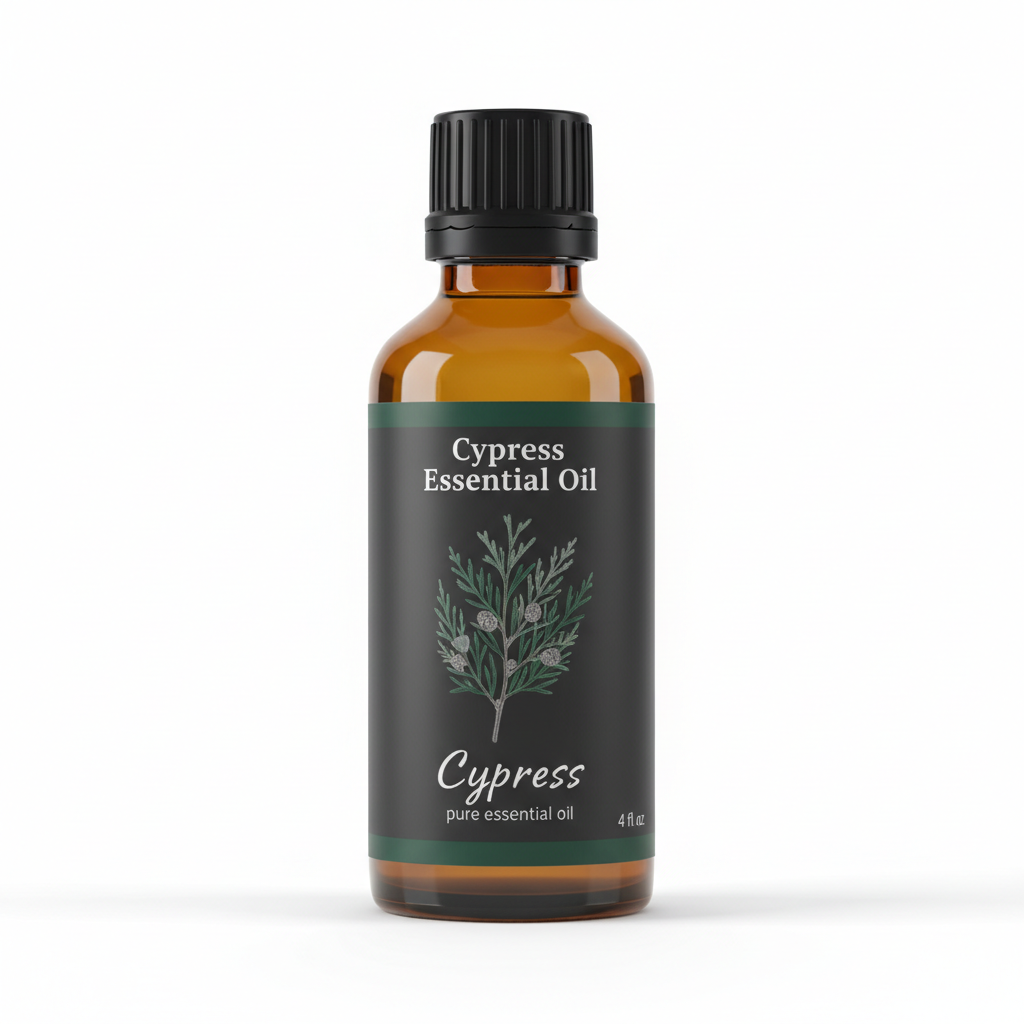
Cypress Essential Oil
Our own Cypress Essential Oil, in sizes from 0.5 oz to bulk.
From $10.99
Shop Now →The rule we start with: it goes in a carrier
Our oil is sold neat, and our guidance for skin is to dilute it to 0.5% to 2% in a carrier oil and patch test first. Nothing about enjoying cypress requires it undiluted, so we never suggest putting it on skin straight from the bottle. One supplier's safety data sheet for a cypress oil classes it as a skin irritant and a skin sensitizer, which is the plain reason the carrier matters: a diluted blend meets your skin at a fraction of the strength.
Percentages are a ratio of oil to carrier, not a count of drops, so the figures below are approximations at roughly 20 drops per milliliter. Droppers vary, so measure the carrier and count carefully.
| Carrier amount | 0.5% | 1% | 2% |
|---|---|---|---|
| 10 ml roller bottle | 1 drop | 2 drops | 4 drops |
| 30 ml (1 fl oz) bottle | 3 drops | 6 drops | 12 drops |
| 100 ml lotion or body oil | 10 drops | 20 drops | 40 drops |
If you are new to the oil, have easily bothered skin, or plan to use a blend daily over a large area, the lower end is the sensible place to begin. The IFRA standards govern fragrance ingredients in finished products, so if you are formulating something beyond a simple oil blend, look up the standard for your product category rather than relying on a drop table. Our cypress dilution chart has more bottle sizes.
Measuring is the part people skip, and it is the easiest to get right. Keep a small pipette or the dropper that came with your bottle, count aloud as the drops fall, and write the number on the label as you go. If you lose count, tip the carrier out and start again. A recipe you have to guess at is a recipe you cannot repeat.
A patch test takes one day
Mix the blend you plan to use, dab a small amount on the inner forearm, cover it and leave it for 24 hours. If the spot turns red, itches or feels warm, wash it off and skip that blend. It is worth repeating when you open a new bottle or change the carrier, since you are changing the recipe.
Fresh oil is better oil
Conifer oils age faster than most. Hana Tisserand has noted that conifer oils oxidize more quickly than many others and that even refrigerated and unopened they are at the limit of usability after about two years. In practice that means a small bottle you finish beats a big one that sits half empty, a tight cap every time, and a cool, dark cupboard. If an old bottle smells flat or sharp, retire it from skin use. Our storage guide goes through the details.
Setting up a tidy little station
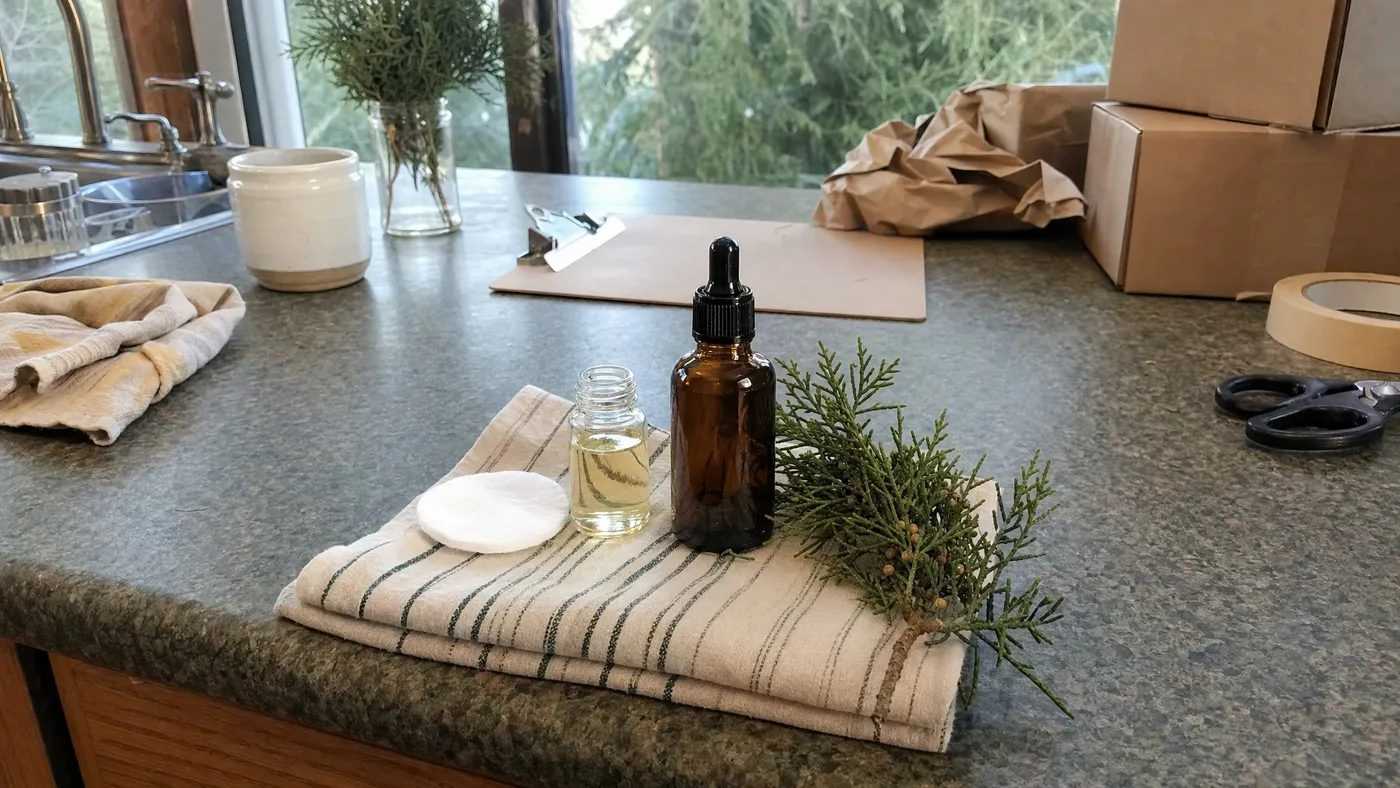
It helps to give your oils a home. We suggest a small box or tray in a cool cupboard, away from the stove and the sunny windowsill. Keep the bottle upright, wipe the neck after use so it does not gum up the cap, and keep a notebook beside it with the date you opened it. When you reach for it, you will see at a glance how long it has been open. A bottle that is easy to find, easy to close and easy to track is a bottle you will treat carefully without thinking about it.
Where cypress does not belong
- Undiluted on skin. Always a carrier first.
- In the eyes or on broken skin. Keep it away from both.
- Loose in bath water. Oil floats and lands on skin in concentrated droplets, so disperse it in a carrier first.
- By mouth. It is an external cosmetic oil, not a food or supplement. Our ingestion article explains.
- Within reach of children and pets. We keep it away from both. See cypress oil and dogs and cypress around kids.
We also suggest avoiding it during pregnancy as a precaution. If you are pregnant, nursing or managing a health condition, your clinician is the right person to ask, and our pregnancy article explains where that advice comes from.
Reading the label before you pour
Before every new project, take ten seconds to check what is on the bottle: the name, the Latin name, any dates. The habit takes no time and gives you confidence that what you are mixing is what you meant to mix. If a bottle has no label or the label has rubbed away, treat it as a mystery and keep it off your skin.
Making it a habit
None of these steps is hard, and most of them take less time than reading about them. Measure, label, test, store, repeat. After a few rounds it becomes automatic, like washing your hands before cooking, and you stop thinking about it. The reward is a bottle that smells good for as long as it should and a blend you can use without a second thought.
If something goes wrong
If a bottle is swallowed, do not make anyone vomit; call Poison Control in the US at 1-800-222-1222 with the bottle in hand. For a skin reaction, wash with a mild soap and plenty of water and stop using the blend.
None of this is meant to take the pleasure out of it. A blend you have measured, tested and mixed fresh is the easiest kind to enjoy.
Cypress Essential Oil
Cypress Essential Oil from our own shop, in sizes from 0.5 oz to bulk.
From $10.99
Shop Now →