Can You Swallow Cypress Oil? Why We Say No
No. We sell cypress essential oil for the diffuser and, properly diluted, for the skin, and we do not recommend swallowing it in any form. That includes a drop in water, tea or honey, and it includes a capsule. Here is the reasoning, because "it comes from a tree" is a fair first reaction.
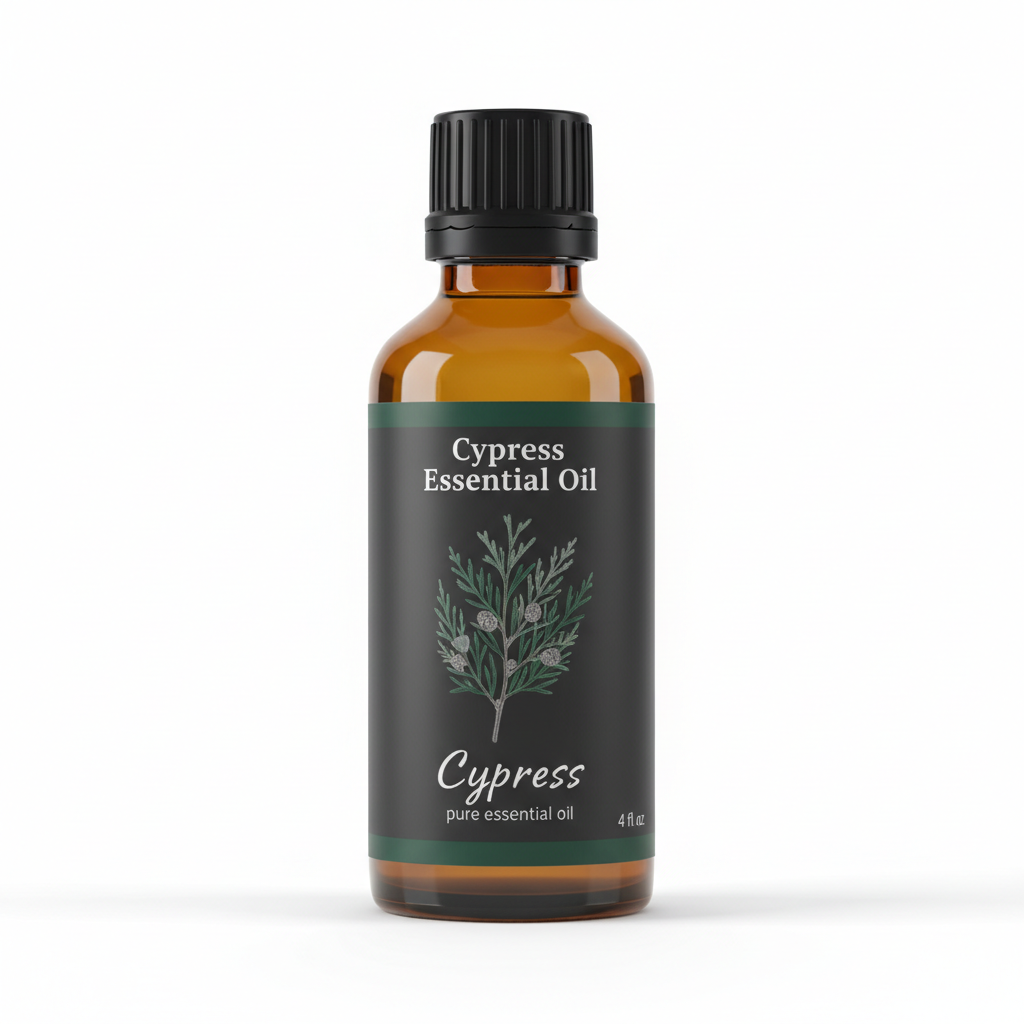
Cypress Essential Oil
Our own Cypress Essential Oil, in sizes from 0.5 oz to bulk.
From $10.99
Shop Now →Natural is not the same as mild
Where a molecule comes from tells you nothing about how much of it you are getting. Steam distillation gathers the aromatic fraction of a large amount of foliage into one small bottle. That is why a single drop smells so much stronger than a handful of needles, and why it deserves more care than the tree itself. The oil also does not mix with water. A drop in a glass floats as an intact bead, and that bead is what reaches your mouth first.
Honey and capsules change the way the oil is carried, not what is carried. A capsule can even hide the burning sensation that might otherwise make someone stop. Words on a label do not change this either. Phrases like "aromatherapy grade" are not defined by any agency, so they cannot make a bottle suitable for swallowing. Ours is labeled for external and aromatic use only.
Why you still see the opposite advice
Internal use turns up in a lot of essential oil content online, because it sounds easy and sells more bottles. We would rather you hear it from the references. Robert Tisserand and Rodney Young's Essential Oil Safety, the standard text on the subject, treats essential oils as potent materials with defined limits rather than something to drip freely. Poison Control makes the point in practical terms: it notes that aspirating an essential oil can cause pneumonia, which can happen if someone chokes and some of the oil reaches the lungs, and that children may be more susceptible to toxic effects than adults.
What to do with a recipe that says otherwise
You may well meet a recipe or a forum post that adds a drop of an evergreen oil to a glass of water or a spoonful of honey. Our suggestion is simple: close the tab. If a recipe is built around eating or drinking an essential oil, it is written for someone else's bottle and someone else's risk. A food, a tea or a seasoning you can cook with comes from the grocery store, and it is a much better place to look for flavor. If the real question is how to enjoy cypress, the answer is by nose.
If someone swallows some
Stay calm and get expert advice, with the bottle in your hand. In the United States, call Poison Control at 1-800-222-1222 or use the web POISON CONTROL tool. Poison Control describes its guidance as free, confidential and available around the clock. Have the oil's name, roughly how much was swallowed, and the person's age and weight ready. Do not try to make them vomit, since oil can reach the lungs on the way back up. Skip folk remedies such as milk, and ask the specialist what, if anything, to give.
If a dog or cat gets into a bottle, call your veterinarian or an animal poison hotline straight away. Our guide to cypress oil and dogs has more on homes with animals.
Telling the household
If other people share your home, tell them plainly where the oils live and that they are not for eating, drinking or tasting. A short sentence at the start saves a lot of worry later. Guests are worth a thought too, since a curious visitor may pick up a small bottle that looks like something else. A closed cupboard solves most of it.
Storing it where it can't be found
Poison Control recommends keeping essential oil bottles locked up and out of reach of children and pets. Our habit-based version: a high shelf, cap on, in the same place every time. Bottles on bedside tables are the usual place things go wrong. An orifice reducer slows pouring, but it does not make a bottle childproof.
It helps to keep the bottle with your other non-food things: next to the candles, the matches and the cleaning supplies, not next to the tea tin or the spice rack. A bottle that lives in the kitchen is easy to grab by mistake when you are tired or in a hurry, and a clear habit of where it lives does more than any warning label.
What cypress is for
The fresh, resinous scent is made for the air and for dilute skin use. We describe it as clean, green and coniferous, fresh and smoky-green, finishing resinous, and it is a good fit for a diffuser on a quiet morning or a lightly scented body oil. Our safety guide gives ratios for dilution and patch testing: 0.5% to 2% in a carrier oil, patch tested first, away from the eyes. Our guide to using cypress covers diffusing. For questions about how an aromatic fits your own health situation, a doctor or pharmacist is the right person to ask, and our FAQ covers everyday questions.
Enjoying it the way it was meant
Cypress rewards a slow sniff. Put a single drop on a blotter or a clean paper towel, wave it gently under your nose and notice the green, resinous opening. That tiny ritual is the whole experience, and it needs nothing more than your nose and a minute.
One quiet tip while you are at it: conifer oils change faster than woods or resins, so close the bottle firmly each time and enjoy it while it smells its best.
Cypress Essential Oil
Cypress Essential Oil from our own shop, in sizes from 0.5 oz to bulk.
From $10.99
Shop Now →Sources & Further Reading
- Poison Control (National Capital Poison Center). Essential oils. poison.org/articles/essential-oils
- Tisserand R, Young R. Essential Oil Safety, 2nd edition. Churchill Livingstone, 2014.