Cypress Cleaning Spray: Why You Need Two Bottles
Plenty of homemade cleaner recipes pour vinegar and castile soap into one bottle because both feel gentle and natural. The result is a curdled, stringy mess. The better plan is two sprays, each doing its own job, both smelling of clean evergreen.

Cypress Essential Oil
Our own Cypress Essential Oil, in sizes from 0.5 oz to bulk.
From $10.99
Shop Now →What you will notice when you spray
Both sprays carry a clean, green, slightly resinous scent that fades quickly once the surface dries. The vinegar spray smells sharper at first, because the vinegar leads, then settles into a drier evergreen note as it evaporates. The castile spray is gentler and softer, with the evergreen sitting more clearly on top. If you like the idea of cleaning without a heavy perfume hanging in the air afterward, this is the kind of scent that suits it.
Why two bottles
Liquid castile soap is a soap, which stays dissolved because it is alkaline. Vinegar is acetic acid. Combine them and the acid pushes the soap back toward the fatty acids it was made from, which is why it clumps into a film that clings to glass instead of rinsing off. That is basic soap chemistry rather than a quirk of our recipe, and it is why the two sprays below never meet.
The vinegar spray, for glass and taps
- 250 ml white vinegar (5% acidity, the ordinary grocery kind)
- 250 ml water
- 25 drops cypress oil
- One 500 ml spray bottle
Pour in the vinegar and water, add the cypress last and shake before every spray; oil floats on a water and vinegar mix and separates within minutes. Mist from 20 to 30 cm away and wipe with a microfiber cloth. That is about 1.25 ml of oil in 500 ml, or roughly 0.25%.
The castile spray, for counters and painted wood
- 500 ml water
- 2 tablespoons liquid castile soap, unscented if you want cypress to be the only scent
- 25 drops cypress oil
- One 500 ml spray bottle
Fill the bottle most of the way with water, pour the soap gently down the side to avoid suds, add the oil, and swirl rather than shake. Spray a light mist, wipe with a damp cloth, then go over it again with a clean cloth to lift any soap film.
A simple routine
Pick one day a week for the sprays and make it a small habit. Wipe the windows with the vinegar spray while the kettle boils, then do the kitchen counters with the castile one. Work from the top down so drips fall onto surfaces you have not cleaned yet, and finish with the floor if you like. Open a window as you go; the evergreen scent is lovely, but fresh air makes it lovelier.
If you find the smell too strong the first time, cut the drops back by a third. A cleaning spray should leave a faint, green impression, not a fog.
Where each belongs
Keep the vinegar spray off natural stone such as marble, granite and limestone, and off waxed wood. Acid dulls calcium-based stone and strips wax finishes, so choose the castile spray or a stone-specific cleaner there. The castile version can leave a slight film on mirrors, so use vinegar for those.
You will find vinegar and castile soap at any grocery or health shop. Keep sprays away from pets' bowls and out of reach of children and pets, and read our notes on pets before using scented sprays around animals.
Bottles, labels and habits
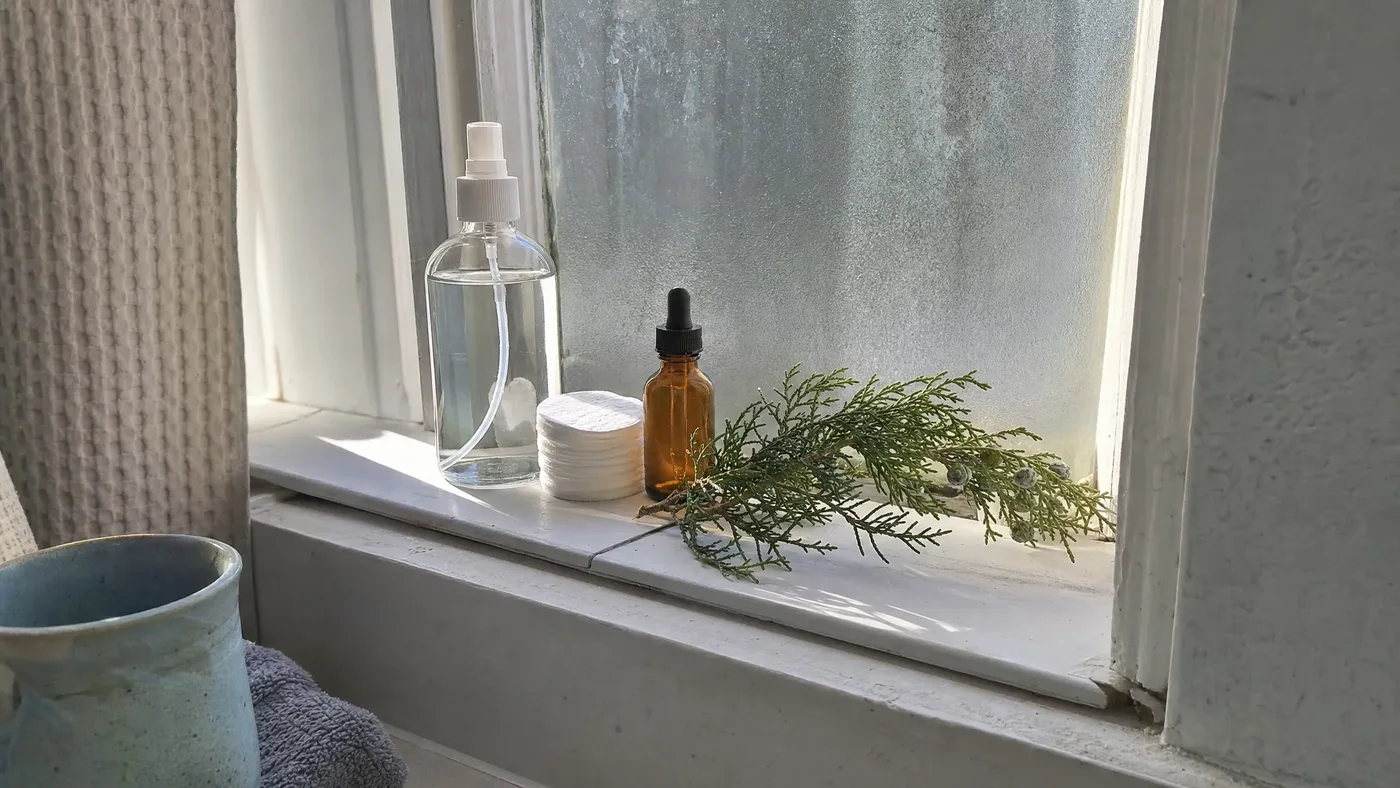
Label each bottle clearly with what is in it and the date you made it, and keep the two in separate places so you never reach for the wrong one. A glass bottle holds the scent better than clear plastic, though a sturdy spray bottle meant for cleaners is fine. Wash and rinse the bottle between batches. A fine nozzle gives a light mist that reaches across a window in one pass, while a coarser one is better for counters.
It also helps to keep a dedicated cloth for each spray. Microfiber for glass, a softer cotton cloth for painted surfaces. It sounds fussy, but it means each job gets done with fewer streaks and less rework.
What a scent can and cannot do
These sprays lift grime and leave a lovely smell. They are not disinfectants. Claims about killing germs on surfaces belong to products registered with the EPA as antimicrobial pesticides, and a homemade mix does not carry that. If you need a registered disinfectant, buy one.
Both sprays keep for a short while: the vinegar one for several weeks, the castile one for about a week in the fridge, so make small batches. Our room spray guide and linen spray guide use the same scent for other jobs.
Start small
If you have never made your own cleaner, start with the vinegar spray for the kitchen window and see how you like it. It takes about two minutes, and you will know straight away whether the scent suits your home.
A clean counter, a bright window and a faint evergreen note in the air is a good Saturday.
Cypress Essential Oil
Cypress Essential Oil from our own shop, in sizes from 0.5 oz to bulk.
From $10.99
Shop Now →