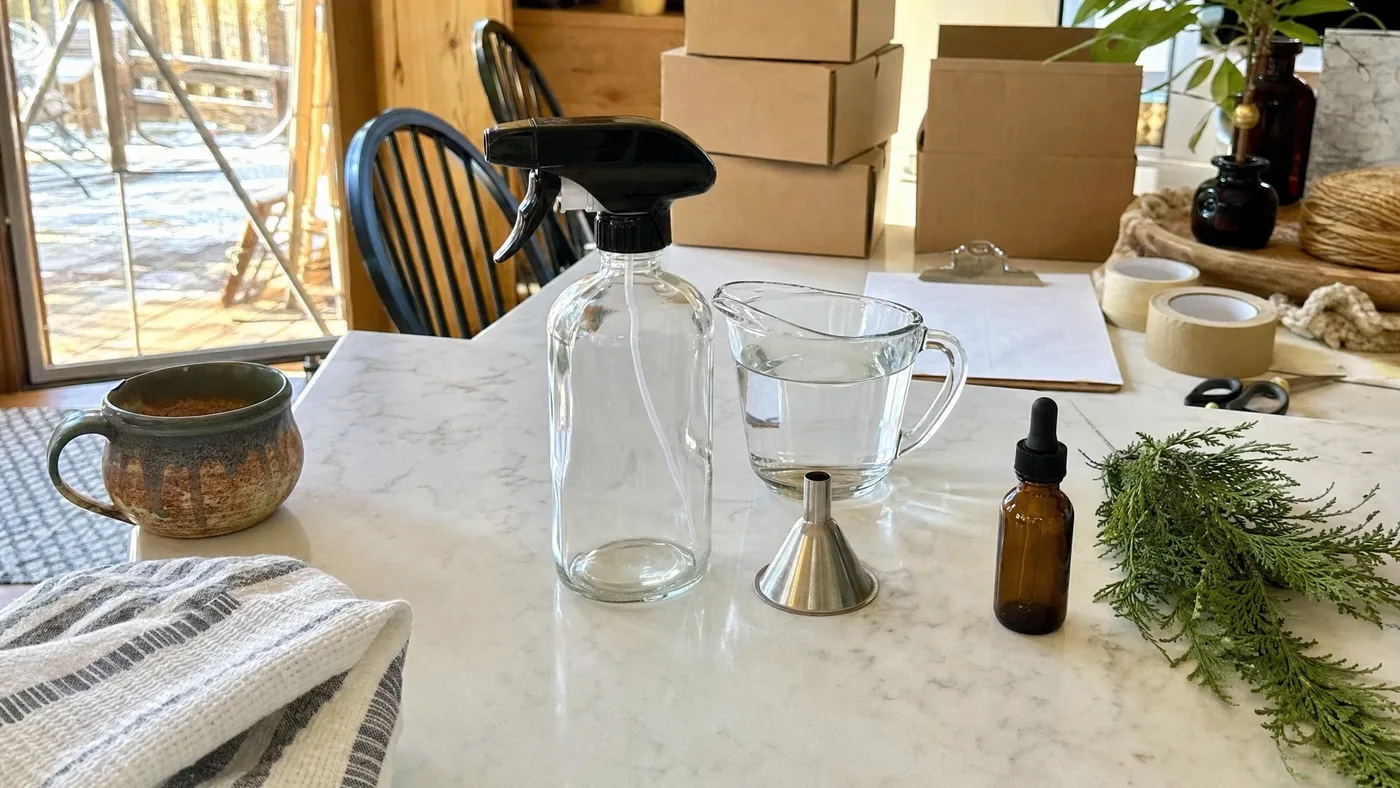
Cypress Room Spray Recipe That Stays Mixed
Shake some oil into a bottle of water, spritz, and the room smells of nothing for the first dozen pumps, then suddenly of far too much. It is a common experience, and the cause is simple chemistry. Here is how to build a cypress room spray that stays mixed from the first pump to the last.
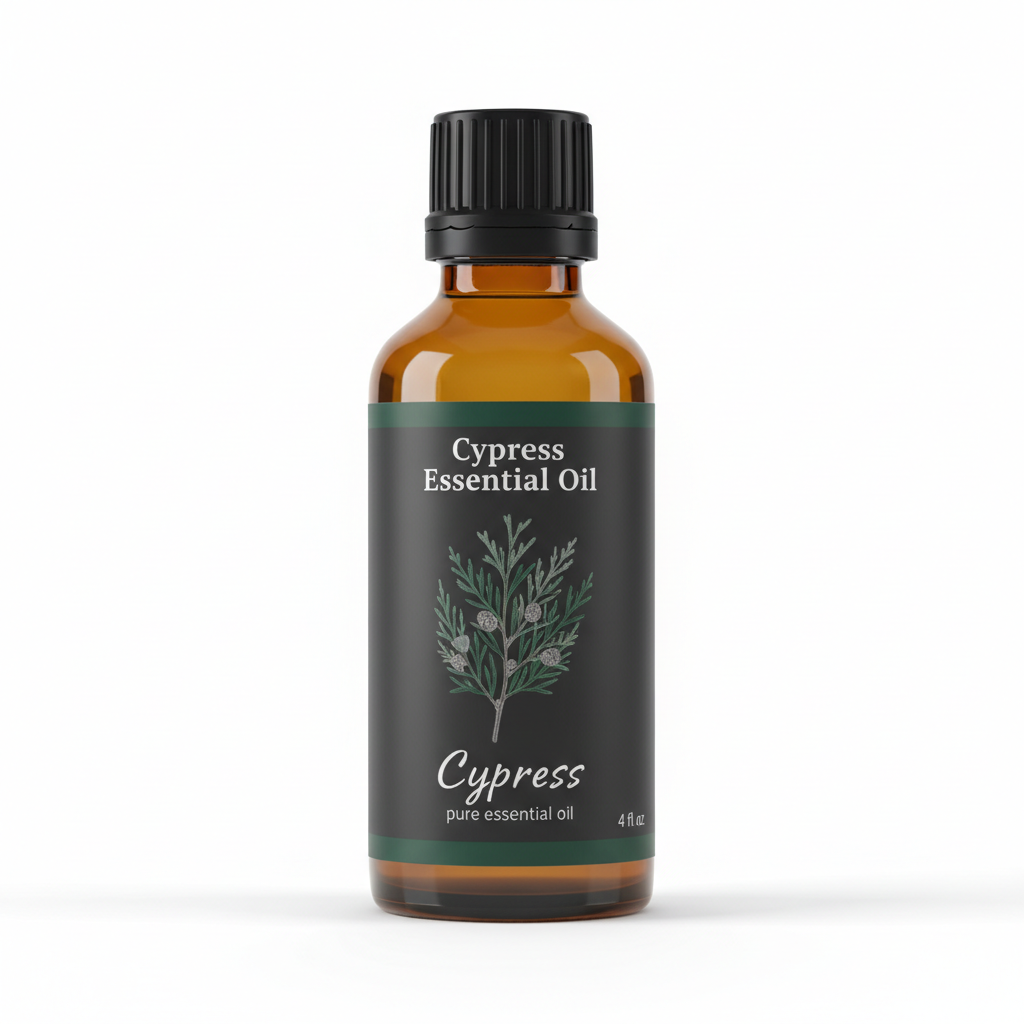
Cypress Essential Oil
Our own Cypress Essential Oil, in sizes from 0.5 oz to bulk.
From $10.99
Shop Now →Why oil and water will not cooperate
Cypress oil is built mostly from terpene hydrocarbons such as alpha-pinene and delta-3-carene (alpha-pinene was nearly half of one analyzed sample; Selim et al., 2014), and molecules like these do not dissolve in water. Shake the bottle and the oil breaks into droplets, then rises to the top as a film within minutes. A spray bottle draws from the bottom, so the early pumps are nearly plain water and the final ones carry a concentrated burst of oil. Oil floating at the surface also meets the air in the bottle, and pinene-rich oils change as they take up oxygen, so the scent can drift from fresh and green toward flat.
The fix is something that can hold the oil in solution. Strong alcohol does it simply, and that is the recipe here.
The recipe
| Component | Amount | Role |
|---|---|---|
| High-proof neutral spirit (95% alcohol) | 60 ml | Dissolves the oil and carries the scent into the air |
| Distilled water | 40 ml | Softens the mist |
| Cypress essential oil | 40 drops (about 2 ml, roughly 2%) | The fragrance |
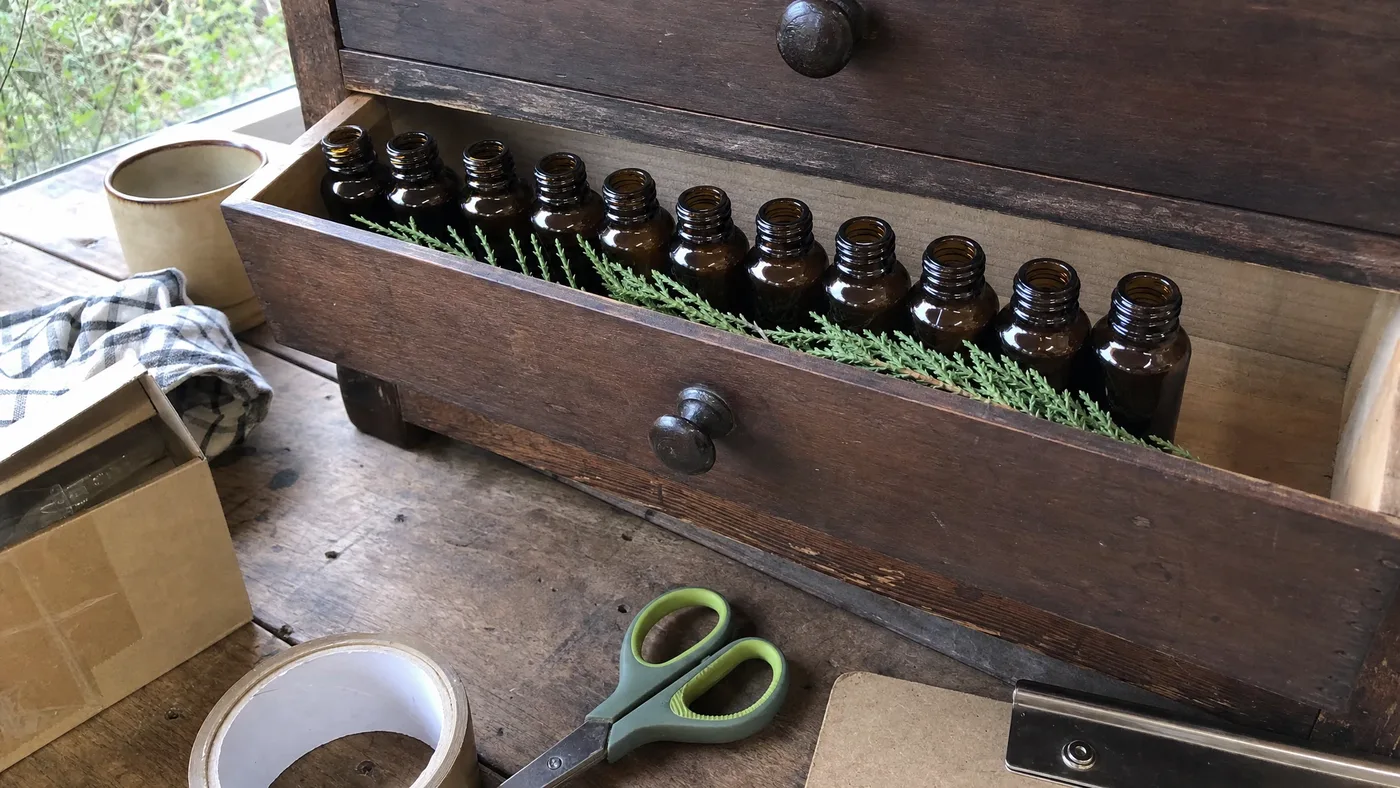
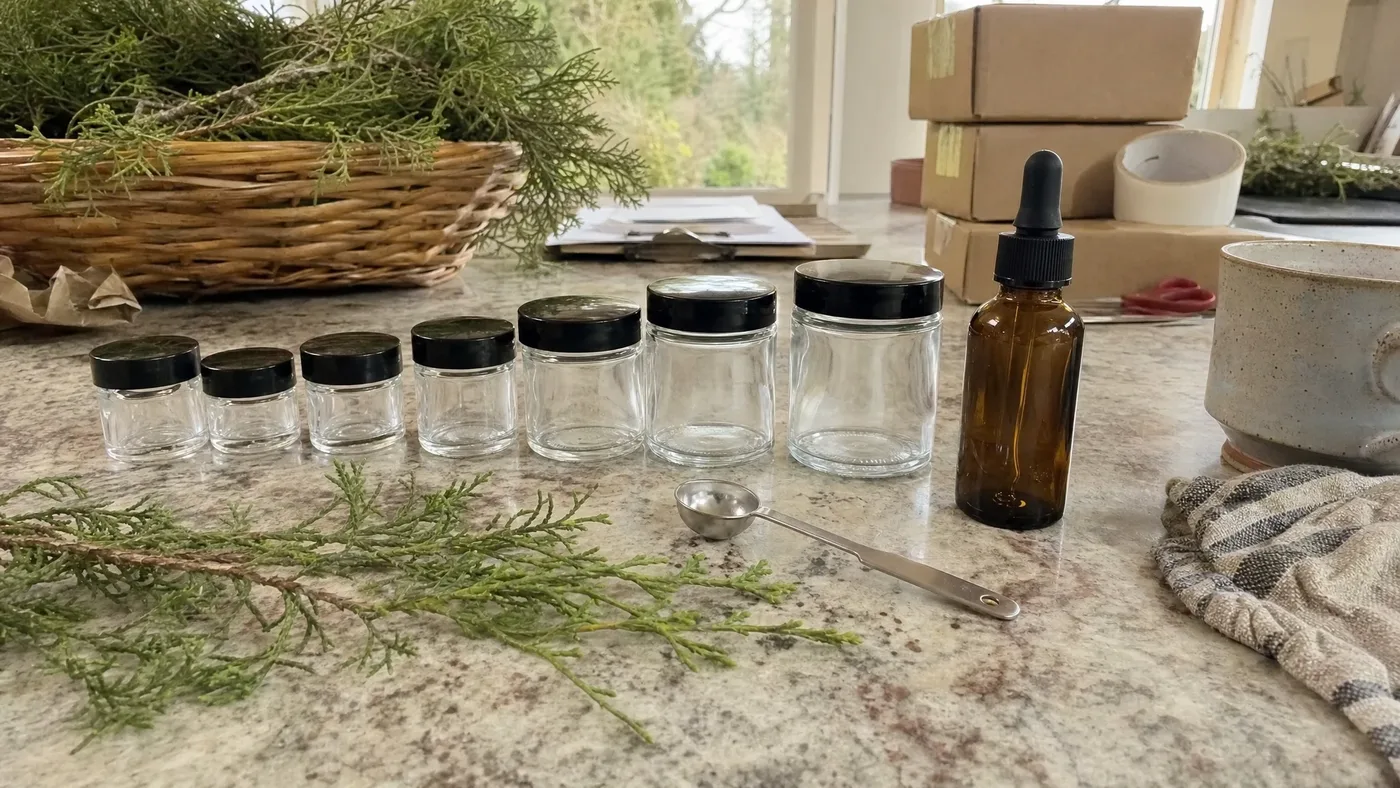
The drop figure uses the usual rule of thumb of about 20 drops per ml, so it is an approximation. You will also need a 100 ml glass bottle with a fine-mist sprayer (amber glass slows light-driven aging) and a small glass measuring cup. Perfumery and soap-supply sellers carry the spirit; ordinary 80-proof vodka is only 40% alcohol and holds this much oil poorly, so it may turn cloudy.
Steps
- Work away from flame. High-proof alcohol is flammable. No candles, burners or cigarettes nearby, and use a clean, dry bottle and cup.
- Measure 60 ml of spirit into the cup.
- Put the oil into the alcohol, not the water. Count 40 drops straight into the spirit. Alcohol is partly friendly to oil and partly friendly to water, so it takes the oil in at once. Added to water first, the oil beads up and the alcohol has to rescue a mixture that has already separated.
- Swirl until clear, about 30 to 60 seconds. Hold it to a window; there should be no oil ribbons.
- Add the 40 ml of distilled water slowly, stirring as you pour. A faint haze often clears as it blends. Tap water brings minerals that can cloud the mix, which is why we use distilled.
- Bottle, cap, label with the date, and let it rest for a day. Fresh cypress oil can smell sharply green at first, and a rest rounds the edge.
Scaling is just proportion. A 200 ml bottle takes 120 ml spirit, 80 ml water and 80 drops. For a lighter scent, use 25 or 30 drops.
How to spray
Aim up and let it fall. Mist two or three pumps at about head height in the middle of the room, then step out of the cloud. The droplets drift down slowly while the alcohol evaporates, leaving the scent in the air instead of soaking one spot. Spraying straight at a sofa arm or a bookcase puts a wet, concentrated dose on a single patch.
Keep the mist away from lacquered or varnished wood, which alcohol can dull, and from porous natural stone such as marble, which oil can darken. Keep it away from eyes and faces. Our guidance is to keep cypress oil away from children and pets, and our Harvest page recommends avoiding it in pregnancy as a precaution, so if there is a cat or dog in the house, or you have questions about fragrance in pregnancy, ask a veterinarian or your doctor or midwife first. Our post on cypress oil and dogs goes into it further.
Choosing where to use it
A spray like this earns its keep in the places where you want a quick refresh and cannot light a candle or run a diffuser: the entryway, a small guest room, the corner by the coat hooks. Try a mist in the air above the shoe rack before guests arrive, or one pass in an empty room before you open the windows. Let the mist fall and settle for a few minutes, then walk back in and see how it has changed. Most people find that the first impression is brisk and the scent mellows to something drier and quieter, and that is your cue to stop spraying.
Make it your own
Once you are happy with the base, try small variations one at a time. Swap two or three of the drops for another oil you love, such as a citrus or a resinous partner, and compare it against the plain version on two blotters. Write the changes on the label so you can repeat what you like. Keep each new batch small, label it, and leave the sprayer clean between uses so it does not clog.
Keeping the bottle fresh
With more than half the bottle being strong alcohol, the liquid itself resists spoilage better than a water-based spray would, though research on cosmetic preservation suggests no single factor, alcohol included, guarantees it (Berthele et al., 2014). What changes first is the aroma. Hana Tisserand notes that oils oxidize faster with heat, light and air, and conifer oils turn sooner than most, so a half-empty bottle will age faster than a full one. Mix a small batch, keep it in a cool cupboard, and make a new one when the scent turns flat or sharp.
If you want to avoid alcohol altogether, a cosmetic solubilizer is the other route. Follow your supplier's data sheet for the ratio, and know that a mostly water spray needs a suitable preservative and a short use-by, which is why we prefer the alcohol version for home batches.
Once you have this one working, the same method scents a linen cupboard; see our linen and closet spray, or browse what blends well with cypress to add a second note.
Cypress Essential Oil
Cypress Essential Oil from our own shop, in sizes from 0.5 oz to bulk.
From $10.99
Shop Now →Sources & Further Reading
- Berthele H et al. (2014). Determination of the influence of factors (ethanol, pH and a(w)) on the preservation of cosmetics using experimental design. International Journal of Cosmetic Science 36(1):54-61. PubMed 24117694
- Tisserand H. Keep essential oils cool! Tisserand Institute. tisserandinstitute.org
- Selim SA et al. (2014). Chemical composition, antimicrobial and antibiofilm activity of the essential oil and methanol extract of the Mediterranean cypress (Cupressus sempervirens L.). BMC Complementary and Alternative Medicine 14. PubMed 24890383