What Blends Well With Cypress Oil? Six Easy Pairings
Cypress is a supporting actor with excellent posture. It does not bring sweetness or fanfare; it brings a clean, green, slightly smoky line that makes whatever stands next to it look more composed. Knowing that, the pairings almost choose themselves.
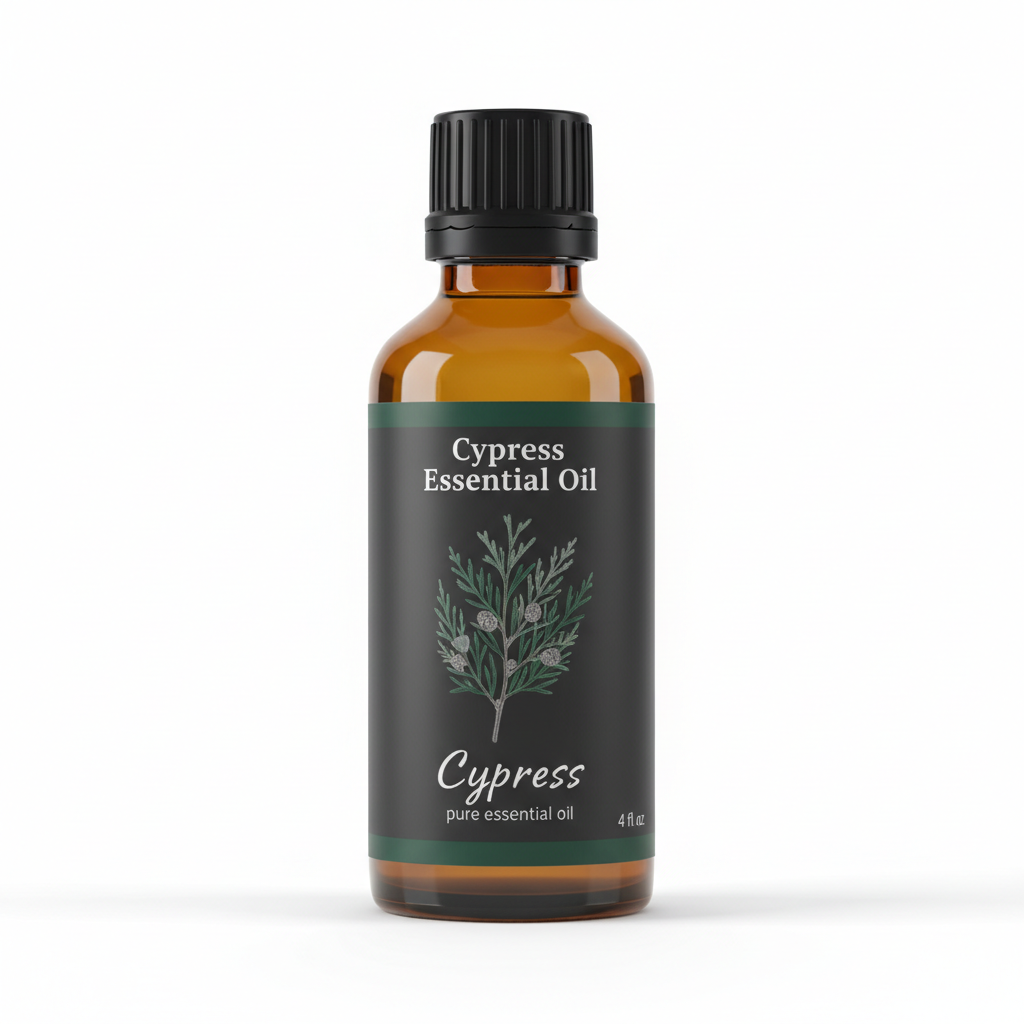
Cypress Essential Oil
Our own Cypress Essential Oil, in sizes from 0.5 oz to bulk.
From $10.99
Shop Now →What cypress does in a blend
We describe our oil as fresh and smoky-green, drier and more refined than common pine oils, finishing resinous and lingering, and as a note that bridges top and middle. In a blend, that means it lifts early and then lasts long enough to link bright oils above to woods and resins below. It also quietly takes sweetness out of whatever it touches, which is why it suits blends that want to feel crisp. We pair it, in our own guidance, with juniper, bergamot, lavender, cedarwood and frankincense, and our bulk page adds clary sage and sweet marjoram. Everything below builds on that list.
Starting points, not rules
The drop counts below are starting ideas for a diffuser, worked out from how these oils sit in a perfumer’s structure (top, middle, base), not formulas we have prescribed. Smell on a blotter, adjust one drop at a time, and keep the total small.
| Partner | Starting drops (cypress : partner) | What it adds |
|---|---|---|
| Frankincense | 2 : 1 | A resinous base; both oils are dry, so the pair is calm and spare. |
| Cedarwood | 2 : 1 | Warmth and depth under the green top. |
| Bergamot | 2 : 1 | A bright, bittersweet citrus lift. |
| Lavender | 1 : 1 | A soft floral herb against green wood. |
| Juniper berry | 1 : 1 | A peppery evergreen with more edge. |
| Clary sage | 3 : 1 | Herbal depth; a little goes far. |
How to try a pairing
The simplest way to build a blend is on paper, not in the bottle. Put a drop of cypress on one blotter strip and a drop of a partner on another, then hold them together under your nose and wave them slowly. You will notice at once whether the two lean toward each other or compete. Do it again an hour later, because the top of a blend moves quickly and the second impression is often the truer one. Jot the ratio on the strip with a pencil so you can find your way back to the one you liked.
Resin and wood: the quiet pairs
Frankincense and cedarwood are the obvious partners because they share cypress’s dryness. Cypress with frankincense gives a spare, church-hall kind of atmosphere, with cypress up front and the resin deepening the finish. Cedarwood adds the pencil-shaving warmth underneath, a bit like cypress growing roots. Since both are dry, ratios are forgiving; keep cypress in the lead so the blend does not settle into one flat color.
Bright and herbal: the lifts
Bergamot gives cypress a citrus top note, and cypress keeps the bergamot from tipping into candy. Lavender adds softness at equal drops, which is why the pairing is a staple for calm-feeling rooms (it is an aroma choice, nothing more). Clary sage brings an herbal, musky quality and can dominate, so add it last, one drop at a time.
Cypress with other conifers
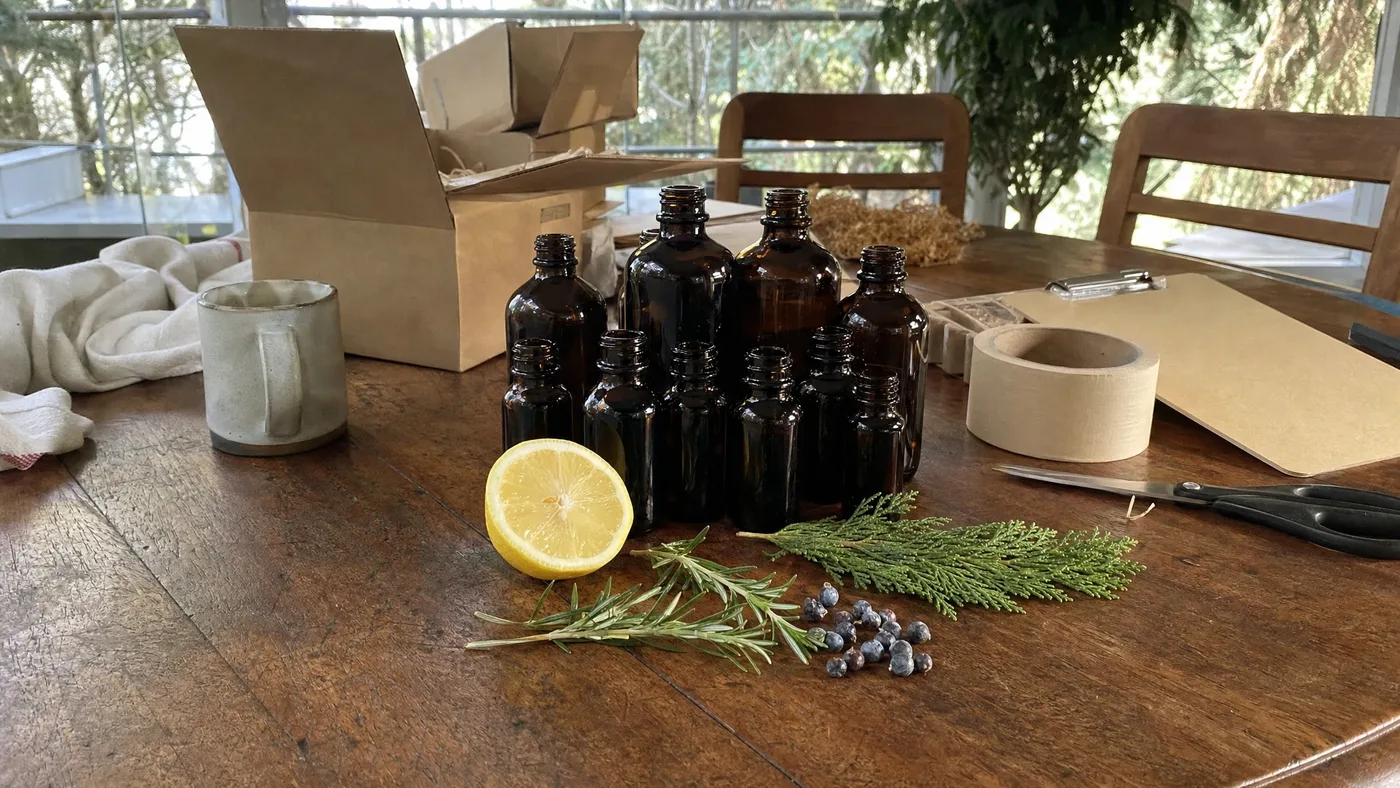
Juniper berry, pine and fir share cypress’s pinene backbone. Research bears this out: published analyses of cypress oil have found alpha-pinene as its leading compound, with delta-3-carene next, and a pine oil study names alpha-pinene as its major compound too. So these blends shade one forest note instead of creating a new one. They are a good fit when you want a woodland scent that feels like a single tree line. We sell cypress only, in our shop; look for the partner oils at a supply shop. Our forest diffuser blends take this further.
A note on bergamot for skin
If a blend will go on skin, the type of bergamot matters. Tisserand Institute guidance explains that expressed citrus oils are the main source of furanocoumarins, and that bergamot carries typically 0.11% to 0.33% bergapten, which is why IFRA caps bergamot oil at 0.4% in products applied to sun-exposed skin. Bergamot FCF, made by removing the furanocoumarins, is considered non-phototoxic. For skin blends, choose FCF, keep total essential oil in the 0.5% to 2% range we suggest for our oil in a carrier, and patch test. Check IFRA standards for your own formulation.
When a blend goes wrong
Every maker ends up with a mix that smells muddy. The usual reason is too many voices at once, so the first fix is to remove an oil, not add one. If the blend is too sharp, go lighter on the cypress. If it feels flat, a drop of something bright on top often wakes it up. Let a new blend sit overnight in a closed bottle before you judge it, because rough edges often blend out and the fresh impression you had at the bench is not the one you will live with.
Keeping it simple
Three oils is plenty: cypress plus two partners, such as cypress, bergamot and frankincense. Every extra oil dilutes the structure cypress provides. For ideas on rotating partners through the year, see cypress for the seasons, and for the bigger picture of how to use the oil, our uses guide. A fresh bottle matters here, since conifer oils are among those that oxidize sooner; keep ours capped, cool and dark. If you blend often, our guide to buying cypress oil in bulk covers what to check before ordering larger amounts. For perfume-style layering, our woodland accords article is a good companion.
Start with two drops of cypress and one of anything else, and let your nose do the editing.
Cypress Essential Oil
Cypress Essential Oil from our own shop, in sizes from 0.5 oz to bulk.
From $10.99
Shop Now →