How to Use Cypress Oil: Diffuser, Skin and Pads
The most common mistake with a bottle of cypress oil is adding more drops because the scent seems to fade. It is not fading. Your nose is adjusting, and the extra drops only add more to the air or onto your skin. A little goes a long way, and the method matters more than the amount.
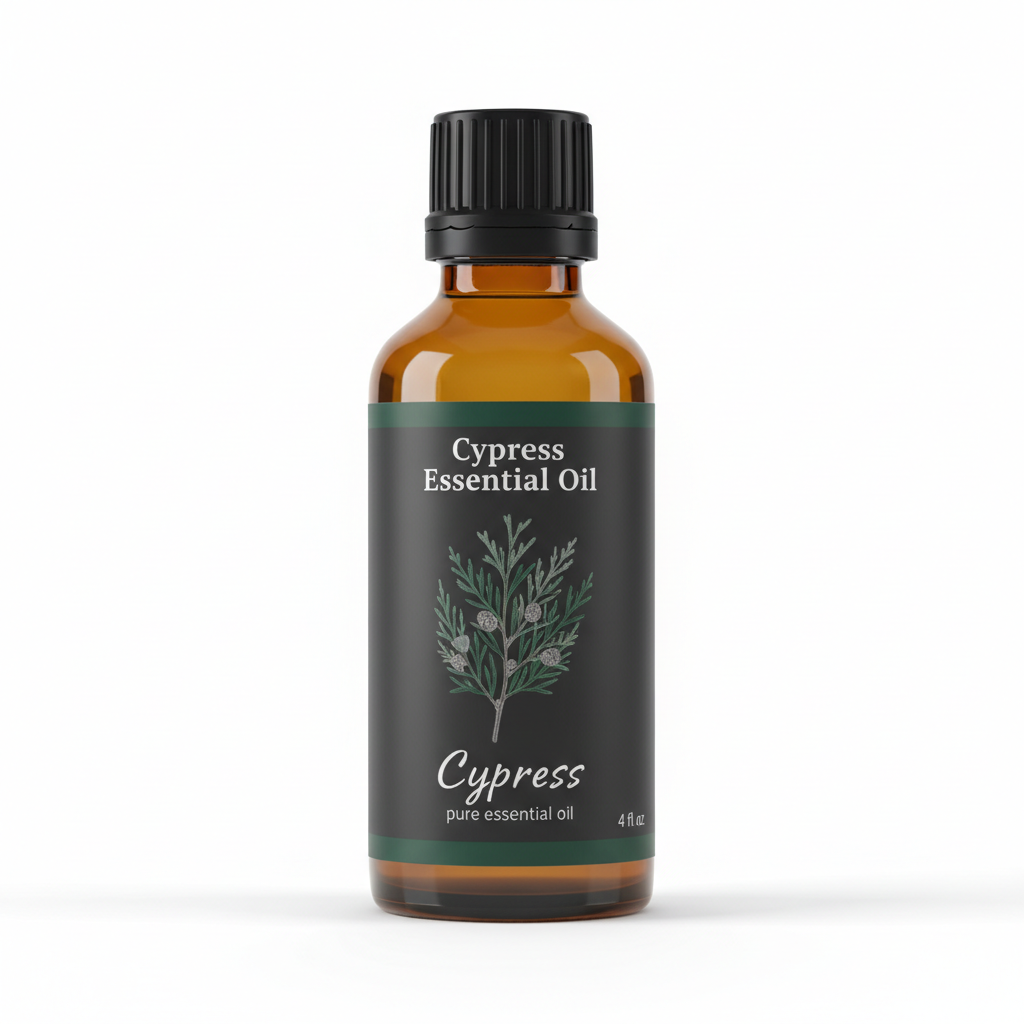
Cypress Essential Oil
Our own Cypress Essential Oil, in sizes from 0.5 oz to bulk.
From $10.99
Shop Now →Know the scent first
We describe our cypress as fresh and smoky-green, drier and more refined than common pine oils, finishing resinous and lingering. In perfumery terms it sits between a top and a middle note. If you have not smelled it yet, our scent profile will tell you whether it suits your space. It also blends well with juniper, bergamot, lavender, cedarwood and frankincense, among others.
A good way to start is to think about where you spend time and how close you are to the scent. A diffuser across the room gives a gentle background; a pad on a desk gives a close and personal one. The distance changes how strong the oil seems, which is why we recommend beginning with the lowest amount and moving up only if you need to.
In the air
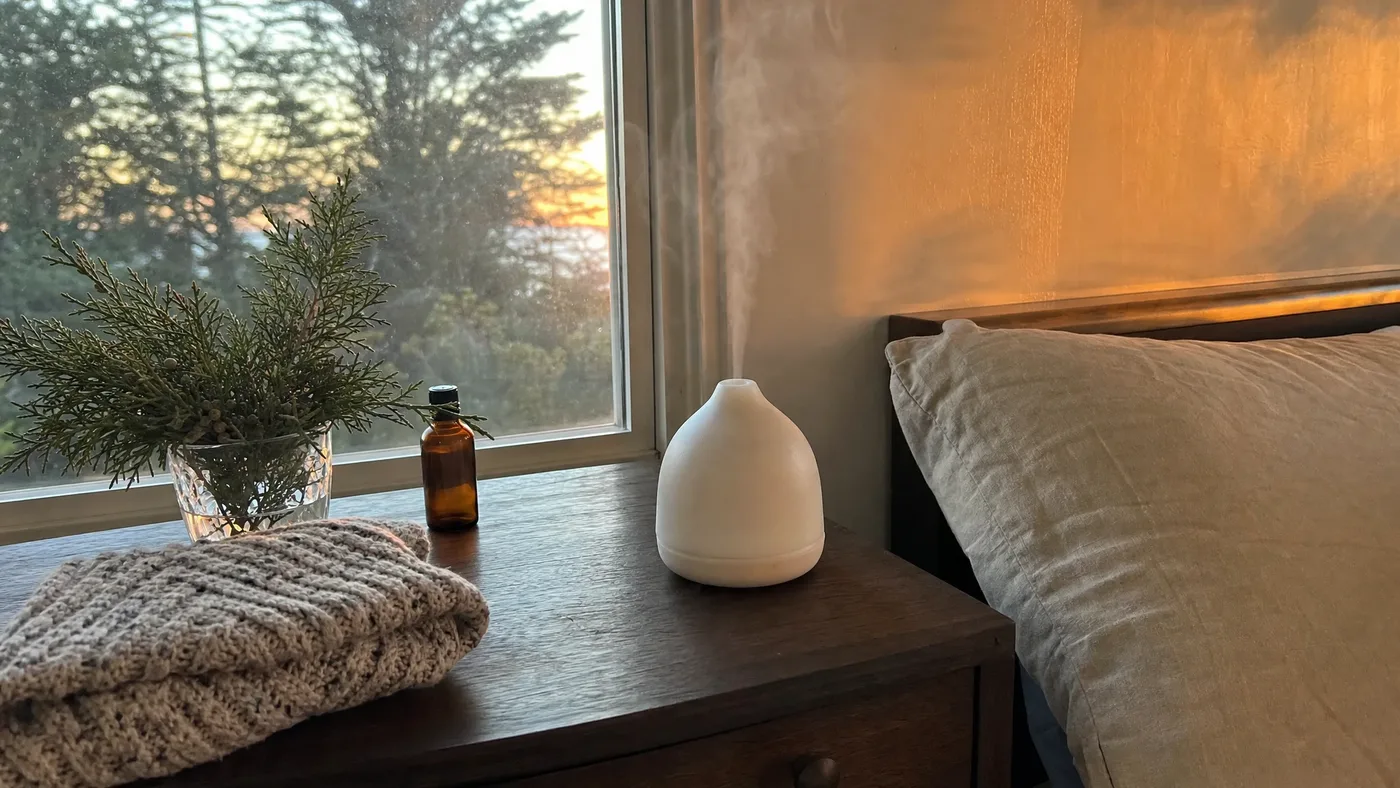
An ultrasonic diffuser turns the water into a fine mist that carries the oil with it, and it does not heat the oil, so the scent stays close to what is in the bottle. Use the water line marked on your diffuser and follow the maker's guidance on drops. When in doubt, start with fewer than you think you need, since a nose adapts quickly to a steady aroma and a room that has stopped smelling of anything is usually a nose that has tuned out, not a diffuser that has run dry.
- Run it in sessions, and give the room a break afterward, rather than running it all day.
- Place it at table height or above, away from where pets and small children spend time.
- Rinse and dry the tank afterward, because oil leaves a film that changes the next scent you use.
For a quieter, more personal option, put a drop or two on a cotton pad and set it on a saucer on a shelf, away from finished wood and fabric. Cypress is a volatile oil, so the scent on a pad is light and fades in a few hours. That is nice for a desk or a bookshelf.
Reed sticks are a gentler, slower option. They draw a base liquid up by capillary action, and because cypress is quite volatile, the scent in a reed bottle tends to be light and short-lived unless it sits in a good base. A personal inhaler, a small tube with a wick you scent yourself, is the most considerate choice in a shared space, since only the person holding it smells anything and each exposure is a deliberate one.
On skin, diluted
Our oil is sold neat, which means a concentrated material that needs a carrier. Our guidance for skin is to dilute to 0.5% to 2% in a carrier oil, patch test first, keep it away from eyes, and never use it undiluted or internally. If you would like the arithmetic: 1 oz of carrier is about 29.6 ml, and at roughly 20 drops per ml (an approximation) that gives these figures.
| Strength | Drops per 1 oz of carrier | Drops per 10 ml roll-on |
|---|---|---|
| 0.5% | about 3 | about 1 |
| 1% | about 6 | about 2 |
| 2% | about 12 | about 4 |
Choose a carrier you already know your skin gets along with, and buy it from a carrier-oil supplier or pharmacy, since we sell only the cypress oil itself. For your own formulations, check the current IFRA standards for the product type you are making. If you are pregnant, our Harvest page recommends avoiding the oil as a precaution, and your doctor or midwife is the right person to ask; and if skin is sensitive, a patch test on the inner forearm is a good first step. Our safety and dilution guide goes through it in detail.
A foot soak is another use we like. Oil does not mix into water on its own, so stir the drops into a spoonful of carrier first.
Another small trick is to keep a blotter strip in a labelled envelope with the date and a note about how the oil smelled the day you opened it. Months later, you can smell the strip, smell the bottle and decide whether the oil has changed. It costs nothing, and it gives you a reference that your memory alone cannot.
Keep your tools tidy too. A dedicated saucer for pads, a clean spoon for carrier oil and a cloth for wiping the bottle threads mean you handle the oil the same way every time. Habits like that matter more than any single recipe, because they keep the oil fresh and the results predictable.
Keep the oil fresh
Conifer oils oxidize faster than most, and Hana Tisserand notes that oxidized oils can carry a higher risk of adverse reaction, which is why we recommend a tight cap and a cool, dark place. Our storage guide shows how.
The simplest way to begin is the smallest one: a pad on a shelf for an afternoon. Notice whether you like the aroma before you scale anything up.
Cypress Essential Oil
Cypress Essential Oil from our own shop, in sizes from 0.5 oz to bulk.
From $10.99
Shop Now →Sources & Further Reading
- Tisserand H. Keep essential oils cool! Tisserand Institute. tisserandinstitute.org