How to Buy Cypress Oil: Six Checks Before You Order
Cypress is a delightful oil to buy and an easy one to buy badly. Its dry, woody-green scent is close enough to other conifer oils that a bottle on a screen tells you very little. A few simple checks do far more than any adjective on a label.
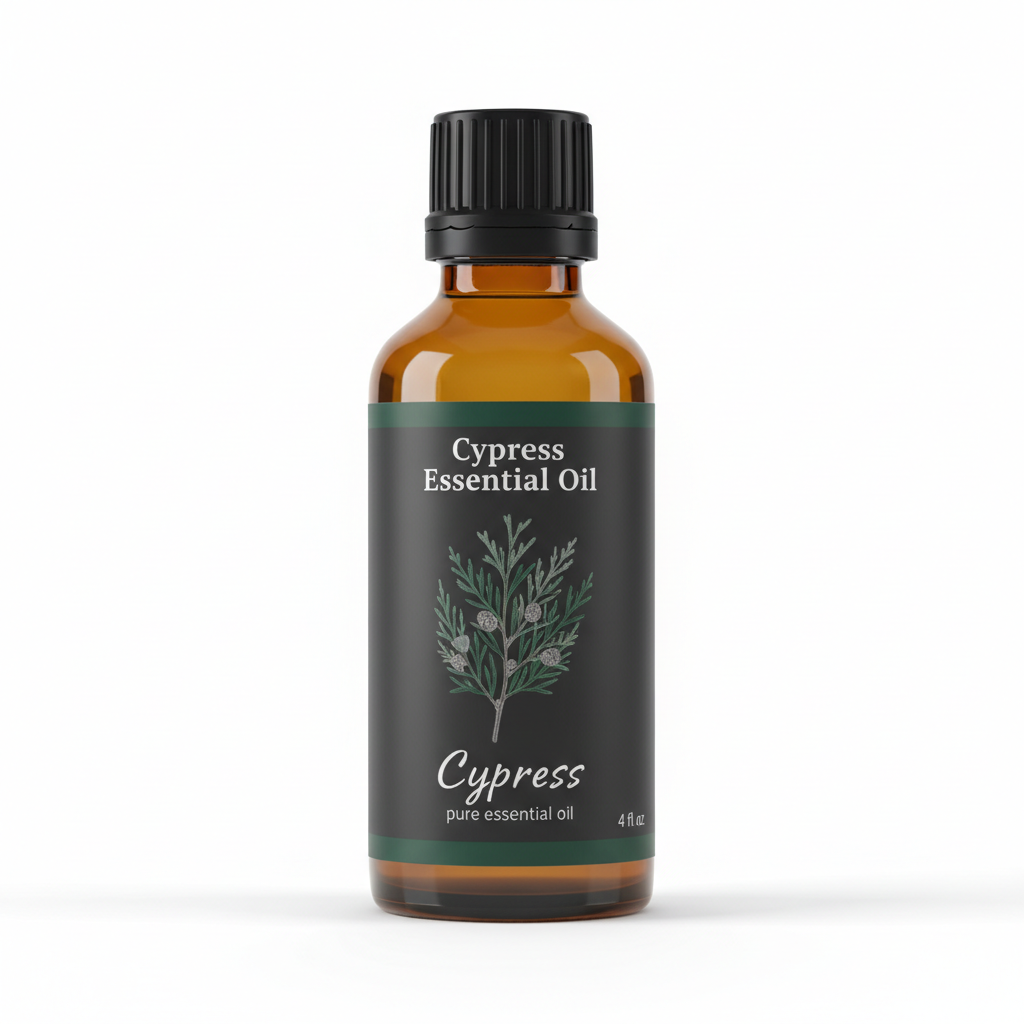
Cypress Essential Oil
Our own Cypress Essential Oil, in sizes from 0.5 oz to bulk.
From $10.99
Shop Now →Start with the name
"Cypress" is a loose word. Blue cypress is a different tree entirely (Callitris intratropica, from Australia), and its oil is a distinct product with a different character. The classic Mediterranean cypress is Cupressus sempervirens, and that is what we sell. Look for the full botanical name on any bottle you buy. If a seller only says "cypress", it is fair to ask. Our comparison of blue and Mediterranean cypress explains how different they are.
Documents beat adjectives
Words like "premium" are free for anyone to write. A batch number and a lab report are not. The Certificate of Analysis we publish is for one batch and lists density (0.864 at 20 C), refractive index (1.469) and optical rotation (+16.08 degrees), each with its pharmacopoeia range alongside. Those are identity and quality checks, and they do not give a compound breakdown. If you need GC-MS or constituent figures for your own formulation, ask us in writing through the contact page before you order and we will tell you what we can provide. Our walkthrough of reading our COA shows what each line means.
It is worth knowing why this matters. One 2026 study of fourteen pine oils from the Turkish market compared them against the European Pharmacopoeia monograph and found none compliant. Conifer oils are not immune from variation, and a standard exists for cypress too: ISO 20809 covers the oil of Cupressus sempervirens.
Read the page like a label
A product page tells you a lot, even before you click anything. Look at what the seller bothers to explain. Is the botanical name written out, or is it only "cypress"? Are sizes clearly listed? Is there a way to ask a question? A page that takes time over the dull details is usually written by someone who cares about the product, and a page that leans on adjectives usually does not have much else to offer. Reading slowly, as if you were checking an ingredient list, costs a couple of minutes and shows you a great deal.
The bottle matters more than people think
Conifer oils age quickly, so how an oil is packed is part of its quality. We bottle every size in amber glass, and each bottle carries the still date, fill date and lot. Tisserand's advice is that even refrigerated, unopened conifer oils are at the limit of usability after about two years. That is a good reason to ask any seller for dates, and a good reason to pick a size you will finish.
Choosing a size
We offer nine sizes: 0.5, 1, 2, 4, 8 and 16 oz, plus 5, 25 and 400 lb for makers. As a rough guide, a hobbyist who diffuses now and then will be happiest with a smaller bottle, since a fresh small bottle beats a large one that sits open. A maker with a steady schedule can step up. We go through it in our sizes guide. Bulk and private-label buyers can use our wholesale page to request sample bottles before committing, and orders ship within one to two business days (bulk sizes may take longer).
One thing we recommend to anyone new to an oil is to start smaller than feels necessary. You do not know yet how often you will reach for it, and the scent you imagined from a description may not be the scent you love in the room. A small bottle lets you find out cheaply and keeps the oil fresh, and if you fall for it, a larger size is an easy next step.
A short pre-purchase routine
- Is the botanical name on the page?
- Is there a batch number and a document that matches it?
- Is the bottle dark glass?
- Are dates on the bottle?
- Is the size one you will finish within a year or so?
- Can you ask the seller a question and get an answer?
Do not be shy about asking questions. A short, polite message to a seller about the plant part, the paperwork or the lot you will receive is a normal thing to do, and the way the reply arrives is its own kind of information. Clear, specific and friendly is what you are hoping for. Vague, hurried or defensive is a hint to look elsewhere. We would rather you ask us twice than guess once, and that goes for any seller you are considering.
When the bottle arrives, give yourself a quiet minute with it. Open it, smell gently from a little distance and notice the first impression before it fades. Write the date on the label, put it somewhere cool and dark, and you have started things off well.
A seller who is happy to answer those is usually a seller worth buying from, and our first order checklist goes further. Whatever you pick, the real test comes when you open the bottle: a clean, green, resinous evergreen note, and nothing sharp or flat.
It is worth saving this list on your phone. When you read through other sellers' pages, walk down the items one by one. You will find that a surprising number of pages answer only two or three, and that is useful information on its own.
Cypress Essential Oil
Cypress Essential Oil from our own shop, in sizes from 0.5 oz to bulk.
From $10.99
Shop Now →Sources & Further Reading
- ISO 20809:2017 Essential oil of cypress (Cupressus sempervirens L.), listing
- Senturk et al. 2026, Molecules 31(4):737 (PMID 41752514), pine turpentine oils on the Turkish market compared with the European Pharmacopoeia monograph.
- Keep essential oils cool! (Hana Tisserand), Tisserand Institute