Your First Cypress Oil Order: Five Checks Before You Click
Cypress oil can differ a lot from one sample to the next, which makes a first online order a small exercise in reading the fine print. The good news is that five checks cover most of what matters, and they take about ten minutes.
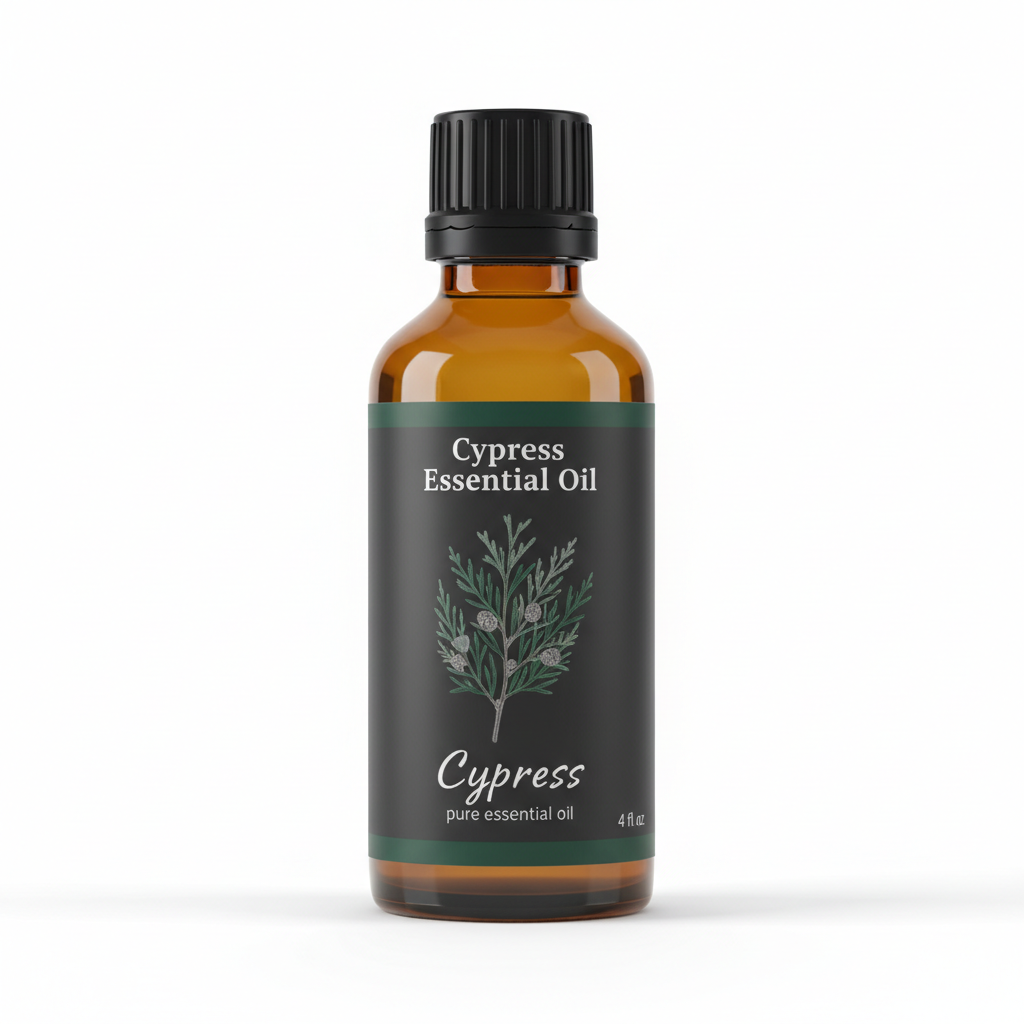
Cypress Essential Oil
Our own Cypress Essential Oil, in sizes from 0.5 oz to bulk.
From $10.99
Shop Now →Why a name is not enough
Three published analyses show how far cypress oil can move. A hydro-distilled Cupressus sempervirens leaf oil had alpha-pinene at 48.6% and delta-3-carene at 22.1%. Oils from three regions of Tunisia had alpha-pinene between 30% and 36.7%. A sample of aerial parts grown in Giza, Egypt, was 74% cedrol, with alpha-pinene at only 4.6%. All would be sold as cypress, and they would not smell alike. Robert Tisserand notes that cypress oil is quite varied, depending in part on the amount of leaf and cone distilled. That is why the interesting question is about the lot, not just the brand.
The five checks
1. A full botanical name
Look for Cupressus sempervirens, the Mediterranean cypress. If a page says only cypress, ask before ordering: blue cypress is a different tree and a different oil (our comparison explains it), and the phrase "cypress rotundus" muddles two plants (explained here).
2. A lot number you can match to a document
A lot number lets paperwork be tied to the bottle you hold. Ours carry a lot number, along with a still date and fill date, in amber glass.
3. What the document actually measures
Density, refractive index and optical rotation are quick physical readings that show an oil sits within expected ranges. A GC-MS report goes further and lists the compounds and their proportions. A phrase like "lab tested" with no document behind it is neither.
The Certificate of Analysis we publish is for one batch, CYPQGCCSUSC005A, with a best-by date of 04/30/2028. It lists relative density 0.864 at 20 C (standard 0.860 to 0.880), refractive index 1.469 (standard 1.460 to 1.480) and optical rotation +16.08 degrees (standard +9.00 to +27.00). It does not include a GC-MS profile, so if you need constituent figures for the lot you will receive, particularly if you make products to sell, ask us in writing through the contact page before ordering. Our COA walk-through reads each line.
4. Who, when and how much
A good certificate names the laboratory and the date, because that gives you someone to ask. Beyond that, a 2026 survey in Molecules compared 14 pine turpentine oils from one market with the European Pharmacopoeia monograph, checking appearance, density, refractive index, optical rotation, acid and peroxide values and profiles, and none complied. That is a different oil in a different market, but it shows that standards go beyond a short set of readings, and that a label alone does not prove an oil meets one.
5. Size and freshness
Conifer oils oxidize sooner than woods or resins; Hana Tisserand of the Tisserand Institute says that kept in a refrigerator, they would be at the limit of usability after about two years. So buy what you expect to use. We sell nine sizes from 0.5 oz up; the size guide works through the arithmetic, and a small bottle is a sensible way to learn whether you like the smell.
Make a short list before you open the page
It helps to decide in advance what you want the oil for. A diffuser in a living room, a few drops in a scent blend, a batch of something you make by hand: each one points to a different size and a different set of questions. Write your answers on a sticky note, along with the one thing you would regret not asking. When the page is open and the sizes are in front of you, it is easy to get distracted, and a note keeps you on track.
What to do on arrival
Write the date on the bottle, store it capped, cool and dark, and dilute to 0.5% to 2% in a carrier before it goes on skin, with a patch test first. Keep it away from eyes, children and pets; our safety guide has the detail. For the aroma, we describe ours as clean, green and coniferous, and the COA lists the standard smell as pine-like, citrus and earthy, so your own nose will be the final judge.
Makers and businesses can ask wholesale for sample bottles and a free consultation form, and bulk lists the larger sizes. For a wider walk-through, see our buyer’s guide.
If anything on a page seems unclear, send a short message before you order. A good seller will be glad to answer, and the reply tells you as much about the business as the product page does.
A Latin name, a lot number, a readable document and a bottle size you will actually finish: with those four, the fifth check is just enjoying the smell.
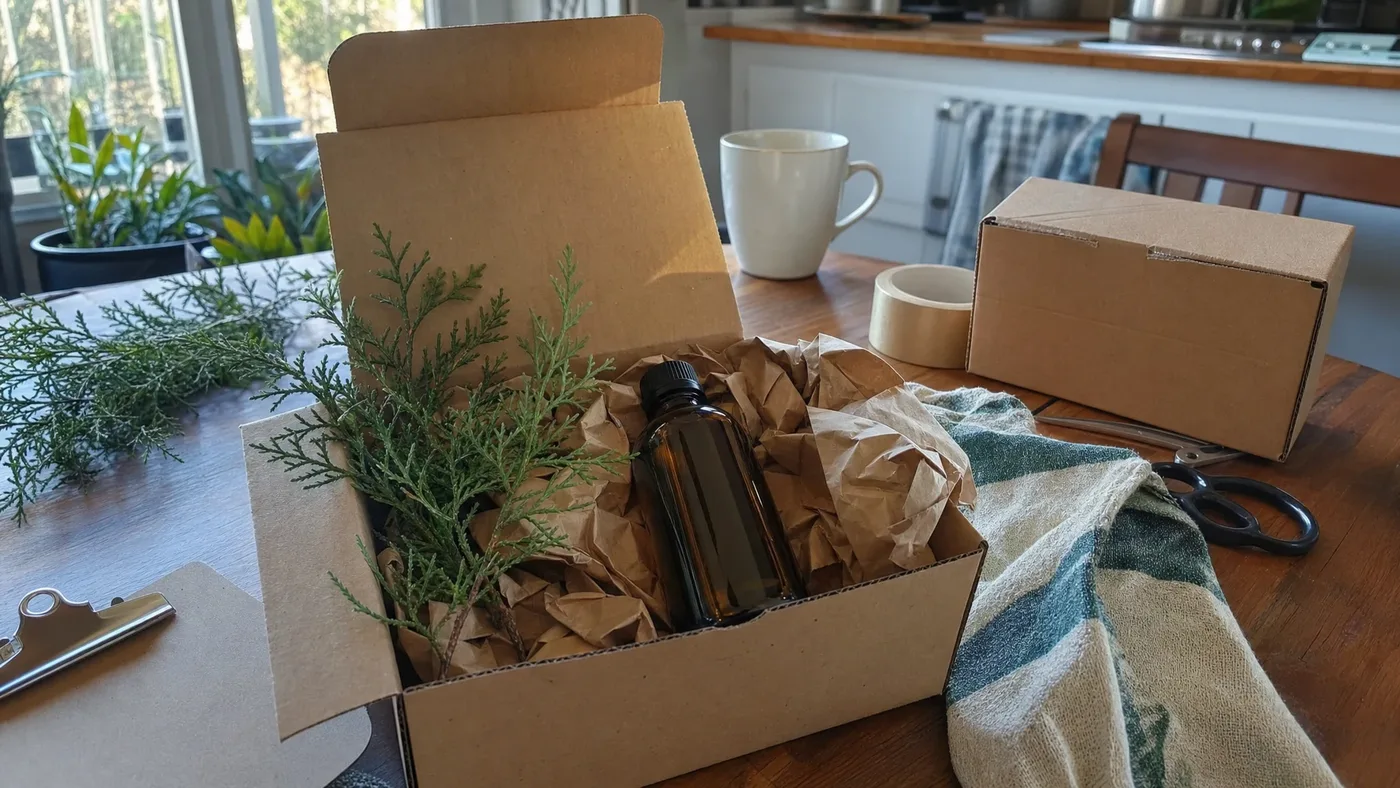
When the parcel comes, open it somewhere with decent light and a clear surface. Check that the bottle is the size you ordered, that the cap is tight, and that the label matches the lot number you saw online. Then, before you do anything else, unscrew the cap for a second and take a gentle sniff from a little distance. You are looking for a clean, green, resinous evergreen note, not something sharp or flat. That first impression is worth remembering, because you will compare every later sniff to it.
Cypress Essential Oil
Cypress Essential Oil from our own shop, in sizes from 0.5 oz to bulk.
From $10.99
Shop Now →Sources & Further Reading
- Selim et al. 2014, BMC Complementary and Alternative Medicine 14:179 (PMID 24890383)
- Sriti et al. 2024, Int J Environ Health Res (PMID 37115147), Cupressus sempervirens essential oil
- Ibrahim et al. 2017, Iranian Journal of Pharmaceutical Research 16(1):328
- Senturk et al. 2026, Molecules 31(4):737 (PMID 41752514), pine turpentine oils against Ph. Eur. 10.0
- Robert Tisserand, Cypress oil as a deodorant and a problem with citing books as references
- Tisserand Institute, Keep essential oils cool!