Why Cypress Oil Fades in Candles: A Test Plan
You pour a candle with a generous dose of cypress oil, and by the time it has cured, the green, woody scent you loved in the bottle has gone quiet. This is a common experience with conifer oils, and it has a good explanation. Understanding it also tells you exactly how to build a candle that carries the scent.
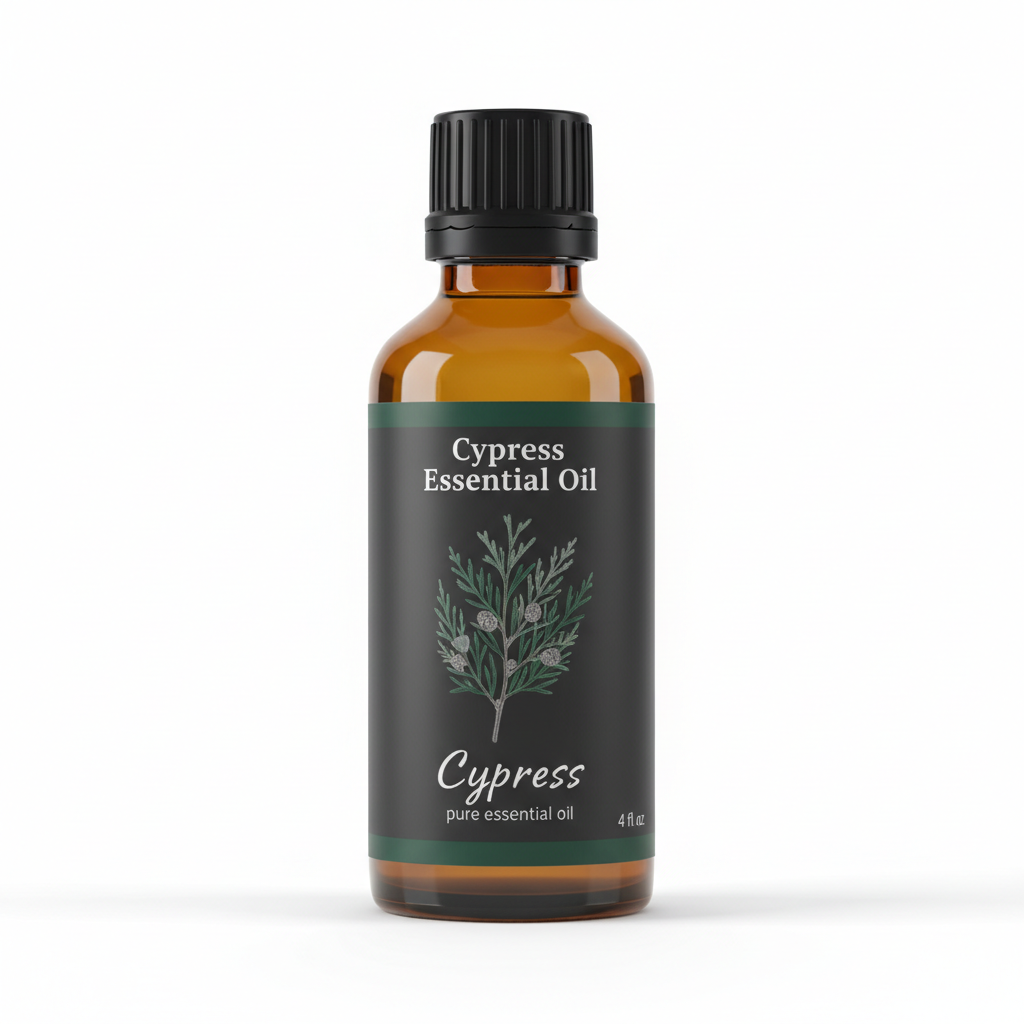
Cypress Essential Oil
Our own Cypress Essential Oil, in sizes from 0.5 oz to bulk.
From $10.99
Shop Now →Why cypress is a top-note oil
Most of cypress oil is made from light, quick-evaporating monoterpenes. One published analysis of a Cupressus sempervirens leaf oil put alpha-pinene at 48.6%, delta-3-carene at 22.1%, limonene at 4.6% and alpha-terpinolene at 4.5%, about four fifths of the oil in four small molecules (Selim et al., 2014). Another, on oils from three regions of Tunisia, reported alpha-pinene between 30% and about 37% (Sriti et al., 2024). The pattern is consistent: lots of volatile material that lifts off easily, which is why we place cypress as a top-to-middle note in perfumery. In a hot wax pool, that same eagerness to evaporate means a good share can leave during pouring and the first burns.
Composition does vary. An Egyptian sample of aerial parts was dominated by cedrol, a heavy sesquiterpene alcohol at 74%, with only about 5% alpha-pinene (Ibrahim et al., 2017), and an oil like that would behave quite differently in wax. The Certificate of Analysis we publish for one batch lists density, refractive index and optical rotation, not a compound breakdown. If you are making candles to sell and want a GC-MS report for your lot, ask us in writing through our contact page before you order.
Temperature is the question to settle first
A candle maker has two temperatures to respect: the wax's, and the oil's flash point. The one cypress safety data sheet we could read in full, from another supplier for an organic Cupressus sempervirens oil, lists a flash point of 41 C and flags the oil as a flammable liquid and vapor. We publish no sheet for our own oil, so treat that as a reference point and not our figure.
Now set it beside typical advice. A supplier Q&A on soy wax suggests adding oil once the wax has cooled below the oil's flash point, and mentions soy waxes that melt at 52 C and 68 C. A wax that melts at 52 C is solid at 41 C, so the two instructions cannot both be followed to the letter. We did not find a source that resolves this, so the sensible route is to rely on your wax maker's data sheet for temperatures and the oil's own safety data sheet for its flash point, keep flame away, ventilate, and stir the oil in at the lowest temperature at which your wax is still fully liquid. A wax supplier can also tell you whether essential oils suit a given wax at all.
How much oil that really is
The same supplier page gives a typical load of 6% to 10% by weight in soy wax, with some high-performance waxes holding up to 12%. Treat that as a testing range, not a rule. With the 0.864 density from the batch on our published Certificate of Analysis, and roughly 20 drops per ml, here is what the percentages mean for 100 g of wax.
| Load | Oil by weight | Oil by volume | Approx. drops |
|---|---|---|---|
| 6% | 6 g | 6.9 ml | 139 |
| 8% | 8 g | 9.3 ml | 185 |
| 10% | 10 g | 11.6 ml | 231 |
Eleven milliliters of flammable oil in every 100 g of wax is a lot, so small trial batches are the way to learn before scaling. Our size guide shows how far a bottle goes at these loads.
A fair trial you can run
Candle makers judge cold throw (the unlit candle) and hot throw (while burning). Here is a plan built from the supplier guidance above.
- Choose one wax lot, one jar and one wick, and change a single variable at a time.
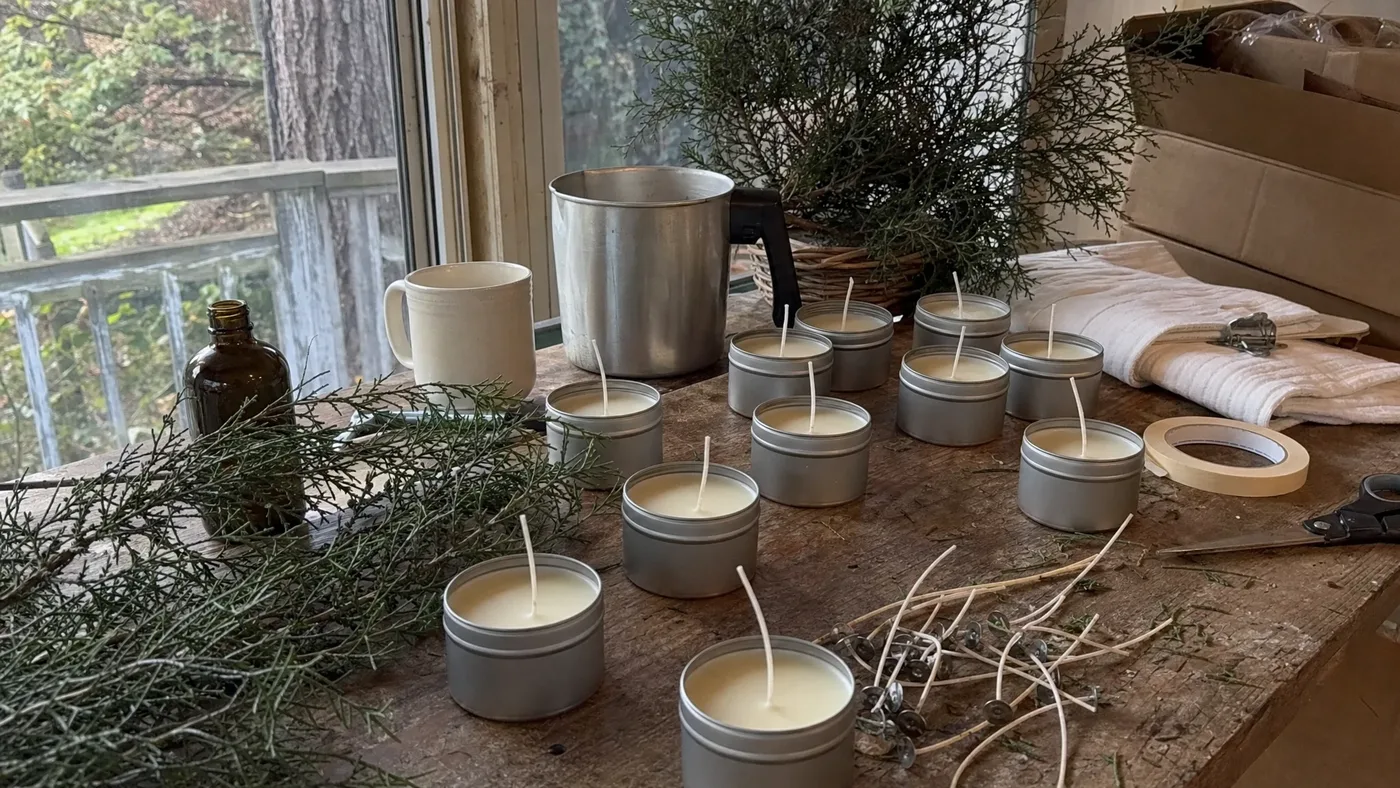
- Pour three candles at 6%, 8% and 10%, with the same pour temperature, and write the temperature down.
- Pour a fourth with half the cypress plus a heavier woody oil from a craft supplier, since heavier materials stay in wax longer.
- Smell each cold at 24 hours, one week and two weeks from the same distance, ideally with a second person scoring blind.
- Burn each for the same time in the same room and score the hot throw at fixed minutes.
- Discard any candle that beads oil on the surface and lower that load.
If every load scores about the same, more oil is not the answer. Because cypress is so volatile, the better lever is usually a smaller share of it in a blend where heavier notes hold the structure. Our posts on what blends with cypress and forest blends have pairing ideas, and cypress in perfumery shows where it sits in an accord.
A few cautions
Our guidance is to keep the oil away from eyes, children and pets, and a candle also puts fragrance into the air they breathe, so a veterinarian or pediatrician is the right person to ask about a particular household. If you sell candles, check the labeling and fragrance-material rules that apply to a sold product with your wax and oil suppliers. And if you want a very loud scent, a fragrance oil built for wax is a different product from a different supplier.
Cypress does not have to carry the whole candle. A modest share gives a green, dry-wood opening and the rest of the formula does the holding. Our soap and candle makers FAQ covers the general questions, and our wholesale page offers sample bottles for makers who want to smell the oil first.
Whichever way your trial goes, give yourself permission to enjoy the process. A cool, dry corner, a notebook full of numbers and a few jars cooling on a rack is a pleasant way to spend an afternoon, and a candle that smells faintly of evergreens is a good result even when it is not a loud one.
Cypress Essential Oil
Cypress Essential Oil from our own shop, in sizes from 0.5 oz to bulk.
From $10.99
Shop Now →Sources & Further Reading
- Selim SA et al. (2014). Chemical composition, antimicrobial and antibiofilm activity of the essential oil and methanol extract of the Mediterranean cypress (Cupressus sempervirens L.). BMC Complementary and Alternative Medicine 14. PubMed 24890383
- Sriti J et al. (2024). Antioxidant, antibacterial and insecticidal activities of cypress (Cupressus sempervirens L.) essential oil. International Journal of Environmental Health Research. PubMed 37115147
- Ibrahim TA et al. (2017). Chemical Composition and Antimicrobial Activities of Essential Oils of Some Coniferous Plants Cultivated in Egypt. Iranian Journal of Pharmaceutical Research 16(1). PMC5423258
- Amrita Aromatherapy (2023). Safety Data Sheet, Organic Cypress Essential Oil, version 1.0. amrita.net
- MySkinRecipes. Soy wax fragrance load and essential oil use in candles (Q&A, 2025). myskinrecipes.com