Which Carrier Oil Is Best for Cypress? A Job-by-Job Guide
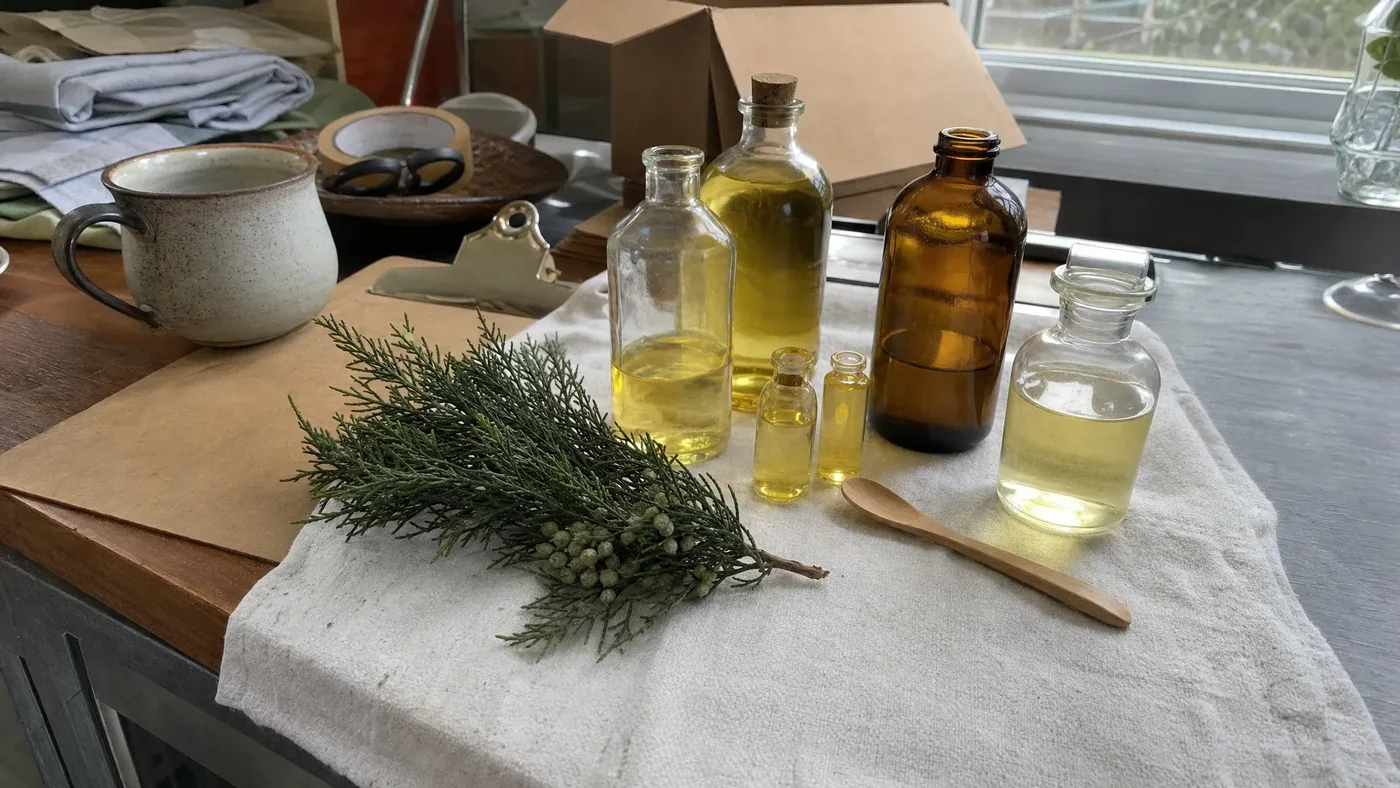
Two decent cypress oils will smell much alike in the same base. The same cypress in two different carriers will not. The carrier decides how a blend glides, how it feels after a minute, whether it lets cypress's dry evergreen note stay in front, and whether it still smells fresh in four months. It is the half of the bottle most people choose last.
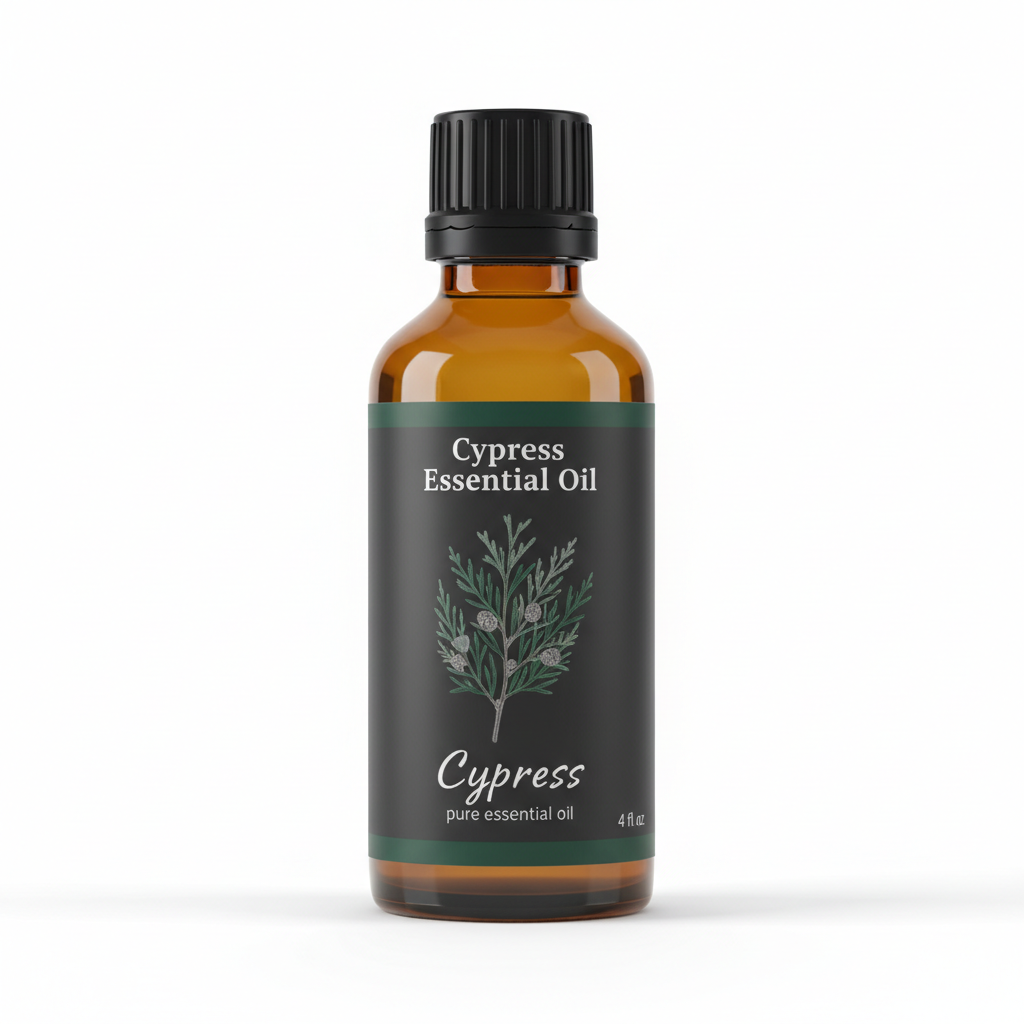
Cypress Essential Oil
Our own Cypress Essential Oil, in sizes from 0.5 oz to bulk.
From $10.99
Shop Now →We sell cypress, not carriers, so this is brand-neutral. Look for any reputable supplier, buy small, and write the date you opened the bottle on the label.
Freshness is the quiet deciding factor
Carrier oils are fats, and fats go stale when oxygen, warmth and light get at them, leaving that flat, crayon-like smell. Oils rich in polyunsaturated fats tend to turn first. Cypress ages in a similar way: its scent leans on light, airy molecules such as alpha-pinene, and Hana Tisserand of the Tisserand Institute notes that conifer oils oxidize faster than most. A half-empty bottle holds more air than a full one, so the practical rule is to buy the size you will finish and make blends in small batches.
Whatever you choose, patch test a diluted blend on the inner forearm before wider use. Our dilution chart turns percentages into drops, and our guidance is 0.5% to 2% in a carrier.
Jojoba: the one that keeps
Jojoba is technically a liquid wax rather than a true oil, made mostly of long-chain wax esters instead of triglycerides. That structure is why it ages so slowly. In a 2022 study from Osaka University, crude jojoba oil held up better than olive oil and squalene when heated at 60 C for 60 days; its acid value did not change while the others rose. It pours like a light oil, spreads evenly and leaves a soft, cushioned finish, and it is nearly scentless, so cypress stays front and center.
That makes jojoba our pick for anything that lives with you for months, such as the daily blends in our cypress cologne and beard oil formulations.
Fractionated coconut: the roller bottle favorite
Fractionated coconut oil keeps the lighter medium-chain fractions of coconut oil (caprylic and capric acids) and leaves the rest behind. It is thin, colorless, nearly scentless and stays liquid in a cool room, which is exactly what a roller ball wants. It feels light and dry, absorbs quickly and is easy to find fresh. Choose it for roll-ons, travel vials and light daily blends, and date the bottle.
If you are weighing jojoba against fractionated coconut, think of it this way: jojoba for longevity and a cushioned feel, fractionated coconut for a feather-light finish and roller-bottle behavior. Neither is wrong.
Sweet almond: the one with glide
Sweet almond has more slip than the others. It is a little heavier, stays workable under the hands long enough to cover a shoulder or calf, and absorbs gradually into a soft, silky feel. That is why it tends to be the massage favorite. Buy it in a size you will use within a season and keep it away from a sunny windowsill.
It does come from a tree nut. Tree nuts are one of the major food allergens recognized by the FDA, so if anyone using the blend has a tree-nut allergy, choose jojoba or fractionated coconut instead. The same goes for blends you give as gifts, since you may not know the recipient's history.
Grapeseed: light, and best bought small
Grapeseed is one of the thinnest, lightest carriers, absorbs quickly and leaves almost no film, so it suits anyone who dislikes feeling oily. Its fat profile is dominated by polyunsaturated linoleic acid, and that is the type of fat that goes stale soonest. Treat it more like a produce item than a pantry staple: smallest bottle, a few months of use, small batches.
Olive and unrefined coconut: when it is what you have
Both will work as a carrier in a pinch, though neither flatters cypress. Extra virgin olive oil is green, peppery and thick, so it competes with cypress's dry, woody profile. Unrefined coconut oil smells like coconut and sets solid at cool room temperatures (virgin coconut oil melts at around 24 C), so it will not roll in a bottle. It does have one natural home: the bath. Fat helps essential oil disperse through salt before it reaches the water, which is why our cypress sea salt soak includes a carrier.
How to choose when you are standing in the shop
Carrier oils are easy to evaluate with your own senses. Open the bottle and smell it: it should be faint and clean, never sharp, waxy or like old crayons. Rub a drop between two fingers and see how it spreads and how long it takes to settle. Look at the date on the label and pick the bottle with the longest runway left. If the shop will let you, choose the smallest size even if the bigger one is cheaper per ounce, because a bottle that goes stale in the cupboard is never a bargain.
Matching carrier to job
| What you are making | Carrier to reach for | Why |
|---|---|---|
| Beard or aftershave blend kept for months | Jojoba | Wax structure ages slowly, almost no scent |
| Roller bottle for daily carry | Fractionated coconut | Stays liquid and clear, light feel |
| Unhurried massage | Sweet almond (no tree-nut allergy) | Glide that lasts across larger areas |
| Quick one-off blend | Grapeseed | Thin and fast to absorb, use within months |
| Bath salts | Unrefined or fractionated coconut | Helps the oil spread through the salt |
Label everything
Once you start blending, bottles multiply quickly. A strip of tape with the carrier's name, the date you opened it and the date you blended it saves a lot of guessing later. Keep your carriers in a cool, dark cupboard and your blends beside them, and you will always know which bottle is which and which one to use up first.
If you remember one thing, make it this: a small bottle opened last month beats a fancy one opened last year.
Cypress Essential Oil
Cypress Essential Oil from our own shop, in sizes from 0.5 oz to bulk.
From $10.99
Shop Now →Sources & Further Reading
- Tsuchimoto S, Sakai H, Fukui K, 2022. Oxidative Stability and Antioxidant Activity of Crude Jojoba Oil. BPB Reports 5(6):121-124
- Tisserand Institute: Keep essential oils cool
- FDA: FDA Issues Guidances on Food Allergen Labeling Requirements (tree nuts as a major food allergen)
- Coconut oil (melting point; caprylic and capric fractions), Wikipedia
- Grape seed oil (fatty acid profile), Wikipedia