Organic Cypress Oil: What the Labels Really Mean
An organic seal is the part of a bottle that looks most official, so it tends to be asked to do more work than it was built for. The useful way to read it is to ask what it says, and what you still need to find out some other way.
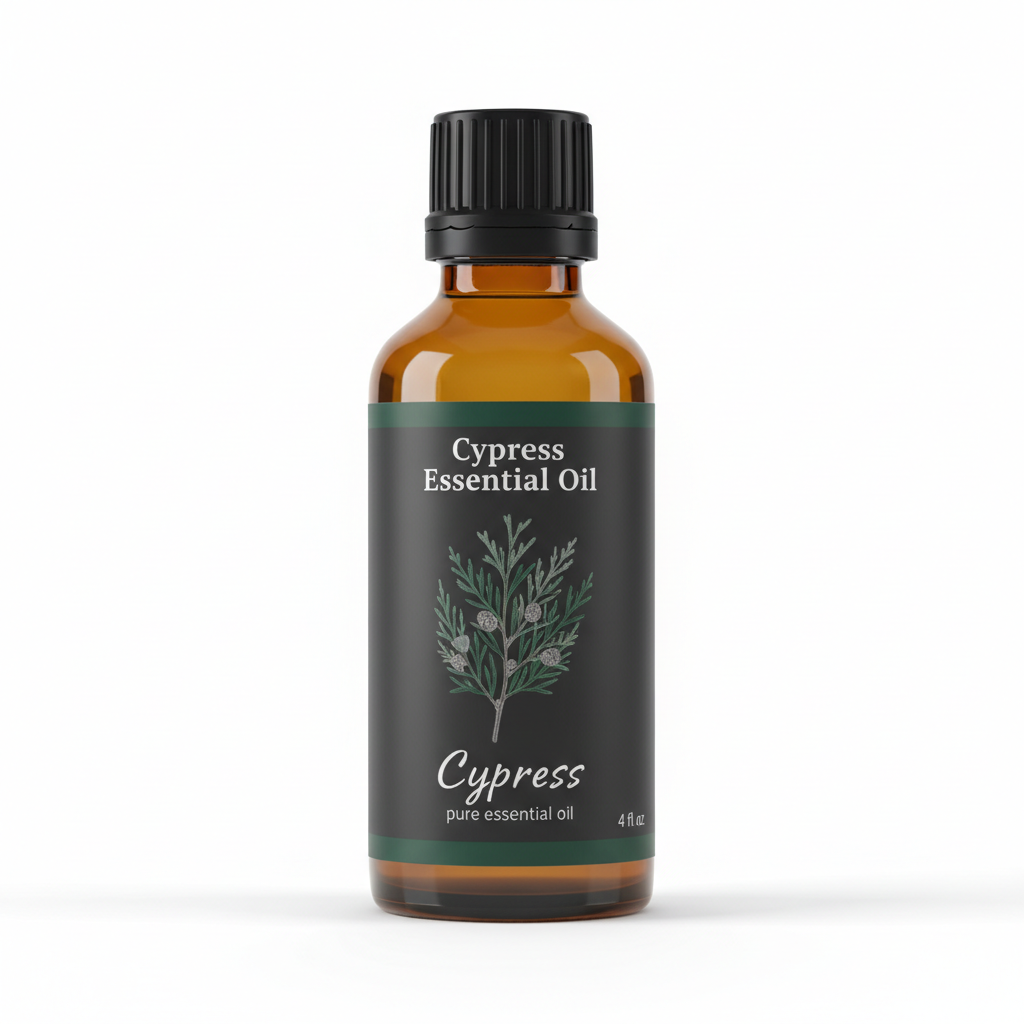
Cypress Essential Oil
Our own Cypress Essential Oil, in sizes from 0.5 oz to bulk.
From $10.99
Shop Now →What the organic wording means
In the United States, the National Organic Program's labeling rules set tiers by how much of a product is organically produced. Under 7 CFR 205.301, a product labeled "100 percent organic" must contain only organically produced ingredients. "Organic" means at least 95 percent. "Made with organic" claims for a named ingredient apply to multi-ingredient products and need at least 70 percent. For a single-ingredient oil, the first two are the ones you will meet. The rules concern how material was produced and handled, which is a different question from what the oil smells like or what it contains. That is our reading of the regulation, and it is why we suggest treating the seal as one fact among several.
It helps to remember that a bottle label is a small space and every word on it was chosen. Some words are regulated, and some are marketing, and the trick is telling them apart. A good habit is to read the label twice: first for what it says, and second for what it leaves out. If a seal appears with no certifier named, or a phrase like "naturally grown" appears with nothing behind it, it is entirely fair to ask what exactly it refers to.
Phrases without a tier behind them
"Wild-harvested", "naturally grown" and "grown without pesticides" do not sit in that tier structure. They may be true and meaningful, but nothing on the bottle lets you check them, so ask the seller what the phrase refers to. Where a claim matters to you, ask for the name of the certifier or the paperwork behind it.
What to read alongside any seal
A lovely cypress oil has certain boring things in common, certified or not. A botanical name, so you know the tree is Cupressus sempervirens. A lot number that connects a bottle to a document. A date or a best-by, because conifer oils change with air, light and warmth. And, if you are making something you will sell, composition data. Published analyses of this species do not agree with each other: one found alpha-pinene at 48.6% leading, another found cedrol at 74% in oil from aerial parts of Egyptian trees. Plant part and place matter as much as farming method, and no seal speaks to them.
The Certificate of Analysis we publish for one batch gives density, refractive index and optical rotation, all within the ranges printed on it. If you need GC-MS or other documentation for a particular lot, write to us through the contact page before ordering and we will tell you what we can provide.
None of this is meant to dismiss certification. For many buyers, how a crop was grown is a values question, and a certificate is exactly the tool for it. Our point is only that a seal answers one question and leaves others open, so it makes sense to treat it as the beginning of a conversation, not the end of one.
When does a certification make sense for you?
If farming practice is central to how you buy, make it your first filter and ask to see the certificate. If you care most about scent and consistency, the documents above will serve you better. Many buyers do both. Either way, our label-reading guide and buyer's guide give a fuller checklist, and our piece on how cypress oil is made shows where the quality decisions sit.
One more habit is worth building: keep the paperwork. When you order any oil, save the product page, the lot number and any document that came with it in a folder on your computer or a notebook on your shelf. Months later, when you wonder what exactly you bought or want to ask the seller a question, you will have the facts to hand. It is a dull little routine, and it is exactly the kind of thing that separates a considered buyer from a hopeful one.
A seal is a sentence on the label. The best bottle lets you read the rest of the story too.
Here is a simple way to sort your own priorities. Take a sheet of paper and write down the three things that matter most to you in an oil: maybe the way it smells, the documentation that comes with it, and the way the plants were grown. Rank them. Then read each seller's page with that ranking in hand and see which one answers your top item best. You may find that the answer changes depending on whether you are buying for a diffuser at home or for something you plan to make and sell, and that is exactly why a ranking is worth the two minutes.
Smell matters in all of this, too. Whatever the label says, the oil still has to smell the way you want it to. Open the bottle, take a gentle sniff from a little distance, and ask whether it is the clean, green, resinous evergreen you expected. Your nose, along with the paperwork, makes the final call.
Cypress Essential Oil
Cypress Essential Oil from our own shop, in sizes from 0.5 oz to bulk.
From $10.99
Shop Now →Sources & Further Reading
- 7 CFR 205.301, product composition (US National Organic Program labeling tiers)
- Selim et al. 2014, BMC Complementary and Alternative Medicine 14: composition of Cupressus sempervirens oil
- Ibrahim et al. 2017, Iranian Journal of Pharmaceutical Research 16(1): essential oils of coniferous plants cultivated in Egypt
- Tisserand Institute: Keep essential oils cool