How to Use Cypress Essential Oil: Diffusion, Topical, and Inhalation Basics
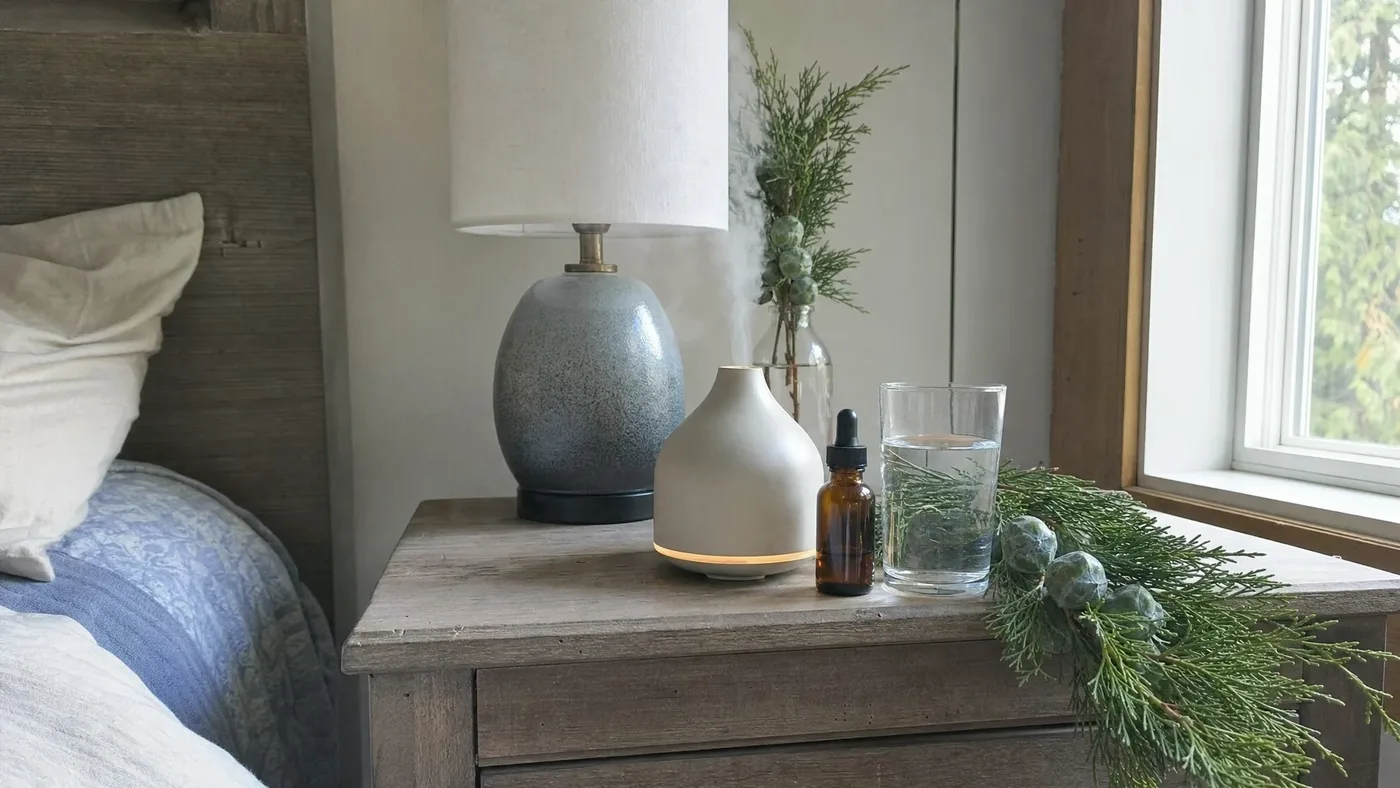
Use cypress oil in small amounts and in the right vehicle. In an ultrasonic diffuser, that means 3 to 5 drops per 100 ml of water for 30 to 60 minutes at a time. On skin, it means a 1 percent dilution in carrier oil. For steam, it means one or two drops, eyes closed. More drops never mean more effect.
Cypress Essential Oil
Our own Cypress Essential Oil, in sizes from 0.5 oz to bulk.
From $10.99
Shop Now →That last point is the one most people get wrong. The instinct is to add drops until the scent is unmistakable. But a nose adapts to a steady smell, so the extra drops mostly buy you faster adaptation, a heavier load of vapor in the room, and a better chance of skin or airway annoyance. This guide is organized the way a shopkeeper would walk you through it: start with what you want from the bottle today, then pick the method that fits.
First, decide what you want from it today
Cypress (Cupressus sempervirens) smells green, woody and a little resinous, with a dry, clean edge. If you have not smelled it yet, the full scent profile will tell you whether it suits your space before you commit to a method. Once you know you like it, the table below matches a goal to a way of using it.
| Goal | Best method | Strength | Caution |
|---|---|---|---|
| A woodsy, fresh-feeling room for an evening | Ultrasonic diffuser | 3 to 5 drops per 100 ml of water | Run 30 to 60 minutes, then rest. Leave pets a way out of the room. |
| A faint scent at a desk or in a shared space | Cotton pad, reed sticks, or personal inhaler | 1 to 2 drops on a pad; follow the inhaler maker's drop count | Keep the pad off finished wood and fabric. Inhalers keep the scent personal. |
| A lightly scented body oil after a day outdoors | Diluted topical use | 1 percent in carrier oil | Patch test for 24 hours. Never neat. Keep away from eyes. |
| A short, deliberate pause with warm steam | Steam-bowl inhalation | 1 to 2 drops in a bowl of hot water | Eyes closed, short sessions, mind the scald risk. Not for children. |
| Scented linens, closets, or surfaces | Room and linen sprays | Follow the dedicated recipe | Test on a hidden patch of fabric first. |
What you need before you start
- A bottle of cypress essential oil labeled with the botanical name Cupressus sempervirens. A single-species oil makes dilution math predictable. If you need one, the shop lists current options.
- An ultrasonic diffuser with a water-line marking, plus cool tap or filtered water.
- A carrier oil such as jojoba, fractionated coconut or sweet almond (skip the last one if nuts are a concern in your home).
- A dark glass bottle with a dropper cap or a small amber jar for blends.
- Cotton pads, a small ceramic dish, or reed sticks for passive scenting.
- A heat-safe bowl and a stable table for steam.
- A kitchen timer or your phone, which matters more than any other item here.
Method 1: Ultrasonic diffusion, the everyday option
An ultrasonic diffuser vibrates a small plate under the water. The vibration breaks the water surface into a fine mist, and the oil floating on top rides out with it. Because the oil is carried in a mist rather than heated, the scent of cypress stays close to what is in the bottle.
Steps
- Fill the tank with cool water to the line. Hot water is unnecessary and can warp some plastic parts. If the tank's fill line is at 100 ml, you are working with a 100 ml baseline.
- Add 3 to 5 drops. Begin at 3. A larger tank scales proportionally: a 300 ml tank lands between 9 and 15 drops, but treat 9 as the starting point, not the target.
- Set it to intermittent mode if it has one. Many models offer 30 seconds on, 30 seconds off. Otherwise set a timer for 30 to 60 minutes.
- Place it at table height or higher, a few feet from where you sit. A diffuser on the floor pushes mist where children and pets spend their time.
- Turn it off and let the room rest. Leave at least as long as you ran it before you decide whether you need another round.
- Rinse the tank afterward. Pour out the water, wipe the inside with a soft cloth, and let it dry. Oil leaves a film on any diffuser, and a film changes how the next blend smells.
Why intermittent beats all day
This is the central trade-off, so it is worth spelling out. Smell receptors adapt to a steady odor, which is why you stop noticing your own home's scent. A diffuser that runs for hours therefore gets a strange reward. You stop smelling it, you assume it has faded, and the room keeps accumulating vapor the whole time. The sensation of "less" is your nose adjusting, not the air changing.
Short sessions with real breaks reverse that. Each time you step out and come back, you smell the oil again at a modest level. You get more perceived scent from fewer drops and less total vapor. If you catch yourself reaching for the bottle because the room "stopped smelling like anything," the answer is a break, not extra drops.
Method 2: Passive scenting for quiet, personal, or shared spaces
Not every setting suits a misting machine. An office, a shared bedroom, or a car are better served by methods that scent a small radius.
Cotton pad or ceramic dish
- Place one or two drops on a cotton pad or an unglazed ceramic piece.
- Set it on a small saucer so oil cannot reach finished wood, stone or paint. Essential oils can mark and soften some finishes.
- Keep it where you will notice it intermittently, such as a bookshelf or a drawer, not directly under your nose.
- Replace the pad when the scent fades, usually within a few hours.
Reed sticks
Reed diffusers draw a base liquid up the sticks by capillary action. Cypress is a fairly volatile oil, so the scent can feel light and short-lived in a reed bottle unless you give it a good base. Expect a gentle presence, not a room-filling one.
Personal aromatherapy inhaler
For shared spaces, this is the most considerate option. A small tube holds a wick that you scent with a few drops, following the maker's instructions. You raise it to your nose for a few breaths and cap it again. The people around you smell nothing, and you control how much you take in. It also avoids the odor fatigue problem, because you are choosing each exposure.
Method 3: Diluted topical use
Topical cypress oil is the method where precision matters most. Essential oils are concentrated, and cypress is rich in monoterpenes such as alpha-pinene, a compound documented in PubChem. Monoterpene-rich oils are generally well tolerated when diluted, but they can irritate skin when applied undiluted. Robert Tisserand and Rodney Young's Essential Oil Safety (2nd edition) is the standard reference here, and it also notes that oxidized terpene-rich oils have a higher sensitization potential than fresh ones. That is one reason to keep bottles tightly capped and store them away from heat.
Cypress is generally not classed as phototoxic, but if you plan to wear a blend outdoors, the article on cypress oil, phototoxicity, and dilution covers the details so you do not have to guess.
Steps
- Calculate your dilution. One percent is the right starting point for body use. In practical terms, that is about 6 drops of cypress per 30 ml (1 fluid ounce) of carrier oil. For a single application, 1 drop in about 1 teaspoon of carrier oil gets you in the same range.
- Mix in the carrier first. Add the carrier oil to your bottle, then the essential oil, then cap and roll the bottle between your palms. Label it with the oil, the percentage, and the date.
- Patch test on your inner forearm. Dab a small amount of the finished blend on a coin-sized spot, cover it lightly, and leave it for 24 hours. If you notice redness, itching or stinging, wash the area with mild soap and water and do not use the blend.
- Apply a thin layer to a small area. Shoulders, calves or the sides of the neck work as places to begin. Keep the blend away from your eyes, the inner ear and broken skin.
- Wash your hands afterward. Residue transfers easily from your fingers to your face.
- Do not layer extra drops on top. If the scent seems faint on your skin, that is normal. Skin is a poor amplifier of scent, and a higher concentration will not change that in any useful way.
Never apply cypress oil neat. Adding a carrier oil is not decoration. It slows evaporation, spreads the oil over a larger surface, and lowers the concentration touching any one patch of skin. For more ideas on how cypress fits into skincare routines and home use, see the complete guide to cypress oil uses.
Method 4: Steam-bowl inhalation, done cautiously
Cypress oil inhalation by steam is the most intense method in this guide, and it is the one most easily overdone. Warm vapor carries scent quickly, and your face sits close to the source. Use it rarely, for short stretches.
Steps
- Set up on a stable surface. Use a wide, heat-safe bowl on a table, not a counter edge. Keep children and pets out of the room.
- Add hot water, not boiling. Let freshly boiled water sit for a minute or two. Scalds from steam bowls are a real hazard, and they matter more than any scent benefit.
- Add 1 or 2 drops of cypress oil. Not 5. Not 10. The surface of hot water releases the oil quickly.
- Close your eyes before you lean in. Vapor can sting open eyes. Keep your face at least 30 cm (about a foot) from the water.
- Breathe normally for 1 to 2 minutes. Do not drape a towel over your head and bowl, which concentrates the vapor and traps heat. If anything feels sharp or uncomfortable, stop and move to fresh air.
- Pour out the water once you finish. Do not leave a bowl of scented hot water within reach of children or pets.
This method is not for children, and it is not for anyone who finds strong aromas bothersome. If you have a medical question about inhaling aromatic vapor, ask a qualified clinician before trying it.
Method 5: Scenting the household
Sprays and surface cleaners use cypress oil differently from the other methods. Here the oil is dispersed in a base, so the scent builds slowly and stays localized. Two recipes cover most situations. The linen and closet spray is the better choice for wardrobes, drawers and bedding. For a longer list of ways to work cypress into daily routines, 15 fresh ways to use cypress oil at home is a good place to browse.
Bathing deserves its own note. The cypress sea salt bath soak uses a dispersal step so the oil does not sit on the surface of the water. That detail matters, and the mistakes section below explains why.
The three mistakes that cause most problems
1. Applying cypress oil neat
Undiluted oil on bare skin is the single most common way people turn a pleasant bottle into an unpleasant experience. Because essential oils are fat-soluble and concentrated, they can sting or leave skin red even when they smell gentle. Repeated neat use may also raise the odds of developing a lasting sensitivity to the oil. Always dilute, always patch test.
2. Dropping oil straight into bathwater
Oil and water do not mix. A drop that lands in a bath floats as a concentrated slick, and when you sit down, it coats the skin it touches at full strength. Disperse the oil in a carrier oil, an unscented base, or salts that you have blended well first, as the soak recipe describes.
3. Diffusing all night in a closed bedroom
Overnight diffusion combines every problem covered above. You adapt to the scent within minutes, the room is closed, and the vapor level keeps rising while you sleep. Pets in the room cannot leave if it becomes too much. The ASPCA Animal Poison Control Center advises caution with essential oils around animals, and cats in particular are a concern. Run a short session before bed, turn the unit off, and open a door.
Tips for better results
- Start low, then adjust by feel. Three drops in 100 ml is a complete test. If the room smells of nothing after you step out and return, add one drop next time.
- Keep the cap on and the bottle full where possible. Alpha-pinene oxidizes readily on air contact, so a half-empty bottle has more air inside and can age faster than a full one. Smaller bottles for oils you use slowly are a sensible choice.
- Do not combine methods in the same hour. A diffuser on, a steam bowl, and a body blend add up. Choose one for the session.
- Clean tools between oils. Leftover oil film changes the scent of whatever you diffuse next.
- Watch your own response. If a scent starts to feel heavy, stop. Preference changes from day to day.
What to expect
Expect modest, sensory results. People often report that a short session of cypress oil in a diffuser may help promote a sense of a fresh, clean, woodsy atmosphere, and some say it suits an unhurried evening routine. Aromatic experiences vary a great deal from person to person, and scent preference is personal. A diluted body blend is better thought of as a lightly scented skin-care ritual than as anything stronger. Steam inhalation is the most vivid of these methods, but also the one to use least.
Nothing here is meant to replace medical care or professional advice. If you are pregnant or nursing, take regular medication, have very sensitive skin, or are unsure whether a new aromatic product suits you, ask a qualified clinician first.
Who this guide is not for
Skip topical and steam methods for babies and young children. Keep diffusers out of rooms where birds, cats or small animals cannot leave, and run them for short periods in rooms they can access. Do not swallow essential oils. If someone does, or if a child or pet gets into a bottle, contact US Poison Control at 1-800-222-1222 (or the ASPCA Animal Poison Control Center for a pet) right away.
Cypress rewards restraint. Three drops, a timer, and a window you can open will serve you better than a half-bottle and a closed door.