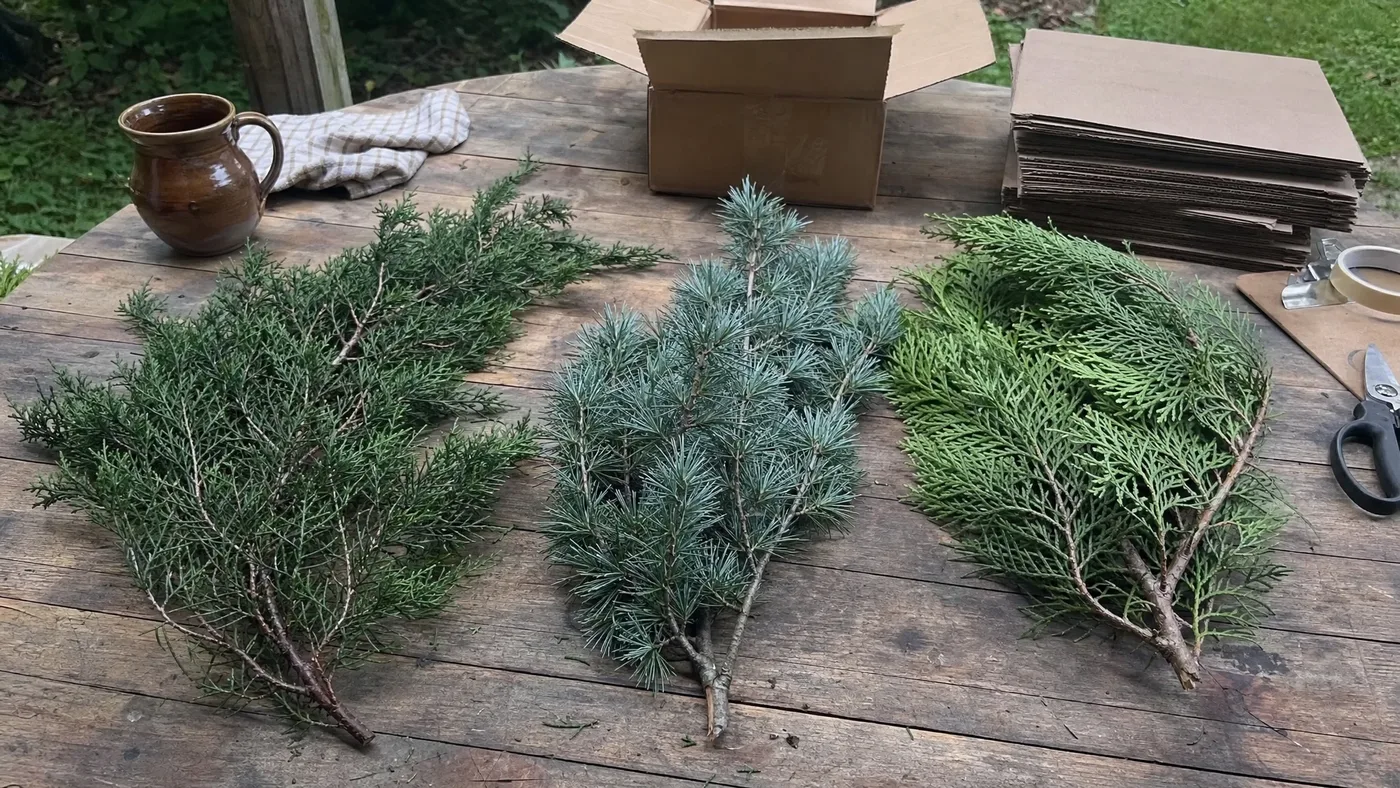
Types of Cypress Essential Oil: Mediterranean, Blue, and Hinoki Compared
Search for cypress oil and you will find bottles that smell like a pine grove, bottles that smell like warm honeyed wood, and bottles that smell like a damp bathhouse in Kyoto. All can be labeled "cypress." They come from different plants, different plant parts, and different continents. The fastest way to sort them is the Latin name on the label. This piece is the map of the types of cypress essential oil, so you can see which material you are actually holding.
Cypress Essential Oil
Our own Cypress Essential Oil, in sizes from 0.5 oz to bulk.
From $10.99
Shop Now →Start with the Latin name
Here is the position this site takes, and it is a firm one. If a label says only "cypress" with no botanical name, walk away. The common name is a marketing word. The Latin binomial is a claim about what is in the bottle, and it can be checked against a supplier's documentation.
Why is the common name so unreliable? Because "cypress" is used loosely for trees in several genera, for a wood oil from the Australian tropics, and, in one confusing case, for a grass-like plant that is not a tree at all. A seller who knows which one they stock will print the name. A seller who prints only "cypress" is either unsure or hoping you will not ask.
If you want the single-product background first, our complete guide to cypress essential oil covers the standard oil in depth. What follows is the wider field around it.
The comparison at a glance
| Oil | Botanical name | Part distilled | Scent character | Typical use |
|---|---|---|---|---|
| Mediterranean cypress | Cupressus sempervirens | Needles and twigs (sometimes cones) | Fresh, green, resinous, lightly smoky, a little like pine needles | Diffuser blends, diluted body oils, soap and candle scenting, men's fragrance accords |
| Blue cypress | Callitris intratropica | Wood | Warm, soft, sweet-woody, earthy, much rounder than needle oils | Perfumery bases, diluted massage blends, fixative in natural fragrance |
| Hinoki | Chamaecyparis obtusa | Timber (wood chips and sawdust), sometimes foliage | Clean, pale, lemony-woody, like fresh-cut Japanese bath wood | Bath and spa-style scenting, room mists, linen sprays |
| Garden cypresses (Monterey, Leyland) | Hesperocyparis macrocarpa, x Cuprocyparis leylandii | Foliage, when distilled at all | Resinous and green, variable | Rarely sold as an oil; mostly landscape trees |
| Cypriol / nagarmotha | Cyperus rotundus | Rhizomes and tubers (underground) | Smoky, earthy, leathery, damp roots | Oriental and woody perfumery, incense-style blends |
Read the fourth column across and you can already hear the problem. These are not five versions of one scent. They are five materials that happen to share a word.
Mediterranean cypress: the one most people mean
Cupressus sempervirens is the tall, narrow, flame-shaped tree that lines Tuscan roads and Mediterranean cemetery walls. The oil comes from steam distilling its needles and twigs. This is the oil the site sells, and when most reference books say "cypress essential oil," this is the species they mean.
Its chemistry is dominated by monoterpenes: alpha-pinene, delta-3-carene, and smaller amounts of limonene and terpinolene, along with a woody sesquiterpene alcohol fraction that gives the dry-down some body. You can check these compounds on PubChem if you like reading molecular data. The practical result is a scent that opens bright and green, then settles into something dry, resinous, and faintly smoky.
Because it is rich in alpha-pinene, this oil oxidizes readily on air contact. That is chemistry, not a flaw in any particular bottle. It does mean a half-empty bottle ages faster than a full one, and that a dark glass bottle with a tight cap, stored cool, matters more here than with a heavier wood oil. If you want the buying side of that, see how to spot pure cypress essential oil before you pay.
Pros
- The most widely documented of the group, with a long record in perfumery and in the safety literature, including Tisserand and Young's Essential Oil Safety, 2nd edition.
- Blends easily with citrus, juniper, lavender, and other conifer oils, so it works as a supporting note.
- Moderate cost compared with wood oils, since needles and twigs yield well.
- Reliable scent profile from a single named species.
Cons
- The scent is sharper and greener than many first-time buyers expect from the word "cypress."
- Short shelf life once opened, because of the high monoterpene content.
- Not a good perfume base on its own. It lives in the top and middle of a blend.
Blue cypress: a different plant part and a different scent
Callitris intratropica is an Australian tree, and the oil is distilled from its wood. That one fact separates it from Mediterranean cypress more than any difference in name. Wood oils are built from heavier sesquiterpene molecules. Needle oils are built from lighter, more volatile monoterpenes. The result is why the two smell nothing alike.
The deep blue color comes from guaiazulene, a pigment-like compound that forms during distillation. The shade can range from pale sky to nearly ink-dark. Color is a curiosity, though, not a quality grade. A blue oil is not automatically better, and a paler one is not automatically weaker.
The scent is soft, warm, and sweet-woody with an earthy undertone. Where Mediterranean cypress opens sharp, blue cypress opens round. If you buy it expecting the first and receive the second, you will think something is wrong with the bottle. Nothing is. You have two different oils. Our article on blue cypress versus Mediterranean cypress oil goes into the chemistry and the sourcing in full.
Pros
- Long-lasting base-note character that suits fragrance work.
- Slower to fade than needle oils, so a bottle holds its scent longer.
- Distinctive color makes it easy to recognize and hard to mistake for anything else.
Cons
- Costs more, since wood yields less oil per kilogram than foliage.
- Supply depends on a small number of Australian producers, so batches vary and availability shifts.
- Not a substitute for Mediterranean cypress in any recipe written for the green, fresh version.
Hinoki: the Japanese timber oil
Chamaecyparis obtusa is the Japanese cypress, a tree long used in temple construction and in bathhouse tubs. The oil is made from the timber, often from chips and sawdust left over from the lumber trade, which is part of why it can be a thoughtful use of material that would otherwise be waste.
Its scent is lighter and cleaner than the other woods in this list. Think of fresh-planed pale timber with a faint lemony lift. People who have only met pine-like cypress sometimes find hinoki surprisingly gentle. It reads as calm and clean rather than resinous.
Hinoki labeling is also the messiest. Some products sold as "hinoki" are distilled from leaves and branches instead of wood, and some are blends or fragrance oils borrowing the name. For a closer look at where the oil comes from and what to ask a supplier, read our hinoki and Japanese cypress oil guide.
Pros
- A clean, quiet scent that suits spa-style room sprays and linen mists.
- Easy to work with in blends because it does not dominate.
- Cultural and craft associations that give it an obvious story.
Cons
- Genuine timber oil is scarce and priced accordingly.
- High risk of mislabeled or synthetic imitations at low prices.
- Delicate scent that can disappear in a blend with stronger ingredients.
Garden cypresses: trees you will see, oils you probably will not
Monterey cypress (Hesperocyparis macrocarpa, formerly Cupressus macrocarpa) and Leyland cypress (x Cuprocyparis leylandii, a hybrid) are landscape trees. The first grows wind-sculpted along the California coast. The second is the fast-growing hedge that takes over suburban back gardens. Both are real cypresses in the loose sense. Neither is a significant source of commercial essential oil.
That matters for a buyer in one way. If you ever see a bottle named for one of these, ask for the supplier's documentation, because there is very little established trade behind it. Absence of a market does not prove a product is bad. It does mean you have no benchmark scent to compare against, and no body of safety literature to lean on.
The cypriol trap
This one catches careful buyers. Cyperus rotundus, sold as cypriol, nagarmotha, or nutgrass oil, is a sedge. It is a grass-like plant, not a tree, and the oil comes from underground rhizomes and tubers. The smell is smoky, earthy, and leathery, with a damp-root depth that perfumers prize in oriental and woody accords.
It sits in a "cypress" search because "cypriol" looks like "cypress" and the genus Cyperus shares a Latin stem. That is the whole link. Nothing botanical connects them. If a product page says "cypress" but its scent description reads smoky and leathery, check the Latin name. You may be looking at a sedge. We unpack the confusion in cypress rotundus oil explained.
Best for: matching the oil to the job
None of these is better than the others. They are different materials suited to different jobs. Here is how the work divides.
- A fresh, green diffuser blend: Mediterranean cypress. Pair it with a citrus or a juniper note.
- A body oil or lotion with a woody backbone (properly diluted): Mediterranean cypress for a brisk scent, blue cypress for a softer, warmer one.
- A natural perfume base note: blue cypress. Its heavier molecules persist, which is what a base needs.
- A bath-time room spray or linen mist: hinoki, if you can verify it is the timber oil.
- Smoky, leathery depth in an incense-style blend: cypriol, knowing it is a root oil.
- Soap and candle scenting on a budget: Mediterranean cypress is the most practical, with the caveat that its scent fades faster in finished products.
- Curiosity about Monterey or Leyland: a garden walk is cheaper and more honest than a bottle.
Who this is not for, and what goes wrong
Two kinds of buyer should slow down. The first is anyone shopping on price alone. A cheap bottle of "hinoki" or "blue cypress" is more likely to be a blend or a fragrance oil than a distillate, because wood oils cost more to produce. The second is anyone expecting one cypress to behave like another in a recipe. Swap blue cypress into a formula written for needle oil and the whole character changes.
What commonly goes wrong is simple. The buyer reads "cypress," assumes one thing, and receives another. The remedy is a habit, not a gadget: read the Latin name, read the plant part, and then read the price against what that material realistically costs.
A short note on safe use
These oils are for aromatic and cosmetic use only. Always dilute before applying to skin, and patch test a small area first and wait 24 hours. Essential oils should not be taken by mouth. Keep bottles away from children and pets, since the ASPCA Animal Poison Control Center and US Poison Control both advise caution with concentrated oils around animals. If you are pregnant, nursing, or using any prescribed product, ask your doctor before introducing new aromatic products. Safety data differs between species, so do not assume what holds for one cypress holds for another.
The verdict
If you want one bottle and you want the oil that most recipes and reference books mean by "cypress," choose Mediterranean cypress, Cupressus sempervirens. It is documented, affordable, and easy to blend. Our cypress essential oil is that species, steam distilled from needles and twigs.
Choose blue cypress when the job is a warm, lasting wood note and you accept the higher price. Choose hinoki when you want clean, quiet timber and are willing to verify the source. Treat cypriol as its own category, a smoky root oil that belongs next to vetiver, not next to cypress. And for Monterey and Leyland, enjoy the trees.
The Latin name is the filter that makes all of this work. It takes five seconds to read, and it settles most of the confusion before you spend anything.