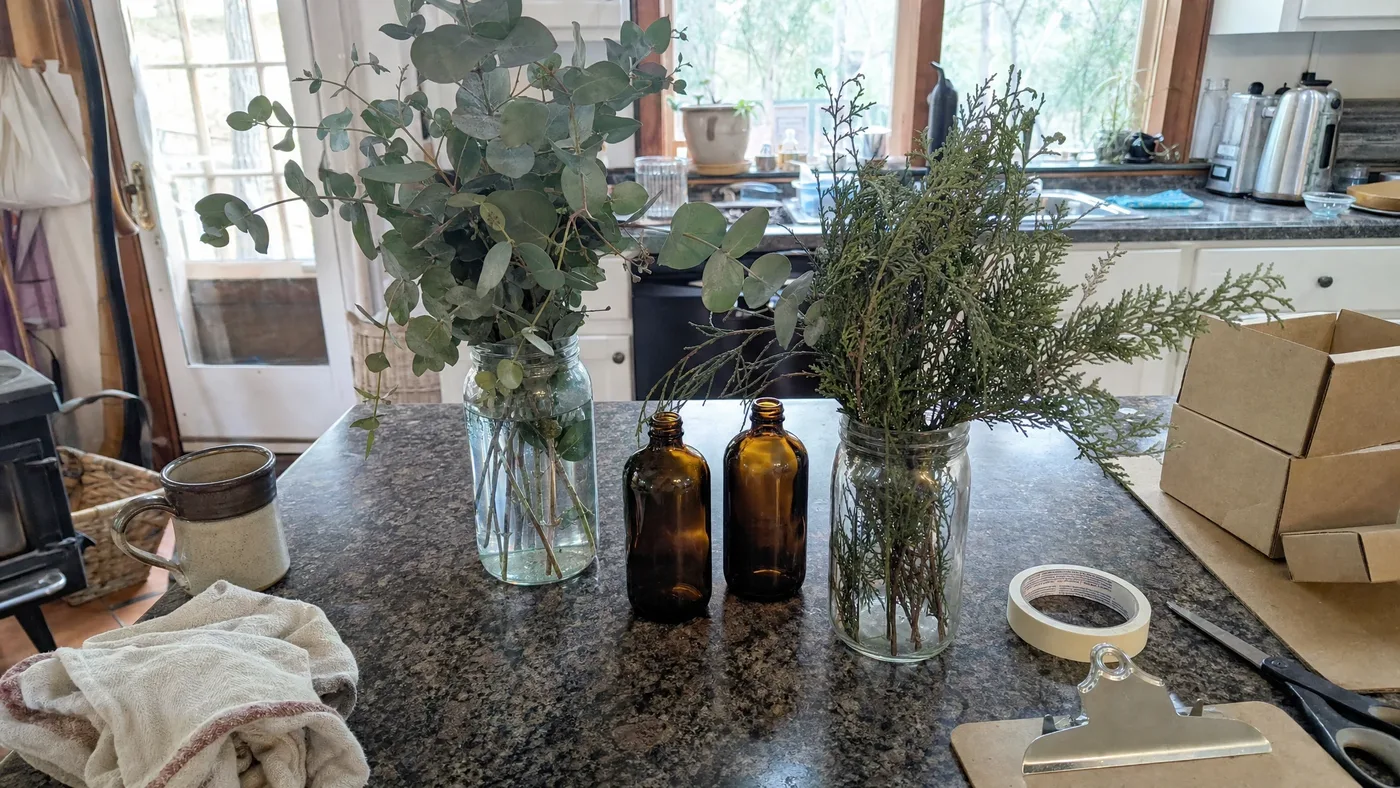
Cypress vs Eucalyptus Essential Oil: Two Fresh Oils, Two Different Jobs
Cypress and eucalyptus both smell fresh, but they get there by different routes. Cypress is dry, green and woody, built mostly on alpha-pinene, so it suits room blends and perfumery. Eucalyptus is sharp and camphoraceous, built on 1,8-cineole, so it suits shower steam and laundry. Choose by the job, not by the word "fresh."
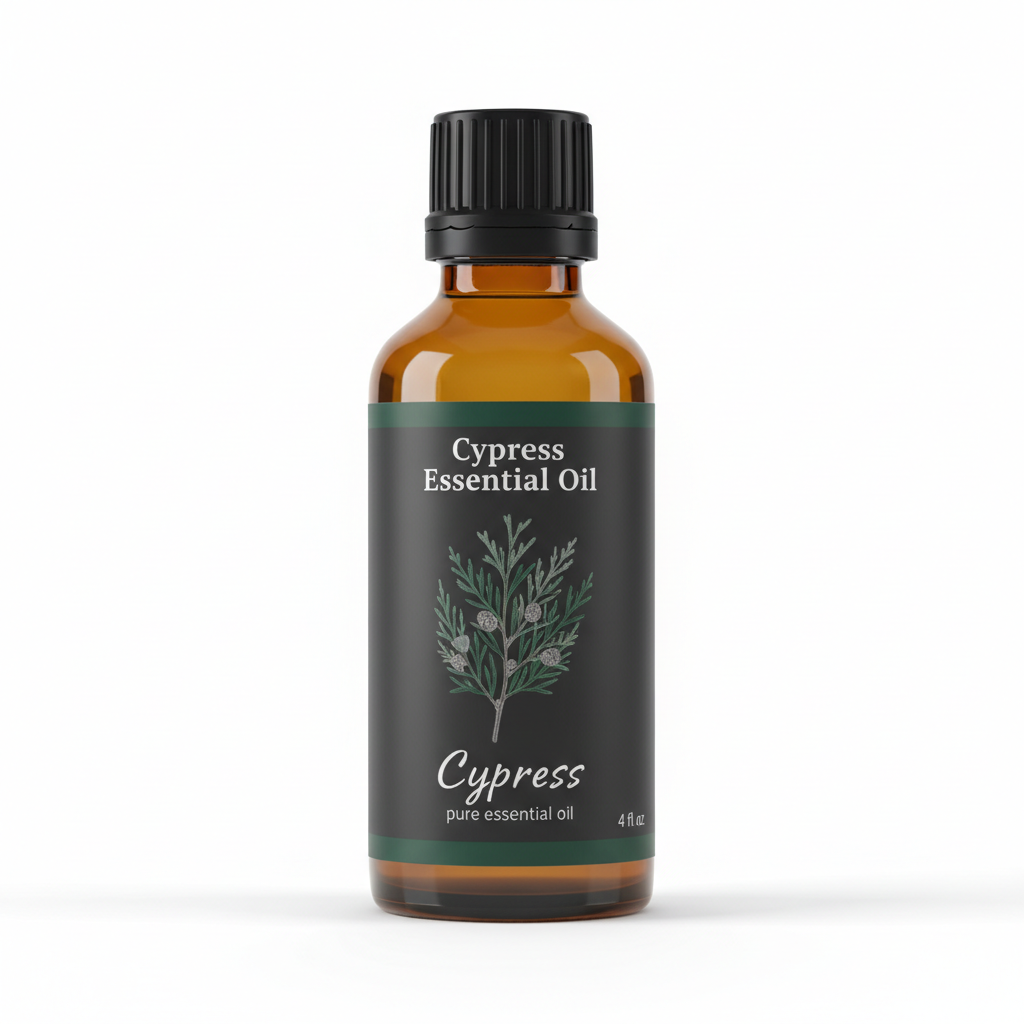
Cypress Essential Oil
Our own Cypress Essential Oil, in sizes from 0.5 oz to bulk.
From $10.99
Shop Now →The misconception worth clearing up first
Search for fresh essential oils and you will find cypress and eucalyptus filed under the same adjective. That is how people end up buying eucalyptus for a living room, lighting the diffuser, and wondering why the space smells like a gym bag that has been aired out with a bottle of solvent.
The word "fresh" covers at least two separate sensations. One is the green, resinous air of a conifer stand. The other is the cold, clearing blast of a high-cineole leaf oil. Cypress delivers the first. Eucalyptus delivers the second. Reaching for eucalyptus when you want the first is the most common mismatch in this pairing, and it is why this comparison exists.
What is actually in each bottle
Both oils are mixtures, and the dominant molecules explain most of what your nose reports. The compound pages on PubChem are a good place to check any name below.
Cypress (Cupressus sempervirens)
Steam-distilled cypress is dominated by monoterpenes. Alpha-pinene leads, with delta-3-carene usually close behind, and smaller amounts of limonene, myrcene and a woody sesquiterpene alcohol called cedrol. Pinene gives the green, needle-like top. Carene adds a dry, slightly sweet, almost hay-like edge. The result reads as a woodland floor in cool air: dry, quiet, with a little smoke at the bottom.
Eucalyptus globulus
Eucalyptus globulus is a different animal. Most of the oil by weight is 1,8-cineole, an oxygenated monoterpene (also called eucalyptol). Cineole has a penetrating, camphor-like, almost medicinal-looking brightness that reaches the nose within a second of opening the cap. Alpha-pinene is present as a minor partner, which is why a faint conifer note sits underneath the sharpness. You notice the cineole first and the pinene only if you hunt for it.
One practical consequence follows from that chemistry. Pinene and carene are hydrocarbons that oxidize readily on contact with air, so a half-empty cypress bottle ages faster than a full one. Cineole is comparatively sturdy, but the sharpness can still dull and turn flat if the bottle is left uncapped near a sunny window. Keep both small, dark and tightly closed.
The scent jobs
Think of the two oils as tools with different handles.
Cypress is a building material. It sits in the middle of a blend and holds other notes up: citrus on top, resin or moss below. Perfumers and home blenders use it to make woodland accords because it adds structure without a strong personality of its own. In a room, it reads as clean and slightly cool, the way a pine-paneled cabin smells before anyone has lit a fire.
Eucalyptus is a utility scent. It does one thing loudly. Put a couple of drops on a washcloth hung away from the direct spray in a shower and the steam carries the cineole into the room. Add it to a laundry drying rack, a gym bag pouch or a cleaning cloth and it announces itself. The trade-off is that it flattens subtle blends when overdosed. One drop too many and every delicate note you built is just background to eucalyptus.
Side-by-side comparison
| Attribute | Cypress | Eucalyptus globulus |
|---|---|---|
| Dominant constituents | Alpha-pinene, delta-3-carene | 1,8-cineole |
| Scent character | Dry, green, woody, slightly smoky | Penetrating, camphoraceous, solvent-bright |
| Note role | Middle note that supports a blend | Top note that leads and dominates |
| Strength in a blend | Easygoing, hard to overdo | Overpowering quickly |
| Best setting | Rooms, perfumery, woodland accords | Showers, laundry, gym gear |
| Safety notes | Dilute, watch oxidation, never ingest | The same, plus extra caution around young children's faces |
Pros and cons
Cypress
- Pros: Forgiving in blends. Smells calm and clean without dominating. Pairs with citrus, resin and florals. Works as a quiet room scent for long stretches.
- Cons: Does not deliver the sudden bracing hit some people want from a shower. Oxidizes if the bottle sits half-empty. Too subtle to scent a large, drafty space on its own.
Eucalyptus
- Pros: Immediate, unmistakable freshness in a small space. A little goes a long way, so a bottle lasts. Excellent for steam, fabric and cleaning cloths.
- Cons: Easy to overdose. Hard to blend delicately. The camphoraceous edge can read as harsh in a bedroom or living room. Needs extra care in homes with young children.
The safety difference is a reason they are not interchangeable
Neither oil is a wellness tool, and neither should be used to replace advice from a doctor. Both are aromatic and cosmetic products. Still, their safety profiles are not identical, and that alone is a reason to stop treating them as swappable fresh scents.
Robert Tisserand and Rodney Young, in Essential Oil Safety (2nd edition), attach specific cautions to oils rich in 1,8-cineole, particularly around the faces of young children. Eucalyptus globulus falls in that group. The practical reading is simple: keep high-cineole oils away from a small child's face, nursery air and bedding, and ask your pediatrician before using them around little ones.
Cypress carries the more generic cautions that apply to nearly every essential oil. Dilute it before it touches skin. Watch for oxidation, since oxidized oils are more likely to irritate. Never ingest it. Keep it out of reach of children. If you share a home with pets, the ASPCA Animal Poison Control Center is the right place to check before diffusing anything, because animals differ from people in how they process aromatic compounds. If you are pregnant or have any ongoing health question, check with your doctor first.
They do blend well, in the right proportions
This is where the pairing gets interesting. A small amount of cineole sharpens a woody base the way a squeeze of lemon sharpens a stew. At roughly 3 parts cypress to 1 part eucalyptus, the cineole lifts the conifer note without taking over. The room smells like cold air through trees instead of like either oil alone.
A simple diffuser starting point: 6 drops cypress and 2 drops eucalyptus in a standard small-room diffuser, then adjust by half-drops. If the eucalyptus is the first thing you smell, you have gone past the ratio. Add a drop or two of a citrus oil if you want the top to feel rounder. For more ideas on what sits well beside cypress, see what blends well with cypress essential oil.
Best for: a use-case table
| Use case | Reach for | Why |
|---|---|---|
| Living room or entryway scent | Cypress | Dry woodland air that does not shout |
| Shower wall or steam | Eucalyptus | Cineole carries well in warm vapor |
| Woodland accord for a blend | Cypress | Works as a supporting middle note |
| Laundry rack or gym bag | Eucalyptus | A bright, utilitarian scent that holds on fabric |
| Bedroom diffuser | Cypress | Less sharp, easier to keep subtle |
| Fresh but layered room blend | Both, about 3:1 | Cineole lifts the conifer note |
| Space with a young child | Cypress, cautiously | Avoids the extra cineole caution, but ask your pediatrician first |
Who this is not for
If you want a single bottle to do everything, neither oil is that. Cypress will disappoint anyone who expects a loud, instant, sinus-clearing blast, because it simply does not smell like that. Eucalyptus will frustrate anyone who wants a gentle background note, because it is built to lead. A third group goes wrong in a different way: people who overdose eucalyptus because the first few drops seem faint (the nose adapts to cineole quickly) and then wonder why the room is overwhelming ten minutes later.
If you cannot find the exact bottle you want, cypress essential oil substitutes covers close matches, and it is more useful than guessing with eucalyptus, which is not a substitute for cypress at all.
Where cypress sits among the other conifers
If your real question is how cypress compares with other trees, two companion guides go deeper. Cypress vs pine vs fir sorts the needle-leaf family by sharpness and sweetness, and cypress vs cedarwood explains why two oils that both say "woody" behave very differently in a blend. Eucalyptus is an outlier next to all of them, which is part of its appeal.
The verdict
Buy cypress if the goal is a room that smells like clean woods, or if you build blends and want a dependable woodland backbone. Buy eucalyptus if the goal is a bracing shower or a fresher gym bag, and you accept that it works best as a short, strong accent. People reaching for eucalyptus freshness in a living room usually want what cypress does. People scenting a shower wall want eucalyptus. If you want both in one room, mix them at about 3 parts cypress to 1 part eucalyptus and start low.
Neither is a wellness tool. They are scents, and they behave like scents: pick the one that fits the room, dilute it sensibly, and keep both away from small children's faces. When you are ready to try a bottle, browse the cypress and companion oils and start with the smallest size.