Cypress Diffuser Blends: 15 Recipes for Every Mood and Season
Cypress has a dry, green, faintly resinous scent, and it behaves differently in a diffuser than most oils on your shelf. Used alone it can read flat. Paired well, it becomes the spine of a blend. These cypress blend recipes use exact drop counts for a 100 ml ultrasonic diffuser, grouped by mood so you can find your way in quickly.
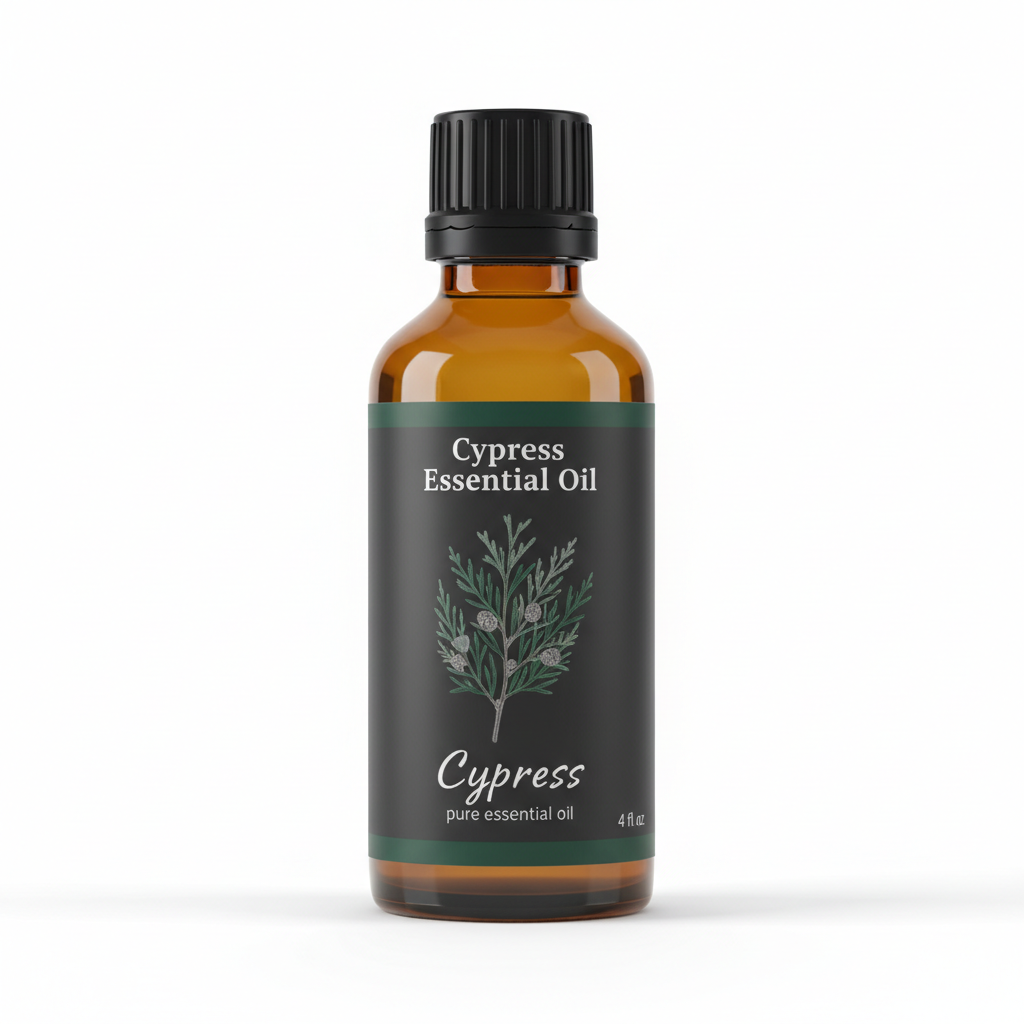
Cypress Essential Oil
Our own Cypress Essential Oil, in sizes from 0.5 oz to bulk.
From $10.99
Shop Now →One position before we start: the recipes are training wheels. The ratio structure behind them is the real skill, and after you have made five of these you should not need a recipe list again. If you want the wider pairing map first, our guide to what blends well with cypress essential oil covers it.
Why These Recipes Are Built the Way They Are
Every recipe below follows note structure. Cypress sits between the top and middle of the scent pyramid: it arrives quickly like a top note but lingers like a middle one. That position is the whole trick. Citrus rides above it and evaporates first. Woods and resins sit below it and linger longest. A blend that has something at each level smells finished. A blend missing one level smells thin or lopsided.
A common misconception is that more drops mean a better blend. In a 100 ml ultrasonic diffuser, 8 to 10 total drops is plenty. Past that, the aromatics crowd each other and the room smells loud rather than layered. Every recipe here stays inside that range.
Fresh and Bright: Citrus Partners
Citrus oils are top notes that vanish quickly. Cypress slows them down and gives the brightness a green backbone. These three suit mornings, kitchens and workspaces.
1. Lemon Hedgerow
Drops: 4 lemon, 3 cypress, 1 cedarwood
Why it works: Lemon is the high top note, cypress holds the middle, and one drop of cedarwood anchors the base.
This is the cleanest-smelling blend in the list. Lemon's sharp edge softens against cypress, which has a faint dry-wood quality that reads like cut hedge. The single cedarwood drop keeps the citrus from disappearing after the first twenty minutes.
Takeaway: When a citrus blend fades fast, add a base drop before you add more citrus.
2. Grapefruit Ridge
Drops: 4 grapefruit, 4 cypress, 1 frankincense
Why it works: Grapefruit's bitter-sweet top sits above the cypress, and frankincense adds a soft resinous floor.
Grapefruit is more astringent than lemon, and cypress matches that dryness instead of fighting it. The result smells like a cold morning walk near evergreens. Frankincense is used sparingly here because it is strong and expensive, and one drop is all the base this blend needs.
Takeaway: Pair a sharp citrus with a dry middle note, not a sweet one.
3. Orange Grove Morning
Drops: 4 sweet orange, 3 cypress, 1 frankincense
Why it works: Sweet orange is the roundest top note, so cypress supplies the structure it lacks.
Sweet orange alone can smell like candy. Cypress pulls it toward something greener and more grown-up. This is a good first blend if you find woodsy scents too serious, because the orange keeps it friendly while the cypress keeps it from turning cloying.
Takeaway: If a blend smells too sweet, raise the cypress by one drop.
Calm and Grounding: Cedarwood, Lavender, Frankincense
These blends lean on the lower register. People report using them for evening routines and quiet reading hours, and they may help promote a sense of calm in a room. For a fuller signature version, see Evergreen Stillness.
4. Cedar and Cypress Dusk
Drops: 3 cypress, 3 cedarwood, 2 lavender
Why it works: Lavender's floral top rides over cypress, while cedarwood supplies a heavier base than any other wood here.
Two woods and one floral make an evening blend with no sweetness at all. The cedarwood's pencil-shaving dryness overlaps with cypress, so the two merge into a single woody tone and the lavender floats across it.
Takeaway: Two woods plus one floral is a reliable bedtime wind-down structure.
5. Lavender Hillside
Drops: 4 lavender, 3 cypress, 1 cedarwood
Why it works: Lavender dominates the top and upper middle, so cypress is there to dry it out and cedarwood to hold it down.
Lavender on its own can smell sweet and soapy. Cypress corrects this by adding a green, resinous edge, so the blend smells more like a hillside than a linen drawer. Use true lavender (Lavandula angustifolia) for the softest result.
Takeaway: Cypress is the quickest way to make lavender smell less perfumed.
6. Frankincense Hush
Drops: 4 cypress, 3 frankincense, 1 lavender
Why it works: The heavy resin base is balanced by cypress, and a lone lavender drop supplies the only top note.
This one reverses the usual proportions. There is barely any top, so the blend opens quietly and deepens over the session. It suits a still, dim room better than a busy one.
Takeaway: Resin-heavy blends smell best in small, closed rooms.
Deep Forest: Fir, Pine, Juniper
These are the most woodsy diffuser blends in the collection. Conifers share terpene families, so they blend into one continuous scent rather than separate layers. That is a strength and a risk: they can turn into a single flat pine note if you skip a base.
7. Fir Canopy
Drops: 4 fir needle, 3 cypress, 1 cedarwood
Why it works: Fir needle is bright and sweet-green on top, cypress fills the middle, and cedarwood grounds it.
Fir smells like a Christmas tree lot in daylight, and cypress dials down the sweetness. The cedarwood prevents the whole thing from evaporating in half an hour.
Takeaway: Balsam fir plus cypress is the easiest conifer pairing to get right.
8. Pine Ridge
Drops: 3 pine, 3 cypress, 2 juniper berry
Why it works: Pine and juniper berry both sit high, so cypress bridges them into the middle.
This blend has no true base, which is deliberate. It smells crisp and sharp, closer to a mountain trail than a warm room. If it feels too edgy after twenty minutes, that is your cue to add a drop of wood or resin.
Takeaway: Skipping the base gives a sharper, shorter blend. Choose that on purpose.
9. Juniper Clearing
Drops: 3 juniper berry, 4 cypress, 1 cedarwood
Why it works: Juniper berry's gin-like top note sits on top of a cypress-heavy middle with a single wood anchor.
Cypress leads here, so the room smells more like dry woodland than a spice cabinet. Juniper provides a peppery lift without any sweetness at all.
Takeaway: A cypress-led blend reads drier than a juniper-led one, so pick the lead on purpose.
Warm and Resinous: Frankincense and a Trace of Patchouli
Patchouli is powerful and earthy, and one drop is a statement. Treat it as a seasoning, never a main ingredient.
10. Amber Grove
Drops: 3 cypress, 3 frankincense, 1 patchouli, 1 sweet orange
Why it works: Orange supplies a thin top, cypress the middle, and resin plus patchouli make a deep base.
Patchouli is the longest-lasting oil in the diffuser, so one drop colors the whole session. Cypress keeps the earthiness from turning muddy, since its dryness clears some of the base's weight.
Takeaway: One drop of patchouli is a dose. Two is a different blend.
11. Resin Hearth
Drops: 4 cypress, 2 frankincense, 1 patchouli, 1 bergamot
Why it works: Bergamot's bittersweet top gives the heavy base something to rise against.
Bergamot is the surprise here. Its slightly floral edge keeps a patchouli blend from smelling like a head shop. Choose a furocoumarin-free (bergapten-free) bergamot if you ever use the same oil on skin.
Takeaway: A bright top note is what keeps a heavy base from feeling closed in.
12. Cypress and Smoke
Drops: 4 cypress, 2 cedarwood, 2 frankincense
Why it works: With two base oils and one middle, the blend leans low and smoky.
No top notes at all here, so it develops slowly and holds a long time. It is the closest cypress comes to smelling like a dying campfire, which is why it works well on cool evenings.
Takeaway: No top note means a slow opening. Start it earlier than you think you need to.
Seasonal Blends
13. Orchard Smoke (Fall)
Drops: 3 sweet orange, 3 cypress, 1 clove bud, 1 cedarwood
Why it works: Orange and clove make a warm top, cypress dries the middle, and cedarwood closes it out.
Clove bud is powerful, so a single drop is correct. Cypress keeps the spice from reading as baking. For another way to use cypress in autumn, see cypress as a bonfire-season scent layer.
Takeaway: Spice oils are accents. One drop, then judge.
14. Winter Evergreen Table
Drops: 3 fir needle, 3 cypress, 1 frankincense, 1 sweet orange
Why it works: Fir and orange sit on top, cypress holds the middle, and frankincense provides the winter base.
This is the holiday-season blend that smells like greenery rather than candy. The orange drop is optional, but it keeps the room from smelling like a tree farm. More seasonal pairings are in cypress for the seasons.
Takeaway: A single citrus drop turns a pure-conifer blend from stern to inviting.
15. Spring Rain Window
Drops: 3 bergamot, 3 cypress, 2 lavender
Why it works: Bergamot and lavender share a floral-citrus top, and cypress adds the damp-green middle.
This one has no base on purpose, so it airs out quickly, which suits open windows and light spring air. It smells like wet leaves with a faint perfume.
Takeaway: When the windows are open, a base-free blend is the better match.
Build Your Own: The 2:2:1 Formula
Here is the skill the recipes were practicing. Use two parts bright top, two parts cypress middle, one part wood or resin base. For a 100 ml diffuser at 10 drops total, that is 4 drops of a citrus or conifer top, 4 drops of cypress, and 2 drops of cedarwood, frankincense or patchouli (use just 1 patchouli plus 1 other base). At 8 drops, round the numbers the way recipes 1 through 3 do.
Then adjust by smell, not by adding more of everything:
- Thin or hollow? Add base, not more top. The instinct is to boost the loudest oil, but a thin blend is missing low notes, not high ones.
- Muddy or heavy? Cut the base by half. A single base drop can be rounded down to zero.
- Too sweet? Move one drop from the top to cypress.
- Too sharp? Swap one conifer top for a sweeter citrus.
Make five blends from the recipes above and you will see the pattern. After that, ordinary pantry-shelf experimentation takes over. Cypress itself is the stable piece, and you can find it on our shop page if you need a fresh bottle.
Who These Blends Are Not For
If you want sweet, gourmand or floral-heavy rooms, cypress will frustrate you. It is dry by nature. Households with young children, pregnant members, or anyone taking regular medication should check with a qualified healthcare provider before diffusing anything regularly. Tisserand and Young's Essential Oil Safety (2nd edition) is the standard reference for oil-specific cautions, and it is worth consulting before you scale up.
Practical Care: Sessions, Pets and Rinsing
Run the diffuser in intermittent sessions of 30 to 60 minutes rather than all day. Scent fatigue sets in quickly, so a long session mostly means you stop noticing the aroma, not that the room smells better. Ventilation matters too: keep the room from being sealed tight.
Pets need more care. Animals can react differently from people, and cats and small animals especially. Leave a door open so they can leave the room, never confine a pet with a running diffuser, and read what pet owners should know about cypress oil and dogs. The ASPCA Animal Poison Control Center and your veterinarian are the right sources for individual questions.
Finally, rinse the diffuser weekly. Rinse the tank with warm water, wipe it with a soft cloth, and let it air dry. Residue from yesterday's blend lingers in the reservoir, and a leftover orange-and-clove film will quietly alter today's cypress and cedar. A clean tank means the blend you measured is the blend you smell.
Pick one recipe tonight, run it for 45 minutes, and note what you would change. That adjustment is already the skill.