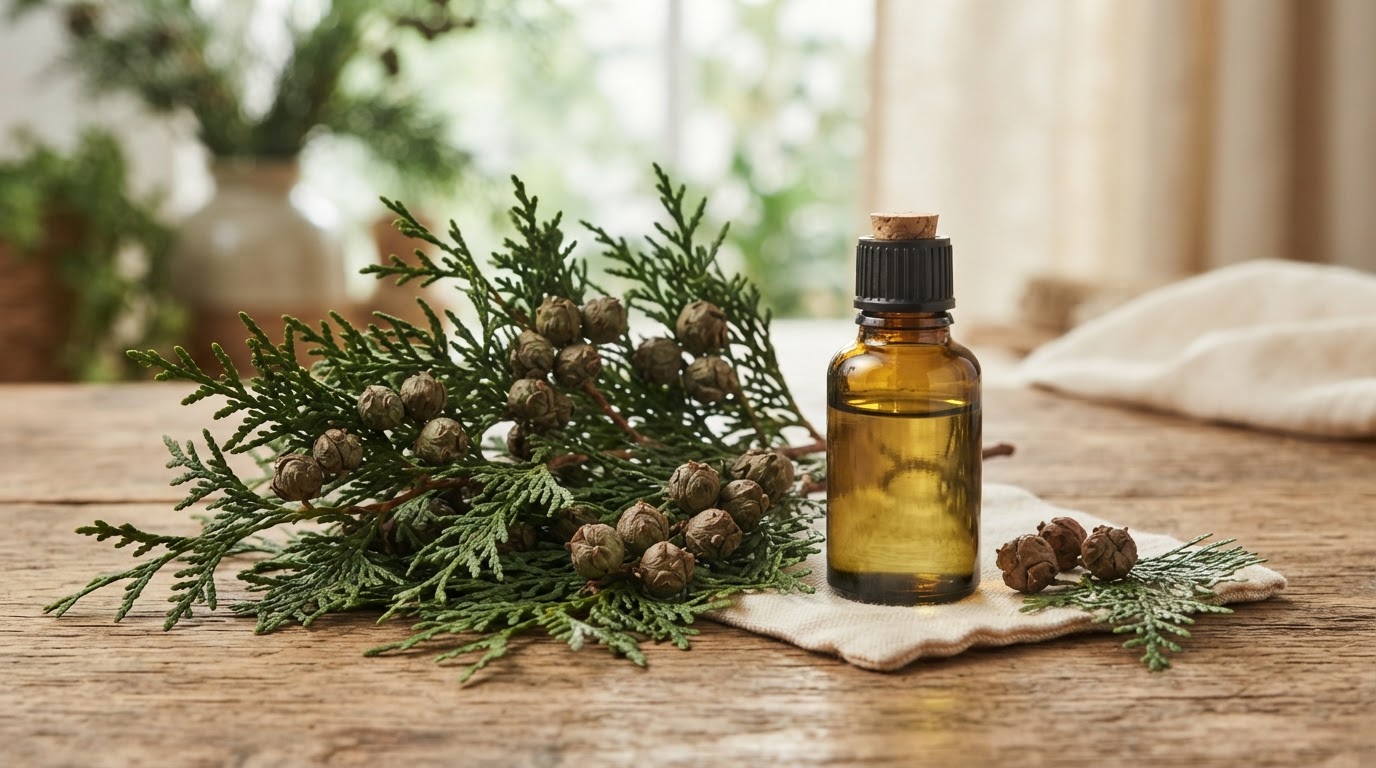
Cypress Essential Oil for Fall: A Bonfire Season Scent Layer
There's a particular week in early fall when the air changes first and the calendar catches up later. Mornings turn sharp, the first bonfires of the season get lit, and suddenly the bright citrus and floral blends that carried the summer feel a little out of place. This is the window where cypress essential oil earns its keep. Its scent profile, green, woody, and faintly smoky at the edges, sits naturally alongside the smell of a real fire without trying to imitate one. If you've only reached for cypress oil for its grounding, forest-floor quality in spring cleaning blends, fall is where it actually gets to shine.
Cypress Essential Oil
Our own Cypress Essential Oil, in sizes from 0.5 oz to bulk.
From $10.99
Shop Now →This guide covers how to use cypress essential oil for fall in practical terms: what it smells like next to smoke, hearth woods, and spice, how to build a fall diffuser blend cypress oil can anchor, and a few seasonal variations to try as the months move from October bonfires into December evenings indoors.
Why Cypress Belongs in Your Autumn Rotation
Cypress oil is steam-distilled from the needles and twigs of the cypress tree, and that origin shows up directly in the scent: crisp, resinous, a little like standing near cedar and pine at once, with a dry, almost mineral finish. Perfumers sometimes describe it as smelling "cool and green with warm undertones," which is a fair way to put it. That combination is exactly why cypress essential oil for fall works so well as a layering note rather than a solo act.
Summer blends lean on citrus, mint, and light florals because those notes read as fresh and bright. Fall calls for something with more weight. Cypress has that weight without going as heavy as patchouli or as sweet as the vanilla and clove blends that flood shelves in October. It reads as outdoorsy rather than dessert-like, which makes it a natural match for the actual smells of the season: dry leaves, cooling air, and wood smoke drifting from a fire pit.
Cypress Oil and Bonfire Scent: What Actually Pairs Well
If you're chasing a cypress oil bonfire scent at home, it helps to think about what a real fire smells like in layers rather than as one note. A wood fire has a sharp top note from the initial catch, a resinous middle as the wood burns, and a dry, ashy base once it settles. Cypress oil sits comfortably in that resinous middle layer, so it pairs naturally with:
- Cedarwood for the deep, dry wood base
- Clove or cinnamon leaf (used sparingly) for a warm, spiced top note
- Sweet orange for a touch of the char-and-citrus quality real bonfire smoke sometimes carries
- Vetiver for smoky, earthy depth without leaning sweet
- Frankincense for a soft, resinous edge that echoes actual burning wood
What doesn't work as well: heavy floral oils like rose or jasmine, which tend to fight cypress's green character rather than complement it, and very light citrus oils like bergamot on their own, which can read as too summery without something woodier to ground them.
Fall Diffuser Blend Cypress Recipes
These are starting ratios. Essential oil blending is personal, and diffuser strength varies by device and room size, so treat these as a baseline and adjust drop by drop until the balance feels right to you.
Backyard Fire Pit (evening, outdoor gathering feel)
- 4 drops cypress
- 3 drops cedarwood
- 2 drops sweet orange
- 1 drop clove
First Frost (crisp, quiet morning blend)
- 5 drops cypress
- 3 drops eucalyptus
- 2 drops peppermint
Harvest Evening (warmer, spice-forward)
- 4 drops cypress
- 3 drops frankincense
- 2 drops cinnamon leaf
- 1 drop sweet orange
Late Autumn Hearth (deep, smoky, low-key)
- 5 drops cypress
- 3 drops vetiver
- 2 drops cedarwood
Start any of these blends at half strength if you're diffusing in a small room or you're new to a particular oil combination. You can always add a drop; you can't take one back out.
Beyond the Diffuser: Other Ways to Layer the Scent
A diffuser is the most common way to use these blends, but cypress oil for fall shows up in a few other practical spots too:
Simmer Pots
A small saucepan of water on low heat with a few drops of cypress oil, a cinnamon stick, and a couple of orange peels will scent a kitchen or living room for an hour or two without a diffuser. Keep an eye on the water level so the pot never runs dry, and never leave a simmer pot unattended on an active stove.
Wood-Based Surfaces
A very light diffusion of cypress oil, well diluted, on unfinished wood coasters or a wooden mantel can reinforce the scent of a room where a fireplace is in use, since the wood itself will pick up and slowly release the aroma. Test on an inconspicuous spot first, since essential oils can affect certain finishes.
Personal Scent Layering
Some people like to carry a bit of the bonfire atmosphere with them in a personal roller blend. If you want to try this, dilute properly first: essential oils should never be applied to skin undiluted. A common starting ratio for body application is 1 to 2 drops of essential oil per teaspoon of a carrier oil like jojoba or fractionated coconut oil, which works out to roughly a 1% to 2% dilution. Always patch test a small amount on your inner forearm and wait 24 hours before wider use, and avoid use on broken or irritated skin. If you are pregnant, nursing, or managing an ongoing health condition, check with a qualified healthcare provider before adding a new essential oil to your routine.
Cypress oil, like most conifer-derived oils, can be mildly sensitizing for some people even at low dilutions. If you notice any redness, itching, or discomfort after a patch test, discontinue use.
Seasonal Variations Through the Fall Calendar
Fall isn't one scent mood, it moves through several as the months pass, and it's worth adjusting your cypress blends accordingly.
Early September to Mid-October: Still Warm, First Signs of Change
Lean lighter. Pair cypress with citrus notes like sweet orange or grapefruit and keep spice oils minimal. This is the transition window, and a blend that's too heavy will feel out of step with afternoons that are still warm.
Late October to November: Peak Bonfire Season
This is where the smokier, woodier pairings (cedarwood, vetiver, frankincester, clove) come into their own. Rooms can handle a stronger, more resinous blend once the weather has properly turned and evenings are cool enough for a real fire.
Late November to December: Moving Indoors
As gatherings shift from the fire pit to the living room, cypress blends can lean slightly sweeter and warmer, closer to what people associate with the December holiday atmosphere: a touch more clove, a hint of vanilla-adjacent warmth from something like benzoin if you have it on hand, and cypress still doing the structural, woody work underneath.
A Note on Sourcing and Quality
Not all cypress oil smells the same, and that's largely down to sourcing and distillation quality rather than marketing. Oil that's been sitting on a shelf too long, or that was distilled from lower-grade plant material, can smell flat or overly sharp rather than the rounded, resinous scent you want for these blends. When you're shopping, look for a supplier that discloses the country of origin and batch testing, and don't be shy about asking for a GC-MS report if one isn't already posted. A well-sourced cypress oil should smell distinctly green and woody right out of the bottle, not thin or solvent-like.
Quick Reference: Fall Cypress Blending Cheat Sheet
| Mood | Pair Cypress With | Best Used For |
|---|---|---|
| Crisp morning | Eucalyptus, peppermint | Diffuser, home office |
| Fire pit evening | Cedarwood, sweet orange, clove | Diffuser, simmer pot |
| Deep autumn hearth | Vetiver, frankincense | Diffuser, living room |
| Holiday transition | Clove, benzoin | Diffuser, gathering spaces |
Autumn essential oil blends don't need to be complicated to feel intentional. Cypress does a lot of the structural work on its own: it's the note that makes a room smell like it belongs to the season rather than borrowing scent cues from summer or winter. Start with one of the recipes above, adjust to your own nose over a few tries, and let the blend shift gradually as the season itself does.
For more on building a well-rounded collection for the cooler months, see our guides on essential oil diffuser blends for every room, how to safely dilute essential oils, and cypress essential oil uses and benefits for a deeper look at this oil's year-round place in a home aromatherapy routine.