Inside a Real Cypress Oil COA: Reading Our Batch Lab Report
Most shoppers have seen the phrase "third-party tested" on a bottle. Far fewer have seen the paper behind it. This case study opens our own Certificate of Analysis for batch CYPQGCCSUSC005A and reads it one line at a time, including the parts that flatter the oil less than we might like. You can follow along with the downloadable cypress oil COA (PDF).
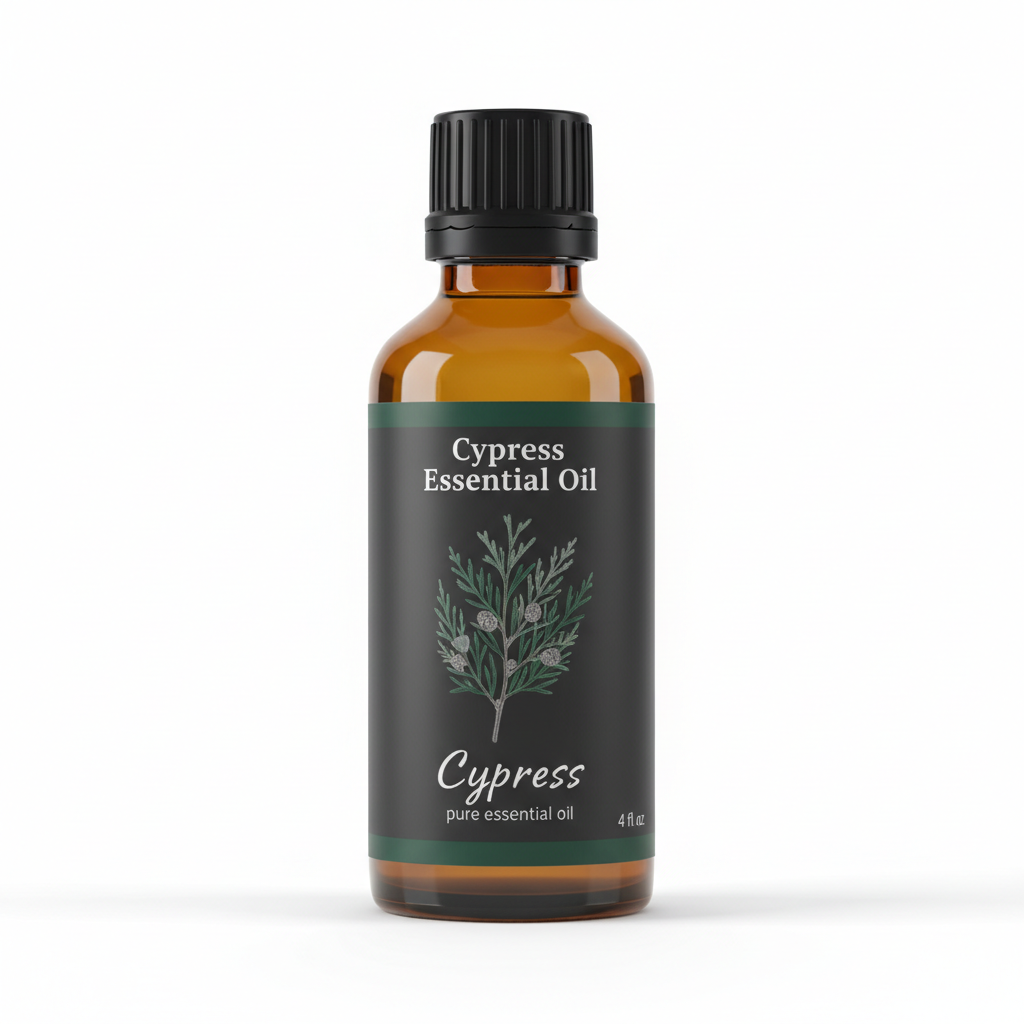
Cypress Essential Oil
Our own Cypress Essential Oil, in sizes from 0.5 oz to bulk.
From $10.99
Shop Now →The short version: this document is necessary, and it is not sufficient. It confirms that the batch behaves like cypress oil on four physical measures. It does not break the oil down molecule by molecule. Knowing which of those two statements a document supports is the whole skill of reading one.
The problem: a document that anyone can wave at you
An essential oil certificate of analysis is only as useful as the reader's ability to question it. A PDF with a logo and a column of numbers looks authoritative whether or not it describes the bottle in your hand. Three things commonly go wrong. The report is generic and carries no batch number. The report belongs to a different lot than the one being shipped. Or the report is real and accurate but answers a smaller question than the buyer assumes.
That third problem is the one this piece cares about. A buyer who sees a lab report and relaxes has made a reasonable mistake, but a mistake still. So the approach here is simple: take a real report, explain each test in plain English, say what a bad result would suggest, and then be direct about what the tests cannot see.
The approach: start with the identity block
Before any measurement, a COA tells you what it claims to describe. Ours lists these identifiers:
- Batch number: CYPQGCCSUSC005A
- Botanical name: Cupressus sempervirens
- Part used: leaf
- Best-by date: 04/30/2028
The batch number is the anchor. It is the one string that ties the paper to a physical lot, and it is the first thing worth matching against the bottle label. If a seller's report has no batch number, or the number on the report differs from the number on your bottle, you are looking at marketing material rather than a certificate.
The botanical name matters because "cypress" is a common name that covers several trees. Cupressus sempervirens is the Mediterranean cypress. Naming the Latin binomial is how a seller commits to a specific plant, and it is how you can check that commitment against any reference you trust. The complete cypress buyer's guide covers why that Latin name belongs on every listing.
The part used, leaf, tells you which plant material was distilled. Cypress oils are described by the foliage and sometimes cones or twigs, and a different input changes the aroma. The best-by date of 04/30/2028 is a shelf-life statement. It is worth remembering that oils rich in alpha-pinene oxidize on air contact, so a partly used bottle will age faster than a full one. That is reasoning from the chemistry rather than a finding in this report, and the date assumes a closed bottle stored cool and dark.
Observations: the four physical parameters
Here is the data section, laid out as the report presents it.
| Parameter | Result for this batch | Standard range |
|---|---|---|
| Appearance | Clear liquid | Complies |
| Scent | Pine-like, citrus, earthy | Descriptive |
| Specific gravity at 20 C | 0.864 | 0.860 to 0.880 |
| Refractive index at 20 C | 1.469 | 1.460 to 1.480 |
| Optical rotation at 20 C | +16.08 degrees | +9.00 to +27.00 |
Appearance: clear liquid, complies
What it measures: whether the oil looks the way the specification says it should. A trained analyst looks at it against light.
How it works: there is no instrument. It is a visual check for cloudiness, sediment, separated layers, or an unexpected color.
What a failure would suggest: haze can point to water contamination or to an incompatible material mixed in. Because it is the cheapest test on the page, it also catches the least. A clear liquid proves little by itself, since many diluents are clear too.
Scent: pine-like, citrus, earthy
What it measures: an analyst's sensory impression compared with what the species should smell like.
How it works: smelling the oil, usually on a blotter strip. It is subjective, which is why the report offers a description rather than a number.
What a failure would suggest: a sharply sweet, flat, or solvent-like note can hint at the wrong material or a degraded one. Our full cypress scent profile explains what those three descriptors mean in practice. Treat this line as a sanity check, not as evidence of anything chemical.
Specific gravity: 0.864 against 0.860 to 0.880
What it measures: density relative to water. A value of 0.864 means a given volume of this oil weighs about 86 percent as much as the same volume of water at 20 C, which is why cypress oil floats.
How it works: an analyst weighs a precisely known volume of oil in a calibrated vessel (a pycnometer) or reads it from a digital density meter, at a controlled temperature. Temperature is stated because density shifts as the liquid warms.
What a failure would suggest: specific gravity is a good detector of gross dilution. Common carrier oils such as fractionated coconut and sweet almond are denser than most conifer oils, roughly in the low 0.9 range, so stirring a meaningful amount into cypress oil would push the reading upward, out of the band. A different species could also land outside. A result sitting at 0.864, near the low end of the range but inside it, is consistent with a lighter, terpene-rich oil. Note that a low-end reading is not a flaw. A range exists because natural batches vary.
Refractive index: 1.469 against 1.460 to 1.480
What it measures: how strongly light bends as it passes into the oil. Every liquid has its own value, shaped by what molecules it contains.
How it works: a drop of oil goes onto a refractometer prism, and the instrument reads the angle at which light is bent. Because the value moves with temperature, the report states 20 C.
What a failure would suggest: a reading outside the range points to a different material or a heavy admixture. Many vegetable carriers sit in a similar neighborhood to some essential oils, so refractive index by itself can miss them. That is why it works best alongside density rather than as a stand-alone verdict. A figure of 1.469 sits comfortably inside the band.
Optical rotation: +16.08 degrees against +9.00 to +27.00
What it measures: how far the oil twists polarized light. Many aroma molecules exist in mirror-image forms, and a natural oil usually carries a characteristic mix of those forms. The plus sign means the oil rotates light to the right.
How it works: polarized light is sent through a tube of oil in a polarimeter, and the analyst records the angle of twist at 20 C.
What a failure would suggest: this is the most informative of the physical tests for catching fakes, because a cheap mixed-in material often has no rotation or the wrong direction. An oil that read near zero, or negative, would raise questions about species or about synthetic components. The range here is wide (+9.00 to +27.00), which tells you how much natural variation the specification allows. A reading of +16.08 falls squarely within it.
The honest limits: what these numbers cannot do
Here is the part that matters most. Four physical measurements, all inside range, tell you that the oil is a plausible cypress oil with no gross problem. They do not tell you what is in it.
Think of the tests as a doorway check. Density, refractive index, and rotation are each a single number summarizing the whole mixture. Many different blends can produce the same three numbers. A skilled adulterator who knows the ranges can tune a mixture to fit inside them, adding a cheaper conifer oil, a fraction of a related species, or isolated aroma chemicals. The specification range for optical rotation alone spans eighteen degrees, which leaves real room to hide a modification.
Only gas chromatography with mass spectrometry, GC/MS, separates the oil into individual constituents and reports each one. That is the test that shows the terpene-by-terpene breakdown, such as how much alpha-pinene or delta-3-carene the batch carries, and whether anything appears that should not be there. If you want to learn to read one, our GC/MS reading guide with a buyer's checklist goes through the peaks in order.
So the accurate description of this document is a physical-parameter COA. It is a real, batch-numbered, range-referenced piece of evidence. It is also one layer. Treating it as the full chemical profile would be the error, and any seller who lets you believe so is relying on your not asking.
Who this is not for
If you are choosing an oil for a purpose that depends on exact composition, such as a formulation where a particular constituent level matters to you, a physical COA will not be enough, and you should ask for the GC/MS for the same batch number. If you simply want a clear, honest, pleasant-smelling bottle for diffusing or for a diluted cosmetic blend, this level of paper is a sound starting point, and you can pair it with a few practical checks for spotting pure cypress oil before you commit.
A reminder on safe handling, since a report says nothing about use. Essential oils are concentrated. Dilute before any skin contact, patch test first, keep them away from children and pets, and check with a qualified healthcare provider if you are pregnant, nursing, or taking medication. Robert Tisserand and Rodney Young's Essential Oil Safety (2nd edition) is the reference most aromatherapy professionals use for maximum dilution guidance.
Key learnings
- Match the batch number. A report without the lot number on your bottle describes nothing you own.
- Read the unit and temperature. Each physical value is only meaningful at the stated 20 C and against a printed range.
- Understand what each test catches. Specific gravity flags heavy dilution with denser carriers. Refractive index and optical rotation add cross-checks on identity. None of them name individual constituents.
- A passing physical COA is a floor. It rules out the crude problems. It leaves the subtle ones open.
- Ask for GC/MS when composition matters. The same batch number should appear on it.
Our position
A seller who cannot show you at least this much paper for the batch you are buying has not earned the price. This is not a high bar. The tests above are routine, inexpensive relative to the cost of a bottle, and take a lab very little time. Skipping them is a choice.
The other half is on the buyer. Sellers get away with leaving the paper out because most shoppers never request it. Every time someone asks "which batch is this, and can I see the report," the practice gets a little harder to avoid. If you would like to see a cypress oil that ships with its paperwork attached, the shop lists current batches. Whatever you buy, from us or anyone else, open the document, find the batch number, and read the numbers against their ranges.