Cypress Oil and Cellulite: What It Can and Cannot Do
Cypress oil cannot remove, shrink, or erase skin dimpling, and no evidence indicates that any essential oil does. What it can do is scent a massage oil with a clean, resinous, woodland note. That makes the massage more enjoyable, and an enjoyable habit is the only part of this story that holds up.
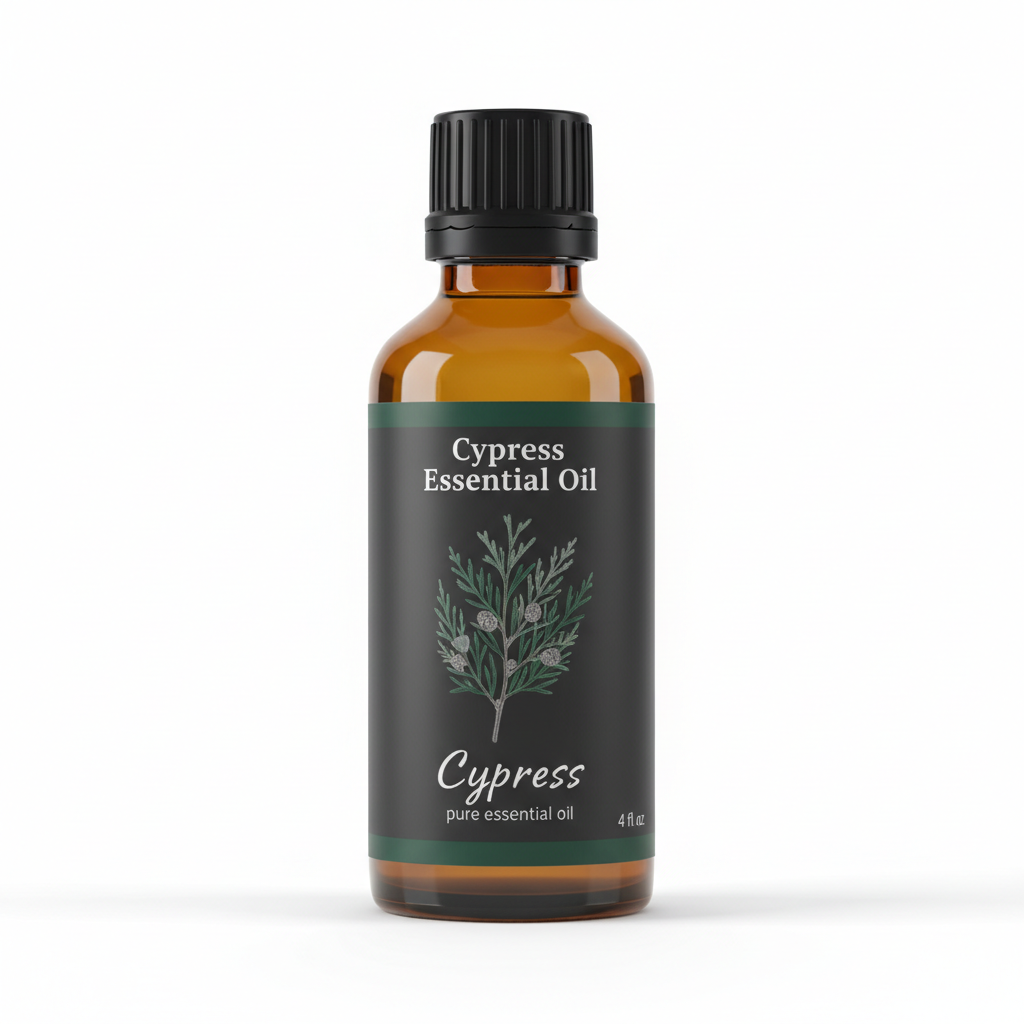
Cypress Essential Oil
Our own Cypress Essential Oil, in sizes from 0.5 oz to bulk.
From $10.99
Shop Now →Where the claim comes from
Search for cypress oil cellulite and you will find dozens of pages repeating the same sentence: cypress "tones," "firms," or "drains" the skin. Follow the references and they loop. One affiliate page quotes another, which quotes a third, and the chain ends at old aroma folklore rather than at any clinical work.
The folklore itself has a logic. Cypress has long been described in aromatic writing as an "astringent" oil, and astringent sounds like tightening. It also smells crisp and dry, which feels like the opposite of soft, dimpled skin. A scent can suggest an effect. It cannot produce one.
This is the same pattern we examined in our look at cypress oil and hair removal: a plausible-sounding idea, repeated until it reads as fact. Here is the claim, taken apart one myth at a time.
Myth 1: Cypress oil reduces the look of cellulite
The truth: We found no clinical evidence that any essential oil, cypress included, changes how skin dimpling looks. Dermatology organizations consistently describe topical products as unable to remove it, and an oil sits on the surface of the skin. The structure behind dimpling lies deeper.
That structure is ordinary anatomy. Fibrous bands anchor the skin to the tissue beneath it, and softer tissue pushes up between those bands. The result is a textured surface. It is a normal structural feature of skin, common across body types and ages, and not a flaw that needs correcting. Research on cosmetic products in this area is thin, and what exists does not support a claim for essential oils.
Why the myth persists: Before-and-after photos. Skin looks different depending on lighting, posture, hydration, and whether it was just massaged. A photo taken after a massage and compared with one taken cold can look like a result. It is a snapshot of a temporary state.
Myth 2: Cypress oil "detoxifies" the skin
The truth: Skin is not an exit route for toxins, and rubbing an oil on it does not pull anything out. The body's filtering work happens elsewhere, and no massage oil changes that. "Detox" on a label is a marketing word with no measurable meaning attached.
Why the myth persists: The word sounds clean, and cypress smells clean. Marketers pair the two because the pairing sells, and because a vague claim is harder to disprove than a specific one.
Myth 3: Cypress oil breaks down fat cells
The truth: No topical oil does this. A cosmetic also legally cannot claim to, because changing the body's structure is outside what a cosmetic is allowed to promise. If a product page says its oil dissolves, melts, or breaks down fat, the page is mislabeled marketing, whatever the bottle contains.
Chemistry offers no mechanism either. Cypress oil is made mostly of small aromatic molecules such as alpha-pinene and delta-3-carene (you can look up both on PubChem). Those molecules are volatile, meaning they evaporate readily from skin. Reasoning from that chemistry, a diluted oil spends its time on the surface and in the air, not reorganizing tissue.
Why the myth persists: It borrows the language of procedures and applies it to a bottle. The vocabulary of clinics has migrated into product copy, and readers assume the effect migrated with it.
Myth 4: A stronger blend will work faster
It will not, and this is the one myth that can cause real discomfort. If an oil has no effect at 1 percent, adding more drops adds nothing except risk. Undiluted or heavily concentrated essential oils can irritate skin, and sensitization (a lasting reaction to a material after repeated exposure) is a documented concern in Robert Tisserand and Rodney Young's Essential Oil Safety, 2nd edition, the standard reference on the subject.
The common mistake here is chasing a result with concentration. People double the drops, use the blend daily, and end up with irritated skin and no visible change. If you make a blend, keep it light: about 6 drops of cypress oil per 30 ml (1 ounce) of carrier oil is roughly a 1 percent dilution.
What is real: massage, and a scent you enjoy
Not everything in the claim is empty. Three things are true, and they are modest.
- Dimpling is ordinary. It is a structural feature of skin, not a problem you have failed to solve.
- Massage can change how skin looks and feels for a short while. Research suggests that pressure and warmth may temporarily change the surface appearance of skin and leave it feeling softer. The effect fades, usually within hours, and it comes from the hands and the glide of the carrier oil, not from the cypress.
- Scent makes habits stick. A massage routine you enjoy is one you repeat. A resinous, forest-like aroma is a pleasant reason to spend ten unhurried minutes after a shower.
That is the honest, limited case for a cypress massage blend. The oil contributes the atmosphere. The carrier contributes the slip. Your hands do the rest.
What a cypress massage blend is actually good for
Think of it as a scent choice, the way you would choose a candle. Cypress smells of cut wood, green needles, and a faint smoky dryness. It sits well with citrus and with other conifers. If that profile appeals to you, you will enjoy the blend. If you prefer florals or sweet notes, cypress is the wrong oil for you, and no claim about skin should change that.
We cover how it fits into a wider routine in our guide to cypress oil for skin, and our piece on what the evidence does and does not support goes deeper on the research behind the broader claims.
A sensible way to blend and use it
- Start with a plain carrier oil such as sweet almond or jojoba (skip almond if you have a nut allergy).
- Add about 6 drops of cypress essential oil per 30 ml (1 ounce) of carrier. Stir gently.
- Patch test first: apply a small amount to the inner forearm, cover it, and wait 24 hours. Stop if you notice redness or itching.
- Keep the blend away from your eyes, face, and broken skin.
- Store it in a dark glass bottle with the cap tight. Because alpha-pinene oxidizes readily on contact with air, a half-empty bottle ages faster than a full one, and oxidized oil is more likely to irritate. Use a smaller bottle as the level drops.
If you are pregnant, nursing, taking medication, or have sensitive skin, check with your doctor before using essential oils. Keep bottles out of reach of children, and note that the ASPCA Animal Poison Control Center and US Poison Control both advise caution around essential oils in homes with pets and young children.
Quick reference: claim versus reality
| Claim | What the evidence indicates |
|---|---|
| Cypress oil reduces the look of cellulite | No clinical support for any essential oil; topical products are generally described as unable to remove it |
| It detoxifies skin | Skin is not an exit route for toxins; the word has no measurable meaning on a label |
| It breaks down fat cells | No topical oil does this, and a cosmetic cannot legally claim it |
| More drops work faster | More drops raise the chance of irritation, with no added benefit |
| Massage with a scented oil is enjoyable | Reasonable, and the only part of the claim that holds up |
Who this is not for
This is not for anyone buying cypress oil specifically to change the look of their skin. You will spend money, apply it faithfully, and see the same skin you started with. It is also not for anyone who dislikes a sharp, woody scent, or who plans to use it at high concentration because a blog suggested it would work harder.
If the claim is why you are here, the better move is to skip the bottle and read the label on anything that promises it. A product that guarantees visible changes in skin texture from an oil is overpromising.
The sensible reason to buy a bottle
Buy cypress oil because you like woodland-scented massage oil. That is a perfectly good reason. If you want to see how it smells before committing, our cypress oil selection is the place to start. Check that the label names the plant by its Latin name (Cupressus sempervirens), lists a harvest or distillation lot, and does not make claims about changing the body. A bottle that is honest about what it is tends to be honest about where it came from.
Keep expectations at the level of atmosphere: a calm ten minutes, a forest note, skin that feels softly oiled. That is what cypress can offer, and it is enough to justify a small bottle.