Cypress Oil for Meditation and Yoga: A Grounding Practice Guide
Cypress oil doesn't quiet a busy mind on its own. Diffused in the room about ten minutes before you sit or step onto the mat, then switched off once practice begins, it works as a scent cue: a signal that this block of time is different from the rest of the day, giving a wandering attention something simple to come back to.
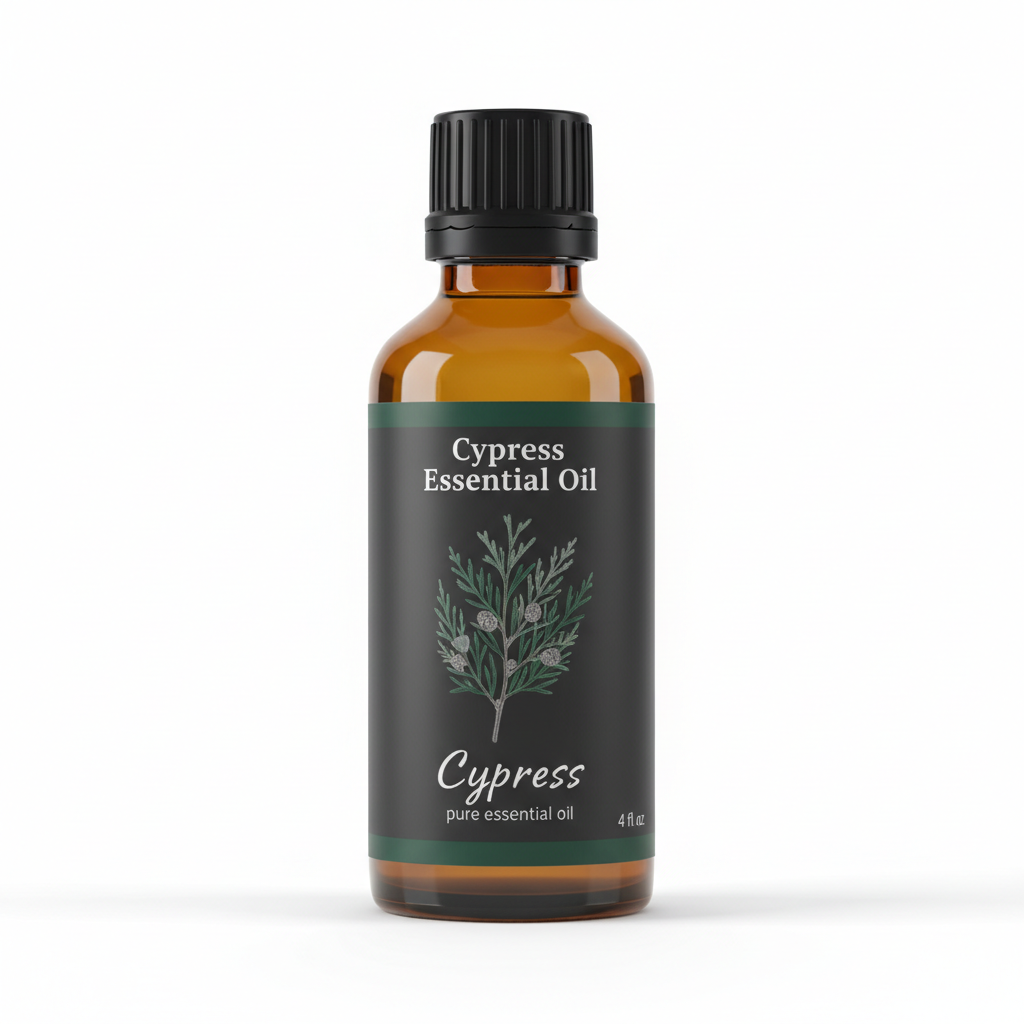
Cypress Essential Oil
Our own Cypress Essential Oil, in sizes from 0.5 oz to bulk.
From $10.99
Shop Now →What the Scent Is Actually Doing
It's worth saying plainly: cypress oil is not a shortcut to a calmer mind, and any guide that implies otherwise is selling something it can't back up. What a consistent scent can do is simpler and more mechanical. Cupressus sempervirens oil is largely alpha-pinene, a volatile compound that reaches the olfactory bulb directly, which sits close to the brain's memory and emotion circuitry. Pair a specific scent with the same ten minutes of sitting often enough, and the brain starts to treat the smell as a marker: this is the time that's set aside, not the rest of the day bleeding into it. That's associative learning, not a chemical effect on mood. Robert Tisserand and Rodney Young's Essential Oil Safety (2nd edition) is useful here precisely because it stays this measured: it documents what the chemistry is and how to handle it safely, and stops well short of promising a state of mind.
That distinction matters for how you use it. A ritual that leans on scent as an attention anchor works whether or not anything measurable happens in the body. A ritual that promises a specific mental outcome sets you up to feel like the oil failed when your mind is loud anyway, which it will be, regularly.
What You'll Need
- Cypress essential oil (Cupressus sempervirens), steam-distilled from the branches and foliage, with a lot number or batch code on the label
- Frankincense essential oil, optional but worth having for the blend below
- An ultrasonic or nebulizing diffuser
- A clock or timer
- A room you can close off for ten to fifteen minutes beforehand
- A mat, cushion, or chair for the seated portion, kept well away from where the diffuser runs
Step by Step: Scenting the Room Before You Practice
- Set the diffuser up away from your mat. Put it on a shelf or side table, not next to where you'll sit or move. You want the scent to have dispersed and started to fade by the time you begin, not to be sitting in a cloud of it.
- Add 3 drops of cypress oil and 2 drops of frankincense to the water reservoir. This ratio keeps cypress as the dominant note, with frankincense rounding out the sharper, resinous edge rather than competing with it. If you want to try other seasonal pairings on days you're not practicing, the cypress diffuser blends for every mood and season article has more combinations.
- Start the diffuser roughly ten minutes before you plan to begin. This is the step people skip, and it's the one that matters. Ten minutes gives the scent time to build, peak, and start tapering off, so that by the time you're sitting down, you're meeting it on the way out rather than the way in.
- Turn the diffuser off before you start your practice. Do this even if the room still smells like cypress. A fading, lingering trace is a better anchor for attention than a device actively pushing out more scent, because a fading signal keeps giving your attention something to notice (is it weaker now than a minute ago?) in a way a steady saturation doesn't. There's also a plainer reason: ultrasonic diffusers hum, and that low mechanical noise works against the quiet you're trying to settle into.
- Sit or begin moving once the room has gone quiet. No diffuser running, no fan noise competing with it. Just the room, and whatever scent is left.
A 10-Minute Seated Routine That Uses Scent as the Anchor
This is a straightforward way to use a cypress oil meditation setup without asking the oil to do more than it reasonably can.
- Sit down once the room has gone quiet, timer set for 10 minutes. Close your eyes or let your gaze drop.
- On your first few inhales, notice whatever scent is left in the room. Don't try to amplify it or chase it. Just register whether it's there, faint or strong.
- Keep noticing it getting fainter as the minutes pass. This is the actual exercise: tracking a signal that's gradually disappearing asks for a slightly different kind of attention than tracking something constant. It gives you a concrete, changing thing to return to.
- When your mind wanders, which it will, bring it back to the scent, not to judging the wandering. Ask yourself what's left of it right now. That question is the whole practice.
- When the timer ends, open your eyes and let the session close there. No scoring, no sense of having passed or failed based on how calm you felt.
For an evening version of this same idea, with a slower wind-down built around a specific hour of the day, see cypress oil for quiet moments and a grounding evening.
Using Cypress Around a Yoga Practice: What to Skip
A few specifics matter more on a mat than in a seated meditation, mostly because of balance and shared air.
- Never apply oil to your hands or the mat itself before practicing. Undiluted or even carrier-diluted oil on your palms or the mat surface is a slip risk the moment you're in a pose that bears weight on your hands, and that risk is real enough to rule it out entirely rather than test it.
- Skip diffusion altogether in a heated room or a shared class. Warm air intensifies volatile compounds, which can turn a pleasant scent sharp and unpleasant fast, and in a room full of other people breathing the same air, filling it with a scent nobody else chose is a basic etiquette problem, not just a comfort one.
- If you want a scented mat, clean it after practice rather than before. Even then, check your mat manufacturer's care instructions first. A number of rubber and PVC mat makers specifically advise against oil contact, since certain oils can break down the surface over time. Test any spray on a small corner and wait a day before using it on the whole mat. If you want a formula built for this, the DIY cypress sea salt soak article isn't a mat spray, but it's a useful template for how to dilute cypress oil properly for a surface or skin-contact application, with the ratios spelled out.
Why Cypress, Specifically
Of all the oils that could fill this role, cypress has a longer claim on it than most. Cupressus sempervirens has marked cemeteries, monastery courtyards, and contemplative spaces across the Mediterranean for centuries, its narrow, upright form read for generations as a visual stand-in for stillness and endurance. That history doesn't change the chemistry, but it's a reasonable part of why this oil, rather than a brighter citrus or a sweeter floral, fits a grounding ritual. If that association interests you, the Mediterranean cypress tree's groves and symbolism goes into where that reputation comes from. When you're choosing a bottle to build this ritual around, look for one with a batch-specific lot code and distillation date listed; alpha-pinene oxidizes readily on air contact, so a half-empty bottle that's been opened for months will smell noticeably different, often sharper and less rounded, than a fresh one from the shop.
Common Mistakes
- Leaving the diffuser running during practice. It turns the room into background noise competing with quiet, and removes the fading signal that makes the scent useful as an anchor in the first place.
- Expecting the scent to produce a specific feeling. It's a cue, not a switch. Some sessions will feel settled; many won't, regardless of what's in the diffuser.
- Oiling the mat or hands directly. Covered above, and worth repeating: this is a slip hazard, not a minor inconvenience.
- Using the same drop count every time without checking the room size. A small bedroom and a large studio don't need the same amount of oil; more isn't more effective, it's just more.
What to Expect
Over repeated sessions, some people report that the scent starts to function the way a bell or a particular chair does: a small, reliable signal that this time is set apart. Some early research into scent and associative memory suggests this kind of pairing can strengthen with repetition, though the evidence speaks to association and recall, not to any guaranteed change in mood or mental state. Results here are personal and inconsistent by nature. Treat the ritual as a structure you're building, not a result you're purchasing.
Who This Isn't For, and a Few Safety Notes
If you're pregnant, have a diagnosed skin sensitivity, or are caring for young children or pets in the same space, check with a qualified healthcare provider before diffusing regularly, and keep diffusers and bottles well out of reach of both children and animals; the ASPCA Animal Poison Control Center maintains guidance specific to pets and essential oils worth reviewing if you share a home with them. If you ever apply any essential oil to skin rather than diffusing it, dilute it properly in a carrier oil first and patch test on a small area, waiting 24 hours before wider use. If you have concerns about ingestion or an adverse reaction, contact US Poison Control. None of this is a substitute for the advice of a healthcare provider, and this ritual isn't built to replace any care you're already receiving. It's a small, repeatable structure for marking off ten minutes, nothing more ambitious than that.