Cypress Massage Oil Recipes: After-Activity Blends That Earn Their Keep
The honest version: the massage does the work. Your hands, the pressure, the time you spend on a sore calf or a locked-up shoulder, that's what matters. The oil's job is smaller: it lets your hands glide instead of drag, and it gives the whole ritual a scent worth repeating. A blend you actually enjoy is what gets a massage out of the one-time-after-a-hard-day category and into a weekly habit.
Cypress Essential Oil
Our own Cypress Essential Oil, in sizes from 0.5 oz to bulk.
From $10.99
Shop Now →What cypress brings to the bottle, and what it doesn't
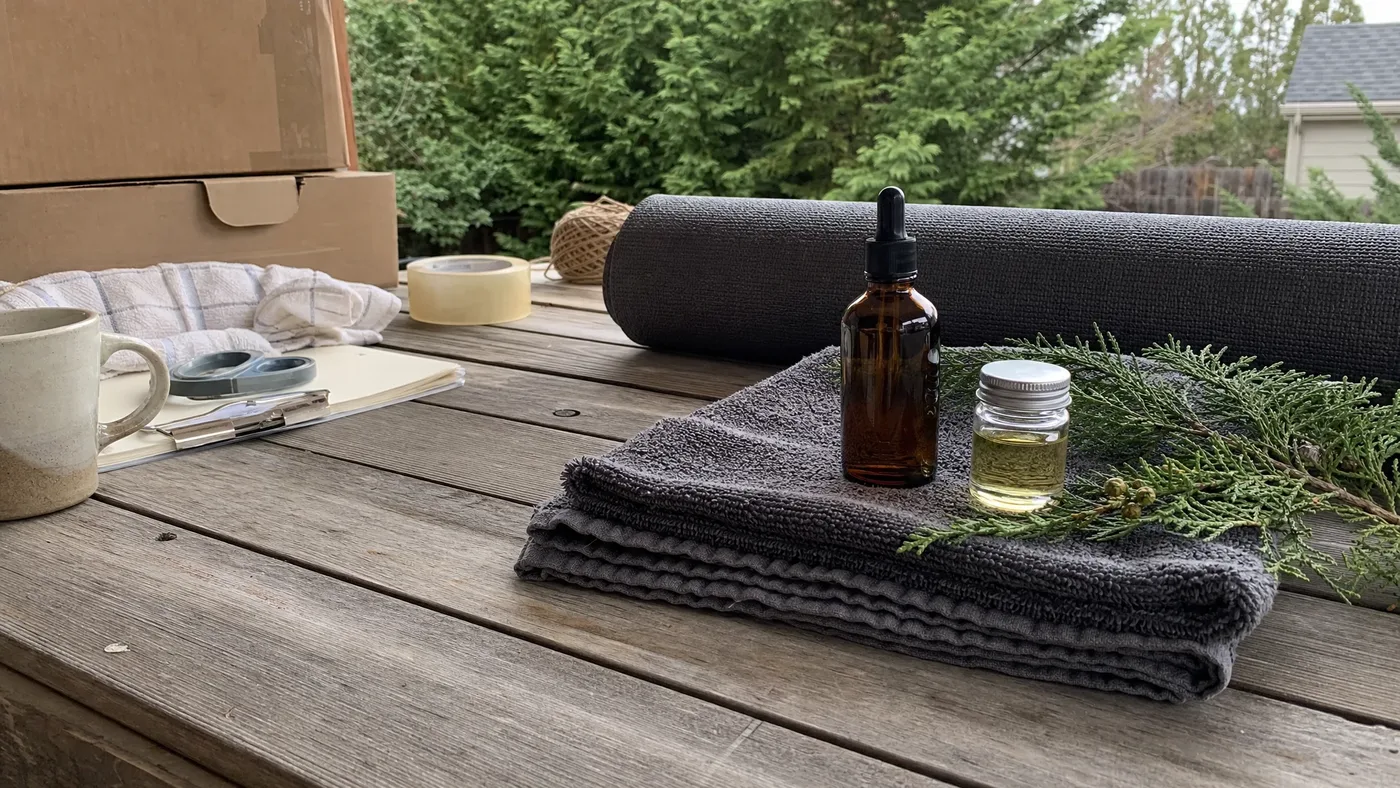
Cypress (Cupressus sempervirens) essential oil smells like a cedar grove after rain: resinous, a little smoky, green at the edges. That's the whole pitch here. We're not going to tell you it eases anything specific, because that's not a claim we're in a position to make, and it's not the point of this piece anyway. People reach for cypress in a massage oil because it smells grounding after time outdoors or a long day hunched at a desk, and because it blends cleanly with lavender, cedarwood, and citrus without fighting any of them for attention.
If you want the reasoning on how much oil to use before you even get to these recipes, the cypress dilution chart breaks down drop counts by carrier volume and use case. The three recipes below sit inside that same range: roughly 1 to 2 percent essential oil in 30 ml of carrier, which is a standard body-massage dilution per Robert Tisserand and Rodney Young's Essential Oil Safety, not a number we picked for effect.
Recipe 1: Trail Legs
Difficulty: Easy | Prep time: 5 minutes | Yield: 30 ml (about 1 fl oz)
Built for calves and feet after a hike, a long walk, or a day on your feet at work. Sweet almond oil is heavier and slower to absorb than jojoba, which is useful here: you want slip that lasts through a full lower-leg massage, not oil that vanishes in the first minute.
Ingredients
- 30 ml sweet almond oil (carrier)
- 6 drops cypress essential oil
- 3 drops lavender essential oil
- 1 amber glass bottle with a dropper or pump, 30 ml or larger
Instructions
- Pour the sweet almond oil into the bottle first.
- Add the cypress and lavender drops.
- Cap the bottle and roll it gently between your palms for 15 to 20 seconds to mix. Don't shake hard; it isn't necessary and it invites air into the oil, which speeds up oxidation.
- Label the bottle with the date and contents. Unlabeled bottles are how two different blends end up looking identical in a bathroom cabinet.
For a lighter, rinse-free alternative on the same trail-day theme (useful when you'd rather soak than be massaged), see the cypress sea salt bath soak for after a day outdoors.
Recipe 2: Desk Shoulders
Difficulty: Easy | Prep time: 5 minutes | Yield: 30 ml
Aimed at the upper back, neck, and shoulders after a day of screen posture. Jojoba is technically a liquid wax, not a true oil, which is why it feels lighter on skin and doesn't leave the slightly greasy residue that heavier carriers can on areas you're going to lean back into a desk chair with.
Ingredients
- 30 ml jojoba oil (carrier)
- 4 drops cypress essential oil
- 3 drops cedarwood essential oil
- 2 drops sweet orange essential oil
- 1 amber glass bottle with dropper or pump
Instructions
- Add the jojoba to the bottle.
- Add all three essential oils.
- Roll between your palms to combine.
- Let it sit, capped, for about an hour before first use. This isn't required, but cedarwood and citrus notes settle and round out a little once they've had time to mingle in the carrier.
Sweet orange oxidizes faster than cypress or cedarwood once a bottle is opened repeatedly, since its main compound, limonene, reacts readily with air. Keep this one capped tightly between uses and expect it to be the first of the three to turn.
Recipe 3: Minimalist
Difficulty: Very easy | Prep time: 2 minutes | Yield: 30 ml
For anyone who doesn't want to manage three bottles of essential oil and a shelf of carriers: one oil, one scent, no blending decisions. Fractionated coconut oil stays liquid at room temperature (regular coconut oil solidifies below about 76°F), has almost no scent of its own, and doesn't go rancid the way most plant oils eventually do, so it's a forgiving base for a single-note blend.
Ingredients
- 30 ml fractionated coconut oil (carrier)
- 5 drops cypress essential oil
- 1 amber glass bottle with dropper or pump
Instructions
- Combine the fractionated coconut oil and cypress oil in the bottle.
- Roll to mix.
- Use.
Five drops in 30 ml works out to under 1 percent, lighter than the other two blends here on purpose. It's a reasonable place to start if you're new to cypress, massaging a child's feet, or just prefer a scent that reads as barely-there rather than assertive. If you want to compare how fractionated coconut, jojoba, and sweet almond behave against each other for massage specifically, the carrier oil comparison covers absorption speed, shelf life, and feel in more detail.
Technique: the part that actually matters
None of these blends will do anything useful if the massage itself is rushed. A few conventions worth following, more craft habit than science:
- Warm the oil in your palms first. Rub a dime-sized amount between your hands for a few seconds before it touches skin. Cold oil straight from a bottle is unpleasant enough that it can end a massage before it starts, especially on bare feet or a bare back.
- Use slow, long strokes. Short, choppy motions feel fussy. Long strokes from ankle to knee, or from shoulder blade to neck, read as more deliberate and are easier to sustain for ten or fifteen minutes.
- Keep pressure moderate and ask, don't guess. "Harder" or "lighter" takes two seconds to say. A massage given on autopilot at one fixed pressure usually isn't matching what the other person actually wants that day.
- Reapply sparingly. A little oil goes a long way. Adding more every few minutes out of habit just means you'll run out of a 30 ml bottle faster than you need to.
If you'd rather apply a scent to pulse points or a single sore spot without a full massage setup, the cypress roller blend recipes use the same oils in a roll-on format, pre-diluted and capped for one-handed use.
Safety notes, read before you mix anything
These are not optional footnotes. Please read them before your first blend.
- Dilution. Stay within the 1 to 2 percent range used above for adult body massage. Going heavier doesn't make a blend work better or faster; it mostly raises the odds of skin irritation and burns through your essential oil supply for no benefit.
- Patch test first. Apply a small amount of the finished, diluted blend to the inside of your forearm. Wait 24 hours and check for redness, itching, or bumps before using it anywhere else. Do this for every new blend, not just the first bottle you ever make.
- Skip it on broken or reactive skin. Open cuts, sunburn, rashes, or any skin that's currently irritated is not the place to test a new oil blend. Wait until skin is calm and intact.
- Defer to your own clinician's guidance. If a healthcare provider has given you specific instructions about massage, pressure, or what touches your skin, follow that guidance over anything written here.
- Keep it away from kids under 10 and pets. Essential oils are concentrated plant compounds, and small bodies and animals don't process them the way adults do. Store bottles out of reach, and if you suspect an oil has been ingested by a child or a pet, contact US Poison Control or the ASPCA Animal Poison Control Center right away rather than guessing at next steps.
- Don't ingest, and don't apply undiluted oil directly to skin. Every recipe above goes into a carrier first for a reason.
The practical mess nobody mentions
Massage oil stains. A cypress and sweet almond blend on a white pillowcase or good sheets will leave a mark that doesn't fully wash out, so keep a dedicated towel for this and don't use your nice linens as a massage surface. Oily hands also make doorknobs, phone screens, and stair railings slippery immediately afterward, so wash up before you go wandering through the rest of the house. Small thing, easy to forget, mildly dangerous on stairs.
Storage and shelf life
Store finished blends in amber or cobalt glass, capped tightly, out of direct sunlight and away from heat (a bathroom cabinet is fine; a sunny windowsill is not). Light and heat both speed up oxidation in carrier oils, and an oxidized carrier smells faintly like old crayons or paint, a reliable sign it's time to toss the batch.
| Blend | Carrier | Expected shelf life |
|---|---|---|
| Trail Legs (sweet almond) | Sweet almond oil | About 6 to 12 months |
| Desk Shoulders (jojoba) | Jojoba oil | About 1 to 2 years |
| Minimalist (fractionated coconut) | Fractionated coconut oil | 2 years or longer |
Jojoba and fractionated coconut oil are the most stable of common carriers, which is part of why they show up so often in blends meant to last. Sweet almond oil, being a true triglyceride oil, is more prone to turning over time, especially once a bottle has been opened and exposed to air repeatedly. A bottle that's half-used ages faster than a full one for the same reason: more air inside means more contact between oxygen and the oil each time you open it.
Variations and substitutions
None of these ratios are fixed in stone beyond the overall dilution percentage. A few swaps that hold up:
- No lavender on hand? Swap it 1:1 for frankincense or marjoram in Trail Legs; both pair reasonably with cypress's woody-green profile.
- No cedarwood? Vetiver works in Desk Shoulders at the same drop count, though it's a heavier, earthier note than cedarwood, so expect a different character, not a copy.
- Allergic to tree nuts? Skip sweet almond oil entirely and use jojoba or fractionated coconut in its place; both are non-nut carriers.
- Want a smaller batch? Halve every number proportionally: 15 ml carrier, half the drop counts, same ratio.
A pre-blended option is also worth considering if you'd rather not keep three single-note oils on a shelf; check the shop for a ready-made cypress massage oil if that fits your routine better than mixing your own.
Who this isn't for
If you're pregnant, nursing, managing a long-term skin condition with a dermatologist, or taking guidance from a clinician about what touches your skin, talk to that provider before adding a new essential oil blend to your routine, rather than treating anything here as a substitute for that conversation. And if the scent itself doesn't appeal to you, no ratio adjustment will fix that. Cypress is resinous and a little sharp; it's not for everyone, and that's fine. The lavender, cedarwood, and orange in these blends exist partly to soften it for people who want something gentler.