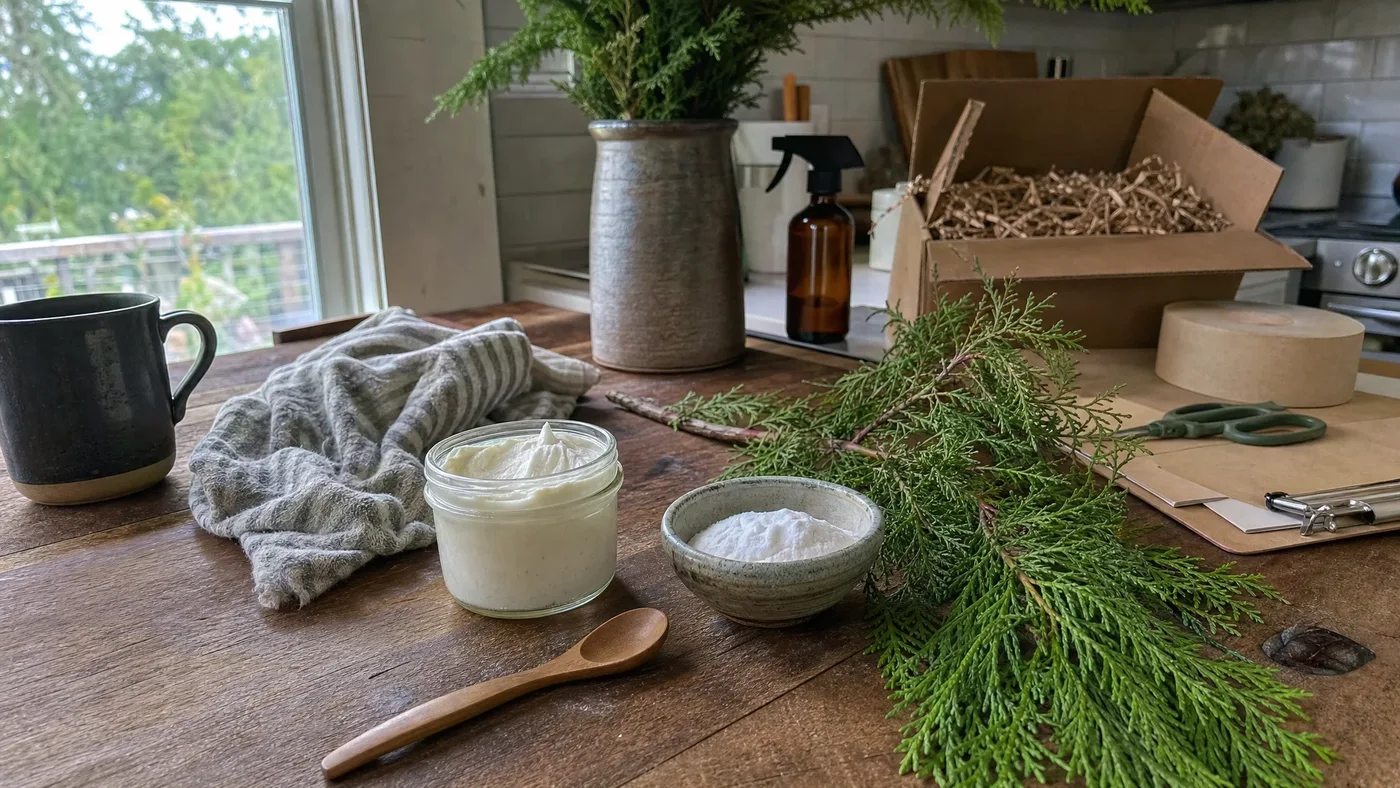
DIY Cypress Deodorant: A Recipe and the Honest Fine Print
A deodorant and an antiperspirant are not the same product. A deodorant addresses odor at the skin's surface; an antiperspirant reduces wetness by acting on sweat production itself, which is why the FDA regulates antiperspirants as over-the-counter drugs rather than cosmetics. This recipe makes a deodorant. You will still sweat. That is the deal, and any DIY formula claiming otherwise is misrepresenting what it can do.
Cypress Essential Oil
Our own Cypress Essential Oil, in sizes from 0.5 oz to bulk.
From $10.99
Shop Now →Why That Distinction Matters Before You Even Start
Antiperspirants work by temporarily plugging sweat ducts, usually with an aluminum salt, which is a drug action under FDA rules and requires formal testing and labeling. Nothing in a kitchen batch of coconut oil and arrowroot does that, and nothing in it should claim to. What this recipe can reasonably offer is a scent layer and a dry, absorbent base that sits on top of normal underarm sweat. If your priority is staying visibly dry through a specific event, a commercial antiperspirant is the honest tool for that job. If your priority is swapping synthetic fragrance and aluminum compounds for a plant-based scent and a simpler ingredient list, this is built for that trade.
Difficulty and Time
Difficulty: easy, no special equipment beyond a double boiler setup. Active time: about 10 minutes. Total time, including cooling in the jar: roughly 30 to 45 minutes before it's firm enough to use.
What You'll Need
| Ingredient | Amount | Role in the formula |
|---|---|---|
| Coconut oil | 3 tablespoons | Base fat, melts around 76°F (24°C) |
| Shea butter | 2 tablespoons | Firms the texture, adds slip |
| Arrowroot powder | 3 tablespoons | Absorbs surface moisture |
| Baking soda | 1 tablespoon | Odor-neutralizing, alkaline (see warning below) |
| Cypress essential oil | 12 drops | Primary scent, dry and woody-green |
| Cedarwood essential oil | 6 drops | Rounds out the scent, adds depth |
Eighteen total drops of essential oil across roughly nine tablespoons of base works out to about 1 percent dilution for the whole batch, well inside the ranges Robert Tisserand and Rodney Young lay out for leave-on body products in Essential Oil Safety, 2nd edition. For a breakdown of how that percentage shifts by carrier volume and use case, the dilution chart is worth bookmarking before you adjust this recipe for a different jar size.
Instructions
- Combine the coconut oil and shea butter in a heatproof bowl set over a pan of barely simmering water (a makeshift double boiler). Melt gently, stirring occasionally, until fully liquid.
- Remove from heat. Let the mixture cool for a minute or two so it's warm, not hot, before adding powders.
- Stir in the arrowroot powder and baking soda off heat, whisking until no dry clumps remain and the texture is smooth.
- Add the cypress and cedarwood essential oils last, once the mixture has cooled further but is still pourable. Adding oils while the base is too hot drives off the lighter aromatic compounds before you ever open the jar.
- Pour into a clean glass or tin jar (roughly 4 ounces). Let it set at room temperature until firm, or speed this up in the refrigerator for about 15 minutes.
- To use, scoop a pea-sized amount with clean fingers and warm it between fingertips before applying. Heat from your skin is what makes it spreadable; it won't glide on cold and firm.
The Baking Soda Problem (Read This Before You Mix)
Baking soda is the single most common reason a natural deodorant recipe stops working out for someone. It's alkaline, and underarm skin is thinner and more reactive than skin on most of the body. Daily contact with an alkaline powder can tip that skin toward redness, itching, or a rash-like reaction over days or weeks, even in people who never had a problem with baking soda as a one-off remedy for odor in other contexts. If you notice redness, bumps, or persistent itching after starting this recipe, stop using it. Don't push through on the theory that your skin needs to adjust; that reaction is skin telling you the pH doesn't agree with it, not a sign you're close to a breakthrough.
Sensitive-skin variant: drop the baking soda entirely. Replace it with either an extra tablespoon of arrowroot powder (for a softer, less odor-focused version) or one tablespoon of magnesium hydroxide powder, which neutralizes odor-causing compounds without the alkalinity spike that baking soda carries. Magnesium hydroxide is milder but also less potent, so expect to reapply more often on a warm day.
Dilution, Patch Testing, and Who Should Skip This
Patch test before you trust this on both underarms for a full day. Apply a small amount to the inside of your forearm, cover loosely, and wait 24 hours. No redness, itching, or swelling means you're likely fine to try it where it matters. Skipping this step and finding out underarm skin reacts badly is a far less pleasant way to learn the same information.
Do not apply to broken, shaved-and-irritated, or otherwise compromised skin, since the barrier that normally limits absorption isn't intact. If you are pregnant, nursing, or managing any ongoing skin sensitivity, check with a healthcare provider before adding a new essential oil blend to your daily routine rather than guessing. Keep the jar away from eyes, and keep it away from pets: cats in particular lack some of the liver enzymes that metabolize common essential oil constituents efficiently, and the ASPCA Animal Poison Control Center lists concentrated essential oils among the household items worth keeping out of reach of curious paws and noses.
Storage and Shelf Life
Coconut oil softens above about 76°F (24°C) and turns fully liquid not far past that, so a batch made in summer or stored on a warm bathroom shelf will slump or separate. Keep the jar somewhere cool, or move it to the refrigerator for the warmer months and let it warm to room temperature for a few seconds between your palms before scooping. Used this way, a batch holds its texture and scent well for about 3 to 4 months. Cypress oil's characteristic brightness comes largely from alpha-pinene, a compound that oxidizes on contact with air over time (its structure is documented on PubChem), so an older jar left open and scooped into daily will smell flatter well before the balm itself goes bad. Keep the lid on between uses.
Variations and Substitutions
- Carrier swap: coconut oil is the backbone fat here, but it isn't the only option if you want a lighter afterfeel or you're avoiding it for another reason. The comparison of carrier oils for cypress essential oil covers how jojoba, fractionated coconut oil, and sweet almond oil each change the texture and absorption of a blend like this one.
- Butter swap: mango butter or cocoa butter can stand in for shea butter at the same measurement if that's what's on hand; both firm up the balm in a similar way.
- Powder swap: kaolin clay in place of some or all of the arrowroot gives slightly more oil absorption through the day, at the cost of a slightly drier, more matte feel going on.
- Scent swap: if cedarwood isn't available, a small amount of lavender or sweet orange in its place keeps the dilution math the same while shifting the scent warmer or brighter. Keep total drops at 18 for a 1 percent batch unless you've checked the dilution chart for a different target percentage.
What to Expect When You Switch
Moving from a commercial antiperspirant to any natural deodorant usually comes with an adjustment window, often cited anecdotally as one to a few weeks, during which underarms that are used to having sweat ducts temporarily blocked start sweating normally again. That's not this recipe failing; it's the return of a bodily function the old product was suppressing. Expect more visible sweat than you're used to, because that's the honest baseline this formula was never designed to change.
A Note on Fabric
The oil content in this balm can leave marks on silk and some synthetic fabrics if you dress before it's fully absorbed into skin. Give it a minute or two after applying, especially before pulling on anything delicate.
Why Cypress, Specifically
Cypress essential oil's scent profile leans dry, green, and woody, driven largely by its pinene and sesquiterpene content rather than the sweeter, rounder notes found in many florals. That chemistry is also why it reads as unisex and doesn't fight with the synthetic "powder" fragrance accords built into most commercial antiperspirant sticks; there's nothing powdery about it to clash. Paired with cedarwood's deeper, drier base note, the combination in this recipe sits closer to a trimmed hedge or a cedar closet than to anything floral or fruity. If you'd rather start from a verified, GC/MS-tested cypress oil instead of an unknown bottle from a drugstore shelf, our cypress essential oil is formulated for exactly this kind of leave-on use.
This is a cosmetic deodorant, not a drug, and not a substitute for medical advice about sweat, skin, or anything else a qualified healthcare provider should weigh in on. Treat it as what it is: a simple, plant-based layer against odor, with its limits stated upfront instead of buried in the fine print.