Cypress Essential Oil and Pregnancy: A Careful, Honest Guide
Evidence on essential oil use in pregnancy is thin across the board. The conservative practice is to skip topical use in the first trimester, keep any later use minimal and diluted to 1 percent or less, and clear it with your own midwife or obstetrician. Brief diffusing in a ventilated room is the lowest-concern use.
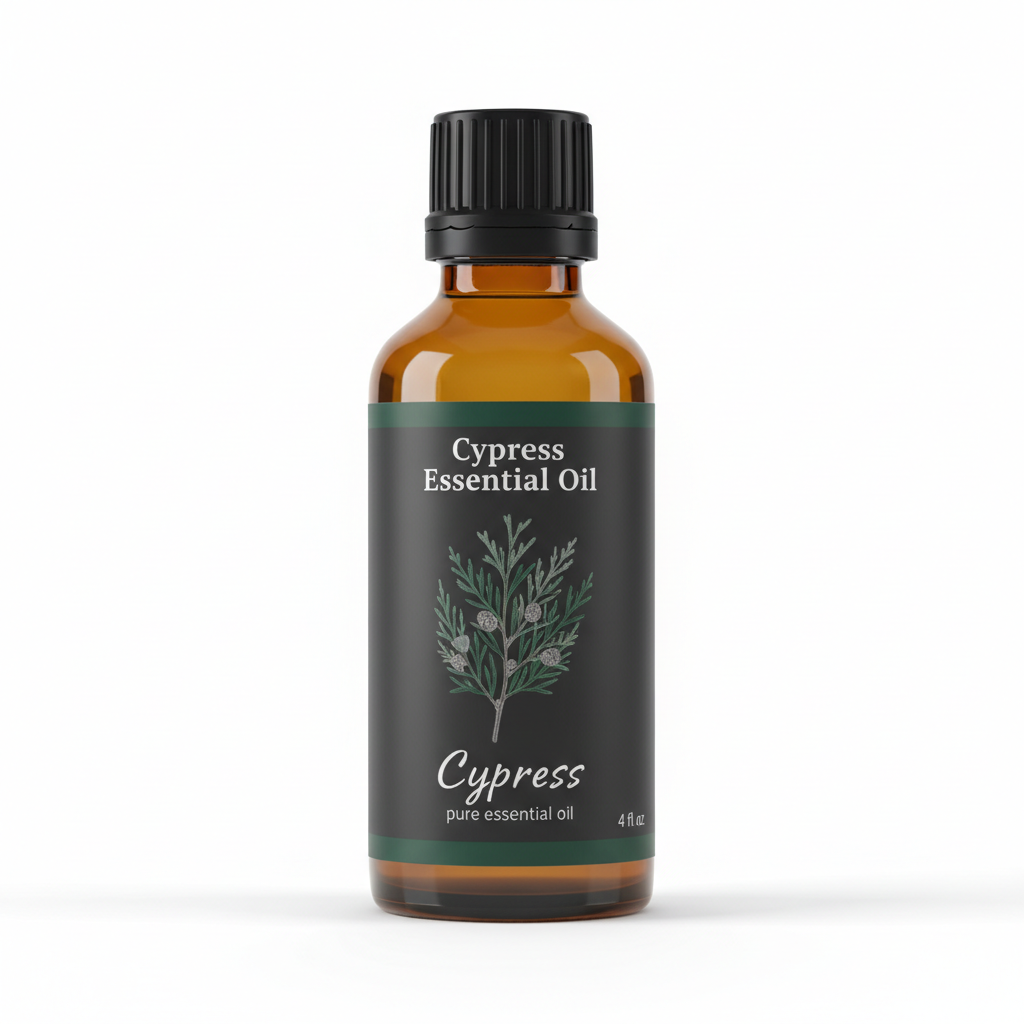
Cypress Essential Oil
Our own Cypress Essential Oil, in sizes from 0.5 oz to bulk.
From $10.99
Shop Now →The deciding voice is your clinician, not a shop, and that includes this one. Nobody selling you oil should be the one reassuring you about using it while pregnant. What follows covers what is and is not known about cypress oil pregnancy questions, plus habits that keep use small.
The Short Answers
Can a shop tell me cypress oil is safe in pregnancy?
No. The evidence on essential oils while pregnant is limited, and no seller can judge your particular pregnancy. A shop can describe the oil, explain the cautions that specialist references apply, and send you back to your own provider.
What do aromatherapy references say about cypress?
Robert Tisserand and Rodney Young's Essential Oil Safety (2nd edition) places cypress among the lower-concern oils. It also applies its general pregnancy cautions: reduced dilution, fewer oils at once, shorter sessions. Lower concern is not the same as cleared, and no reference book replaces the person monitoring your pregnancy.
Why skip topical use in the first trimester?
Because it is the stage where the least is known and caution costs almost nothing. Leaving a bottle in the cupboard for a few months gives up very little. That is a conservative habit, not a finding that cypress does anything alarming.
If cypress is lower concern, can I use it as I did before?
Not without changes. Lower concern still sits inside the general cautions, so recipes written for ordinary adult use need cutting down in strength, in number of oils, and in session length. Ask your clinician before resuming any routine you had before you were pregnant.
Dilution and Skin
What dilution counts as conservative?
One percent or less. That works out to roughly 6 drops of essential oil in 30 ml (1 fluid ounce) of carrier oil. Recipes written for general adult use often run stronger, so halve or quarter them rather than copying them as written.
Should I patch test even if I have used cypress before?
Yes. People report that skin and scent responses shift during pregnancy, which makes an old patch test a weaker guide. The steps are laid out in our guide to cypress dilution and patch testing.
Can I use cypress oil undiluted?
No, at any stage of life. Undiluted essential oil is concentrated plant material, and the basic safety rules for cypress apply even more firmly when you are being cautious. A carrier oil such as jojoba or sweet almond is the starting point.
Is it all right to add cypress oil straight to a bath?
Skip it. Oil does not dissolve in water, so drops float on the surface and touch skin at full strength as you get in. This is chemistry rather than a pregnancy-specific rule, but it is one of the commonest ways a diluted routine quietly becomes an undiluted one.
Should I keep cypress away from my abdomen?
A cautious routine does. No one has shown that cypress on the abdomen is a problem, but there is no reason to apply it there, and fewer application sites means less to explain to your midwife.
Does cypress cause sun sensitivity on skin?
Cypress is not usually grouped with the oils of greatest concern for this, and our article on cypress and phototoxicity goes through the details. The usual trouble comes from blends. A cold-pressed citrus oil added to a cypress mix changes the sun question entirely.
Diffusing and Scent
Is diffusing really the lowest-concern use?
It is generally considered so, because exposure is brief and diffuse compared with putting oil on skin. The conditions matter: a ventilated room, a modest number of drops, and a diffuser that you can switch off the moment the scent stops being welcome. Your clinician still has the final say.
How long should a diffusing session last?
There is no published threshold for cypress in pregnancy, so treat any number as a habit rather than a rule. A short session of around 20 to 30 minutes, followed by a break and fresh air, fits the specialist guidance on shorter sessions. Never run a diffuser all day in a closed room.
Why might a scent I liked suddenly feel unwelcome?
People report that sensitivity to smell changes during pregnancy, and a favorite can turn sharp or overwhelming within days. Cypress is resinous and dry, with a woody edge that can read as fresh one week and harsh the next. If a scent stops working for you, stop using it. No routine is worth pushing through.
Why buy small bottles?
Comfort comes first, since you may drop the scent partway through. There is also a chemistry reason: cypress is rich in alpha-pinene, a compound that oxidizes readily on contact with air, so a half-empty bottle tends to age faster than a full one. A small bottle you finish is better than a large one that sits open.
Should I blend cypress with other oils?
Keep it to one oil at a time. The general cautions call for fewer oils, and a single oil means that if something feels wrong you know exactly what caused it. Blends are where recipes copied from the internet most often go wrong.
Nursing
What about cypress oil breastfeeding questions?
The honest answer is the same: evidence specific to cypress oil breastfeeding use is limited. Keep any use minimal and diluted, and raise it with your midwife, lactation consultant or pediatrician before you start.
Where should I avoid applying diluted oil while nursing?
Keep it away from any skin a baby contacts: chest, shoulders, neck, and the arms and hands that hold them. Choose a spot the baby will not touch or nuzzle, and wash your hands before picking them up. For diffusing, leave it out of the room where the baby sleeps.
What should I bring to an appointment?
Bring the bottle, or a photo of its label. The botanical name (Cupressus sempervirens for the cypress we sell), the dilution you plan to use, and how you plan to use it give your clinician something concrete to respond to. If they say no, that settles it.
Buying and Labels
What should I check on a bottle before buying?
Look for the botanical name and a single ingredient. A product labeled only "cypress fragrance" may be a synthetic scent oil, which is a different material altogether. When you browse the cypress oils in the shop, those two details are the first things to read.
Does a "pregnancy-safe" label mean anything?
We are not aware of any recognized standard behind it. A label cannot know your pregnancy, and a seller who offers that reassurance is stepping outside what a seller can honestly offer. Treat the phrase as marketing and ask your provider instead.
Who is this guide not for?
Anyone looking for a green light. If you want a yes, this page will frustrate you, because it can only say that the evidence is limited and that your clinician decides. The most common mistakes are adult-strength recipes, several oils at once, undiluted bath additions and long diffuser sessions in closed rooms.