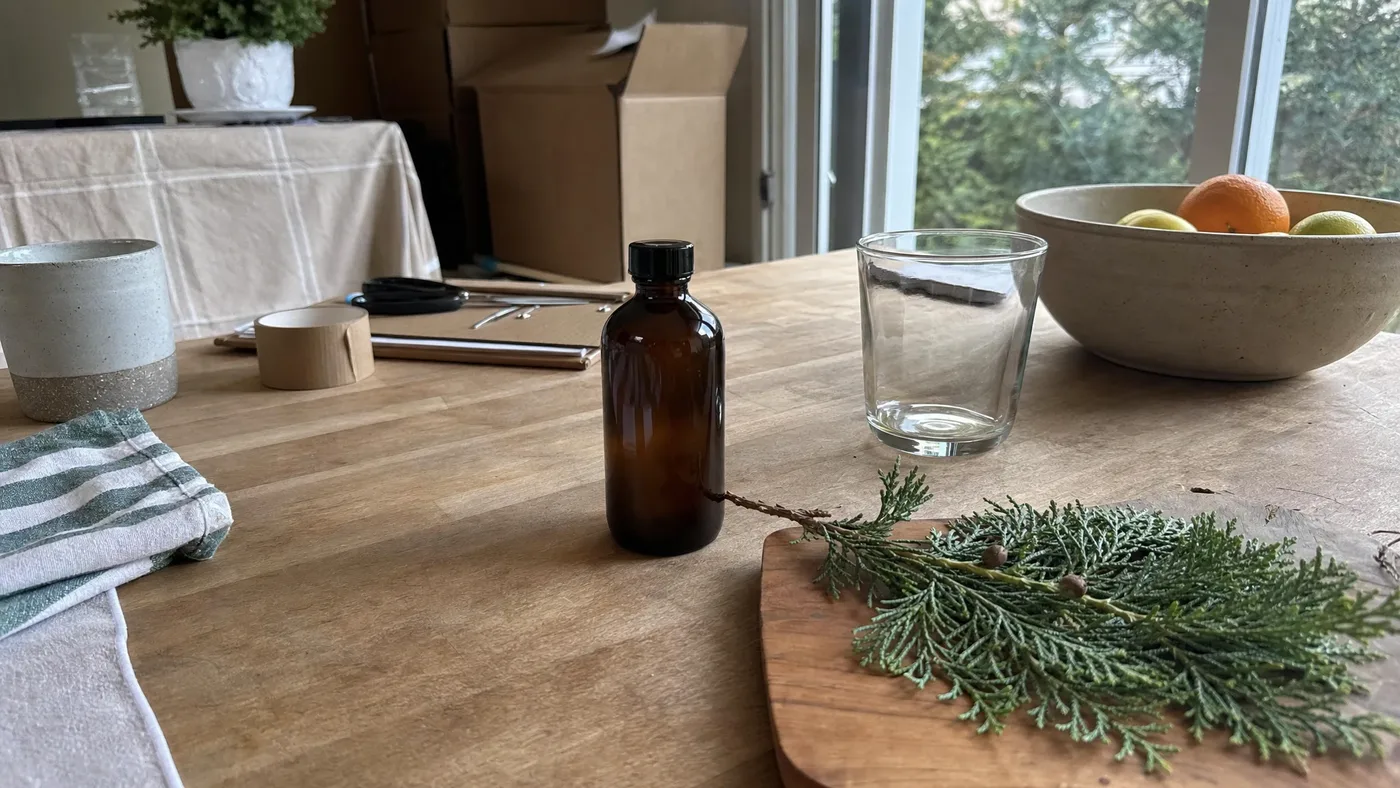
Can You Ingest Cypress Essential Oil? Why Our Answer Is No
No. Cypress essential oil is sold for aromatic and diluted topical use only. It is not a food product, and swallowing concentrated essential oil is the usual story behind poison control calls. Natural origin does not change that: the oil is a highly concentrated plant extract, and a drop in water still reaches your mouth at full strength.
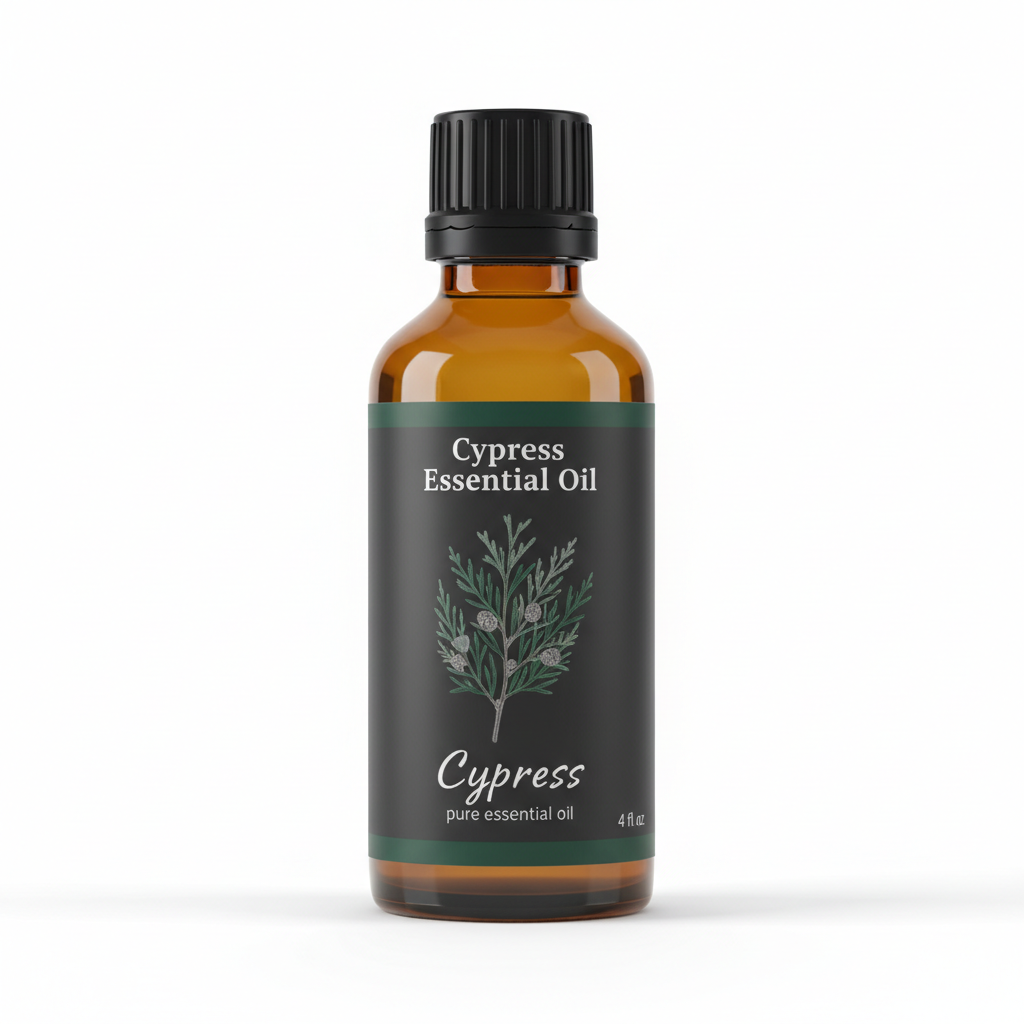
Cypress Essential Oil
Our own Cypress Essential Oil, in sizes from 0.5 oz to bulk.
From $10.99
Shop Now →The Short Answers
Can you ingest cypress oil?
No. Our position is simple: this product is made and sold for the diffuser and for properly diluted skin use. Nothing about its labeling, sourcing, or intended use supports swallowing it.
Is cypress oil edible?
No. Edible means a product is made, handled, and labeled to be eaten. A bottle of cypress essential oil is an aromatic product, and it carries no food labeling or serving guidance.
What does cypress oil internal use actually mean?
It means putting the oil in the mouth: drops in water, tea, honey, or a capsule. We do not offer instructions for any of these, and we would rather say so plainly than leave it vague.
Why 'Natural, So a Drop Is Fine' Fails
It comes from a tree, so why isn't a drop in water fine?
Origin tells you where a molecule came from, not how much of it is in your glass. Steam distillation gathers the volatile fraction of a large mass of foliage into one small bottle. A single drop is far more concentrated than anything the tree itself would ever put in front of you.
Doesn't the oil just dissolve in water?
It does not. Essential oils are hydrophobic, so the drop floats on the surface and stays together. When you drink, that undiluted bead is what meets your lips, mouth, and throat first.
Does 'pure' mean it is safe to swallow?
No. Pure describes what is in the bottle: oil from the plant and nothing added. It says nothing about what your digestive tract should meet. Pure cypress oil is exactly the concentrated material that deserves the most care.
Doesn't 'aromatherapy grade' mean it can be ingested?
It means nothing of the kind. Grading phrases on essential oil labels are unregulated marketing language, full stop. No agency defines them, so no bottle earns safety for swallowing from a clever adjective.
What about putting drops in honey or a capsule?
Honey and capsules change how the oil is carried, not what is being swallowed. A capsule can even hide the sensation that might otherwise make a person stop. We do not recommend either.
Why You Keep Seeing the Opposite Advice
Why do so many websites suggest internal use?
Casual internal use is the most commonly repeated unsafe suggestion in online essential oil content. It spreads because it sounds easy and sells more oil. A seller who encourages it is telling you they have not read the safety literature.
What do safety references say?
The standard reference is Robert Tisserand and Rodney Young, Essential Oil Safety, 2nd edition. It treats essential oils as potent materials with defined safety limits, not as flavorings to be dripped freely. Read it before using any oil in a way its label does not describe.
Where can I check what is in cypress oil?
PubChem, the US National Library of Medicine's chemistry database, lists the individual compounds that essential oils are built from, such as alpha-pinene. Looking them up is a good habit. Each entry is a reminder that you are handling a concentrated chemical mixture.
If Someone Swallows Cypress Oil by Accident
What should I do right away?
Call US Poison Control at 1-800-222-1222, or use the online tool at webPOISONCONTROL, with the bottle in hand. Be ready to share the oil name, roughly how much was swallowed, and the person's age and weight. Follow the instructions you are given.
Should I make them vomit?
No. Do not induce vomiting. Oils can reach the lungs on the way back up, which is one reason professionals ask you to call before doing anything.
Should I give milk or water to dilute it?
Do not reach for milk on folk advice. Oil does not mix with it, and the old tip is not a substitute for a trained responder's instructions. Ask the Poison Control specialist what, if anything, to give.
What if my dog or cat got into the bottle?
Call the ASPCA Animal Poison Control Center at 888-426-4435, or your veterinarian, right away. Our guide to cypress oil and dogs covers safe storage and diffuser habits for homes with animals.
How do I prevent a child from reaching the bottle?
Store it high, closed, and out of sight, in the same place every time. Keep the orifice reducer cap on, since it slows pouring but does not make the bottle childproof. A bottle left on a nightstand is the usual scenario that goes wrong.
What You Can Do With Cypress Oil Instead
How is cypress oil meant to be used?
Aromatically, in a diffuser or a few drops on a tissue, and diluted for skin. Its fresh, woody, resinous scent suits a morning room or a bath of warm steam. Our safety guide to dilution and patch testing gives the ratios and cautions.
Who is this oil NOT for?
It is not for anyone who wants an oil to swallow, and it is not for use undiluted on skin. People who are unsure how an aromatic fits their own situation should ask their doctor or pharmacist first. If that is you, the cypress oil FAQ covers more everyday questions.
What commonly goes wrong?
Two mistakes appear again and again: leaving the bottle within a child's or pet's reach, and skipping dilution because the oil feels light on the skin. Oxidation is a quieter problem. Because alpha-pinene reacts readily with air, a half-empty bottle ages faster than a full one, so close it tightly after each use.
Where can I find the oil itself?
You can browse our shop for cypress essential oil bottled for aromatic and diluted topical use. Check the label and sourcing details before you buy any oil, ours included.