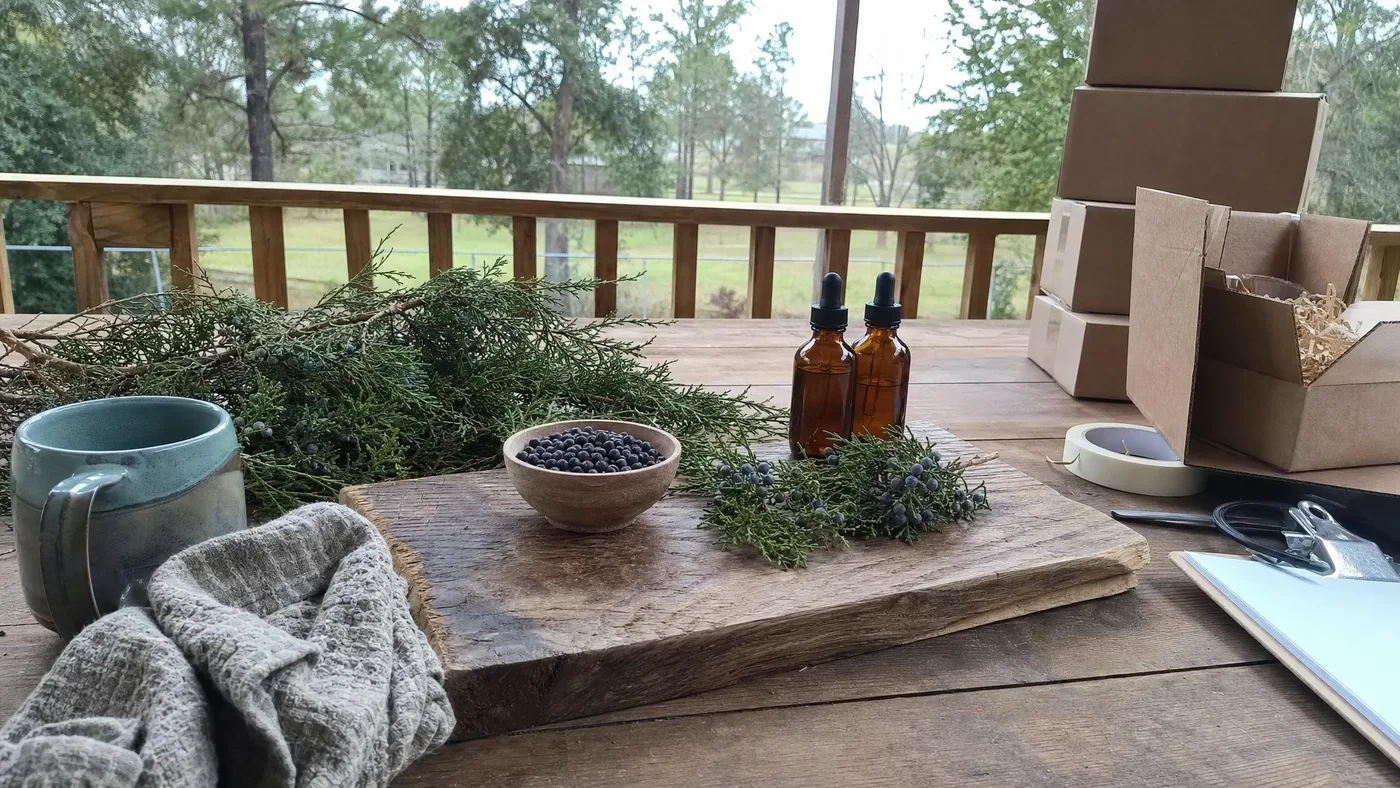
Cypress vs Juniper Berry Oil: Two Evergreen Notes Compared
The short answer: cypress and juniper berry share an alpha-pinene backbone, so they smell related, but they do different jobs in a blend. Juniper berry is brighter, fruitier and gin-like. Cypress is drier, greener and more austere. Blenders should own both and layer them at 3 parts cypress to 2 parts juniper berry.
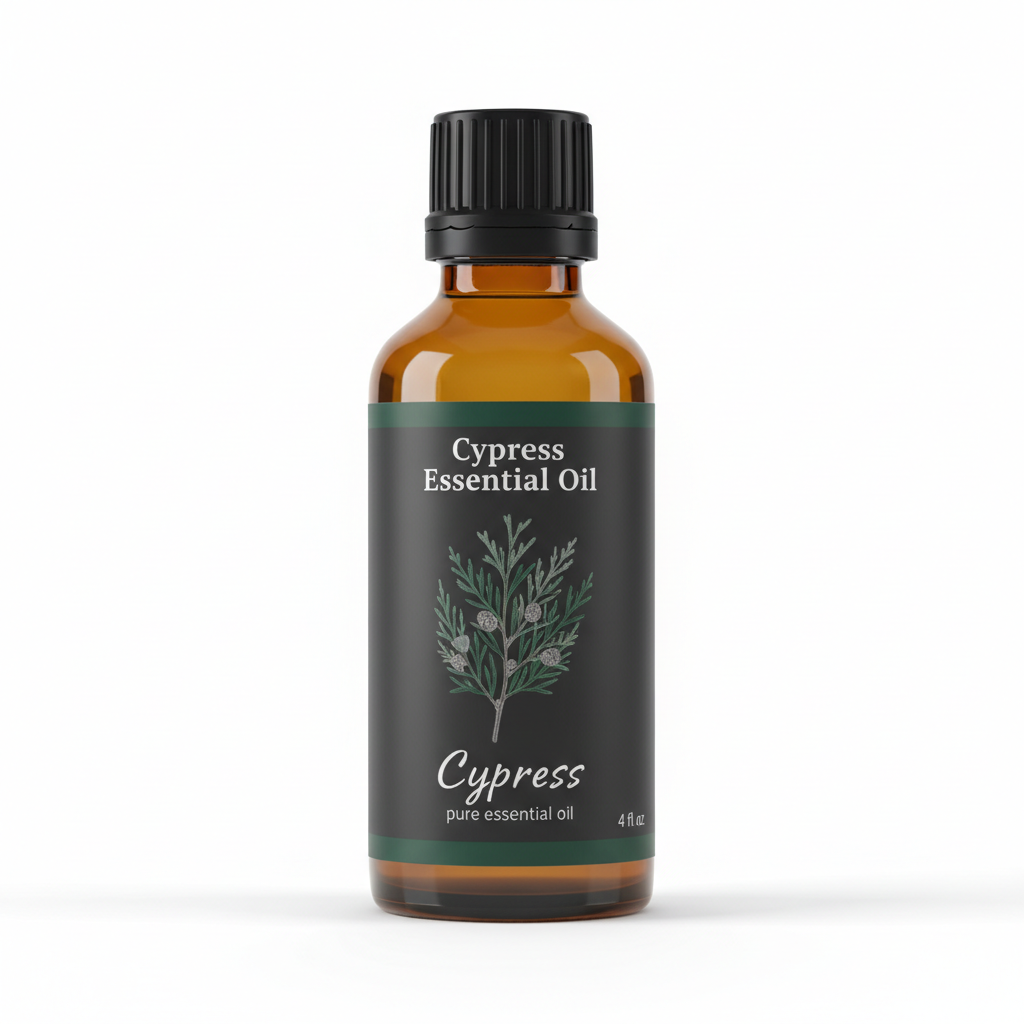
Cypress Essential Oil
Our own Cypress Essential Oil, in sizes from 0.5 oz to bulk.
From $10.99
Shop Now →If you are comparing cypress vs juniper berry essential oil because you have room for one new bottle, this guide walks through the question the way you would at a shop counter: what each oil smells like, what the label needs to say, where each one earns its place, and which single bottle makes sense for whom.
Why these two smell like cousins
Open any reference entry for these oils (PubChem is a good neutral starting point for the individual compounds) and you will see the same headline compound: alpha-pinene. It is a monoterpene, the same family of aroma molecules that gives pine forests their sharp, resinous air. Both cypress oil (distilled from the foliage and twigs of Cupressus sempervirens) and juniper berry oil (distilled from the berries of Juniperus communis) are built on it.
That shared backbone explains why a first sniff of either can land somewhere between pine, fresh-cut wood and cold air. It also explains why people confuse them. Beyond the backbone, the supporting compounds diverge. Cypress oil typically carries other woody-green components alongside the pinene, and that supporting cast reads as dry and slightly smoky. Juniper berry oil carries a different set of terpenes, and that set is where the peppery, fruity, gin-like lift comes from. Exact proportions vary by harvest, region and distillation, so treat any single published figure as a snapshot rather than a spec.
One more point from chemistry, offered as reasoning rather than observation: alpha-pinene is prone to oxidation once it meets air. A bottle that is mostly empty holds more air than a full one, so both oils age faster as you use them down. Keep caps tight and store them somewhere cool and dark.
How they differ when you actually smell them
Put a drop of each on separate paper blotters and wait a minute. The opening notes are close. Then they part ways.
Juniper berry opens with a spiky, slightly peppery brightness, followed by a resinous, faintly fruity sweetness. The gin association is literal: juniper berries are the defining botanical in gin, so a nose trained on a gin and tonic will recognise the family at once. The scent reads as lively and a little sparkling.
Cypress stays drier and greener. There is a clean, woody, slightly smoky quality, with less fruit and almost no sweetness. Where juniper berry feels like a window opened onto a sunny hillside, cypress feels like standing among the trees in cool shade. Some people find it austere, and that is a fair description. The austerity is exactly why it works as structure in a blend.
Their staying power also differs in practice. Cypress tends to sit in the middle of a composition and hold it together. Juniper berry tends to lift the top and fade a little sooner. Both are fairly forceful oils at the bottle, so start with less than you think you need.
The comparison table
| Attribute | Cypress (Cupressus sempervirens) | Juniper berry (Juniperus communis) |
|---|---|---|
| Plant part distilled | Foliage and twigs | Berries (cones) |
| Shared backbone | Alpha-pinene | Alpha-pinene |
| First impression | Dry, green, woody | Bright, peppery, resinous |
| Distinctive facet | Smoky, shaded, austere | Gin-like, faintly fruity |
| Role in a blend | Structure and middle body | Lift and sparkle |
| Best-fitting moods | Contemplative, grounded | Fresh, lively |
| Pairs naturally with | Cedarwood, vetiver, sandalwood, frankincense, lavender | Grapefruit, bergamot, rosemary, cypress, black pepper |
| Label check | Latin name should read Cupressus sempervirens | Must say berry; needle oil smells different |
| Risk of confusion | Other conifers sold as cypress | Berry oil vs needle or twig oil |
| Shelf-life habit | Oxidises with air contact | Oxidises with air contact |
Read the label first: berry oil is not needle oil
This is the most common way a juniper purchase goes sideways. Juniperus communis yields more than one oil. Distillers can steam the berries, or they can steam the needles and twigs. The two smell meaningfully different. Berry oil carries the gin-like, fruity-resinous note this article keeps describing. Needle or twig oil leans greener and sharper, closer to the woody family where cypress already lives. If you buy needle oil expecting the gin note, you will wonder why it smells so much like the cypress you already own.
The same Latin-name discipline applies to cypress. “Cypress” on a label can point to more than one genus, and the botanical name is the only reliable way to know what is in the bottle. Look for Cupressus sempervirens for the classic Mediterranean profile described here, and for juniper look for Juniperus communis with the word berry clearly stated. A bottle that names only “juniper” with no plant part is a reason to ask the seller a question before you buy.
A reputable seller should be willing to tell you the plant part, the country of origin and the distillation method. If those details are missing, that tells you something about how closely the oil was sourced.
Cypress: the honest pros and cons
Pros
- It gives blends a spine. Cypress adds dry, woody structure that keeps sweeter or brighter oils from drifting into something sugary.
- It suits grooming-style blends. The clean, shaded, slightly smoky character sits comfortably in beard-oil and shaving-ritual scents, where juniper alone can read too fruity.
- It is a good contemplative note. A quiet evening diffuser with cypress, cedarwood and a little frankincense reads as still and grounded.
- It plays well in small amounts. A drop or two gives shape without announcing itself.
Cons
- It can smell flat on its own. Alone, cypress is dry to the point of severity. Many people want something to soften it.
- It has little sweetness to offer. If you want a friendly, approachable scent straight from the bottle, cypress is the harder choice.
- The botanical name matters. Mislabelled conifer oils exist, so the quality of the bottle depends on the seller.
Juniper berry: the honest pros and cons
Pros
- It has an obvious personality. The gin-like facet is recognisable within seconds and gives a blend a signature.
- It brightens without citrus. In a fresh cologne-style blend or a lively diffuser mix, juniper berry lifts a composition while staying herbal and resinous rather than sweet-sour.
- It bridges woods and citrus. Pair it with grapefruit or bergamot on one side and cedarwood on the other, and it connects them.
- It is easy to like. Few people dislike the smell of gin botanicals, which makes it a low-risk choice for shared spaces.
Cons
- It fades sooner. The bright top note does not hold as long as cypress's body.
- It can take over. Too much and the whole blend turns into a gin cocktail.
- It carries more safety caveats. Tisserand and Young's Essential Oil Safety (2nd edition) is the reference to check for juniper berry. The short version: do not use it casually in leave-on products, and read the guidance if you are pregnant, nursing or managing a medical condition.
- Berry vs needle confusion. As above, the wrong bottle gives you the wrong scent.
Best for: matching the oil to the job
Lively diffuser blends
Juniper berry. If your usual question is cypress or juniper for diffuser blend building in a kitchen or living room, juniper berry is the livelier choice. It carries the top of a mix, and it sits well beside grapefruit or rosemary. Cypress will work here too, but it is the supporting player.
Fresh colognes and body-spray style blends
Juniper berry. A cologne-style scent wants an opening that sparkles. Juniper berry supplies that, and cypress then anchors the drydown. If you can only afford one for this job, pick juniper berry.
Grooming and shave-adjacent blends
Cypress. The dry, clean, slightly smoky character suits beard oils and balms. It reads as tidy rather than sweet. Remember that anything touching skin needs dilution and a patch test (see the safety section below).
Quiet, woody evening scents
Cypress. Paired with cedarwood and a trace of vetiver, it makes a still, shaded atmosphere for reading or winding down at the end of the day. It may help promote a sense of calm in the way a quiet forest does, which is an atmosphere effect rather than anything medical.
Room sprays and linen mists
Both, layered. Juniper berry carries the first spray, cypress holds the scent as it dries. Neither does the job as well alone.
A first conifer for someone who dislikes “piney” scents
Neither, probably. If your reaction to pine cleaner is negative, both oils will remind you of it. Juniper berry has more softness, so try that first on a blotter.
The better forest gin: layering the two
This is where the pair earns its reputation among blenders. Used alone, juniper berry can read as a cocktail and cypress can read as a stand of trees with no one in it. Together they make something neither can: a note that smells like a forest with a gin bar at the edge of it.
The ratio that works best is 3 parts cypress to 2 parts juniper berry. At that balance cypress supplies the dry woody body and juniper berry adds the fruity-resinous lift, without either one dominating.
Diffuser version
For a standard small ultrasonic diffuser, use 3 drops cypress and 2 drops juniper berry. Add 1 drop of bergamot or grapefruit if you want a brighter opening. Run it in a well-ventilated room, in intervals rather than continuously, and keep it out of reach of pets and children. The ASPCA Animal Poison Control Center and US Poison Control both publish guidance on essential oils around animals, and it is worth reading before you diffuse at home, because many oils are a concern for cats in particular.
Body-oil version (for a scent-first ritual)
For 50 ml of carrier oil such as jojoba or fractionated coconut, add 6 drops cypress and 4 drops juniper berry. That works out to roughly 1 percent total dilution, a conservative level for a leave-on product. Always patch test first: apply a small amount of the diluted blend to the inside of your forearm, cover it, and wait 24 hours. Do not use on broken skin or near the eyes.
Because both oils are alpha-pinene-rich, oxidised oil is a real concern. Oxidation raises the chance of skin sensitisation, which is the reason to buy small bottles, keep them cool and discard any oil that smells harsh or turpentine-like.
What commonly goes wrong
- Buying the wrong juniper. Berry and needle oils are sold under the same plant name. Only one gives you the gin note.
- Using juniper berry as a straight swap for cypress. It will add fruit and brightness that your blend may not want, and the dry backbone disappears.
- Using cypress as a straight swap for juniper berry. The blend loses its sparkle and tips toward the austere.
- Overdosing the diffuser. Both oils are forceful. Three or four drops in a small room is usually plenty.
- Skipping dilution. Neither oil belongs on skin neat.
Who this comparison is not for
If you want a soft, sweet, floral room scent, neither of these will do it, and no ratio will fix that. Look at lavender or sweet orange instead. If you are pregnant, nursing, on a medication schedule or managing a medical condition, speak with your physician before using either oil, and especially before using juniper berry on your skin. Essential oils are fragrance materials, and nothing here is a substitute for professional medical advice.
The verdict
Juniper berry is the more immediately charming oil. Cypress is the more useful one over time. That is the plain trade-off.
If you blend regularly, buy both. This is the rare pairing where that is the honest answer. Each fills a gap in the other, and the 3:2 forest gin layering is better than either bottle alone. Two small bottles cost less than a single mistake in a larger one, and you will use them up before oxidation becomes an issue.
If one bottle is enough for you, make it cypress. The reasoning: brightness is cheap and available in nearly every kitchen, because a citrus oil lifts cypress well enough to approximate much of what juniper berry adds. The reverse is harder. A dry, shaded, woody structure is difficult to build from juniper berry, because its fruitiness keeps showing through. Cypress is the oil that quietly improves everything else in the drawer.
The exception: if your use is almost entirely a bright, fresh living-room diffuser, and you do not plan to build grooming or woody evening blends, juniper berry berry-labelled with Juniperus communis is the better single bottle.
Whichever you pick, read the Latin name, confirm the plant part, buy a size you will finish, and keep the cap tight. When you are ready to add to your shelf, our cypress oil selection lists the botanical name and origin for every bottle.
Evergreen essential oils compared side by side are easier to understand once you have smelled them next to each other, so if you can, buy a pair of small bottles and spend an evening with two blotters. The difference that is hard to describe in words becomes obvious in about thirty seconds.