A Buyer's Guide to Cypress Oil for Natural Deodorant Makers
Most deodorant makers spend their energy on the base. They adjust the butter-to-powder ratio, argue about arrowroot versus kaolin, and test how a stick holds up in a warm bag. The essential oil gets added at the end, almost as an afterthought. That order of attention is backwards. In a product worn on thin, shaved, closed-in skin every single day, the freshness of the oil is the ingredient most likely to decide whether the finished deodorant feels comfortable to wear.
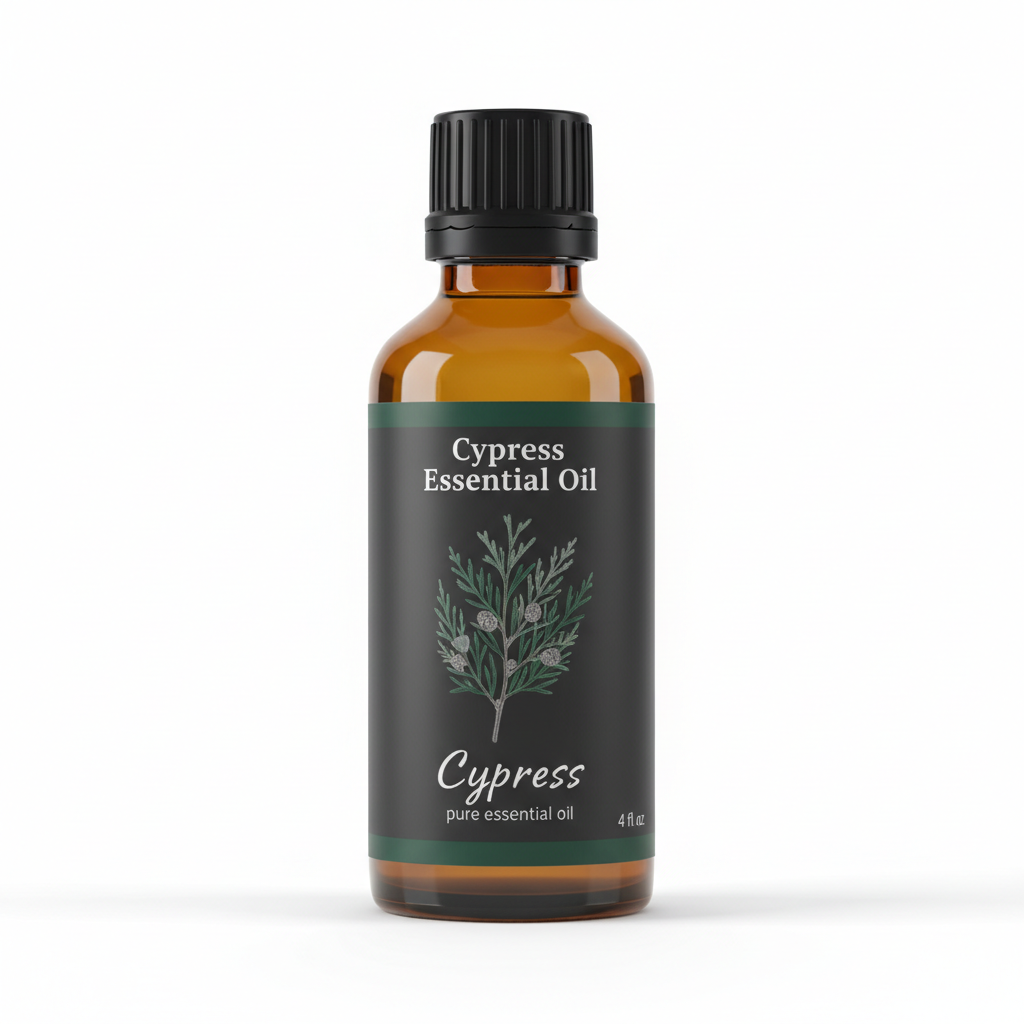
Cypress Essential Oil
Our own Cypress Essential Oil, in sizes from 0.5 oz to bulk.
From $10.99
Shop Now →This guide walks through buying cypress essential oil specifically for that job. It is a different purchase from picking a bottle for a diffuser, and the checklist is different too. The order matters: freshness first, documentation second, botanical name third, bottle size last. Brand and price come after all of that.
Why a deodorant maker shops differently from a diffuser user
A diffuser oil is released into room air in tiny amounts, and the person using it can walk out of the room. A leave-on underarm product sits against the skin for hours, under clothing, with very little airflow. The skin there is thin. It is often freshly shaved. It is warm and occluded, which means anything in the formula stays in close contact with it.
Cypress (Cupressus sempervirens) is a good example of why this matters. Its aroma is green, woody and faintly resinous, and it is rich in monoterpenes, especially alpha-pinene, with smaller amounts of delta-3-carene, limonene and myrcene. PubChem lists these compounds in detail if you want to look up their properties. The practical point is that monoterpenes react with oxygen readily. A bottle that smelled crisp when it was distilled can smell flatter, sharper or faintly turpentine-like after a long stretch of air contact. Robert Tisserand and Rodney Young, in Essential Oil Safety (2nd edition), discuss oxidized oils as a recognized concern for skin comfort, and that is the reasoning behind everything that follows.
So the question for a deodorant maker is not "which cypress smells best in the bottle?" It is "which cypress is least likely to have changed since it left the still?"
Step one: find out how old the oil actually is
Freshness is the first thing to check, ahead of the brand name, the label design or the price. Here is the reasoning. Oxidation is cumulative. Every time a bottle is opened, a little air gets in. A half-empty bottle holds more air relative to oil than a full one, so it ages faster. An oil that has been repackaged, shipped, shelved and handled for a year has had many chances to take on oxygen before it ever reaches your workbench.
What to look for:
- A distillation date or a batch-specific best-by date. A distillation date is the more useful of the two because it tells you when the clock started. A best-by date tells you only when the seller thinks it should stop, and sellers set that generously. Treat any best-by date as a ceiling, not a promise of peak condition.
- A lot or batch number on the bottle itself. If the number is only on the shipping box or the website, it is hard to connect the bottle on your shelf to any paperwork.
- A seller that can tell you how long a batch has been in stock. If you email and ask when the lot was received, a transparent seller answers in a day or two. A vague reply is useful information too.
- Dark glass with a proper cap and, ideally, an orifice reducer that you can see is intact. Clear or light-blue glass lets light in, and loose caps let air in.
You can also use your nose. A fresh cypress opens green, clean and slightly sweet-woody. If it smells harsh, sour, or like paint thinner, set it aside for something other than skin products. Smell is a rough check, though, and a nose cannot reliably catch early oxidation. That is why dates and batch records come first.
Step two: ask for batch documentation
The minimum paperwork for a cosmetic maker is a certificate of analysis (COA) tied to the specific batch you are buying. A COA is a lab report. It should identify the product, the batch or lot number, the date of analysis and the testing method. A COA for "cypress essential oil" with no lot number is a generic page that could belong to any bottle the company has ever sold.
The most informative version includes a gas chromatography and mass spectrometry (GC/MS) profile. This is a chemical breakdown showing which compounds are present and in what proportion. For cypress, you would expect alpha-pinene to be the leading component, with delta-3-carene prominent and the others trailing behind. You do not need a chemistry degree to read it. You are checking three things:
- Does the main constituent list look like cypress, with alpha-pinene at or near the top?
- Does the batch number on the report match the one on your bottle?
- Is the analysis date recent enough to be meaningful?
A COA does not prove an oil is safe on skin, and it does not replace your own patch testing. What it does is tell you the oil is what it claims to be, and that gives you a stable starting point. If a seller refuses to share batch documentation for an oil you plan to put in a leave-on product, that is reason enough to buy elsewhere.
Step three: confirm the Latin name
"Cypress" is a common name that covers several different trees. For this purpose you want Cupressus sempervirens, the Mediterranean cypress. The botanical name should appear on the label or product page. If a listing says only "cypress oil" or "cypress fragrance" with no Latin name, you cannot tell what is in the bottle.
Other conifer oils sit nearby in the catalog, such as juniper, cedarwood and various pines and firs, and some of them share overlapping aromatic compounds. Substituting one for another changes both the scent and the way the oil behaves in a blend. For a maker developing a repeatable formula, that is a problem. You want to buy the same species every time so the finished product smells the same from batch to batch.
Also check the plant part and the method. Cypress is typically steam-distilled from the leaves and twigs. A label that says "steam distilled" is expected. A label that says "fragrance oil," "nature identical" or "perfume blend" is a different product altogether and belongs in a different shopping list.
Step four: only now think about bottle size
This is where many buyers start, and it is where they go wrong. The larger bottle looks like the better deal per milliliter, and for a diffuser oil that is sometimes true. For a leave-on product it can be false economy.
Consider how a small-batch maker actually uses cypress. At a usage rate around 1 percent total essential oil, a 30-gram batch of deodorant needs roughly 0.3 grams of oil, which is about six drops. A 15 mL bottle holds enough for dozens of batches. If you make one batch a month, that bottle will still be in use a year or more later, opened dozens of times, with more air in it each time. The cost per milliliter looked low on the day you bought it. But if the last third of the bottle is oxidized and you would not feel comfortable putting it on your skin, you paid for oil you could not use.
The sensible approach is to match the bottle to your production pace:
- Making a few batches a month or less: buy the smallest size offered, typically 5 or 10 mL, and reorder.
- Selling at markets or online and making batches weekly: a 15 mL bottle can make sense, because you will finish it while it is still fresh.
- Buying in bulk to save money: split a large bottle into several small, full, dark glass vials right away and keep the unopened ones sealed in a cool, dark place. A full vial has little air in it, which slows oxidation.
A "value" size that goes stale is negative value in a product that goes on skin every day. When the choice is between saving a little per milliliter and having oil you trust, the second option wins.
Key features to compare side by side
When you are looking at two or three candidate bottles, a short comparison keeps the decision honest. Here is how the factors rank for a deodorant maker:
| Feature | What you want | Why it matters for leave-on use |
|---|---|---|
| Distillation or best-by date | A stated date, preferably recent | Older monoterpene-rich oils are more likely to have oxidized |
| Batch-matched COA | Lot number on report matches bottle | Confirms identity and gives you a record for your own formula notes |
| GC/MS profile | Alpha-pinene leading, expected companions present | Shows the oil is cypress and not a stretched or substituted product |
| Botanical name | Cupressus sempervirens | Keeps scent and behavior consistent between batches |
| Bottle size | Small enough to finish within months of opening | Less air contact and fewer openings per milliliter used |
| Container | Dark glass, tight cap | Limits light and air exposure |
| Price per milliliter | Reasonable, not the lowest | Unusually cheap cypress raises the question of what else is in the bottle |
The usage rate: what the fragrance industry's caution suggests
The International Fragrance Association (IFRA) publishes standards that divide finished products into usage categories, and leave-on products applied to the underarm sit among the most conservative of them. This guide will not quote a figure, because the standard is revised over time and the applicable limit depends on the specific material and the category. If you sell your deodorant, read the current IFRA documentation yourself for the materials you use.
The spirit behind the caution is easy to translate. Underarm skin is thin. It is occluded by clothing and by the closed fold of the arm. It is shaved regularly by many people, which can leave the surface more reactive. Put those together and the sensible place to formulate is at the low end. A total essential oil load of around 1 percent of the finished weight, covering every oil in the blend and not just cypress, is a reasonable starting point for most makers. If cypress is only one of several oils in your scent, its share of that 1 percent will be smaller still.
Two habits make this safer:
- Patch test every new batch. Apply a small amount of the finished deodorant to the inner forearm, leave it for a day, and watch the spot. Do this for each new bottle of oil and each new batch of product, not once and never again. A fresh bottle of oil is a new variable.
- Weigh, don't count drops. Drop sizes vary with the bottle and the oil. A scale that reads to 0.01 gram gives you a figure you can write down and repeat.
If you are making deodorant for other people, mention the ingredient list clearly and encourage them to patch test too. Anyone who is pregnant, nursing, or has a skin concern should check with their doctor before using a product with essential oils in it. For the finer points of dermal guidance on individual oils, Essential Oil Safety by Tisserand and Young is the reference most formulators keep on the shelf.
Picking by budget: what to buy at each level
Naming specific brands here would date this page quickly and would require trying each one, so this section describes the kind of purchase that makes sense at each price level instead. Use it as a filter when you browse.
Lowest outlay: the smallest bottle from a seller who shows dates
If you are making your first few batches, buy a 5 or 10 mL bottle from a seller who prints a batch number and a distillation or best-by date, and who will email a COA on request. It will cost more per milliliter than a large bottle, and that is fine. You are paying for a short turnaround time, and a fresh small bottle is a better starting point than a large one of unknown age.
Middle of the range: a batch-matched COA with GC/MS included
For makers selling small runs, the best value is usually a mid-priced oil whose seller publishes the batch report, including the GC/MS profile, on the product page or sends it with the order. This is the tier where documentation becomes routine. You can file each report with your batch notes, which also helps if you ever need to trace a customer question back to a lot.
Higher outlay: an oil from a producer who can name the still
The most expensive cypress is not automatically better, but a few sellers deal directly with a distiller and can tell you the harvest region, the distillation season and when the lot arrived. That is traceability, and it is worth paying for if your deodorant is a core product and you want consistent scent from one reorder to the next. The test is whether the seller can answer questions with specifics. If the answer is the same marketing paragraph as the product page, the premium is just a premium.
At every level, the same order applies. A cheap bottle with a date and a COA beats an expensive bottle with neither.
Red flags to walk away from
- No Latin name. "Cypress oil" alone is not enough information.
- No batch number, or a COA that is clearly generic. A report with no lot number cannot be matched to your bottle.
- The word "fragrance" or "perfume" anywhere in the product name. Those are synthetic or blended products, not distilled essential oils.
- A price far below the rest of the market. Distilling cypress takes plant material and time. Prices far under the going rate raise the possibility of dilution with a carrier or a cheaper oil.
- Clear glass or plastic bottles. Light and air accelerate oxidation, and some plastics are not suited to long contact with concentrated oils.
- A shelf-life claim that sounds unlimited. Monoterpene-rich oils change over time. Anyone claiming a bottle will stay unchanged for many years is not describing the chemistry accurately.
- Claims that the oil can address a medical or skin condition. A reputable seller of cosmetic ingredients sticks to aroma, quality and sourcing. If the product page makes health promises, take it as a sign that the seller is careless in other areas too.
- A bottle that smells sharp, sour or flat when you open it. Put it aside for another use, such as scenting a candle, and buy a new one for skin products.
Where to buy
The best source is whichever seller answers your questions fastest and most specifically. In practice that tends to mean one of three places.
Specialist essential oil suppliers that sell to soap and cosmetic makers usually publish batch reports and offer a range of bottle sizes. Their customers are formulators, so they expect questions about COAs and dates. This is the most dependable route for deodorant makers.
Direct from a producer or a small importer can give you the most traceable oil, and sometimes the freshest, but minimum order sizes may be larger than you need. If you buy this way, plan to decant into small vials as soon as the shipment arrives.
General online marketplaces are the riskiest option. Listings change, sellers swap suppliers without updating the page, and the bottle that arrives may not match the one in the photo. If you do buy there, insist on the same checks: Latin name, batch number, date, and a COA you can request before you commit.
If you would rather compare a curated set of oils in one place, the Evergreen Elegance shop lists cypress alongside other conifer oils. Whatever source you choose, ask for the lot number and the date before you order. It takes one email.
Who this is not for
If you make a deodorant once a year as a gift, a premium oil with a full documentation package is probably more than you need. A small fresh bottle from a decent seller will do the job, and the habits in this guide (low usage rate, patch test) still apply.
If you are formulating for someone with very reactive skin, a scent-free base is the simpler path, and a conversation with their doctor comes before any essential oil goes into the recipe. Cypress is an aromatic ingredient, not a necessary one.
And if you are hoping that a more expensive oil will make up for a poorly balanced base, it won't. The base still matters. The point of this guide is only that the oil deserves the same scrutiny as the butter and the powder, and that scrutiny begins with a date on the bottle.
A short buying checklist
- Find the distillation or best-by date, and the lot number on the bottle.
- Request the COA for that lot, and read the GC/MS if one is included.
- Confirm the label says Cupressus sempervirens, steam distilled.
- Pick the smallest bottle you will finish within a few months of opening.
- Formulate at the low end, around 1 percent total essential oil, and weigh it.
- Patch test each new batch before you wear it daily or sell it.
The information here is educational and about ingredient quality for cosmetic use. Talk with a qualified professional or your doctor if you have questions about how a particular ingredient fits your own circumstances.